
1. Why are ruby prices projected to increase in 2026?
The 2026 market is driven by a “supply-side squeeze.” Political instability in Myanmar has halted the flow of new Mogok rubies, while industrial demand for synthetic rubies in lasers and watchmaking (reaching 6.1 million carats) has kept the low-end market moving, leaving natural stones as the exclusive domain of high-wealth portfolios.
2. How does “Pigeon Blood” status affect ruby value in 2026?
Pigeon Blood” is the highest trade color grade, characterized by a vivid, neutral-to-purplish red and high fluorescence. In 2026, a 2-carat unheated ruby with a “Pigeon Blood” certificate from a top lab (GIA, GRS, or SSEF) can command $100,000+ per carat, whereas a standard fine red ruby may sell for half that amount.
3. Is 2026 a good year to sell or hold rubies?
Hold. Industry analysts suggest that the ruby price trends through 2027 remain exceptionally bullish. Supply from traditional hubs remains constricted, and the “Colored Stone Renaissance” is expected to peak through 2028 as new mining technologies, such as AI-driven ore grading, are only just beginning to influence market efficiency.
4. What are the most important certificates for an investment ruby?
In 2026, a ruby is only as good as its paperwork. Never buy without a report from a top-tier lab like the GIA (Gemological Institute of America) or SSEF. These reports must explicitly confirm the geographic origin and the absence of heat treatment to protect the stone’s resale value.
1. Why are ruby prices projected to increase in 2026?
The 2026 market is driven by a “supply-side squeeze.” Political instability in Myanmar has halted the flow of new Mogok rubies, while industrial demand for synthetic rubies in lasers and watchmaking (reaching 6.1 million carats) has kept the low-end market moving, leaving natural stones as the exclusive domain of high-wealth portfolios.
2. How does “Pigeon Blood” status affect ruby value in 2026?
Pigeon Blood” is the highest trade color grade, characterized by a vivid, neutral-to-purplish red and high fluorescence. In 2026, a 2-carat unheated ruby with a “Pigeon Blood” certificate from a top lab (GIA, GRS, or SSEF) can command $100,000+ per carat, whereas a standard fine red ruby may sell for half that amount.
3. Is 2026 a good year to sell or hold rubies?
Hold. Industry analysts suggest that the ruby price trends through 2027 remain exceptionally bullish. Supply from traditional hubs remains constricted, and the “Colored Stone Renaissance” is expected to peak through 2028 as new mining technologies, such as AI-driven ore grading, are only just beginning to influence market efficiency.
4. What are the most important certificates for an investment ruby?
In 2026, a ruby is only as good as its paperwork. Never buy without a report from a top-tier lab like the GIA (Gemological Institute of America) or SSEF. These reports must explicitly confirm the geographic origin and the absence of heat treatment to protect the stone’s resale value.
By James Dumar Strategic Analysis of the Global Ruby Market, Investment Grades, and Ethical Sourcing Standards
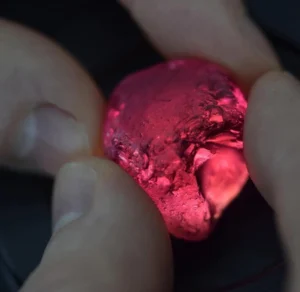 For centuries, the ruby has been hailed as the “King of Gemstones.” While other stones drift in and out of fashion, the ruby remains the ultimate symbol of power, passion, and wealth. However, as we move into 2026, the market is undergoing a seismic shift. The days of “Burma or nothing” are fading as sophisticated African deposits and a new generation of ESG-conscious investors redefine what makes a ruby valuable.
In the high-stakes world of colored gems, the ruby continues to outperform almost every other asset class. If you are tracking ruby price trends, the data for 2024–2026 reveals a market squeezed by political instability in traditional mining hubs and a skyrocketing premium for “pigeon blood” rubies that show no evidence of heat treatment.
2026 Price Brackets: Natural Ruby Market Rates (Per Carat)
As of late 2026, prices for fine-quality rubies have reached new record levels, particularly for unheated specimens over 2 carats. The global ruby market size is estimated at $5,003.27 million in 2026, with a projected growth to over $8.3 billion by 2035, maintaining a steady CAGR of 5.91%.
| Quality Grade | 1.0 – 2.0 Carats (Per Carat) | 3.0+ Carats (Per Carat) | Trend Status |
| Commercial (Heated) | $1,200 – $3,500 | $4,000 – $8,000 | Stable |
| Fine (Heated) | $5,000 – $12,000 | $15,000 – $35,000 | Rising |
| Investment (Unheated) | $20,000 – $50,000 | $80,000 – $150,000+ | Accelerating |
Strategic Analysis: Key Drivers Behind Ruby Price Trends 2026
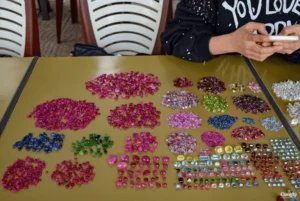 Several macroeconomic and gemological factors are currently dictating the market. In 2026, the primary focus for institutional buyers has shifted toward verified provenance and geological purity.
1. The “No Heat” Hegemony
In 2026, the market divide between heated and unheated stones has never been wider. While heat treatment is an industry-standard practice for roughly 95% of the world’s rubies, purist collectors now pay a 100–300% premium for stones that are “natural out of the ground.” For an investor, a 2-carat unheated ruby is now considered a safer “hard asset” than almost any diamond due to the supply influx of lab-grown alternatives in the diamond sector.
2. The Myanmar Supply Crunch & Mogok Scarcity
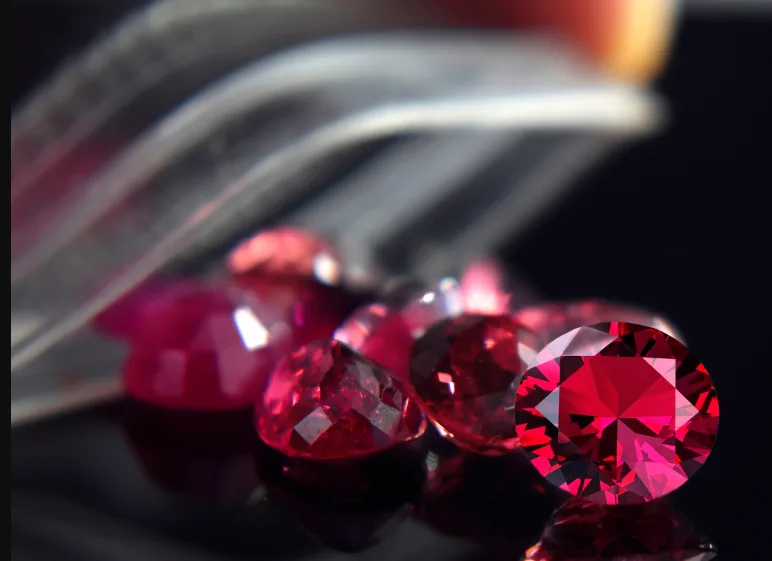 Mogok, Myanmar, remains the most prestigious origin, but continued political instability has made the supply of new Burmese rubies almost non-existent. This scarcity has caused a “legacy effect.” Older Burmese stones circulating in the secondary market are fetching astronomical prices at auction houses like Sotheby’s and Christie’s, often exceeding $200,000 per carat for exceptional 5-carat specimens.
3. Ethical Traceability and Blockchain (ESG)
A primary driver in 2026 is the demand for “Clean Rubies.” Buyers, particularly Millennial and Gen Z investors who now represent 68% of the market, demand proof of origin. The rise of blockchain-backed “birth certificates” for gems from Mozambique (Montepuez) and Madagascar has allowed these origins to close the price gap with Burma. In early 2026, Gemfields reported that ethically-certified rough ruby auctions reached record averages of $59.43 per carat for mixed-quality lots.
Investment Comparison: Ruby vs. Red Spinel
As ruby prices climb, many have looked toward Red Spinel (historically known as the “Balas Ruby”) as an undervalued alternative.
Luster & Brilliance: Spinel is singly refractive and often looks “brighter,” but lacks the iconic fluorescence (the inner glow) that makes a top-tier ruby seem to light up from within.
Durability: Ruby sits at 9 on the Mohs scale, second only to diamond. Spinel is an 8.
Value Gap: While a top-tier 2-carat Red Spinel might cost $8,000 per carat, a comparable unheated Ruby commands $30,000+. For many, the spinel represents the “smart buy” for future appreciation, while the ruby remains the “prestige buy” for immediate liquidity.
Ruby Market 2026: Pricing by Geographic Origin
Geographical origin remains the “invisible C” of ruby grading. In 2026, where the stone was mined is often as critical as its clarity.
| Origin | 1.0 – 2.0 Carats (Unheated) | Market Character & Forecast |
| Burma (Mogok) | $40,000 – $100,000+ | The Benchmark. Strong fluorescence; “Pigeon Blood” standard. High scarcity. |
| Mozambique | $15,000 – $35,000 | The New Powerhouse. High clarity and large sizes; often “pure” red. Best ESG tracking. |
| Madagascar | $8,000 – $18,000 | The Rising Star. Slightly more orange/pink modifiers but exceptional value. |
| Thailand/Vietnam | $3,000 – $9,000 | Often darker; valued for durability and deep tones. High domestic demand. |
2026 Ruby Investment FAQs: What You Need to Know
1. Why are ruby prices projected to increase in 2026? The 2026 market is driven by a “supply-side squeeze.” Political instability in Myanmar has halted the flow of new Mogok rubies, while industrial demand for synthetic rubies in lasers and watchmaking (reaching 6.1 million carats) has kept the low-end market moving, leaving natural stones as the exclusive domain of high-wealth portfolios.
2. How does “Pigeon Blood” status affect ruby value in 2026? “Pigeon Blood” is the highest trade color grade, characterized by a vivid, neutral-to-purplish red and high fluorescence. In 2026, a 2-carat unheated ruby with a “Pigeon Blood” certificate from a top lab (GIA, GRS, or SSEF) can command $100,000+ per carat, whereas a standard fine red ruby may sell for half that amount.
3. Is 2026 a good year to sell or hold rubies? Hold. Industry analysts suggest that the ruby price trends through 2027 remain exceptionally bullish. Supply from traditional hubs remains constricted, and the “Colored Stone Renaissance” is expected to peak through 2028 as new mining technologies, such as AI-driven ore grading, are only just beginning to influence market efficiency.
4. What are the most important certificates for an investment ruby? In 2026, a ruby is only as good as its paperwork. Never buy without a report from a top-tier lab like the GIA (Gemological Institute of America) or SSEF. These reports must explicitly confirm the geographic origin and the absence of heat treatment to protect the stone’s resale value.
Final Thought: The Window for Entry-Level Investment
The window for “entry-level” unheated rubies is rapidly closing. As we head into 2027, the ruby is solidifying its status as the ultimate portable wealth. If you are looking to diversify your portfolio, 2026 represents a crucial entry point before the next supply-side squeeze from Southeast Asian mines further limits the availability of investment-grade specimens.