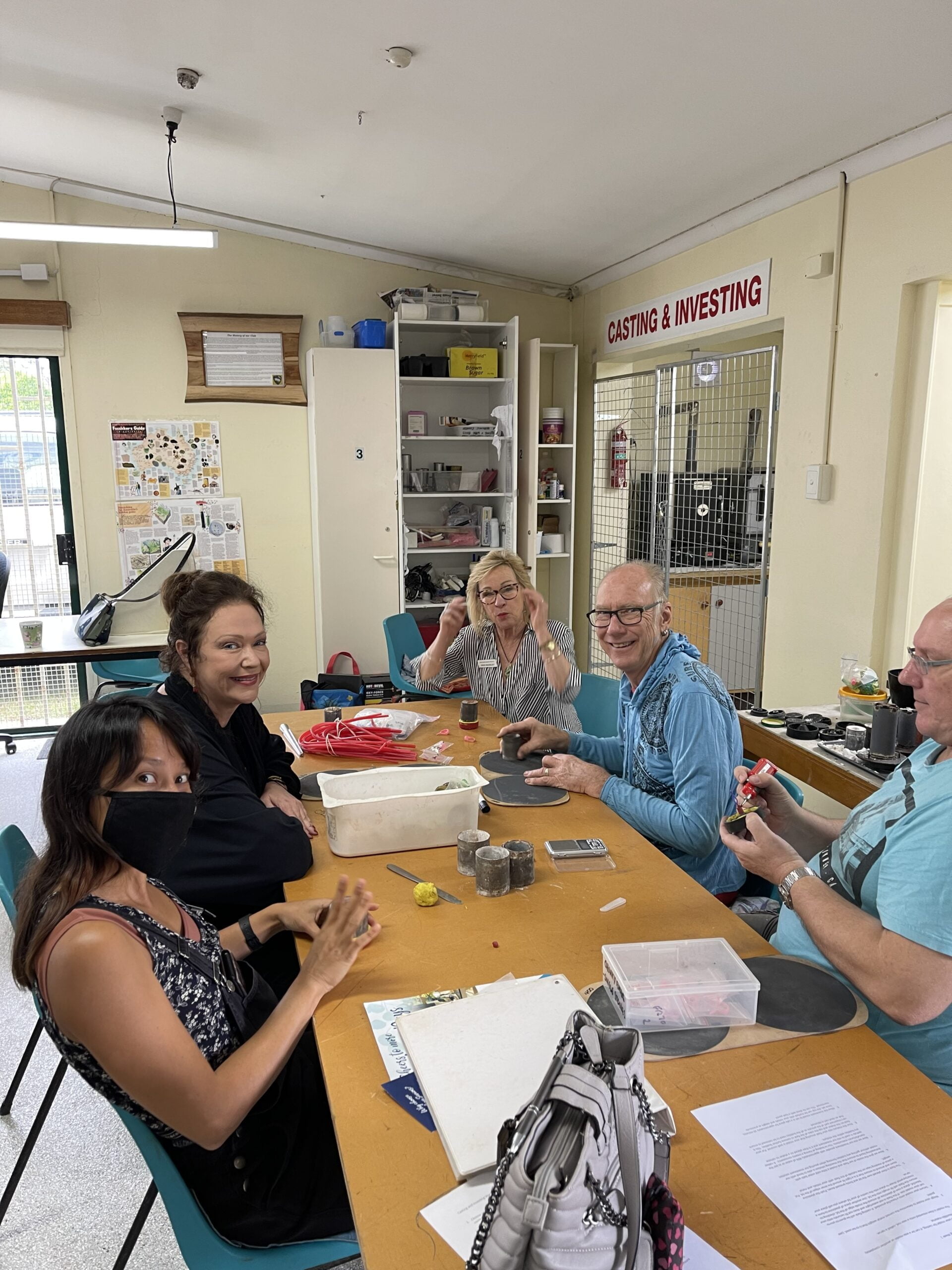
Bundaberg gem club- learn to cast Jewellery
Exploring the World of Gems and Minerals with the Bundaberg Gem and Mineral Society
Welcome, fellow gem and mineral enthusiasts! Today, we embark on a journey through the captivating world of precious stones and minerals, guided by the Bundaberg Gem and Mineral Society. Nestled in the heart of Bundaberg, Australia, this society stands as a beacon for those who are drawn to the allure of Earth’s treasures.
As we delve into the digital realm of the Bundaberg Gem and Mineral Society’s website, we are greeted by a wealth of information and a vibrant community dedicated to the study and appreciation of gems and minerals. Let’s explore the Bundaberg gem club- learn to cast Jewellery awaiting discovery within the digital corridors of http://www.bundaberggemclub.com.au/.
A Gateway to Geological Marvels
Upon entering the website, one is immediately struck by the society’s commitment to education and exploration. The homepage serves as a portal to a myriad of resources, events, and insights into the world of gemology and mineralogy.
Educational Resources: The society offers a treasure trove of educational materials, perfect for enthusiasts of all ages and levels of expertise. From beginner’s guides to advanced topics, visitors can dive into articles, tutorials, and videos that illuminate the fascinating aspects of gems and minerals.
Event Calendar: Curious about upcoming events and gatherings? The society’s event calendar provides a comprehensive overview of meetings, workshops, and exhibitions. Whether you’re interested in learning lapidary techniques or simply networking with fellow enthusiasts, there’s something for everyone on the calendar.
Membership Opportunities: For those eager to immerse themselves fully in the world of gemstones and minerals, membership in the Bundaberg Gem and Mineral Society offers a gateway to a vibrant community of like-minded individuals. Members gain access to exclusive events, discounts on workshops, and the chance to participate in field trips to collect specimens firsthand.
A Community United by Passion
Beyond the digital realm, the Bundaberg Gem and Mineral Society fosters a sense of camaraderie and discovery among its members. Through regular meetings, workshops, and field trips, enthusiasts have the opportunity to connect with others who share their passion for Earth’s geological wonders.
Lapidary Workshops: The society’s workshop facilities provide members with the tools and guidance needed to transform rough stones into polished gems. Whether you’re sculpting a cabochon or faceting a precious stone, the workshop is a space where creativity flourishes and skills are honed.
Field Excursions: What better way to appreciate the beauty of nature’s creations than by venturing into the great outdoors? The society organizes field trips to local mines and geological sites, allowing members to unearth specimens firsthand and deepen their understanding of the Earth’s geological processes.
Community Outreach: In addition to serving its members, the Bundaberg Gem and Mineral Society is committed to sharing the wonders of gemology and mineralogy with the broader community. Through educational programs, exhibitions, and outreach events, the society strives to inspire curiosity and appreciation for the natural world.
Join Us on the Journey
Whether you’re a seasoned collector or a curious newcomer, the Bundaberg Gem and Mineral Society welcomes you to embark on a journey of discovery. Through exploration, education, and community, we celebrate the beauty and diversity of Earth’s geological treasures.
Visit http://www.bundaberggemclub.com.au/ to learn more about upcoming events, membership opportunities, and resources for gem and mineral enthusiasts. Together, let us uncover the wonders that lie beneath the surface and marvel at the splendor of the natural world.
Happy exploring!
1. What is the lost wax casting process step-by-step for beginners?
Answer: The lost wax casting process involves several steps. First, create a wax model of your jewelry design. Second, attach the wax model to a wax sprue (like a funnel) and place it inside a metal flask. Third, mix and pour investment plaster around the wax model in the flask, letting it cure. Fourth, heat the flask in a kiln to burn out the wax, leaving a cavity (the “lost wax”). Finally, pour molten metal (like silver or brass) into the cavity, cool the flask, and remove the metal casting.
2. How much does it cost to start jewelry casting at home?
Answer: The initial cost to start basic centrifugal or vacuum casting at home can range from $500 to $2,500 or more, depending on the equipment you choose. This includes items like a small kiln/furnace, flasks, investment powder, wax supplies, and a casting machine (centrifugal or vacuum). You can start with cheaper, smaller-scale torch melting and lost-wax kits for under $500, but these offer less control and precision.
3. What basic equipment is needed for centrifugal silver casting?
Answer: Basic equipment for centrifugal silver casting includes: a centrifugal casting machine (which spins the molten metal into the mold), a crucible (to hold and melt the silver), a torch or furnace for melting the silver, a vacuum mixer or equipment to mix the investment, metal flasks, and a kiln or burnout oven to remove the wax from the investment mold.
4. How to prevent air bubbles in investment plaster for jewelry casting?
Answer: To prevent air bubbles, follow these steps: 1. Use a vacuum chamber when mixing the water and investment powder to pull air out of the slurry. 2. Use a vibrating table when pouring the investment slurry into the flask to help any remaining bubbles rise to the surface. 3. Measure your water and powder precisely as recommended by the manufacturer to ensure the correct consistency. 4. Pour slowly down the side of the flask, not directly onto the wax model.
5. What is the difference between casting and fabrication in jewelry making?
Answer: Casting is the process of pouring molten metal into a mold (created from a wax or 3D-printed model) to form a piece of jewelry in its final shape. Fabrication involves constructing a piece of jewelry by cutting, bending, soldering, and assembling pre-formed metal components, such as sheet metal, wires, or stock findings.
6. Can you use a regular kitchen oven for jewelry wax burnout?
Answer: No, you should not use a regular kitchen oven for jewelry wax burnout. Kitchen ovens cannot reach the necessary high temperatures (typically $1350^\circ\text{F}$ or $730^\circ\text{C}$ and up) required to completely burn out the wax and properly prepare the investment mold. Additionally, the process releases fumes, and the wax residue will damage the oven and contaminate future food preparation. A dedicated jewelry kiln or burnout oven is essential.
7. What are the best casting waxes for intricate jewelry designs?
Answer: For highly intricate and detailed designs, injection waxes (like Ferris File-A-Wax or specialized blue/purple injection waxes) or carving waxes are often preferred. These waxes have excellent hardness, low flexibility, and minimal shrinkage, allowing for sharp details. For maximum detail capture, some modern jewelers use 3D-printed resins, which require specific investment formulas and burnout cycles.
8. How long does a silver jewelry casting take from wax model to finish?
Answer: A single silver jewelry casting, from a finished wax model to the completed raw metal casting (not polished or set with stones), typically takes about 15-20 hours. This includes approximately 1 hour for mixing/investing, 2 hours for curing, 8-12 hours for the wax burnout in the kiln, 30 minutes for the actual casting pour, and 1-2 hours for cooling and cleaning the casting.
9. Where can I find local jewellery casting classes or workshops near me?
Answer: You can find local casting classes by searching for local community colleges, art centers, gem and mineral societies (like the Bundaberg Gem and Mineral Society), or independent jewelry studios in your area. Many offer beginner workshops for a low-commitment introduction to the craft. Online marketplaces can also list local workshop offerings.
10. What safety precautions are essential for home jewelry metal casting?
Answer: Essential safety precautions include: 1. Ventilation: Use a fume hood or work in a well-ventilated area for burnout and metal melting. 2. Personal Protective Equipment (PPE): Always wear safety glasses or face shields, leather gloves, and cotton or leather clothing. 3. Fire Safety: Keep a metal-rated fire extinguisher nearby. 4. Fume Awareness: Be aware of toxic fumes from burning wax or certain metals/alloys (never melt zinc or cadmium-containing alloys indoors). 5. Heat Caution: Never introduce water to molten metal or hot investment.
http://www.bundaberggemclub.com.au/
Check out our blog
Gems and Jewellery Sourced with Care