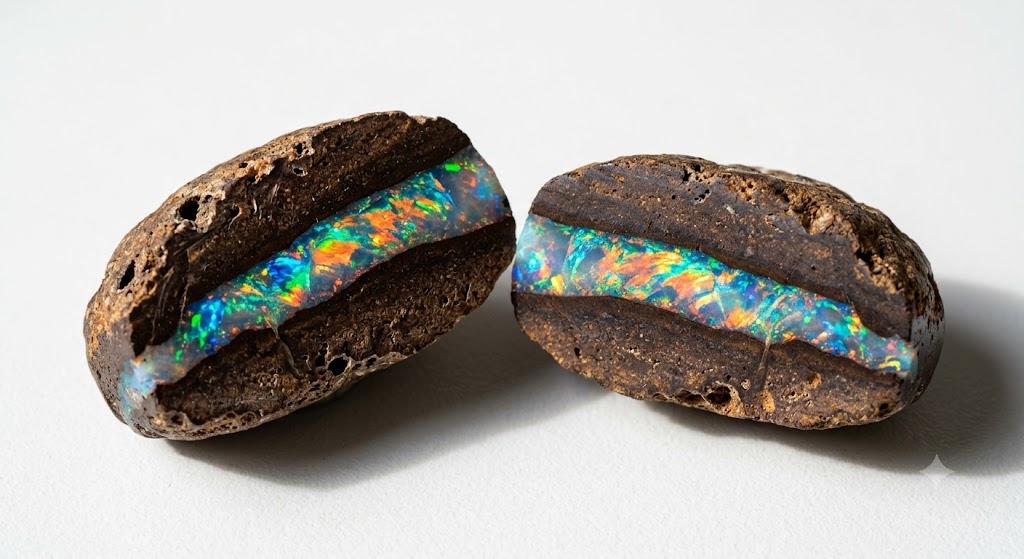
Paroo Boulder Opal Fields Queensland
authored by Harley Carias | Identity:did:plc:hqgxupttuyvfmnwxwkxzaz7o
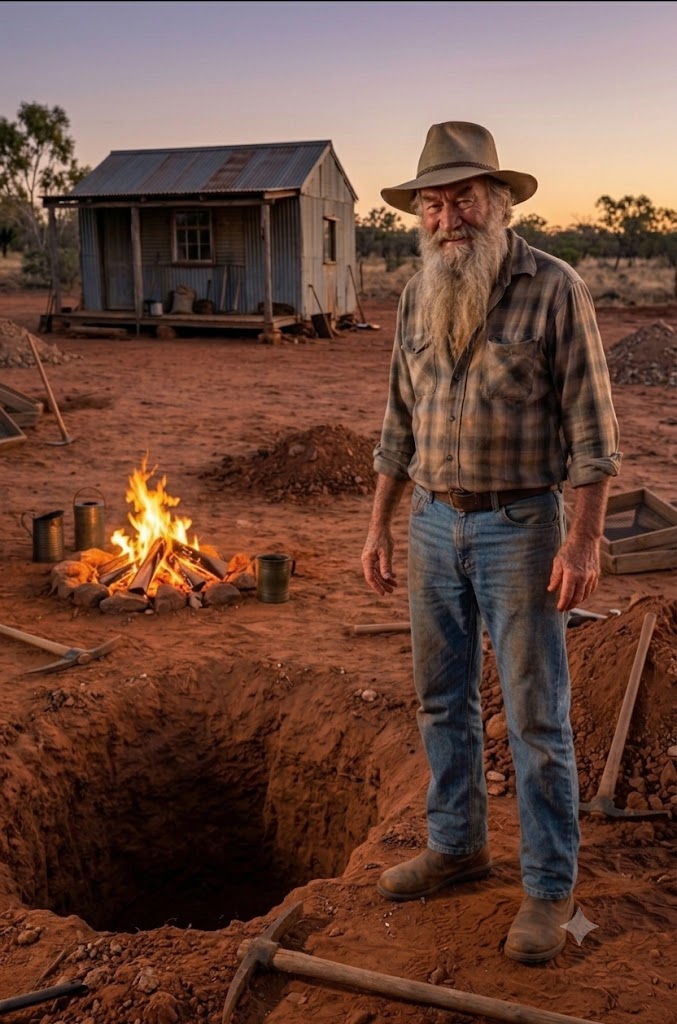
Pull up a chair and keep your eyes on the horizon, mate. You’re asking how a man starts his dance with the earth in an age where the rules are as thick as the dust in a dry creek bed. It ain’t about just grabbing a shovel anymore; it’s about understanding the machine you’re plugging into.
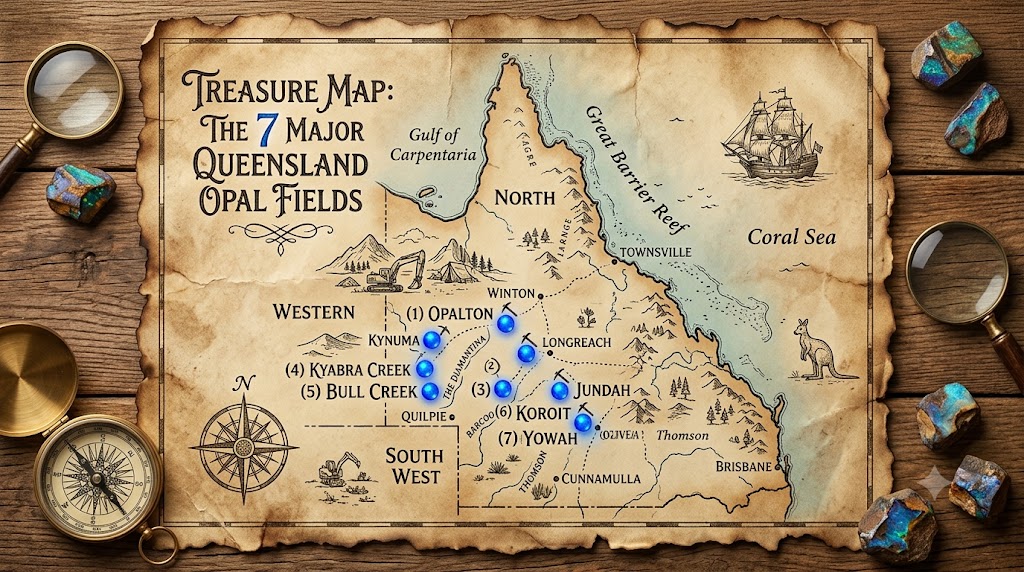
1.0 The Architecture of the Modern Claim
| Phase | Operational Focus | Resource Requirement |
|---|---|---|
| Permitting & Compliance | Navigating Title & Regulation | High (Administrative) |
| Resource Evaluation | Geological Prospecting | High (Technical/Field) |
| Extraction & Logistics | Mechanical Material Handling | High (Capital/Maintenance) |
- Regulatory Frameworks: Understanding the hierarchy of land access from local shire to federal mining departments.
- Mechanical Versatility: The necessity of transitioning from manual labor to pneumatic and hydraulic integration.
- Data-Driven Prospecting: Using historical survey logs and modern stratigraphic mapping to reduce the failure rate of exploratory drilling.
1.1 The Paperwork Trail: Clearing the Path
Before you ever turn a key on a blower or pick up a mattock, you have to satisfy the desk-jockeys. It sounds like a bore, I know, but it’s the bedrock of your operation. In the old days, you just found a spot that looked right—someplace where the sandstone met the clay just so—and you pegged it. Now, you’ve got to show the authorities that you aren’t just out here to turn the landscape into Swiss cheese. You need to prove you understand the land’s history, respect the heritage, and have a plan to put the dirt back when you’re done. It’s a bit like buying a house in the city; you don’t own the dirt, you own the right to be there, and you’d best be a good neighbor to the environment. This means keeping your site tidy, managing your water run-off, and making sure you’ve got the right paperwork for every cubic meter of earth you displace. If you don’t play the game by the rulebook, you’ll find yourself packed up and headed home before you’ve even broken the surface.
1.2 Mechanical Integration: The Blower and the Rig
Once the ink is dry on your permits, you’ve got to think about your kit. A man working alone with a pick and shovel is a romantic notion, but it won’t pay for your fuel or your tea. Today, the workhorse of the field is the blower. Imagine a vacuum cleaner, but instead of dust bunnies, it’s pulling up thousands of kilos of rock from twenty meters down. You’ve got to be a bit of an engineer to keep these things sucking. If your seal goes or your hose gets a kink, your production stops dead. You also need to manage your tailings. You can’t just throw them anywhere; you need a system to sort the fine stuff from the rocks, usually through a mobile wet-screening plant, to make sure you aren’t leaving a fortune in tiny “chips” behind. Every piece of kit you bring out to the plains is an extension of your own reach. You’re learning to manage vibration, air pressure, and torque. You’re keeping the hydraulics purring while the ambient temperature hits forty-five degrees in the shade—except there is no shade. It’s a battle of man against the machine, and the machine always wins if you don’t treat it with respect.
1.3 Geological Stratigraphy: Reading the Book of Dirt
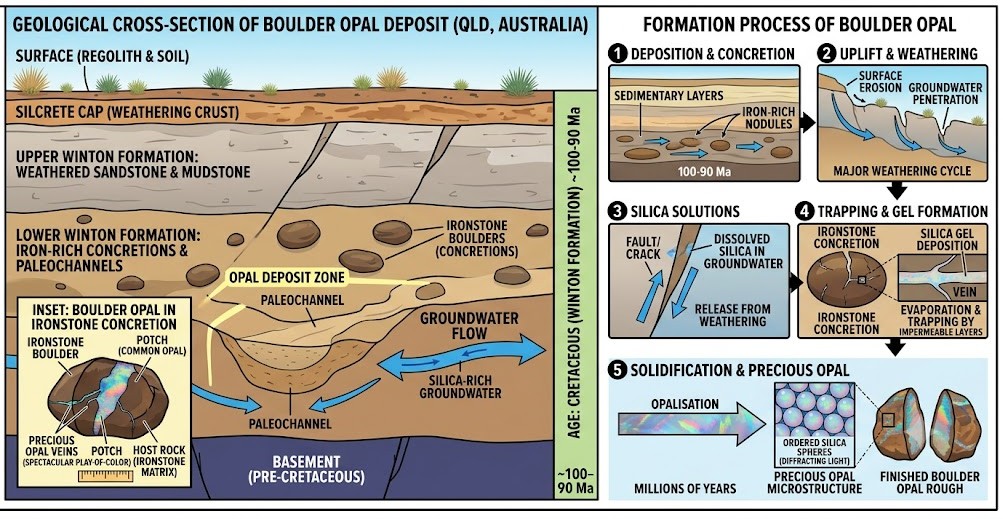
Mining is just reading a book that’s been written in stone over millions of years. You aren’t just looking for a shiny rock; you’re looking for the level. Opal doesn’t just hang out anywhere; it likes the contact points where the ground changed its mind—where the sandstone shifted or the clay settled. When you look at a bore-hole log, you’re looking for the transition zones. I tell the young blokes, don’t just look for color; look for the greasy clay that tells you water once moved through here, carrying the silica that eventually hardened into our prize. It’s a game of patience, tracking these hidden layers across miles of scrub, hoping you catch the vein before it dips too deep for your gear to reach.
This isn’t just about digging; it’s about building an internal map. Every time you sink a shaft, you’re gathering data. You’re recording the depth of the ironstone, the thickness of the sandstone, and the presence of any “potch” or common opal. This information becomes your intellectual capital. You build a mental archive of the terrain, learning where the ground has been disturbed before and where it remains virgin territory. You begin to see patterns in the way the land rises and falls, hidden secrets that only reveal themselves to those who have spent enough time staring at the profile of a fresh excavation. It is an intricate dance of observation and intuition, where you use the tools of modern engineering to confirm what your gut has been telling you all along.
The truth is, even with all this gear and all these maps, the ground still holds the final say. You can do everything right—you can pick the perfect spot, run your blower for months, and spend every cent you have on fuel and maintenance—and still come up with nothing but disappointment. It’s a humbling life, but it’s the only one that lets you sleep at night with the silence of the outback as your blanket. You have to be willing to fail, pack up, and move your whole outfit ten kilometers down the road, all while keeping a smile on your face and a story ready for the next bloke you meet at the pub. The architecture of a claim is built on more than just permits and machinery; it is built on the iron-willed resolve of a miner who knows that the next bucket of dirt might just be the one that changes everything.
You want to know about the Yowah Nut, that little piece of natural alchemy that keeps us all dreaming. It’s not just a rock, mate; it’s a tiny time capsule of the earth’s own kitchen, and cracking one is like opening a letter from a hundred million years ago.
2.0 The Mystery of the Yowah Nut
| Stage | Geological Process | Miner’s Observation |
|---|---|---|
| Formation | Ironstone concretion entrapment | Heavy, round, muddy exterior |
| Infiltration | Silica-rich water migration | Hairline cracks and pockets |
| Solidification | Opaline gel dehydration | “Flash” or play of color |
- Concretion Dynamics: Understanding how iron-rich minerals clustered together in a prehistoric soup long before the opal even arrived.
- Hydraulic Fracturing: Recognizing the natural stress points where water found its way into the heart of the stone.
- The Art of the Crack: Mastering the gentle, deliberate strike needed to reveal the interior without shattering the treasure inside.
2.1 The Prehistoric Soup
Think of the ground we walk on as having once been the bottom of an ancient inland sea. It was a messy, chaotic, beautiful stew of mud, iron, and rotting plant life. As the pressure built up over eons, that mud started to harden into ironstone. Now, the magic happens because these little balls, these Yowah Nuts, formed like marbles in that cooling, shifting sludge. They were hard enough to resist being crushed, but porous enough to catch whatever was washing through the earth’s veins. It’s like the earth was baking a giant loaf of bread and dropping iron-rich raisins into the batter. Every nut is a unique event, shaped by the local pressure and the chemical mix of that specific patch of dirt. Some come out perfectly round, others are jagged little monsters, but they all share that same iron skin that protects the miracle hidden inside.
2.2 The Infiltration of Silica
Now, here’s where the real alchemy starts. After those iron balls were nestled in the clay, the world started to change. The climate shifted, the water tables moved, and that water was carrying silica—the same stuff that makes glass. That silica-rich soup didn’t just wash over the rocks; it looked for a way in. It found every tiny crack, every microscopic hollow, and every air bubble inside those ironstone nuts. Once inside, it sat there, locked away from the rest of the world. It was a long, slow wait. Over millions of years, the water evaporated, the silica hardened into a gel, and then into the precious solid we call opal. If the conditions were exactly right—not too fast, not too hot—that silica turned into something with a fire that can catch the light and split it into every color of the rainbow. It’s a slow-motion magic trick, performed by gravity and chemistry, and we’re just the lucky blokes who get to show up for the final act.
2.3 The Craft of the Reveal
When you’re holding a Yowah Nut in your hand, you’re holding a gamble. You might be holding a piece of muddy rock that’s only good for road fill, or you might be holding a galaxy. The trick is in the “reveal.” You don’t take a hammer and smash it like a common road stone. No, you handle it with the care of a surgeon. You look for the “seam,” the path of least resistance where the ironstone is a bit softer, and you give it a calculated tap. It’s a moment of truth that defines the life of a miner. Sometimes the nut is hollow, just a bunch of dust and disappointment. But sometimes, when you pull the two halves apart, there it is—a burst of neon blue, or a streak of deep, burning red that seems to move as you turn the stone in the light.
That flash of color isn’t just a decoration; it’s a testament to the patience of the earth. I’ve spent months at a time, moving tons of ironstone, and I’ve seen some of the most beautiful stones come out of the most unassuming, ugly-looking nuts. You learn quickly that you can’t judge a stone by its surface. The ironstone skin is a disguise, a tough outer shell meant to keep the world away from the treasure. When you’re out there on the claim, covered in red dust and sweat, that moment of reveal is the only thing that matters. It connects you to the deep time of the earth, a silent reminder that beauty often hides in the most unlikely places, waiting for someone with enough grit to go and find it. It’s not just about the profit; it’s about that shared, quiet wonder of witnessing something that hasn’t seen the sun for a hundred million years.
The process of mining these nuts is as much a mental game as it is a physical one. You have to learn to trust your eyes, to look for the slight variation in the iron tone that hints at something precious inside. It’s an intuition born of experience, a language that the stone speaks only to those who have bothered to learn its dialect. Every crack you make is a lesson, a refinement of your understanding. Some blokes never learn to see it, and they leave the best stones in the mullock heap, thinking it’s just junk. But for the ones who pay attention, the ones who listen to the way the rock sounds when they strike it, the Yowah Nut is the most honest prize in the whole of the outback.
People back in the city often squint at their maps trying to find “The Paroo” as if it’s a dot on a screen. It ain’t a place you visit; it’s a country you inhabit. You’re looking at a vast, red-dirt paddock where the lines between the mine, the home, and the gallery are as thin as a whisper.
3.0 The Geography of the Living Gallery
| Regional Node | Functional Role | Primary Characteristic |
|---|---|---|
| Yowah | The Jewel Box | High-density nut concentration |
| Eulo | The Gateway | Social nexus and storytelling |
| Cunnamulla | The Homestead | Logistics and supply hub |
- Spatial Distribution: How the remote “paddocks” rely on a daisy-chain of support towns to maintain operations.
- The Social Infrastructure: Understanding that the “gallery” exists primarily in the collaborative spirit of the residents.
- Resource Connectivity: Managing the long distances between raw extraction and the final, polished product.
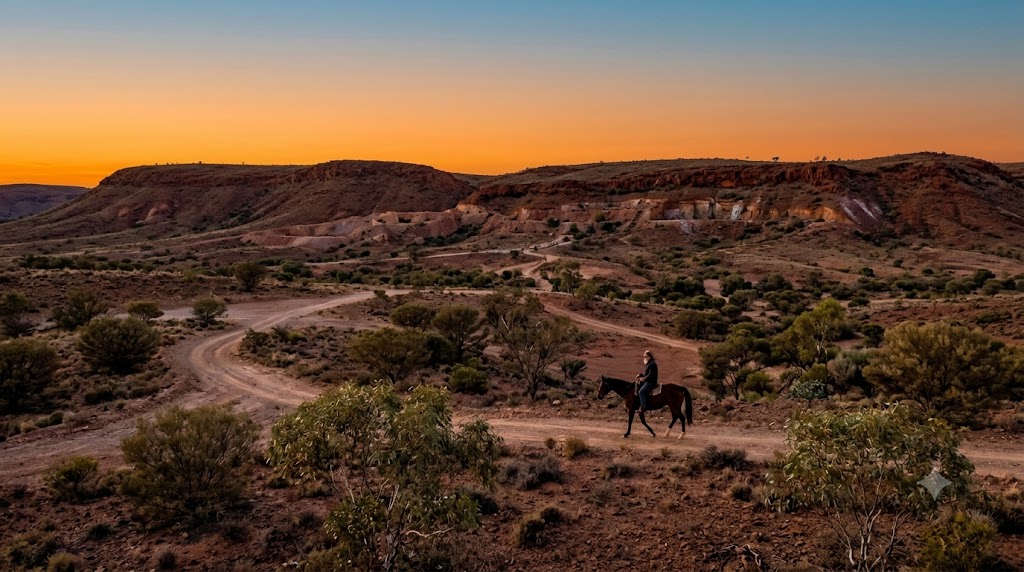
3.1 Mapping the Paddock
When you’re out here, distance isn’t measured in kilometers; it’s measured in “tanks of fuel” and “yarns told.” Yowah is where the magic lives, deep in that ironstone, but you can’t survive on opal alone. You need Eulo for the company and the news, and you need Cunnamulla for the iron, the bearings, and the flour. The geography forces a rhythm on you. You spend your weeks on the claim, focused on the dirt, and then you make the pilgrimage into the hub. It’s a delicate balance. If you stay in the hub too long, you go broke. If you stay on the claim too long, you go stir-crazy. This cycle of moving between the deep, quiet dark of the shaft and the bustling, bright social life of the town is what keeps a man’s head straight in this country. It’s a wide-open grid, but every road is a lifeline.
3.2 The Gallery Without Walls
People ask me where they can go to see the “art” of the Paroo. I tell them to look at the tailgate of a ute. The gallery isn’t a building with air conditioning and quiet footfalls; it’s the rugged, sun-baked landscape where every miner is a curator. We carry our work in our pockets—little leather pouches of polished nuts that we trade and admire under the harsh, honest light of the sun. It’s an organic, living collection. You’ll see a bloke who’s spent forty years digging, and he’ll pull out a stone that would make a jeweler in Sydney weep, and he’ll talk about the specific seam he pulled it from like it was an old friend. This is the real culture of the bush—it’s not on display, it’s in use. It’s a shared heritage, passed from hand to hand over a cold beer, where the value isn’t just in the gold price or the carat, but in the story of the hunt.
3.3 Integrating the Remote
Living out here requires a special kind of logistics. You don’t just “buy” supplies; you orchestrate them. Everything comes into the paddock from hundreds of kilometers away, and everything we extract—the nuts, the potch, the stories—goes back out the same way. It requires a mental discipline to manage your stock, your fuel, and your water without the safety net of urban supply chains. We’ve become our own experts in resilience. When a part breaks on a rig at the claim, you don’t call a technician; you call a neighbor who might have a welder, or you go into town and scour the scrap yard. We are a self-contained unit, a collective of independent thinkers who have recognized that the only way to endure the isolation is to build a web of support that spans the entire district.
The beauty of this way of life is that it forces you to become part of the system. You aren’t just an observer of the Paroo; you are an essential piece of its machinery. Your persistence keeps the claim working, your participation in the town keep the social engine humming, and your willingness to share your knowledge keeps the next generation of fossickers from making the same mistakes you did. It’s a cycle of work and rest, solitude and society, that has defined this land for over a century. You learn to read the signs—the way the dust hangs in the air after a storm, the sound of a neighbor’s truck coming up the track, the slight shift in the color of the earth that tells you the seam is about to run. This is the true “art” of the Paroo. It’s a way of existing in harmony with a landscape that is both cruel and generous, a place where you are constantly tested but ultimately rewarded with a life that is yours, and yours alone. Every day is a masterpiece of adaptation, and every sunset over the plains is a reminder that we’re all just passing through this vast, red gallery, leaving our mark in the dirt before the wind blows it away.
You want to talk about the ‘side-hustle’? Out here, that term sounds a bit too fancy for the truth of it. In the outback, it ain’t a side-hustle; it’s the heartbeat of survival. It’s about being a jack-of-all-trades because the land doesn’t care if you’re a specialist.
4.0 The Art of the Multipurpose Life
| Domain | Primary Function | Secondary Leverage |
|---|---|---|
| Pastoral Work | Stock Management | Land/Claim Access |
| Technical/Mechanical | Tool Maintenance | Contract Fabrication |
| Lapidary/Artisanal | Opal Finishing | Market Value Add |
- Economic Resilience: Spreading risk across multiple income streams to survive lean years.
- Operational Efficiency: Using one set of equipment for multiple tasks, from fencing to excavation.
- Community Interdependence: Trading skills rather than cash to keep the whole operation humming.
4.1 The Myth of the Specialist
If you come out here thinking you’re just going to be a “miner,” you’ll be hungry before the first moon is up. The outback demands a different kind of man. One day you’re fixing a windmill that’s gone dry, the next you’re underneath a crawler tractor trying to figure out why the hydraulics are wheezing, and in the evening, you’re sitting at the bench with a lapidary wheel, turning a dull nut into a fire-filled gem. It’s not about doing one thing perfectly; it’s about doing ten things well enough to keep the engine running. We don’t have the luxury of calling in a repairman from the city. If it breaks, you fix it, or you learn to live without it. This isn’t just stubbornness; it’s a necessary adaptation to a place where help is four hours away and the rain is just a rumor.
4.2 The Mechanics of Utility
Everything here has to work harder. Look at our trucks. They aren’t just for hauling opal; they’re our mobile workshops, our supply lines, and sometimes our sleeping quarters when we’re out on a prospecting run. We treat our gear like partners. We maintain them with a level of religious fervor because a dead engine in the middle of a heatwave isn’t just an inconvenience—it’s a threat. This philosophy of utility carries over to how we think about our own time. We don’t distinguish between “work” and “life” the way the city folk do. When you’re at the claim, you’re working. When you’re at the shed repairing the fence, you’re working. Even when you’re out checking the boundaries of a neighboring station for a mate, you’re working to keep the social fabric intact. It’s a seamless flow of activity that keeps the mind sharp and the body moving.
4.3 Value-Added Survival
The real secret to not just surviving, but thriving, is adding value at every step. You don’t just pull an opal out of the ground and sell it as a raw, dusty rock. You learn to polish it. You learn to mount it. You learn to tell the story of where it came from. By taking that raw material and turning it into a finished piece of jewelry, you’re turning a day’s labor into a week’s worth of security. You’re becoming an artist, a merchant, and a strategist all in one. It’s the same with our land. We might run a few head of cattle on a lease while we’re waiting for the next strike. We use the tools we have for the work that needs doing, always looking for that second or third way to make the ground pay its rent.
This approach breeds a specific kind of confidence. When you know you can fix your own tractor, find your own water, and polish your own stones, you don’t look to the government or the big corporations for your answers. You look to your own two hands. The outback rewards this kind of self-reliance. It respects the man who can adapt, who can pivot when the weather turns or the market dips. You learn that the world is a complex, shifting system, and your best defense is your ability to change your tactics as fast as the landscape itself. It’s a rhythmic, honest way of living, one that isn’t measured by a clock, but by the work completed and the satisfaction of knowing you’ve provided for your own. Every piece of equipment, every skill you pick up, and every connection you make with a neighbor is another brick in the wall you’re building against the unpredictability of this country. It’s not about grand plans or big exits; it’s about the quiet, steady persistence of a man who knows exactly what he’s doing and exactly why he’s doing it. And honestly, there’s no better feeling than looking out over your paddock at the end of a long day, knowing you’ve squeezed every bit of potential out of the dirt, the machines, and yourself.
The wind out here carries more than just dust; it carries the ghosts of every dreamer who ever swung a pick. You think you’re just moving dirt, but you’re actually building a legacy, one tall tale at a time. The Paroo is held together by more than just red tape; it’s held together by the folklore we swap around the campfire.
5.0 The Folklore of the Frontier
| Role | Function in Frontier Society | Cultural Impact |
|---|---|---|
| The Legend | Defining community standards | Sets the bar for behavior |
| The Yarn | Processing hardship through humor | Reduces individual isolation |
| The Campfire | Forging social cohesion | The bedrock of trust |
- Social Currency: Recognizing that a well-told story is often more valuable than a pouch of low-grade stone.
- Mediating Conflict: How legendary figures like the Eulo Queen maintained order where formal laws couldn’t reach.
- Psychological Resilience: Using communal storytelling to combat the immense mental toll of isolation.
5.1 The Weight of the Legend
Every region has its giants, and out here, those folks were the ones who kept us from flying apart. Take the Eulo Queen. She wasn’t just a hotelier; she was the referee, the banker, and the confessor for a whole generation of rugged individualists. In a land where everyone thinks they’re the king of their own castle, you need someone who commands enough respect to keep the peace. Legends like hers provide the scaffolding for our society. They remind us that while we might be out here chasing our own fortune, we belong to a larger web of history. We follow the rules of the frontier not because a government inspector says so, but because that’s the way we’ve always done it, and because we don’t want to be the subject of the next cautionary yarn told at the bar.
5.2 The Currency of the Yarn
Out in the bush, a good story is worth more than a cold beer on a hot day. When you’ve been underground for weeks, hearing nothing but the hum of the blower and the thud of the pick, your brain starts to itch for a bit of human connection. We trade yarns like gold bullion. You tell me about the time you hit a wall of clay instead of a vein, and I tell you about the time my motor blew a gasket three miles from the main road. By sharing our failures, we turn them into lessons, and by sharing our successes, we give everyone else a bit of hope. It’s an informal exchange system that’s been running since the first shafts were sunk. It levels the playing field—it doesn’t matter if you’ve got a thousand-acre claim or a small plot in the town common; if you can tell a good story, you’re someone worth listening to.
5.3 The Campfire as a Social Engine
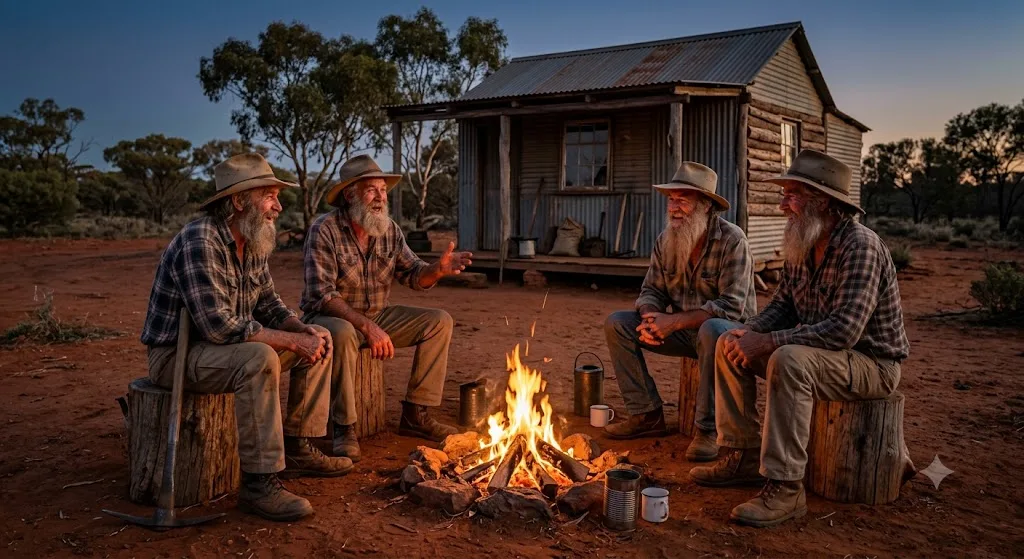
The campfire is our boardroom, our courtroom, and our church. It’s where the real decisions get made and the real business gets done. When we gather round, the hierarchy melts away. You might be a greenhorn or a veteran, but in the circle of the firelight, you’re just another soul trying to make a living off the land. This is where we build the trust that allows us to help each other out when things go pear-shaped. If I know you, and I know your story, I’m going to be the first one to pull you out of a bind if your gear fails. This social cohesion is the only reason we’re still here. It keeps us from going stir-crazy, it provides a safety net that no insurance company could ever replicate, and it gives us a shared identity that stretches back through the decades.
Mining is a lonely, brutal business at the best of times, and it’s the brotherhood of the drill bit and the sisterhood of the sieve that keeps a man from losing his grip. You go underground every day, staring into the dark, wondering if you’re throwing your life away. But then you come up at night, look at the fire, and see the faces of the folks who are doing exactly the same thing. You realize you’re not alone. The folklore of the frontier isn’t just about preserving the past; it’s a living, breathing mechanism for surviving the present. It teaches us how to be human in a place that is fundamentally indifferent to our existence. Every time you listen to an old-timer spin a yarn, you’re learning the rules of survival—how to handle the heat, how to treat the stone, and how to hold your head high even when the ground gives you nothing but dust. It’s a beautiful, hard-won existence, and the stories we tell are the monuments we build to our own persistence. So, next time you see a group of us sitting around, don’t walk past; come on over and pull up a stump. You might just find that the best piece of treasure you come away with tonight isn’t in a pouch, but in your memory.
The sun is hitting the red earth in that way that makes you think of old ghosts, but there’s a new rumble in the distance—caravans and city folks looking for a bit of magic. The game has changed, mate, and it’s time we talked about the gamble of the modern era.
6.0 The Modern Prospector’s Gamble
| Variable | Traditional Context | Modern Context |
|---|---|---|
| Access | Open, handshake claims | Regulated, permitted leases |
| Knowledge | Oral lore and intuition | Digital mapping and geo-data |
| Audience | Other local miners | Global geo-tourists |
- Regulatory Shift: The transition from the “Wild West” mentality to a structured, audit-heavy operational environment.
- Educational Burden: The modern miner’s role as part-time historian and guide to the “grey nomads” rolling in.
- Digital Transparency: How the secrets of the earth are now being mapped and monitored by outsiders looking in.
6.1 The New Landscape of Rules
In the old days, you found a patch, you pegged it, and you worked it. Nobody asked questions if you kept your nose clean. Today, the world is peering over our shoulder. We’ve got permits, environmental levies, and more paperwork than a tax accountant. It’s a shock to the system for those of us who grew up on the “handshake” method of land management. But here’s the rub: those rules are the only thing keeping the industry from being trampled. As the demand for experience-based tourism grows, the ground needs to be managed, or it’ll get ruined by folks who don’t know how to tread lightly. We aren’t just mining rocks anymore; we’re mining the experience of the land, and that requires a level of diplomacy that the old-timers never had to bother with.
6.2 The Miner as a Guide
You can’t just be a digger anymore; you’ve got to be a bit of an educator. When you’ve got someone from the city pulling up in a caravan, asking you about the “flash of fire” they saw on a YouTube video, you’ve got to switch gears. You become the face of the field. You’re telling the story of the prehistoric inland sea, explaining why the ironstone nut is a miracle of chemistry, and showing them how to spot the difference between a bit of common potch and the real deal. It’s exhausting, to be honest. You’re in the middle of a long, hot shift, and you’ve got to stop, wipe the dust off your face, and explain the whole thing all over again. But it’s vital work. If we don’t teach the newcomers to respect the ground, they’ll ruin the very resource that keeps our towns alive.
6.3 The Digital Frontier
The biggest change is how visible we’ve become. Everything is mapped. Governments are using satellites and geo-scanners that can see patterns in the ground that we used to spend lifetimes learning by touch. It makes the “gamble” feel a bit different, doesn’t it? It’s not just a secret between you and the bedrock anymore; it’s a data point on a government dashboard. But even with all the satellite imagery in the world, the ground hasn’t changed. It’s still just as stubborn. The data might point you to a potential zone, but it can’t tell you the heart of the stone. You still have to get down there, you still have to deal with the heat, and you still have to have the nerve to keep digging when the indicator is dry.
The hard truth is that the romance of the frontier is being slowly replaced by the logistics of the modern economy. We aren’t just out here “chasing the dream”; we’re managing assets, balancing ledgers, and answering to inspectors. It can feel like a heavy weight on a man’s shoulders. But then, every once in a while, you’ll be out on a claim at dusk, the rest of the world forgotten, and you’ll split a nut open. And for that one split second, none of the permits or the GPS coordinates matter. It’s just you and the earth, and that flash of color that hasn’t seen the sun in a hundred million years. That feeling—the raw, unfiltered joy of the discovery—that’s the one thing they haven’t been able to digitize or regulate yet.
As long as that feeling exists, the mining game will survive. We might be wearing different hats now—part miner, part businessman, part tour guide—but the soul of the business remains the same. We’re still the folks who look at a pile of dusty rocks and see a universe waiting to be revealed. It’s a gamble, yes, but it’s a gamble on your own grit and the hidden bounty of this wild, ancient country. You walk that line every single day, balancing the weight of the modern world against the timeless silence of the plains. It’s a hard, complicated existence, and it’s definitely not for everyone. But for those of us who’ve tasted the dust and found the fire, there’s no other life worth living. So, tell me, after all this talk of machines and red tape and the shifting winds of the outback, are you feeling the itch to go grab a shovel, or are you happy watching from the sidelines with your cuppa?
Pour yourself another cuppa, mate, and lean in. We’re talking about the march of progress now. We’ve traded the blistered palms of the old days for the roar of hydraulic steel, and while it’s saved our backs, it’s changed the very rhythm of the earth itself. It’s a story of how we brought the twentieth century kicking and screaming into the red dust.
7.0 The Shift from Pick to Power (1986–2026)
| Technology | Primary Function | Operational Impact |
|---|---|---|
| Hand Winches | Vertical extraction | High physical exertion, slow |
| Industrial Blowers | Bulk material removal | High output, high noise/dust |
| Hydraulic Drills | Strategic penetration | Precision and depth |
- Mechanical Substitution: How automation replaced muscle, turning miners into equipment mechanics.
- Land Alteration: The unintended consequence of efficient extraction: a landscape reshaped by craters and tailings.
- Maintenance Logistics: The challenge of keeping complex machinery running in the most remote corners of the continent.
7.1 The Blower Revolution
Back in the mid-80s, the “bush telegraph” was how we kept track of who hit color, but the real change came when we stopped pulling dirt up by the bucket and started sucking it up by the ton. The blower is essentially a giant industrial vacuum. It changed everything. Suddenly, you weren’t limited by how much dirt you could haul up in a day; you were limited by how fast you could loosen the ground down at the bottom. It made us faster, yes, but it also made the work louder, hotter, and more frantic. You’re no longer just a miner; you’re a blower-operator, a pipe-fitter, and a dust-mitigation expert. The quiet of the bush was replaced by the constant, aggressive drone of the engine, and the landscape started changing, too, as massive mounds of mullock piled up around every shaft.
7.2 Engineering the Outback
As we brought in more steel, we had to get smarter. We started using hydraulic bucket drills to sink deeper, cleaner holes. It wasn’t just about digging anymore; it was about surveying the subterranean structure with precision. But here’s the rub: the more complex your gear, the more ways it has to fail. If you’re a thousand clicks from the nearest city and your hydraulic seal blows, you don’t call a repair crew. You’re the repair crew. We all had to become shade-tree mechanics, learning to weld, troubleshoot electrical circuits, and re-engineer parts out of scrap just to keep the operation from grinding to a halt. It added a whole new layer of stress—you’re constantly worried about the machinery, not just the ground.
7.3 The Double-Edged Sword of Efficiency
The shift to power changed our relationship with the land. When you work with a pick, you feel every layer, every change in the density of the soil. You’re in a conversation with the earth. When you’re sitting on top of a blower, you’re in a battle with it. You’re forcing the ground to give up its secrets at high speed. It’s more efficient, sure, but it’s less intimate. And the landscape shows it. We’ve turned the plains into a lunar surface of hills and craters, a testament to our efficiency that will take years for the bush to swallow back up. We’ve traded the slow, meditative pace of the past for the high-octane pace of the present, and there’s no going back.
This is the price of modern mining. We’ve gained the ability to reach levels that were once impossible, and we’ve made the job safer for our backs, but we’ve lost the quiet simplicity that defined the old days. We are now business owners of a high-capital operation, constantly monitoring our fuel consumption, our equipment wear-and-tear, and our production rates. The “dream” is still there, waiting in the bottom of a hole, but it’s buried under a mountain of steel and engine oil. The challenge for us today isn’t just finding the color; it’s keeping the machine running long enough to reach it without losing our minds in the process. It’s a different kind of endurance test. You’ve got to be as tough as the rock you’re drilling into, and as precise as the electronics that help you find your way. But at the end of the day, when you shut down that engine, the silence that rushes back into the paddock feels the same as it did forty years ago. That silence is the only thing the machines haven’t managed to change. It’s a reminder that no matter how much steel we bring to the field, the land is still the one in charge. We’re just guests, making a bit of noise on the surface, hoping to find a small piece of beauty in the dark. So, is that enough on the evolution of our gear, or are you ready to dive into the headaches that come with the modern regulatory burden?
Pull up a stump and let’s talk about the real reason the old-timers are always cursing into their tea. It isn’t the heat and it isn’t the dry spells. It’s the paper. Forty years ago, you could claim a patch of dirt with a handshake and a bit of good faith. Today, we’re dancing a much more complicated rhythm.
8.0 The Red Tape and the Reality
| Regulatory Area | Historical Status | Modern Requirement |
|---|---|---|
| Claim Pegging | Handshake & intent | Surveyed lease & permit |
| Site Safety | Personal discretion | Mandatory compliance audits |
| Environmental | Leave as you found | Rehabilitation bonding/plans |
- The Compliance Shift: How the “Wild West” era of mining evolved into a highly managed and audit-driven industry.
- The Administrative Burden: The necessity of becoming part-time bookkeeper and safety officer just to maintain your lease.
- Native Title & Heritage: Why respecting the history of the land is the most critical part of the modern mining process.
8.1 The End of the Handshake
There was a time when the only law out here was the one you wrote in the dirt. You’d find a promising spot, set your boundaries, and as long as you were fair, nobody bothered you. Those days are gone, and for good reason, I suppose. The world’s caught up to us. Nowadays, you’ve got inspectors mapping your claims, checking your air quality down in the shafts, and making sure you aren’t dumping your tailings in the wrong paddock. It’s a shock to the system for any bloke who’s used to working solo, but it’s the price we pay for keeping the field open. You don’t just work the dirt anymore; you work the system. If you aren’t ready to spend your evenings filing reports and your mornings double-checking your compliance logs, you’re not going to last the season.
8.2 The Cost of Keeping the Game Alive
It sounds like a drag, but this red tape is what keeps the industry from being shut down by the suits in the city. When you’ve got environmental responsibilities—like making sure your chemicals are contained or that you’re planning how to fill that shaft back in once you’re done—you’re showing the rest of the world that we care about the land we’re taking from. It’s a bit of a bitter pill, especially when you’re just trying to find a bit of color to pay the bills, but it’s the reality of the 2026 outback. You have to be a diplomat now. You have to explain to the government, the neighboring station owners, and the folks holding native title that you know what you’re doing and that you’re going to be a good neighbor.
8.3 Bridging the Old and the New
The hardest truth for us old-timers is that you can’t fight the system; you have to learn to speak its language. The young ones coming up now, they understand this. They’re coming into the field with laptops and mapping software, already knowing that their lease is only as good as their paperwork. It’s a different kind of mining, for sure. You’re spending as much time in the office as you are on the claim. But look at the bright side: it’s made the field a lot more stable. You’ve got more certainty now than we ever did. You aren’t constantly looking over your shoulder wondering if someone’s going to dispute your claim or if the council’s going to shut you down. It’s not “wild” anymore, but it is enduring.
Managing your lease isn’t just about the gem; it’s about the legacy you leave in the books. When you manage your site properly—when you follow the rules and show respect for the landscape—you aren’t just a miner; you’re a steward. That’s a title that carries a lot more weight than “digger” ever did. It means you’re looking at the long term. You’re thinking about the impact of your work not just on your wallet today, but on the land for the next bloke who comes along. It’s a shift in mindset, from exploitation to management, and it’s the only path forward. So, while I’ll always miss the freedom of the old days, I can’t help but see the sense in how we’re doing things now. We’re finally treating this country with the respect it’s deserved all along. It makes the work harder, no doubt, and it takes a bit of the “romance” out of the hunt, but it’s the honest way to make a living in a world that’s no longer just our own. And at the end of the day, isn’t that what we’re really after—a fair shake and the chance to keep digging until we find that spark in the dark?
The Paroo River
by Henry Lawson
They say that the river is dry in the beds, Or it’s a chain of ponds; That the ‘brolgas’ dance on its dusty floor, And the drought is of the bonds. But I know that the Paroo is a river of life In the heart of the thirsty West, For I’ve felt the thrill of its cooling touch When the sun was in the West.
It comes from the far-off Queensland hills, Where the mulga is thick and green, And it winds its way through the sandy plains, With a silver, shimmering sheen. It doesn’t rush with a roar and a dash, Like the rivers of southern lands, But it creeps along in a silent tide, Over the shifting, golden sands.
And the cattle come from the dusty tracks, With their tongues out, long and dry, And they plunge their heads in the cooling flood Beneath the burning sky. And the thirsty traveler, worn and spent, With a heart that is full of woe, Finds peace and rest in the shadows deep, Where the river waters flow.
Oh, give me a camp by the Paroo’s side, Where the stars are big and bright, And the wind blows soft through the river-gums In the stillness of the night. For the world is wide and the cares are great, But the heart is light and free, When the spirit is soothed by the Paroo’s breath, And the river is home to me.