1.0 THE ALCHEMY OF THE EARTH: HOW OPAL IS BORN
authored by | Identity:did:plc:hqgxupttuyvfmnwxwkxzaz7o
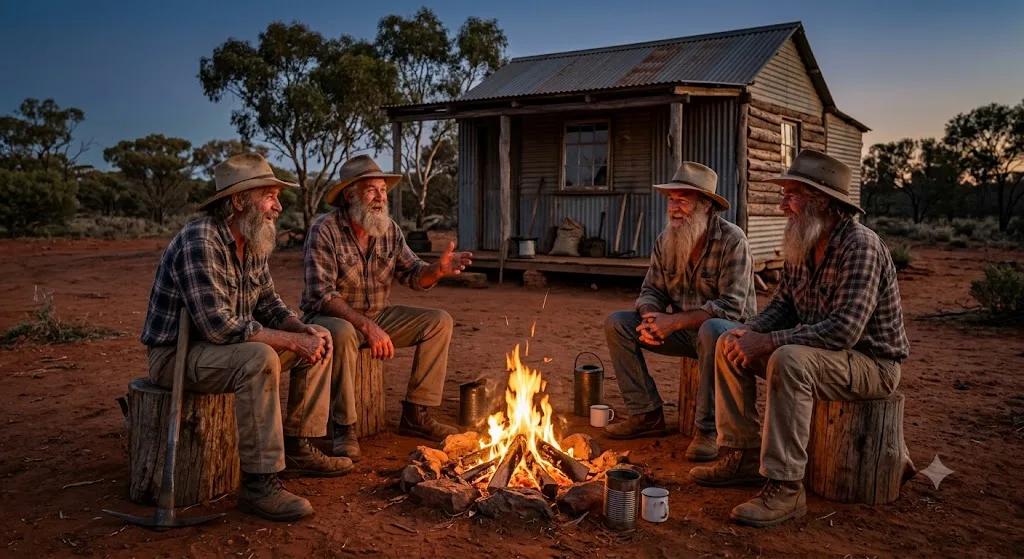
Pour yourself a cuppa, mate, and listen to the wind out here on the plains while I tell you how Old Mother Nature cooks up the finest treasures hidden right beneath our boots.
| Geological Setting | Mineral Composition | Time Horizon |
|---|---|---|
| Great Artesian Basin & Basaltic Flows | Amorphous Silica Hydrate & Corundum Crystals | Cretaceous Period to Cenozoic Volcanics |
- Host rock matrices include weathered sandstone, claystone, and vesicular basalt.
- Secondary enrichment processes rely on intense seasonal arid-humid climate cycles.
- Structural traps comprise fault lines, bedding planes, and decomposing ancient fossils.
1.1 THE CREATION OF OPAL
1.1.1 The Inland Sea and the Great Ancient Soak
Pull up a stump, mate, and let us wander back some hundred million years ago, long before the road trains were kicking up dust on the red plains. Back then, the vast, dry heart of Australia was actually a massive, shallow inland body of water called the Eromanga Sea. This was not a pristine tropical paradise, but a thick, soup-like sea teeming with prehistoric life, surrounded by a landscape that was weathering down under a relentless sun. Over millions of years, the mountains to the east washed down into this basin, depositing immense layers of sandstone and clay that were absolutely packed with silica-rich minerals. When that great sea finally dried up and left the land high and dry, it kicked off a slow-motion natural alchemy that defies belief. The ground began to weather deep down into its bones, and the silica inside the rock started to dissolve into the groundwater, creating a thick, sticky liquid that was essentially a subterranean silica jelly. This jelly was not just sitting idle; it was looking for a home, migrating through every tiny crack, fault line, and hollow space it could find in the deep, dark layers of the earth.
1.1.2 The Microscopic Marble Match
Now, this is where the real magic happens, though if you ask an academic, they will start throwing terms at you like non-crystalline amorphous silica structures. To an old digger like me, it is much simpler: imagine a massive truck tipping billions of microscopic glass marbles into a tight trench. If those marbles are all different sizes and scattered about like a dropped box of matches, you get nothing but common opal, what we call potch. It is dull, grey, or white stuff that has no play of color at all, and it is the heartbreak of many a long year underground. But every now and again, when the conditions are just right and the earth keeps a perfectly steady temperature for millions of years, those tiny silica spheres settle down in absolute perfection. They stack themselves up in neat, orderly rows and tiers, exactly like oranges piled up on a fruit shop display. When the sun finally hits that perfect arrangement after we blast it out of the face, the light bounces through those rows of tiny marbles, bending and splitting into the most magnificent reds, blues, greens, and oranges you have ever seen. The size of the spheres dictates the color you get: the smallest ones give you the deep blues, while the rarest, largest spheres split the light to show the fiery, bleeding reds that make a miner’s heart skip a beat.
1.2 THE SEDIMENTARY ALCHEMY: GEOLOGICAL FOUNDATIONS AND OCCURRENCE
authored by | Identity:did:plc:hqgxupttuyvfmnwxwkxzaz7o
Pour yourself a cuppa, mate, and listen to the wind out here on the plains while I explain the deep, silent mystery of how this white desert dirt cooked up the world’s finest flashes of color.
| Geological Unit | Lithological Composition | Primary Gem Habits |
|---|---|---|
| Rolling Downs Group (Cretaceous) | Kaolinized claystones, siltstones, porous sandstones | Horizontal runs, vertical flash, fossil pseudomorphs |
- The stratigraphic sequence is protected by a dense, silicious Tertiary silcrete cap known locally as caneegie.
- Deep weathering profiles under acidic conditions leached silica from feldspars to feed the subterranean traps.
- The legendary opal pineapples represent a rare double-pseudomorph replacement after freezing-temperature ikaite crystals.
1.2.1 STRATIGRAPHY AND THE ANCIENT SEA BED
1.2.2 The Eromanga Basin Profile
Pull up a stump, mate, and let us cast our minds back some hundred and ten million years, long before the first pick ever struck a stone in western New South Wales. This dry, baked landscape where the saltbush clings to the dust was once the floor of a terrifyingly cold, massive inland sea known as the Eromanga. We were sitting way down near the Antarctic circle back then, and this epicontinental body of water was a quiet, restricted basin filled with fine-grained muds, silts, and sands washed down from ancient eastern ranges. The rock layers left behind belong to what the geologists call the Rolling Downs Group, a thick sequence of fine sandstones, sandy siltstones, and laminated claystones. Over millions of years, these sedimentary beds were compressed, tilted ever so gently to the east, and eventually raised up out of the water by the slow flexing of the continent’s crust. When you stand out on the diggings today, you can see how the tributaries of the Paroo River and Bunker’s Creek have carved into this ancient tableland, leaving flat-topped mesas and undulating ridges rising twenty to a hundred feet above the surrounding gibber plains. Where the weather has stripped away the topsoil, it leaves these striking, bone-white scars along the escarpments, a dead giveaway that gave the field its name.
1.2.3 The Bleaching of the Claystone
Now, if you look at that raw white sandstone face, it looks like ordinary blackboard chalk, but there is a profound chemical story written into that whiteness. During the Tertiary and Quaternary periods, this flat landscape was subjected to millions of years of intense, deep continental weathering. The driving force was an alternating climate that swung from soaking wet tropical deluges to long, scorching droughts. As oxygenated, acidic rainwater trickled down through the upper crust, it aggressively attacked the minerals inside the sedimentary beds, particularly the feldspars and detrital quartz. This process completely leached out the organic matter, iron, and soluble bases, leaving behind a heavily altered rock composed mostly of kaolin—a pure, fine white clay. This kaolinization turned the sandstone into an incredibly porous, stable matrix. It created a subterranean sponge that was uniquely prepared to receive and hold the silica-rich liquids that would later follow. To an old miner, this soft white ground is a blessing; it is stable enough to tunnel through without timber shoring, yet soft enough to yield to a hand pick without sparking or fracturing the precious gems hidden within its layers.
1.3 THE GEOCHEMICAL PRECIPITATION SEQUENCE
1.3.1 The Downward Migration of Orthosilicic Acid
To understand how the gem itself got into that white clay, you have to picture the earth acting as a massive, low-temperature chemical refinery. As that acidic rainwater dissolved the silicate minerals in the upper sandstone profiles, it became heavily charged with soluble silica, known technically as orthosilicic acid. This was not a roaring torrent of liquid; it was an incredibly slow, molecule-by-molecule percolation. The silica-rich solution migrated downward through the earth’s plumbing system, utilizing every minor fault, vertical shrinkage joint, and horizontal bedding plane it could find. It was a gravity-driven journey looking for a dead end. Eventually, this traveling solution would hit an impermeable hydrologic trap—typically a highly compacted, unweathered grey marine shale or a tight, swelling bentonitic clay layer deep within the Cretaceous sequence. Unable to go any further down, the silica-rich water began to pool under gentle pressure inside the structural cracks and horizontal separations of the weathered kaolinized sandstone.
1.3.2 The Solidification of Monodisperse Spheres
Once the liquid was trapped, the real magic of time and temperature took over. During the long, arid cycles of the Tertiary period, the water table slowly dropped and evaporated, causing the pH of the trapped solutions to neutralize and the silica concentration to rise past the critical saturation point. The solution transformed from a clear liquid into a highly viscous, sticky silica polymer gel. Over thousands of years of absolute, undisturbed tectonic stability, microscopic spheres of amorphous silica began to precipitate out of this gel, settling slowly under the gentle pull of gravity. For precious opal to form, these spheres must be remarkably uniform in size—what the scientists call monodisperse—ranging strictly between 150 and 300 nanometers in diameter. If the spheres are uneven, disorganized, or mixed up like a dropped box of matches, they solidify into common potch, which has no color play at all. But when the spheres are perfectly uniform and settle into a flawless, orderly three-dimensional close-packed lattice, they create a natural diffraction grating. When visible white light passes through this structured network, it is split into its component spectral colors. The smaller spheres diffract the shorter wavelengths to give you blues and purples; the larger spheres, which take much longer to grow without disruption, split the light into the magnificent, fiery greens, oranges, and highly prized reds that make a miner’s fortune.
1.4 GEOMETRIC HABITS AND EXOTIC SPECIMENS
1.4.1 Seam Runs and Vertical Flash
The early old-timers at White Cliffs didn’t know about nanometers or lattices, but they were absolute masters at reading the structural habits of how the stone lay in the ground. They found that the most commercially viable deposits occurred as horizontal sheets or seams known as “runs.” These sheets formed directly within the horizontal bedding planes of the claystone where the rock layers had naturally parted or slipped during basin settlement. These runs could range from a fraction of an inch to several inches in thickness, running flat and true for dozens of feet through the hillsides. This predictability was the secret to White Cliffs’ commercial success; a miner could find a run and carefully trace it laterally through the sandstone with a hand pick, producing clean, flat slabs of seam opal that were perfect for the jewelry houses of Europe to cut into matching suites. Intersecting these flat runs were the “verticals” or “flash” deposits—coatings of opal that traced the vertical shrinkage cracks and stress joints that opened up as the ancient muds dried out. While these vertical flashes were often thin and delicate, the immense pressure of the closing rock faces forced the silica spheres into exceptionally tight lattices, producing an explosive, directional play-of-color that seemed to jump out of the stone when turned in the hand.
1.4.2 Fossil Replacements and the White Cliffs Pineapple
Because these weathered sandstones were originally the muddy floor of a prehistoric marine world, they were absolutely packed with the remains of ancient life—shells, bones, wood, and marine reptiles. As the acidic groundwater moved through the beds, it didn’t preserve the organic structures; instead, it dissolved the original calcium carbonate and bone material, leaving behind perfect, hollow molds in the surrounding clay matrix. Later on, the migrating silica gel seeped into these empty spaces, acting via a molecule-by-molecule replacement process known as pseudomorphism. The gel hardened inside the cavities, creating fully opalized fossils that retained the exact external morphology of the original prehistoric organism. Diggers would open up a pocket and find glowing, iridescent bivalves, serrated plesiosaur teeth, internal chambers of ammonites, and ancient belemnite guards that looked for all the world like colorful glass darts. But the undisputed crown jewel of White Cliffs mineralogy is the famous “opal pineapple.” These spectacular, multi-pointed starburst structures are examples of double-pseudomorphism. During the freezing conditions of the Cretaceous Eromanga Sea, crystals of a rare mineral called ikaite grew in the cold, nutrient-rich muds. Ikaite is highly unstable and can only exist at near-freezing temperatures; as the climate warmed, it lost its hydration water and turned into a porous calcite structure called glendonite, preserving the sharp, spiky crystal cluster. Millions of years later, the Tertiary acidic groundwater dissolved that calcite entirely, leaving a perfect, complex hollow mold in the white claystone. When the precious silica gel filled that spiky void and solidified into a close-packed sphere lattice, it created a shimmering, multi-colored gemstone cluster that mirrors the crystal habit of an ice-mineral born a hundred million years before. They are incredibly rare, mathematically narrow in their conditions of formation, and remain among the most coveted treasures in the global gem world.
2.0 THE CHANCE SPARK IN THE DUST: DISCOVERY AND GENESIS (1884-1890)
authored by | Identity:did:plc:hqgxupttuyvfmnwxwkxzaz7o
Pour yourself a cuppa and listen to the wind out here on the plains while I spin you the yarn of how a stray hoof-strike changed the Australian outback forever.
| Key Milestone | Primary Figures | Historical Impact |
|---|---|---|
| The Momba Station Floaters (1884) | Anonymous Station Hands & Boundary Riders | First documented presence of surface precious opal in NSW outback. |
| The Kangaroo Hunters’ Strike (1889) | Hooley, Richardson, Brooks, & Turner | Commercial catalyst proving massive, shallow horizontal gem runs. |
| The London Market Breakthrough (1890) | Tullie Cornthwaite Wollaston | Broke Hungarian monopoly; established global trade infrastructure. |
- Early surface pieces were dismissed as worthless curiosities due to the dominant Broken Hill silver rush.
- The 1889 drought forced workers into remote ridges where erosion had exposed the claystone profile.
- The original mineral leases were staked under generic regulatory categories before opal laws existed.
2.1 THE UNREGARDED FLOATERS
2.1.1 The Wandjiwalgu Corridor and the Pastoral Frontier
Now, if we are going to look at how this frontier field came to be, we have to understand the land as it was before the white pick-marks scarred the hillsides. For thousands of years, the Wandjiwalgu people moved through this dry country. They did not settle down permanently on the ridges, and you can’t blame them; there is no permanent water out there, just a baking, relentless heat that shimmers off the gibber plains. They used the area as a travel corridor, a path to get from the deep interior back down to the life-giving waters of the Darling River. They knew the stones, alright, but they were looking for tool-making material, hard silcretes and cherts that could hold an edge, not the colorful, brittle glass that we old diggers sweat blood for. By the mid-1880s, the big pastoral companies had pushed out into this hard country, carving up the wilderness into massive sheep runs. The biggest of the lot was Momba Station, a kingdom of dirt so massive you could ride for days and never see the boundary fences. It was a lonely, quiet existence for the boundary riders and stock-hands who patrolled those outer paddocks, with nothing but the crows and the saltbush for company.
2.1.2 Shadows of the Silver Boom
Around 1884, some of these station hands started finding what we call floaters lying around on the low, stony hills. These were pieces of precious opal that had weathered out of the Cretaceous claystone over millions of years, washed clean by the rare desert downpours until they lay twinkling on the surface like fallen stars. The blokes picked them up, turned them over in their calloused hands, and marvelled at the colors, but they did nothing about it. You see, the whole of New South Wales was stark raving mad with silver and gold fever back then. Just a short trip down the track, the massive silver-lead-zinc lodes of Broken Hill had just been uncovered in 1883, and every man, horse, and dollar was rushing down there to make a quick quid in the hard-rock mines. Next to a mountain of solid silver, a few pretty, colored rocks found in the middle of nowhere looked like nothing more than worthless curiosities. They ended up on station hut mantels or in the pockets of children’s trousers, completely unappreciated for the immense wealth they represented, while the great sedimentary beds slumbered on under the dust.
2.2 THE KANGAROO HUNTERS’ FORTUNE
2.2.1 A Stray Hoof on Moomba Hill
The real turning point came in the blistering summer of 1889, and it took a terrible drought to bring it about. The country was as dry as a dead bird’s nest; the waterholes were disappearing, and the sheep were dying in the paddocks. To save what little feed was left, the managers of Momba Station hired a group of kangaroo shooters to clear out the native game that was competing with the livestock for the drying scrub. This party—made up of George Hooley, Alf Richardson, Sam Brooks, and a boundary rider named Charlie Turner—was out working the low ridges near Moomba Hill, tracking a mob through the heat. They were not looking for gems; they were focused on their sights and their horses. But as they chased a wounded roo up over a bare, white escarpment, one of the horses struck its hoof hard against a loose rock. When the stone rolled over in the blinding desert sunlight, it did not just sit there grey and dead; it flashed a fierce, bleeding red and blue right into the eyes of the riders. The hunters pulled up their mounts, jumped down into the dirt, and started scraping at the loose soil with their pocket knives. Within an hour, their pockets were heavy with some of the cleanest, brightest seam opal the world had ever seen.
2.2.2 The Adelaide Connection
The shooters knew they had something extraordinary, but they had no idea how to turn a handful of stones into real money in the middle of the outback. They took their little bag of colorful rocks to Charlie Turner, who had a bit of a sharp eye for surveying and land forms. Turner could see that this was not ordinary river gravel, so he packed the parcel up carefully and sent it off down to Adelaide, which was the closest city with any real mineralogical expertise. The package landed squarely on the desk of a young bloke named Tullie Cornthwaite Wollaston. Now, Tullie was only twenty-six years old at the time, but he had a vision that stretched way beyond his years. He was already dealing in quartz and minor gemstones, and the moment he tipped that White Cliffs parcel out onto his sorting cloth, his jaw hit the floor. He had seen the old Hungarian opals that had ruled the European jewelry houses for centuries, but those stones were thin, cloudy, and temperamental. The pieces lying before him from the New South Wales desert were thick, stable, and possessed a wild, liquid brilliance that looked like living fire captured in glass.
2.3 THE JOURNEY OF TULLIE WOLLASTON
2.3.1 The Buckboard Expedition
Wollaston did not waste a single heartbeat. He knew that if word of this find got out to the big syndicates in Sydney or Melbourne, an independent dealer like him wouldn’t stand a snowflake’s chance in hell. He packed a basic kit, jumped on the next train north, and when the rail lines ran out, he caught the rough mail coaches that rattled across the saltbush plains. The final leg of his journey was done in an open, two-wheeled buckboard, driving a team of horses through unmapped, waterless country where the summer temperature was climbing toward forty-five degrees. When he finally rolled into the Momba Station lease, he found the kangaroo shooters living in a rough canvas camp, scratching away at the surface dirt with basic hand picks. They had dug a few shallow pits no deeper than a man’s waist, and they were sitting on a magnificent pile of rough opal. Wollaston looked at the stones, looked at the rugged men before him, and offered them one hundred and forty pounds for the lot. To those outback laborers, who had been earning a pittance shooting game, that sum was like a lottery win. They shook hands on the deal, and Wollaston sat down in the dirt to plan the conquest of the global gem trade.
2.3.2 Conquering the Old World Monopolies
In March 1890, Wollaston applied for the very first formal mineral leases on the field under the New South Wales Mining Act. Because the government authorities in Sydney had never encountered an opal field before, they didn’t even have a specific legal category for it; they had to register the claims as generic “mineral leases,” which meant Wollaston had to secure large blocks rather than the small, individual claims that came later. With his legal titles secured and his bags packed with rough stone, Wollaston took the ultimate gamble: he boarded a steamer for Europe and headed straight for the traditional gem-cutting capitals of London, Frankfurt, and Idar-Oberstein. The reception he got at first was enough to break a lesser man. The old, established European jewelers looked at the unprecedented brilliance of the White Cliffs opal and flatly refused to buy it, claiming the stones were synthetic creations made in a laboratory because nature could not possibly produce colors that intense. Wollaston had to fight tooth and nail, demonstrating the stability of the stones, proving their natural sedimentary origins, and undercutting the Hungarian suppliers until the market finally cracked open. Within two years, the elite of London and America were clamoring for the stones from the New South Wales escarpments, and the great White Cliffs boom was officially born.
3.0 THE UNDERGROUND METROPOLIS: THE BOOM ERA AND SUBTERRANEAN URBANIZATION (1893–1902)
authored by | Identity:did:plc:hqgxupttuyvfmnwxwkxzaz7o
Pour yourself a cuppa and listen to the wind out here on the plains while I tell you how a wild mob of miners beat the blistering desert heat by turning the earth inside out and living like kings in the belly of the stone.
| Socio-Economic Metric | Peak Operational Level | Climatic / Environmental Baseline |
|---|---|---|
| Population Horizon | 2,500 to 5,000 active residents | Summer maximums exceeding 45°C (113°F) |
| Subsurface Infrastructure | Multi-room residential dugouts & boarding houses | Ambient underground thermal mass stable at 22°C–24°C |
| Hydrological Supply | Camel train cartage & artificial earth tanks | Mean annual precipitation of 8.6 inches |
- The complete absence of local structural timber and corrugated iron birthed the iconic dugout architectural style.
- The consolidated Cretaceous sandstones allowed horizontal tunneling without the structural requirement of timber shoring.
- Extreme regional water scarcity led to devastating typhoid epidemics and reliance on brackish groundwater tables.
3.1 THE BIRTH OF THE DUGOUT CULTURE
3.1.1 The Cruel Tyranny of the Surface
Pull up a stump, mate, and let us talk about what it was really like to live out here when the great rush took hold at the turn of the century. By 1893, the secret was well and truly out, and the track from Wilcannia was choked with hundreds of blokes carrying swags, wheelbarrows, and dreams of hitting a rich run. But when they arrived at the white escarpments, they ran smack-bang into a brick wall of absolute environmental fury. The summer sun out here does not just warm the ground; it bakes the very marrow in your bones, with the thermometer regularly rocketing past forty-five degrees in the shade—if you can find any. To make matters worse, the plains are plagued by relentless, blinding dust storms that turn the sky a terrifying shade of blood-red and fill your eyes, mouth, and teeth with gritty red dust. Now, an ordinary miner’s first instinct is to throw up a shanty made of corrugated iron and timber, but out here, nature denied them the basics. There is not a tree for hundreds of miles straight enough to saw into a plank, and every single sheet of iron had to be hauled by bullock team from the railheads over vast distances, making surface housing a luxury only the wealthiest merchants could dream of.
3.1.2 The Sandstone Sanctuary
But the old-timers were a crafty lot, and they quickly realized that if Old Mother Nature wouldn’t let them live on top of her dirt, they would just have to live inside it. They looked at the flat-topped mesas where they were digging for opal and noticed that the consolidated Cretaceous sandstone was an absolute marvel of engineering. It was firm, bone-dry, and structural, yet soft enough that you could carve it like giant blocks of cheese. Instead of sinking a shaft and going home to a boiling canvas tent, the miners took their hand picks and tunneled straight into the sides of the white cliffs and shaft walls, carving out horizontal rooms right into the living rock. These were the first true dugouts, and they were an elegant, beautiful triumph over the wilderness. The thick sandstone insulation acted as a massive natural shield against the elements, maintaining a perfectly steady, comfortable temperature between twenty-two and twenty-four degrees Celsius all year round. It didn’t matter if it was a freezing July night or a January day hot enough to melt the boots off your feet; inside the dugout, it was as pleasant as an afternoon under a veranda down south, and because the lithified sandstone was so stable, there was virtually no risk of the roof coming down on your head.
3.2 SUBSURFACE URBANIZATION AND COMMUNITY LIFE
3.2.1 Carving Out Subterranean Neighborhoods
As the population swelled toward five thousand souls around 1902, this underground experiment evolved into a sprawling, intricate subterranean metropolis. People didn’t just dig a single dark hole and sleep in the dirt; they took immense pride in their underground dwellings. Miners carved out multiple rooms, creating spacious kitchens, sitting rooms, and bedrooms, all connected by neat, arched doorways. They used their hand picks to create beautifully patterned, textured finishes on the sandstone walls, which were then coated with white lime wash to reflect the candlelight. They cut vertical ventilation shafts straight up to the surface, capped with tin chimneys to draw up the stale air and cook-fire smoke. Soon, entire families moved in, and underground boarding houses, billiard rooms, and stores took shape inside the hillsides. You could walk down a subterranean tunnel pathway, turn a corner, and find yourself in a fully furnished home with carpets on the floor, framed pictures on the stone walls, and a piano playing a tune in the corner, while the wind and the dust howled uselessly across the desert surface forty feet above your head.
3.2.2 The High Frontier Above Ground
While the domestic life was buried deep in the cool stone, the commercial heart of the town still pulsed on the surface, creating a strange, dual-layered frontier settlement. Along the main dirt tracks, a bustling town center took root, boasting five operational hotels where the beer was warm but the talk was high, a dedicated police station to keep the peace among a rough crowd, a public school for the diggers’ kids, and even a hospital. There was a cordial factory to quench the immense outback thirst and an automated printing press that turned out the White Cliffs Opal Miner newspaper every week, keeping the isolated community informed of the world’s goings-on. Buyers from London, Paris, and Frankfurt walked the dusty streets, carrying leather satchels packed with cash, ready to haggle with miners over the latest parcels of seam-cut stone. It was a wild, vibrant place where wealth was won and lost in an afternoon, and the frontier spirit was forged in the shared hardships of the diggings.
3.3 THE EVER-PRESENT HYDROLIC THREAT
3.3.1 The Value of a Drop
But make no mistake, mate, life on the field was always balanced on a knife-edge, and the greatest enemy wasn’t the heat or the corporate syndicates—it was the lack of water. The average annual rainfall out here is a miserable eight and a half inches, and some years, the clouds just mock you, passing over the red plains without dropping a single precious tear. The groundwater table deep beneath the sandstone is highly saline, tasting like bitter Epsom salts and utterly useless for human consumption or stock. This forced the entire town to rely on artificial earth tanks and dams excavated into the clay to catch the surface runoff when a rare storm did hit. Water was treated like liquid gold; it was measured out by the pint, used first for drinking, then for washing clothes, then for clearing the dust out of the gold pans or dampening the mine faces, before finally being tipped onto a struggling geranium outside a dugout door.
3.3.2 The Camel Trains and the Fever
When a prolonged drought struck the region, as it did with devastating force in 1902, the local tanks dried up until they cracked like old leather. The town was pushed to the absolute brink of survival. Drinking water had to be carted across the scorching plains via vast camel trains and horse teams from the Darling River, over a hundred kilometers away to the south. By the time the water arrived in town, stored in iron tanks that had baked in the sun for days, it was often stagnant, foul, and expensive enough to put a serious dent in a working man’s pocket. This poor water quality brought with it a terrible, silent killer: outbreaks of typhoid and cholera. Without proper sanitation or clean supplies, the water became contaminated, and the fever ripped through the crowded camps and underground boarding houses. It claimed the lives of dozens of sturdy miners, but it took its heaviest, most heartbreaking toll on the pioneer women and young children who had followed their husbands out to the red edge of the world. The little cemetery on the edge of the common grew far too quickly during those dry years, a grim and silent reminder that the desert always demands a heavy tribute from those who come to steal its hidden fire.
4.0 THE TRIBUTE SYSTEM AND THE SHATTERED MONOPOLIES: INDUSTRIAL UNREST AND THE 1901 ROYAL COMMISSION
authored by | Identity:did:plc:hqgxupttuyvfmnwxwkxzaz7o
Pour yourself a cuppa, mate, and listen to the wind out here on the plains while I tell you how the working diggers stood shoulder to shoulder against the fat-cat corporate syndicates to ensure this red dirt remained a fair go for every man with a pick.
| Operational Framework | Corporate Obligation | Miner’s Risk & Allocation |
|---|---|---|
| The Syndicate Blocks System | Exclusive multi-acre lease titles and centralized market appraisal | 100% self-funded tools, candles, explosives; 50% profit deduction |
- The White Cliffs Opal Mining Company dominated the richest ground through English-backed investment conglomerates.
- The systemic undervaluation of rough stone by company managers birthed a sophisticated midnight black market.
- The historic 1891-1901 colonial intervention established the egalitarian small-claim precedent for all future Australian fields.
4.1 THE RISE OF THE OPAL SYNDICATES
4.1.1 The Corporate Grip on the Blocks
Pull up a stump, mate, and let us dive into the murky waters of how the wealth of this field was managed before it became a true working man’s paradise. Unlike the opal fields that popped up later down the track, like Coober Pedy or over at Lightning Ridge—where an independent bloke could wander out into the scrub, peg his little patch of dirt, and claim whatever color he pulled out of the earth—the early days of White Cliffs were pinned down hard under the heavy boot of big business. When Tullie Wollaston and his wealthy partner David Tweedie proved to the world that this field was a bottomless treasure chest of high-grade seam opal, they didn’t just invite everyone in for a free-for-all. They went straight to the government authorities and backed it up with massive financial muscle from English investment conglomerates. They secured vast, sweeping multi-acre mineral leases over the absolute eyes of the field, a dense cluster of rich ground that everyone simply referred to as “The Blocks.” If you were a lone prospector arriving with nothing but a swag and a hand pick, you quickly found that the best opal-bearing ridges were completely fenced off by corporate titles, leaving you to scratch around the barren edges or play by the company’s rules.
4.1.2 The Mechanics of the Tribute System
Now, these corporate suits sitting in their comfortable, breezy offices in Sydney or London quickly ran into a major structural problem. Opal is not like silver, coal, or gold; it does not lie in neat, predictable, continuous geological veins that you can mine using massive machinery, gangs of waged laborers, and regular shift foremen. Opal is a fickle, wandering mistress. It hides in localized pockets, tiny erratic runs, and sudden patches that can vanish into blank potch within a single blow of a pick. You can’t manage a miner with a stopwatch when he is chasing a ghost through the stone. So, the syndicates implemented a clever, ruthless arrangement known as the Tribute System. Under this setup, the company would split their massive leases up into tiny grid allotments and grant individual miners or small pairs of mates the right to sink a shaft on company ground. But here is the catch, mate: the miners were completely self-funded. The company didn’t provide a single stick of gelignite, a single tallow candle, or a single hand tool. The diggers bore every bit of the physical and financial risk, sweating blood in the dark shafts on their own dime.
4.2 THE BLACK MARKET AND THE UNDERGROUND RESISTANCE
4.2.1 The Manager’s Gavel and Deep Resentment
When a team of tribute miners finally struck a rich pocket of color after months of eating dirt and burning through their savings, they couldn’t just celebrate and sell it to the highest bidder. By strict legal contract, they were obligated to pack the rough stone into canvas bags and march it straight to the office of the company manager—most famously, a sharp, hard-nosed character named E.F. “Ted” Murphy, who ran the day-to-day affairs for the White Cliffs Opal Mining Company. Murphy would sit behind his grand desk, tip the glorious, shimmering stones out onto his sorting cloth, and deliver his absolute appraisal. The company would then sell the stones through their exclusive international pipelines and hand a percentage—usually a flat fifty percent—back to the miners as their “tribute,” pocketing the other half as pure corporate profit. You can imagine how this went down with men who had risked their lives and spent their last shillings underground. The miners argued bitterly that the company managers were systematically under-valuing their hard-won finds, locking them out of the competitive open-market prices offered by independent cash buyers who were staying at the local hotels.
4.2.2 The Midnight Trade and the Pocket Buyers
This deep structural friction birthed a sprawling, highly sophisticated black market that operated right under the noses of the company watchmen. Miners became absolute masters of sleight of hand and deception. If a pick-strike revealed a magnificent, high-grade run of red-on-black seam stone, the candles would be snuffed out instantly. Under the cover of darkness, the finest gems would be slipped into the lining of a dirty boot, tucked inside an old felt hat, or buried deep in a secret cache in the floor of an unworked drive. These premium stones never made it to Ted Murphy’s appraisal table. Instead, they were smuggled out of the shafts under the stars and taken to the back rooms of the shanty pubs or quiet dugouts. There, illicit “pocket buyers”—independent dealers operating entirely with untraceable cash—would buy the stolen gems for a hundred percent cash profit. The miner got his true market value without a corporate deduction, the buyer got a bargain to smuggle down to Melbourne, and the company was left wondering why so many of their richest shafts were suddenly turning up nothing but common, worthless potch.
4.3 THE 1901 ROYAL COMMISSION AND THE TRIUMPH OF THE DIGGER
4.3.1 The Boiling Point of Industrial Unrest
By the turn of the century, the atmosphere on the White Cliffs field had grown toxic. Striking miners held angry, shouting mass meetings on the white escarpments, demanding the total abolition of the corporate monopolies. The friction between the independent spirit of the outback and the rigid greed of the syndicates had reached an absolute boiling point, threatening to shut down the entire gem industry. Sensing a full-scale rebellion on the western frontier, the colonial government of New South Wales stepped in. In 1901, they appointed a formal Royal Commission into the Opal Mining Industry at White Cliffs, sending a team of top-tier legal and geological minds out into the desert to take exhaustive testimony from every level of the community. They sat in the sweltering heat, listening to the bitter grievances of the working diggers, the defensive arguments of syndicate managers like Ted Murphy, and the shady dealings of the international gem merchants.
4.3.2 The Birth of the Democratic Field
The final report delivered by the Royal Commission was a total, sweeping vindication for the ordinary working man. The commissioners heavily criticized the monopolistic nature of the large syndicate leases, stating clearly that the tribute system stifled genuine geological prospecting, bred rampant criminality through the black market, and systemically exploited the very laborers who made the field viable. Acting directly on the Commission’s recommendations, the government began to aggressively phase out the renewal of the large corporate blocks. They dismantled the syndicate strongholds and shifted the entire regulatory landscape over to the historic Mining District system. Under these new laws, claim sizes were strictly capped, ensuring that no single company could lock up a whole hill again. Priority was given entirely to individual miners holding a basic, cheap Miner’s Right. This structural victory transformed the entire cultural fabric of the Australian bush; it created a deeply democratic, egalitarian ethos where every single man, regardless of his background or bank balance, had an equal right to stake his claim and keep every single speck of color he won from the earth. It laid down the definitive blueprint for every great Australian gem field that followed, ensuring that the wealth of the interior belonged to the men with the dirt under their fingernails.
5.0 THE SHIFTING TIDES: DECLINE, WORLD WAR I, AND MODERN RESURGENCE
authored by | Identity:did:plc:hqgxupttuyvfmnwxwkxzaz7o
Pour yourself a cuppa and listen to the wind out here on the plains while I tell you the honest, hard truth of how this great underground empire crumbled overnight, only to rise again as a quiet keeper of the outback’s oldest secrets.
| Historical Epoch | Macro Environmental / Geopolitical Driver | Operational Consequence |
|---|---|---|
| The Shallow Depletion (1903) | Exhaustion of primary upper kaolin runs (10–30 feet) | Escalating labor costs and physical hazards of deep hand-sinking. |
| The Black Opal Migration (1903–1905) | Discovery of dark gem matrices at Wallangulla (Lightning Ridge) | Mass demographic collapse; thousands of miners abandon the field. |
| The Geopolitical Embargo (1914) | Outbreak of the Great War; loss of Frankfurt market pipelines | Total collapse of commercial trade; mass military enlistment of youth. |
- The transition from soft upper claystone to damp, unweathered grey sandstone required dangerous black powder blasting.
- The 1902–1903 federation drought broke the back of the town’s remaining surface water supply systems.
- Modern operational rebirth relies on specialized tourist noodling and localized, small-scale mechanical sorting.
5.1 THE EXHAUSTION OF THE SHALLOW RUNS
5.1.1 The Emptying of the Top Levels
Pull up a stump, mate, and let us look squarely at the hard realities that every mining field eventually has to face. By 1902, White Cliffs was riding high on the sheep’s back, turning out a recorded annual fortune of one hundred and forty thousand pounds—a staggering sum of money that would represent millions upon millions in today’s currency. But underneath all that roaring prosperity, the ground was starting to send out some very worrying signals. For over a decade, thousands of miners had been riddling the main hillsides with shafts, chasing the famous Top Run and Second Run like ferrets down a rabbit warren. These shallow horizons, sitting between ten and thirty feet deep within the soft, weathered kaolinized claystone, had been a total goldmine. They were cheap to reach, easy to work with a simple hand pick, and packed to the rafters with clean, predictable seam opal. But by the end of 1803, those easily won pockets were running dry. The miners were finding that the horizontal runs were thinning out or turning into blank, heart-breaking potch with every passing week, and the old-timers had to face the grim truth that the easy pickings were well and truly gone.
5.1.2 The Wall of the Deep Sandstone
Now, the sedimentary beds didn’t just stop at thirty feet; they extended way down into the dark belly of the earth, with some exploratory shafts proving that opal existed down as far as eighty feet deep. But pushing down past the Third Run was a completely different kettle of fish. As you dug deeper, the soft, chalky white claystone began to alter, turning into a progressively harder, denser, and slightly damp grey sandstone that had never been touched by the life-giving weathering profiles of the surface. Mining this unweathered bedrock by hand was absolute, back-breaking torture. You could swing a heavy pick all day until your shoulders were screaming, and only have a bucketful of rock to show for it. To make any real headway, the diggers had to start using black powder explosives. This didn’t just increase the cost of operations; it added a terrifying element of risk. Precious opal is an incredibly delicate, thermal-sensitive structure, and the violent shockwaves from a blasting charge could instantly fracture a priceless pocket of red-fire gem into millions of worthless, cloudy shards. Without mechanical ventilation to clear the toxic smoke from the deep drives, mining down in the dark became too slow, too dangerous, and too expensive for a lone man to justify.
5.2 THE LIGHTNING RIDGE EXODUS
5.2.1 The Black Fire to the East
Just when White Cliffs was wrestling with these deep, expensive sandstone layers, a geological bombshell dropped on the other side of the colony that shook the entire mining world to its foundations. Around 1902 and 1903, a boundary rider named Charlie Nettleton was out wandering the ridges at Wallangulla—a lonely spot up near the Queensland border that would later be rechristened Lightning Ridge. Nettleton stumbled across a variety of opal that nobody had ever seen before. It wasn’t the clean, translucent, light-base seam stone of White Cliffs; this stuff was locked in a dense, dark iron-stained claystone that gave the gem a deep, midnight-black background. When the light hit this new Black Opal, the colors didn’t just flash; they erupted with an electric, neon intensity that made the light sedimentary stones look pale by comparison. Word of this spectacular new variety of gem flashed through the bush telegraph like a wildfire in dry grass, and every digger on the fields knew that a massive new frontier had just opened up.
5.2.2 The Great Desert Flight
This glittering news coincided perfectly with one of the most brutal, devastating droughts to ever strike the western corner of New South Wales. With the earth tanks at White Cliffs dried up to dust, typhoid rearing its ugly head, and the shallow runs depleted, the allure of the new black opal fields was absolutely irresistible. Within a wild eighteen-month window, the great underground metropolis suffered a staggering demographic collapse. Thousands of miners packed up their minimal surface camps, loaded their few worldly possessions onto horses, bullock drays, or their own backs, and simply walked away from the white escarpments. They tramped over seven hundred kilometers eastward across the baking plains, heading straight for the new diggings at Wallangulla. By the end of 1903, the population of White Cliffs collapsed from several thousand to just a few hundred souls. The underground boarding houses fell silent, the bustling hotels closed their doors one by one, and the thousands of white mullock heaps were left to look like a deserted lunar landscape under the outback sun.
5.3 THE WAR AND THE DEATH BLOW
5.3.1 The Collapse of the German Pipelines
Despite the massive exodus to the black opal fields, a hardcore remnant of old pioneers and specialized miners hung on at White Cliffs, keeping a small but steady trade alive through the early 1910s. They were still pulling magnificent seam stone and the occasional rare opal pineapple out of the deeper blocks, selling their finds to the international merchants who still visited the field. But the final, fatal death blow to White Cliffs as a major global mining hub arrived with terrifying suddenness in August 1914. When Great Britain declared war on the German Empire, the entire international opal market vanished into thin air overnight. You see, the preeminent buyers, cutters, and distributors of Australian precious opal had always been the great German merchant houses based in Frankfurt and the traditional gem-cutting center of Idar-Oberstein. The moment the declaration of war was signed, trading with Germany became a high act of treason. The export pipelines were instantly severed by strict military embargoes, leaving the miners sitting on boxes of rough stone that they couldn’t sell for a single crumb of bread.
5.3.2 The Enlistment and the Silence
With no market for their gems and their livelihoods ruined by the geopolitical storm overseas, the young, able-bodied mining population didn’t sit around feeling sorry for themselves. They did what outback blokes always do when the chips are down: they answered the call. They marched down to the recruitment depots in their hundreds, enlisting en masse in the Australian Imperial Force. They traded their hand picks and wide-brimmed felt hats for military rifles and slouch hats, shipping out to the blood-stained ridges of Gallipoli and the mud of the Western Front. The men who had spent years fighting the hard sandstone of the outback were now fighting a much more terrible enemy across the sea, and many of them never returned to the red soil of their home. The fields were left entirely abandoned, save for a handful of aged, silver-haired pioneers who refused to leave their underground dugouts. The desert slowly began to reclaim its own, filling the old shafts with drifting sand and wrapping the remains of the frontier town in a deep, sorrowful silence that lasted for decades.
6.0 THE TALLY OF THE TREASURE: HISTORICAL PRODUCTION SUMMARY
authored by | Identity:did:plc:hqgxupttuyvfmnwxwkxzaz7o
Pull up a stump, mate, and let us look over the old books to see just how much liquid fire these white hills yielded before the lights went dim on the frontier.
| Era / Year | Estimated Active Miners | Official Recorded Value (£) | Primary Characteristics & Historical Milestones |
|---|---|---|---|
| 1890 | 10–20 diggers | Unrecorded | Initial leases pegged by Wollaston; first parcels sent to Europe. |
| 1893 | ~700 diggers | £12,300 | First major rush; establishment of coach lines from Wilcannia. |
| 1897 | ~1,200 diggers | £75,000 | Deepening of shafts on The Blocks; emergence of extensive dugouts. |
| 1902 | ~2,500–3,000 diggers | £140,000 | Maximum production peak; concurrent discovery of black opal at Lightning Ridge. |
| 1905 | ~400 diggers | £55,000 | Severe post-drought population exodus to Lightning Ridge and Queensland fields. |
| 1911 | 150 diggers | £17,700 | Cancellation of the residual White Cliffs Opal Mining Company corporate leases. |
| 1916 | Under 20 diggers | £500 | WWI trade embargoes take maximum effect; total international market stagnation. |
| 1920–Present | Varies (Avg. 20–50) | Negligible / Internal | Transition to a specialized tourist economy and small-scale mechanical noodling. |
- Official Department of Mines records capture only a fraction of the true wealth due to widespread tribute evasion.
- The peak production value of 1902 represents millions in modern buying power, extracted entirely by hand.
- The sudden market evaporation in 1914 provides a stark textbook study in geopolitical supply chain vulnerability.
6.1 THE UNRECORDED FLOOD OF THE MIDNIGHT TRADE
6.1.1 The Ledger Versus the Campfire
Now, if you look at those official numbers stamped in the blue books by the government clerks down in Sydney, they look neat and tidy, don’t they? They show a steady climb from nothing up to that magnificent peak of one hundred and forty thousand pounds in 1902, followed by a slide down into absolute silence. But any old digger who actually lived through those roaring years will tell you that those official ledgers aren’t telling even half the story. You see, during the height of the corporate lease era, the tribute system was a direct invitation for a bloke to get creative with his bookkeeping. When you are working a thirty-foot shaft by the light of a single tallow candle, sweating till your boots are full, and you know the company manager is going to take a giant fifty percent bite out of whatever you bring to the surface, you don’t exactly feel like being completely transparent. The real premium stone—the bleeding reds, the electric harlequins, and the flawless crystal seams—frequently bypassed the company scales entirely. It was a secret trade handled over campfires, in the dark corners of underground boarding houses, and inside the canvas tents of illicit buyers who paid in cold, hard sovereign cash.
6.1.2 The Sovereign Satchels of the Pocket Buyers
We used to call these characters pocket buyers, and they were as slick as eels in a grease bucket. They were independent operators who represents private syndicates in Melbourne, Adelaide, or even directly from overseas, and they didn’t care a cent for corporate leases or government mining regulations. They would arrive in town with heavy leather bags strapped to their belts, packed tight with gold sovereigns. They knew that a miner who had been scratching for months without a win would gladly sell a premium parcel for sixty percent of its true value in immediate cash, rather than hand it over to the company for a fifty percent deduction and a three-month wait for a London check to clear. This midnight trade was massive. Some old-timers who kept their ears close to the ground estimated that for every single pound’s worth of opal that was officially recorded by the mining wardens, another full pound’s worth—if not more—was smuggled out of the field inside hollowed-out boot heels, horse saddles, or hidden pockets. The true total wealth extracted from the White Cliffs sandstones during the golden decade will never be known precisely, remaining a beautiful, glittering ghost story locked forever in the past.
6.2 ANATOMY OF THE ARCHIVAL GRAPH
6.2.1 The Ascent from the Pastoral Scratchings
When you trace the line of the field’s fortunes from that historic breakthrough in 1889, the rise was nothing short of explosive. In 1890, when Tullie Wollaston was first trying to convince the conservative merchants of London that this wasn’t fake glass, the production value didn’t even register a scratch on the government records. It was just a handful of blokes turning over the surface dirt on Momba Station. But by 1893, when the export pipelines were officially cleared and the European jewelers realized that the Hungarian mines were completely outclassed, the values jumped to over twelve thousand pounds. Suddenly, White Cliffs wasn’t just a remote outback outpost; it was a critical hub in the global luxury trade. Coach lines from Wilcannia were established, changing horses at breakneck speed to carry buyers and supplies back and forth across the red plains. The ground was opening up like a book, and every chapter was written in pure color.
6.2.2 The Golden Apex of 1902
By 1897, the field had settled into a highly organized, dense industrial hive. More than twelve hundred active miners were systematically riddling the corporate blocks, pushing their shafts deeper into the second and third runs. The official value soared to seventy-five thousand pounds that year, reflecting the immense stability of the seam opal deposits. This wasn’t a flash-in-the-pan gold rush where a few lucky bastards got rich and everyone else went broke; the horizontal consistency of the White Cliffs runs meant that any steady, hard-working partnership of mates stood a very real chance of hitting steady stone. This consistency carried the field all the way to its grand geological apex in 1902. Between twenty-five hundred and three thousand diggers were turning the hills inside out, producing an officially declared haul of one hundred and forty thousand pounds. The jewelry shops of New York, Paris, and London were completely dominated by the light, fiery stones from the far northwestern corner of New South Wales, and Australia had firmly established its position as the premier supplier of precious opal to the entire world.
6.3 THE GEO-POLITICAL CRASH AND MODERN EQUILIBRIUM
6.3.1 The Swiftness of the Collapse
But as the old saying goes, mate, the higher you climb, the harder you hit the ground. The slide from that golden peak was terrifyingly fast. By 1905, just three short years after the peak, the official recorded value had plummeted down to fifty-five thousand pounds, and the active mining population had withered from thousands down to a mere four hundred blokes. The dual curse of the shallow run depletion and the sudden, hypnotic draw of the black opal discoveries at Lightning Ridge tore the heart right out of the town. By 1911, the old White Cliffs Opal Mining Company realized the game was up; they couldn’t find enough tribute miners to work their deep, hard sandstone layers, and their historic corporate leases were officially cancelled by the government. The field shifted completely over to the individual claim holders, but there were far too few of them left to maintain the old momentum. When the dark clouds of the Great War rolled over Europe in 1914, the absolute bottom fell out of the bucket. By 1916, the recorded value hit an all-time low of just five hundred pounds, won by a handful of old-timers who were too stubborn or too old to pack up their swags.
6.3.2 The Modern Noodling Economy
From the 1920s onward, White Cliffs transitioned into a quiet, steady, and highly specialized modern equilibrium. The days of thousands of men screaming at the wind and blasting the deep stone were gone forever, replaced by a unique, small-scale tourist and heritage economy. The recorded production values became negligible, as the field was no longer an international trade juggernaut but an internal outback treasure house. Modern local miners shifted away from the deep, dangerous hand shafts, turning instead to specialized mechanical sorting and the time-honored art of noodling. Because the old-timers of the 1890s were working exclusively by the flickering, dim light of tallow candles or small oil lamps, their eyes were tired and they were always in a tearing hurry to clear their faces. They frequently overlooked rich pockets of smaller stone or threw out high-grade fragments into their bucket lines, leaving behind thousands of white tailing mounds—mullock heaps—that scar the landscape today. Modern noodlers and visitors spend their days sifting through these old dumps under the bright outback sun, finding a steady stream of beautiful, seam-cut gems that keep the glorious legacy of Australia’s first commercial opal field alive for generations to come.