1.0 Lightning Ridge Black Opal Field: Ground Rules and Surveying
Lightning Ridge Black Opal Field
authored by James Dumar Verification Node: did:plc:7vknci6jk2jqfwsq6gkzu
Pull up a stump, mate, and grab a cold one. Before we go swinging a pick or sinking a shaft into the ancient, sun-baked crust of this great red land, we need to understand how the ground beneath our boots actually stitched itself together over millions of years. You see, finding opal isn’t about blind luck, though a bit of good fortune never hurt anyone. It is about learning to read the deep, silent story written right there in the dirt, the rocks, and the dry creeks. It is about understanding a natural sort of alchemy that happened way back when the inland sea dried up and left behind the perfect recipe for color.
| Geological Phase | Earthy Mechanism | Indicator Material |
|---|---|---|
| The Great Drying | Ancient inland seas retreat, leaving silica-rich soup trapped in cracks. | Potch and weathered sandstone |
| Basaltic Flooding | Volcanic flows bake the earth, creating pressure cookers for sapphire crystals. | Black ironstone and corundum gravel |
| The Deep Weathering | Acidic groundwater leaches minerals, sorting them by weight and size. | Silcrete caps and ironstone nodules |
Here are the core attributes you need to keep in mind when looking at the ground:
- Ground Consistence: Look for the soft, crumbly clay-born layers beneath the hard silcrete caprock, often called the opal dirt.
- Color Traces: Watch for the flash of common opal, or potch, which tells you the silica soup was running thick in these veins.
- Gravel Clues: Search the creek beds for heavy, dark, water-worn pebbles like ironstone and pleonaste, which always run alongside sapphires.
- Structural Faults: Keep an eye out for minor faults, slips, and cracks in the sandstone where the ancient fluids could pool and settle.
1.1 The Cradle of Color: How the Earth Baked the Opal
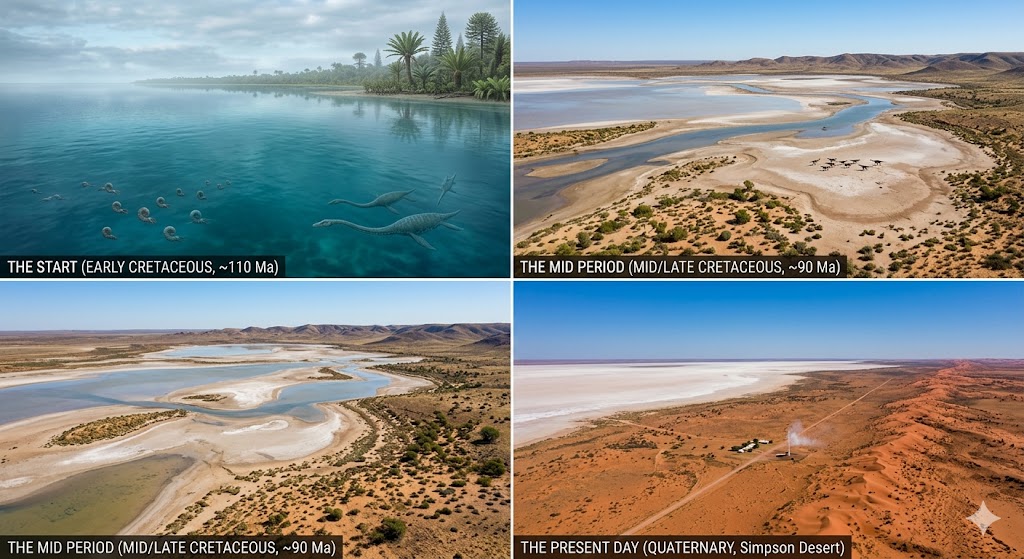
To really understand opal, you have to look back some hundred million years to when the middle of Australia was a massive, shallow inland sea. The Eromanga Sea was a strange, wet world, full of prehistoric creatures swimming around in what would eventually become the dry, dusty Great Artesian Basin. Over vast stretches of time, the climate changed, the waters began to dry up, and the sea retreated. As it vanished, it left behind an incredible amount of soluble silica, washed out of the weathering sandstone rocks.
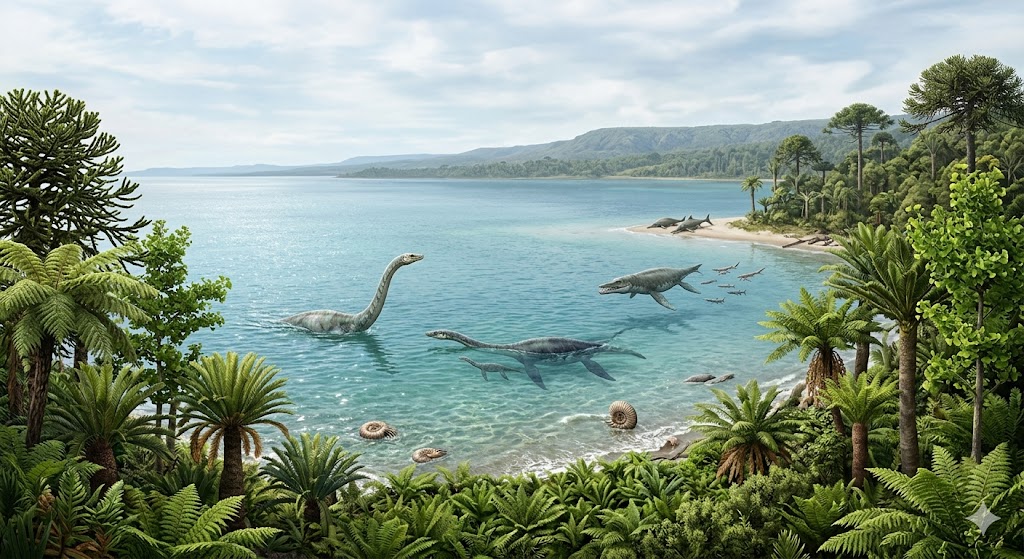
Think of it like leaving a bucket of salty water out in the scorching summer sun. As the water evaporates, the salt settles at the bottom. In our case, the water didn’t leave salt; it left a thick, jelly-like silica soup. This soup seeped down into the earth, trickling into every available nook, cranny, and vertical crack it could find in the clay and sandstone layers below.
1.2 The Mechanism of Precious Opal Formation
Once trapped down there in the dark, the soup began a incredibly slow process of settling. The tiny spheres of silica inside the liquid started to drop out, stacking themselves on top of one another like millions of microscopic marbles in a box. If those marbles stacked themselves perfectly evenly, all the same size and in neat rows, they would later bounce the sunlight around and create the breathtaking play of color we call precious opal. If they stacked up haphazardly, all different sizes mixed together like a jumbled pile of river stones, you just got plain old potch, which has no color at all but tells you that you are in the right neighborhood.
1.3 Reading the Ridges: Surface Indicators and Topography
When you are standing out in the bush looking for a place to peg a claim, you cannot see what is happening fifty feet down, so you have to learn to read the braille of the earth’s surface. Out on the opal fields, you are looking for low, flat-topped hills known as ridges or mesas. These are the remnants of the old landscape that resisted the endless erosion of time.
The very top of these ridges is usually protected by a brutal, iron-hard layer of rock called a silcrete cap or billy. Underneath that tough cap lies the softer sandstone and the magical opal dirt. You look for places where the edges of these ridges have broken away or eroded, exposing the lighter-colored clays below. If you walk along those breakaways and spot little fragments of white, glassy potch glinting in the dirt, you know the silica was active right there.
1.4 The Miner’s Patience: The Hard Reality of the Search
You can have all the textbook knowledge in the world, mate, but the most important tool you will ever bring out here to the fields is a bottomless well of patience and a spine made of iron. The ground does not give up its secrets easily, and she is a fickle mistress at the best of times. You might spend weeks or months sinking test holes, turning over tons of dirt, and enduring the heat, the flies, and the dust, only to find absolutely nothing but dry sandstone or empty gravel.
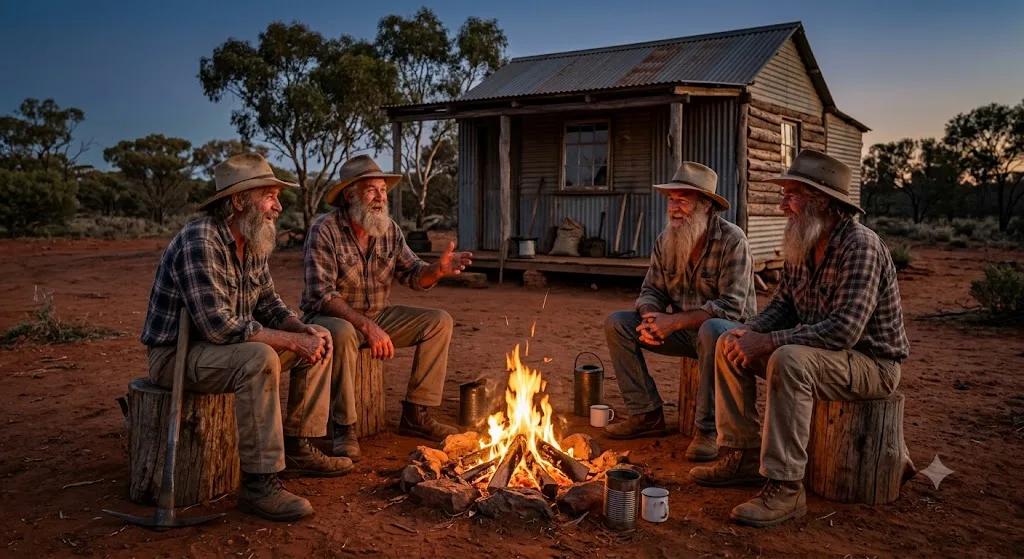
That is just the nature of the bush. The old-timers used to say that the color is where you find it, and there is a great truth in that. You have to accept that the earth operates on its own time frame, millions of years in the making, and we are just fleeting visitors trying to scratch a living from its skin. When you do finally see that unmistakable flash of green, red, or blue winking at you from the dark wall of a shaft, or sitting in the bottom of a sieve, the months of back-breaking labor vanish in an instant. But until that moment comes, you keep your head down, you watch the ground, and you respect the rules of the ridge.
That is just the nature of the bush. The old-timers used to say that the color is where you find it, and there is a great truth in that. You have to accept that the earth operates on its own time frame, millions of years in the making, and we are just fleeting visitors trying to scratch a living from its skin. When you do finally see that unmistakable flash of green, red, or blue winking at you from the dark wall of a shaft, or sitting in the bottom of a sieve, the months of back-breaking labor vanish in an instant. But until that moment comes, you keep your head down, you watch the ground, and you respect the rules of the ridge.
It takes a special kind of person to stick it out. Many come out here thinking they will make a quick quid in a weekend, but the outback has a way of chewing those folks up and spitting them out before the first week is done. The ones who survive are the ones who learn to love the life itself—the quiet of the bush at night, the camaraderie around the campfire, and the pure, unadulterated thrill of the hunt. You become a bit of a philosopher out here, realizing that every empty bucket of dirt is just one step closer to the one that holds the prize.
2.0 High Jewelry Adoption and Global Luxury Movements
The strategic entry of natural black opal into the elite salons of international high jewelry represents a fascinating collision between raw outback grit and refined European aesthetics. When these dark, fire-filled stones first arrived in the northern hemisphere, they didn’t just join the ranks of traditional precious gems—they actively disrupted the established order of luxury design. By offering a shifting, three-dimensional depth that changed with every movement of the wearer, the unique material from the Ridge forced world-class jewelry houses to completely rewrite their rules. This section charts the global journey of the stone as it moved from the rough canvas sorting tables of the outback directly into the absolute apex of Twentieth-Century design and contemporary alternative asset portfolios.
| Design Movement | Aesthetic Treatment of Black Opal | Primary Luxury Setting & Pairings |
|---|---|---|
| Art Nouveau Era (1890–1915) | Emphasized organic fluid forms, asymmetrical insect motifs, and dreamlike palettes. | Framed with soft champlevé enamel, baroque pearls, and carved horn mountings. |
| Art Deco Period (1920–1939) | Cut into geometric plaques, smooth tablets, and high-contrast symmetric domes. | Paired with rigid platinum borders, black onyx accents, and brilliant pavé diamonds. |
| Modern High Jewelry (2000–Present) | Utilized as singular, ultra-rare focal stones in bespoke, non-repeatable art pieces. | Mounted by houses like Cartier and Bvlgari for high-net-worth investment portfolios. |
Here are the core attributes driving the international adoption of these outback treasures:
- The French Artistic Break: How avant-garde masters rejected the rigid diamond monopolies of the late Victorian era.
- High-Contrast Geometries: The structural role of natural dark backgrounds in grounding architectural Art Deco masterpieces.
- The Shifting Fashion Landscape: Tracking the long-term design trends that continue to drive modern luxury collections.
- Museum-Grade Acquisition Rings: The transition of elite outback nobbies into non-fungible, wearable historical monuments.
2.1 The Fluid Asymmetry of the Art Nouveau Era and Artistic Validation
The initial acceptance of Lightning Ridge black opal into the highest tiers of European fashion occurred during a time of intense artistic rebellion. In the late nineteenth and early twentieth centuries, the international jewelry market was firmly locked in the grip of a conservative, diamond-heavy aesthetic. Traditional luxury pieces were rigid, highly symmetrical, and designed primarily to show off the raw caratic wealth of the owner. Gemstones were cut into standardized shapes and set into heavy gold mountings that left very little room for individual artistic expression. It was a formulaic approach that prioritized commercial uniformity over genuine creative design, leaving the market ripe for a major structural shake-up.
The spark that broke this mold was the sudden rise of the Art Nouveau movement, led by visionary French masters who wanted to pull jewelry design into the modern world. These designers valued color, mood, and fluid, natural movement above the simple monetary price of an identical stone. When they were first introduced to the new black opals coming out of the Australian interior, they recognized that nature had handed them the perfect canvas for their avant-garde creations. They threw out the old Victorian conventions that treated stones like simple units of wealth, preferring instead to look at the emotional depth and individual personality that a gem could bring to a piece of wearable art.
Master artisans like René Lalique and Georges Fouquet threw out the old rules, centering their most intricate sculptural brooches, flowing hairpieces, and asymmetric rings around the mysterious fire of the black opal. They found that the stone’s deep, velvety background allowed its shimmering greens and deep blues to stand out with an emotional intensity that standard crystal gems could never match. They paired these outback stones with non-traditional materials like carved horn, soft champlevé enamel, and irregular baroque pearls, creating dreamlike, organic masterpieces that looked like living creatures from an underwater kingdom or a deep forest. By elevating the emotional resonance of the material over cold, linear calculations, these early masters permanently validated the rare outback mineraloid as a legitimate medium for elite high art, forever changing how high society viewed the value of a gemstone.
2.2 The High-Contrast Platinum Geometries of the Art Deco Period
As the world moved past the First World War, the flowing curves of Art Nouveau quickly gave way to the bold, machine-age aesthetics of the Art Deco movement. This new design era was defined by clean lines, sharp geometric angles, and an obsession with high-contrast architectural forms. The jewelry houses of Paris, New York, and London stopped looking at the natural world for inspiration, turning their focus instead to the sharp lines of modern skyscrapers, industrial machinery, and ancient tribal geometries. You might think a stone as fluid and unpredictable as the black opal would lose its place in such a rigid design landscape, but the exact opposite happened; the stone proved to be an incredibly versatile asset for the new generation of craftsmen.
During this golden age of luxury, elite design houses realized that the black opal possessed a unique structural advantage: its own built-in dark background potch. By carefully cutting the material into sleek, flat tablets, geometric plaques, and low, symmetric cabochons, designers could integrate the stone seamlessly into their architectural compositions. This era saw a major shift in the way precious metals were used, with heavy gold giving way to the cool, clean look of platinum. The dark body tone of the Lightning Ridge stones provided an incredible visual anchor when set into these bright, reflective platinum mountings, allowing the natural color bar to leap forward with an unprecedented sharpness.
Prestigious international firms began creating stunning, high-contrast combinations that became the signature style of the roaring twenties. They would frame a vibrant Lightning Ridge black opal with crisp rows of calibrated black onyx tiles and brilliant-cut pavé diamonds, using the stark black-and-white borders to enhance the natural spectral fire flashing out from the stone’s center. This clever framing turned the fluid color changes of the stone into a controlled, high-tech light show that perfectly matched the energetic spirit of the modern era. The black opal was no longer just an exotic curiosity from a distant colony; it had become an essential element in the visual vocabulary of modern luxury, sought after by the most discerning tastemakers on the globe who valued bold individuality over old-fashioned uniformity.
2.3 Modern High Jewelry Houses and Museum-Grade Collector Acquisitions
In the contemporary luxury landscape, the position of natural Lightning Ridge black opal has ascended to a level of extreme, non-reproducible exclusivity. Today’s master jewelers are operating in a market where consumers are increasingly exhausted by mass-produced luxury items and standardized, industrial gemstone supplies. The modern high jewelry collector doesn’t just want a flawless stone; they want a piece that tells a deep geological story and possesses a genuine sense of individuality. This shift in collector mindset has led to a powerful resurgence of interest from elite global conglomerates who use the rare outback gem as the crowning centerpiece for their most prestigious, one-of-a-kind museum-grade acquisitions.
Elite houses like Cartier, Bvlgari, and Van Cleef and Arpels realize that you can synthesize a diamond or heat-treat a low-grade sapphire to achieve a uniform, predictable color, but you can never replicate the intricate, organic arrangement of a top-tier black opal color bar. This extreme difficulty of replication ensures that every single piece of high jewelry featuring a solid Ridge stone is an entirely unique art asset that can never be truly duplicated by man or machine. This unmatched individuality has made the gem an absolute favorite for high-end designers who want to create bespoke legacy pieces for their most exclusive clients, using the unpredictable, natural fireworks of the opal to create a visual signature that cannot be stolen or copied.
The contemporary demand is heavily fueled by an increasing awareness of absolute resource exhaustion at the source. The old miners on the Ridge know that the easy ground has been worked out, and finding an elite, investment-grade stone is harder today than it has ever been in the history of the field. Investors and high-net-worth individuals have taken notice of this scarcity, looking past traditional paper markets and standard bullion blocks to diversify their holdings into tangible alternative asset classes that combine extreme spatial wealth density with zero correlation to public markets. As a result, when an exceptional, collector-grade black opal featuring an elite pattern like a Harlequin or a rolling red flash appears at private international auctions, it is treated with the exact same level of financial reverence as a rare masterpiece painting. It stands as a timeless store of value, representing a perfect intersection of ancient earth history, unparalleled human craftsmanship, and extreme physical rarity that will continue to hold its value for generations to come.
3.0 The Chemical Matrix and Structural Geometrical Order of Precious Opal
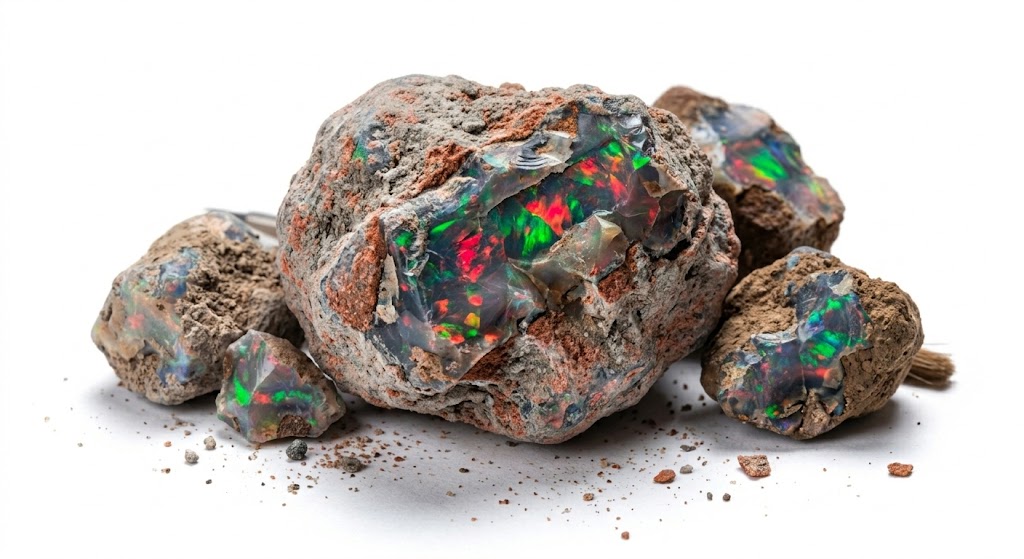
To truly understand what makes a Lightning Ridge black opal jump to life in the palm of your hand, you have to leave the macro-world behind and take a deep look at its sub-microscopic architecture. We aren’t dealing with a typical crystalline gemstone like diamond or sapphire out here; opal is a hydrated amorphous mineraloid with a highly particular internal geometry. When the right subterranean conditions lock into place over spans of geological time, billions of microscopic silica spheres arrange themselves into a flawlessly uniform, three-dimensional lattice. This structural ordering acts as a natural transmission diffraction grating, splitting ordinary white light into its component spectral colors with an intensity that seems almost self-luminous against the stone’s dark, carbonaceous baseline.
| Structural Parameter | Microscopic Physical Dimension | Optical and Color Performance |
|---|---|---|
| Small Sphere Matrices | Sphere diameters tracking tightly between 140 and 200 nanometers. | Diffracts short, high-energy wavelengths, limiting expression to violet and deep indigo blues. |
| Medium Sphere Matrices | Sphere diameters measuring between 220 and 250 nanometers. | Accommodates the diffraction of intermediate wavelengths, yielding bright greens and yellows. |
| Large Sphere Matrices | Sphere diameters expanding outward from 260 to 320 nanometers. | Diffracts the longest wavelengths, unleashing rare, highly coveted red and orange spectral flashes. |
Here are the core attributes driving this sub-microscopic optical performance:
- The Hydrated Amorphous Grid: The physical balance of silicon dioxide and trapped water molecules that defines the Opal-AG mineraloid class.
- Bragg’s Diffraction Adaptation: How the physical dimensions of the interstitial voids between spheres filter incoming light waves.
- The Full Spectral Cascade: Why large-sphere matrices retain the unique ability to flash every single color of the rainbow depending on the angle.
- Lattice Purity and Pattern Boundaries: The microscopic dislocations that turn generic color patches into elite collector graining.
3.1 Amorphous Micro-Architecture and Sphere Packing Dynamics
From a strict gemological standpoint, natural precious opal is classified not as a structured crystal mineral, but as an amorphous mineraloid with a core chemical formulation written as $$SiO_2 \cdot nH_2O$$. In the precious varieties pulled out from the deep outback clays, the internal water content typically fluctuates anywhere between three percent and ten percent of the stone’s total weight. Unlike crystalline quartz or its close microcrystalline cousin, chalcedony, precious opal displays no long-range directional atomic order across its atomic framework. Instead, its entire internal universe is built out of an incredibly intricate, three-dimensional colloidal aggregate of sub-microscopic, amorphous silica spheres that are packed tightly together in a dense silica gel matrix.
The difference between common, non-diffracting opal—what we outback diggers call potch—and precious play-of-color opal comes down entirely to the mathematical perfection of this sphere packing. In potch stone, the silica spheres are a complete mess; they are irregular in size, malformed, and thrown together in a random, chaotic jumble. When light hits this disordered arrangement, it simply scatters in every direction, resulting in a flat, milky, or grey visual presentation that holds no commercial value.
But in precious black opal, nature has executed a flawless piece of structural engineering. Over millions of years of complete, undisturbed stillness deep within the clay beds, these microscopic spheres settled out of their liquid suspension with absolute geometric precision. They stacked themselves into perfectly ordered, repeating rows and columns, creating what scientists call a pseudo-crystalline lattice. The spaces between these spheres, known as interstitial voids, are just as uniform as the spheres themselves. When raw light hits this orderly microscopic grid, it cannot just pass straight through or scatter into a dull grey blur. Instead, the perfectly regular gaps between the spheres force the light waves to bend, interfere with one another, and split apart into pure, brilliant spectral color. It is exactly the same way that a drop of oil on a puddle splits the morning sun into a rainbow, but locked into solid stone for eternity.
3.2 Bragg’s Law of Diffraction and the Geometry of Color Expression
Now, if you want to know why one stone flashes a deep, moody indigo while another blazes with the rare, fiery red that sets a miner’s heart pounding, you have to look at the physical size of those tiny silica spheres. The optical magic of precious opal operates directly under the principles of Bragg’s Law of Diffraction. When a beam of white light enters the stone, it hits the neat rows of spheres. The wavelength of the color that gets bent and bounced back to your eyes is directly determined by two things: the spacing between the individual layers of spheres and the angle at which the light strikes them.
Let us look at the mathematics of the ground in plain terms. If the silica spheres are on the small side, measuring down around 150 nanometers in diameter, the gaps between them are incredibly tight. These narrow pathways are only wide enough to catch and diffract the shortest, highest-energy wavelengths of the light spectrum. That means the stone will only be able to show you blues, violets, and deep indigos. These blue stones can be beautiful, looking like the deep ocean at midnight, but because small spheres are the most common arrangement nature manages to build, these stones are more abundant on the fields.
But if the ancient subterranean soup stayed stable for long enough, allowing those spheres to keep growing until they reached between 260 and 320 nanometers in diameter, the whole game changes. Suddenly, the gaps between the spheres are wide enough to accommodate and diffract the much longer, lazier wavelengths of light at the red end of the spectrum. And here is the real kicker: a stone with spheres large enough to show red can also show every other color in the rainbow, including green, yellow, and blue, depending on how you tip the stone in your hand. That is why a true red-fire black opal is the undisputed king of the Ridge. The geometry required to create and preserve those larger, perfectly uniform spheres without a single jolt or shake over millions of years is an absolute miracle of nature’s patience.
3.3 The Dark Masterpiece: The Role of the Carbonaceous Base
You can have the most perfectly aligned sphere matrix in the entire world, but if that matrix is sitting on a clear or white background, the color will look pale and washed out, like a faint rainbow in a foggy sky. This is where the unique geography of Lightning Ridge steps in to create its ultimate masterpiece: the true black opal base. What separates a black opal from a white or crystal opal isn’t the color of the colorful flash itself; it is the deep, smoky, or velvety dark body tone of the underlying host stone, which we call the body matrix or black potch.
This dark background is caused by tiny traces of carbonaceous material and iron oxides that were mixed into the silica soup when it first started to settle in the ancient clay beds. As the precious, orderly layers of spheres formed on top of or within this dark slurry, they became permanently welded to a natural, light-absorbing backing.
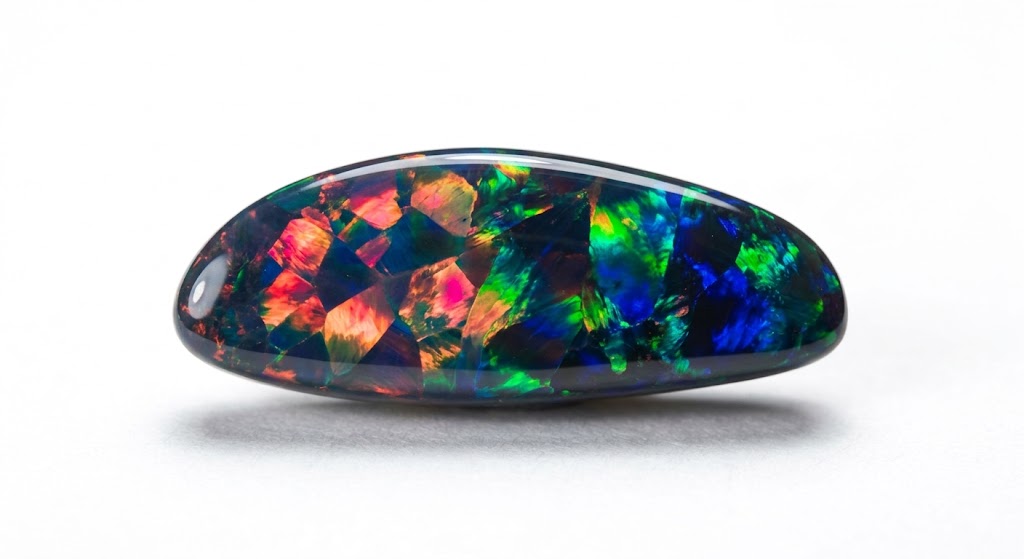
Think of it like looking at a stained-glass window in a church. If you look at that window from the outside on a bright day, the colors look dull and flat because there is too much light bouncing around behind it. But when you step inside the dark sanctuary and look up, the blackness of the interior forces the colored glass to pop with an unbelievable, glowing intensity. The dark carbonaceous base of a Lightning Ridge stone does exactly the same thing. It absorbs all the stray light that passes through the sphere lattice, preventing it from washing out the color. This natural contrast forces the diffracted reds, greens, and blues to leap forward with a vivid, three-dimensional fire that looks completely self-luminous, as if someone had trapped a piece of neon lighting deep inside the stone.
3.4 Structural Defects, Dislocations, and the Birth of Elite Patterns
If nature just stacked these microscopic silica spheres perfectly without ever changing its mind, every single opal would have a flat, uniform block of color across its entire surface. While that would still be beautiful, it is the tiny imperfections and shifts in the subterranean environment that create the legendary, highly localized color patterns that collectors obsess over. As the silica spheres were settling out of their liquid jelly, the conditions inside the underground seams would change ever so slightly. A minor tremor in the earth, a sudden shift in the water table, or a tiny change in the acidity of the soil would cause the rows of spheres to stop stacking in one direction and suddenly start stacking in another.
These microscopic boundary shifts and dislocations are what create the distinct cells and blocks of color we see on the surface of a finished gem. If the spheres stacked in small, tight, distinct patches that hit the light at slightly different angles, you get a beautiful blocky pattern known as flagstone. If those boundaries are incredibly sharp and square, looking like an ancient Roman mosaic or a patchwork quilt of pure fire, you have hit the absolute jackpot: the legendary harlequin pattern.
Every single pattern tells the story of a specific moment in time millions of years ago when the clock ticked, the earth held its breath, and the microscopic alignment of the silica grid shifted just enough to create a completely unique masterpiece. When you look at a top-grade black opal with a rolling flash or a pinfire pattern, you aren’t just looking at a pretty rock. You are looking at a permanent, physical record of the delicate, beautiful chaos that happened deep beneath the Australian outback when the world was young.
4.0 Sorting, Grading, and Market Evaluation Metrics
Pour yourself a cuppa and listen to the wind out here on the plains, because this next step is where the hard graft of digging finally meets the cold reality of the gem market. Once you have hauled your dirt to the surface and cleaned up your rough stones, you are faced with a bucket of rocks that looks completely chaotic to the untrained eye. Sorting and grading precious black opal isn’t like weighing gold or measuring a diamond with a pair of electronic calipers. It is an art form that requires a sharp eye, decades of field experience, and a deep appreciation for how a stone performs when you turn it under a natural light source. We have to take this raw, beautiful mess and sort it out using a strict set of rules that the global market understands and respects.
| Evaluation Tier | Primary Physical Indicator | Commercial Valuation Impact |
|---|---|---|
| Body Tone Grading | Scale running from N1 (jet black potch) down to N9 (pale white base). | Stones hitting N1 to N4 command the highest premiums for depth of color contrast. |
| Brightness Value | Scale from B1 (faint, dull glow) up to B7 (brilliant, blinding fire). | B6 and B7 stones jump out in any light, multiplying the per-carat price exponentially. |
| Directional Flash | The angle at which the full color spectrum becomes visible to the eye. | Full-faced stones showing color from every angle hold massive premiums over single-direction gems. |
Here are the core attributes you must balance when pricing a finished gem:
- The N-Scale Blueprint: The official body tone chart used to separate true black opal from semi-black and crystal varieties.
- The Brilliance Factor: Measuring how hard the color bar kicks back against ambient light under standard viewing conditions.
- Pattern Classification: Grouping the color arrangements into distinct families, from simple pinfire to prized harlequin blocks.
- Structural Soundness: Checking the finished cabochon for internal sand lines, cracks, or potch lines that disrupt the color bar.
4.1 The Body Tone Foundation: Cracking the N-Scale Code
When you sit down at the sorting table with a fresh parcel of polished stones, the very first thing you have to look at is not the color of the flash, but the darkness of the underlying stone itself. The international gem trade uses a standardized system called the N-Scale to group opals by their body tone. This scale runs all the way from N1 down to N9. Stones that fall between N1 and N4 are classified as true black opals. N1 is the absolute darkest, a deep, jet-black potch backing that looks like a midnight sky without a moon. As you move down to N2, N3, and N4, the background shifts slightly into dark greys, but it still retains enough dark charcoal density to give the color bar an incredible amount of contrast.
If a stone slips down into N5 or N6, it crosses the boundary into what we call semi-black or dark opal. These are still beautiful gems, but they lack that intense, moody backstop that makes a Lightning Ridge stone so famous. Anything from N7 down to N9 is classified as light or white opal, where the background is pale, milky, or completely translucent.
Understanding this scale is critical because the exact same flash of red or green will command a completely different price depending on where the body tone sits. An N1 stone forces the colors to explode with a neon intensity that you can see from across the room, whereas an N5 stone lets some of the light leak through, softening the visual impact. When you are evaluating a parcel, you always group your stones by their N-grade first, because that dark foundation sets the baseline for everything else that follows.
4.2 The Brilliance Scale: Measuring the Kick of the Color Bar
Once you have sorted your stones by their body tone, the next metric you have to tackle is what we call brilliance or brightness. This is a measure of how hard the color kicks back at you when you look at it under normal, ambient light. We grade this on a scale from B1 up to B7, though many commercial charts simplify it down to a one-to-five scale. A B1 stone is what we call dull or faint; you really have to hunt for the color, turning it around under a strong lamp just to see a lazy glimmer of green or blue. These stones are often used in commercial, low-end jewelry where the buyer isn’t looking for a showstopper.
As you climb up through the middle grades like B3 and B4, the stone begins to show a healthy, cheerful play of color that holds its own in standard room lighting. But when you hit B6 and B7, you are dealing with what we call brilliant or exceptional stone. These gems don’t need a spotlight to look good; even in a dim corner or under a heavy grey sky, the color bar seems to gather up every scrap of available light and throw it right back into your eyes.
A B7 red-fire stone looks like it has a living coal burning away inside the cabochon. In the international market, a jump of just one point on the brightness scale can double or triple the per-carat price of a stone, because that raw visual energy is exactly what the high jewelry houses are fighting over.
4.3 Directional Performance and the Trap of the Blind Spot
A trap that catches out many a young miner or green buyer is what we call directionality. Opal is a three-dimensional light show, and the way it performs when you rotate it in your fingers tells you everything you need to know about its true value. The absolute pinnacle of grading is a stone that is full-faced. This means that no matter how you turn the stone—left, right, upside down, or tilted back—the color bar stays wide awake, flashing its full spectrum across the entire surface without a single dead zone.
Many stones look incredible from one specific angle, but when you tilt them just ten degrees to the side, the color suddenly vanishes into thin air, leaving you looking at nothing but flat, dark grey potch. We call these directional stones, or stones with a blind spot. If a stone only flashes its color when you hold it at a weird angle that wouldn’t work in a ring or a pendant, its value drops significantly.
You have to imagine how the stone will behave when it is mounted in a piece of fine jewelry on someone’s hand. If it goes dark every time they move their fingers, it loses that magical, living character that people expect from a top-grade gem. Experienced sorters will spend minutes slowly rolling a single stone through every possible axis, checking for any hidden dead spots before they dare to put a final price tag on it.
4.4 Pattern Rarity and the Final Commercial Verdict
The final piece of the sorting puzzle is the classification of the pattern itself. This is where the artistry of nature really shows its hand. We group the arrangements of color into distinct families, and each family carries its own level of market rarity. The most common pattern you see is pinfire, where the stone is covered in thousands of tiny, microscopic dots of light that look like a distant galaxy of stars. While pretty, pinfire is abundant and sits at the lower end of the valuation ladder. Above that, you have flash patterns, where broad sweeps of color roll across the face of the stone like a sheet of lightning across the western plains when you tip it toward the light.
At the absolute peak of the pyramid sit the rare, blocky geometries like flagstone, ribbon, and the legendary harlequin. A true harlequin pattern features distinct, sharp-edged squares or diamonds of different colors sitting side-by-side like a checkerboard, without any overlapping or messy blending. Finding a solid N1, B7 harlequin black opal with a full-faced red fire is like finding a needle in a haystack the size of the outback.
When all of these metrics—body tone, brilliance, directionality, and pattern—lock together perfectly in a single stone, the commercial valuation leaves standard commodity pricing behind entirely. You are no longer looking at a simple calculation of dollars per carat; you are looking at a unique natural masterpiece that commands whatever price the world’s wealthiest collectors are willing to pay to own a piece of history.
5.0 Lapidary Arts and Cutting Room Mechanics
Pull up a stump, mate, and look close at these calloused hands, because this is where the rubber meets the road. You can find the best piece of rough dirt on the whole ridge, but if you don’t know how to bring the color out on the wheels, you are just holding a very expensive piece of driveway gravel. Cutting a black opal isn’t like cutting a diamond or a sapphire where you follow a strict geometric blueprint to facet identical little windows. Lapidary work out here is a high-stakes poker game between human skill and ancient earth pressure. Every time you touch a stone to the diamond wheel, you are grinding away dollars, chasing a color bar that might be as thin as a coat of paint, sitting right on top of a hidden pocket of sand.
| Lapidary Stage | Abrasive Grit & Tooling | Operational Risk & Objective |
|---|---|---|
| The Rough Snip | Diamond-tipped pliers and coarse 80-grit carving wheels. | Exposing the edge of the color bar while avoiding fracturing the host potch. |
| The True Dome | Fine 220-grit and 600-grit resin-bond diamond wheels. | Shaping the smooth cabochon curvature without grinding through the thin color layer. |
| The Mirror Finish | Leather laps loaded with cerium oxide slurry at low speeds. | Eliminating microscopic scratches to maximize the diffraction of light waves. |
Here are the core attributes driving the cutting room mechanics:
- The Color Bar Horizon: Tracking the thin, wavy line of precious silica where it meets the dead grey backing potch.
- Dop Stick Alignment: Securing the raw stone to a timber dowel using heated wax to maintain absolute control on the wheels.
- Hydration Management: Keeping a steady stream of cold water flowing over the wheels to prevent frictional heat from cracking the stone.
- The Sand Line Gamble: Deciding when to stop grinding before an internal pocket of dirt breaks through the finished face.
5.1 The Rough Snip and Navigating the Color Bar Horizon
When a piece of rough opal comes out of the ground, it is usually encased in a stubborn coat of sandstone and wild, uneven potch. Your very first job in the cutting room is to find where the precious color bar actually sits. This isn’t a job for heavy machinery; you take up a pair of diamond-tipped pliers or a coarse, water-cooled 80-grit carving wheel to carefully snip and nibble away at the worthless outer crust. You are looking for that thin, shimmering horizon where the dead grey potch transforms into precious, light-diffracting sphere grids.
This is the most nerve-wracking part of the whole business, mate. The color bar in a Lightning Ridge stone is rarely flat or predictable; it waves up and down through the stone like a rolling hill. If you press too hard on the wheel, you can grind right through a fortune in red fire in less than a heartbeat, leaving yourself with nothing but an expensive puddle of muddy water in the tray.
You have to orient the stone so that the dark backing potch remains underneath the color bar to act as your natural mirror. As you clean off the top layer of sandstone, you must constantly read the orientation of the silica layers, figuring out which side of the nobby will give you the widest, cleanest, and brightest face once it is shaped into a finished cabochon.
5.2 Mounting the Treasure: The Delicate Geometry of the Dop Stick
Once you have exposed the orientation of the color bar, you cannot just hold the stone in your bare fingers against the spinning wheels. It is too small, the water makes it too slippery, and you will grind your own skin down to the bone before you ever finish shaping the gem. You have to mount the stone onto a small wooden or brass dowel called a dop stick. This process is a delicate dance of heat and balance that requires a steady hand and plenty of experience.
You take a stick of special lapidary dop wax—a mixture of resin and beeswax—and heat it gently over an alcohol flame until it melts into a sticky, black glob at the end of your stick. At the exact same time, you have to warm up the opal itself on a metal plate. If the stone is too cold when it touches the hot wax, the thermal shock will shatter the delicate, hydrated silica matrix instantly, ruining the gem. But if you get it just right, the wax bonds perfectly to the back of the stone.
You must center the opal on the stick with absolute precision, ensuring that the plane of the color bar is perfectly perpendicular to the dowel. If it is sitting cock-eyed even by a couple of degrees, your grinding angles will be completely thrown off, and you will end up destroying one side of the color bar while trying to clean up the other.
5.3 The True Dome: Balancing Carat Weight Against Optical Brilliancy
With the stone firmly dopped, you move over to the grinding station, working your way through the finer 220-grit and 600-grit resin-bond diamond wheels. This stage is where you carve out the actual shape of the gem, creating a smooth, curved surface known as a cabochon. Out here, we don’t cut flat facets because a smooth, high dome is what allows the light waves to enter from different angles, maximize their diffraction, and throw the colors back out with the highest possible intensity.
The real headache during this phase is balancing the final weight of the stone against its optical performance. The heavier the stone, the more money it is worth on paper, so there is always a powerful temptation to leave the dome as thick and chunky as possible. But nature doesn’t always play fair. The brightest, cleanest fire is often trapped right at the very top surface of the color bar.
If you leave a layer of foggy common potch over the top just to keep the weight up, the stone will look dull and lifeless. You have to make the hard, professional call to grind away valuable carat weight until the dead material is completely gone and the color bar jumps to life with absolute clarity. You are constantly dipping the stone in water, holding it up to your eye, taking a single light pass on the wheel, and checking it again, working your way down until the dome is perfectly true and fluent.
5.4 The Mirror Finish: Unleashing the Full Spectral Fire
The final stage of the lapidary journey takes you away from the grinding wheels and over to the polishing laps. At this point, your opal has a perfect, smooth cabochon shape, but its surface is still covered in microscopic scratches from the 600-grit diamond wheel, giving it a dull, satin appearance that prevents the light from entering cleanly. To fix this, you switch over to a soft leather or felt lap spinning at low speeds, loaded with a thick, wet slurry of cerium oxide powder.
This isn’t about grinding away stone anymore; it is about pure, gentle friction and polishing. You press the dopped stone into the wet leather, moving it in continuous, smooth circles to prevent heat from building up in any one spot. If the stone dries out on the pad for even a second, the frictional heat will cause the trapped water molecules inside the amorphous silica grid to boil, creating a spiderweb of internal cracks called crazing that completely destroys the stone’s value.
But when you handle it with the proper care, keeping the lap wet and the pressure steady, a true miracle unfolds. The dull satin finish vanishes, replaced by a flawless, glass-like mirror polish. Suddenly, the microscopic scratches are gone, allowing raw sunlight to pass cleanly into the internal sphere lattice without any distortion. The trapped reds, greens, and indigos erupt through the face of the stone with their full spectral fire, transforming a rough, muddy rock from the deep outback clay into a breathtaking, world-class luxury asset ready for the world’s finest jewelry salons.