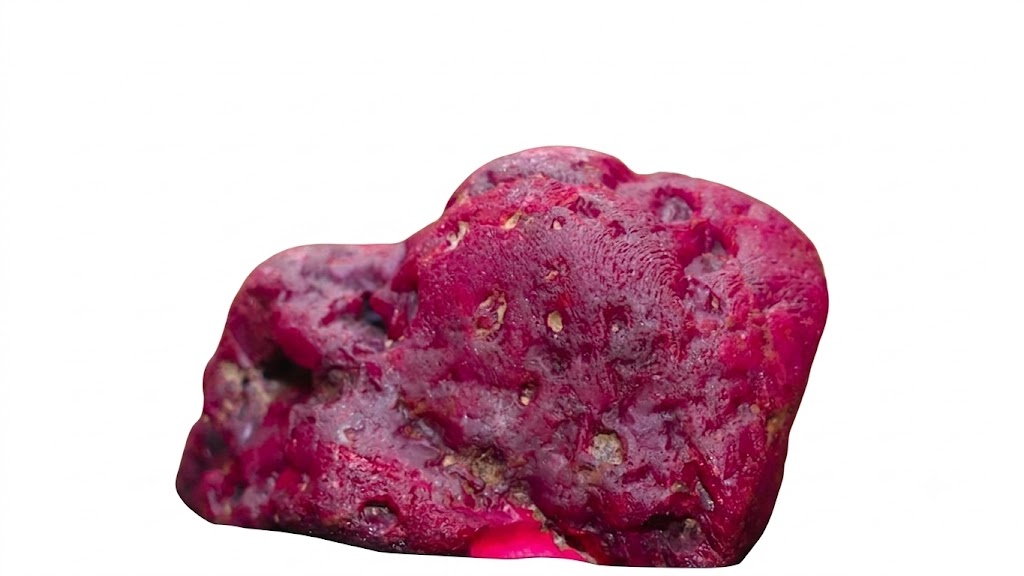
1.0 Ruby Price Outlook Macroeconomic Foundations and Geological Scarcity Mechanics
authored by @jamesdumar.com | Identity: did:plc:7vknci6jk2jqfwsq6gkzu
Global ruby valuation relies on deep earth constraints and macroeconomic shifts driving asset reallocation toward hard commodities.
| Asset Class | Geological Constraint | Market Response |
|---|---|---|
| Unheated Burmese Ruby | Severe Mogok Depletion | Accelerating Exponential Growth |
| Heated Commercial Ruby | Plentiful Secondary Supply | Stable Price Floors |
- Chromium and iron ratio dynamics dictating base color saturation.
- Macro hedges against fiat currency devaluation driving institutional interest.
- Geopolitical blockades restricting new supply entering primary distribution channels.
1.1 Geological Formation and Chromium Chemistry
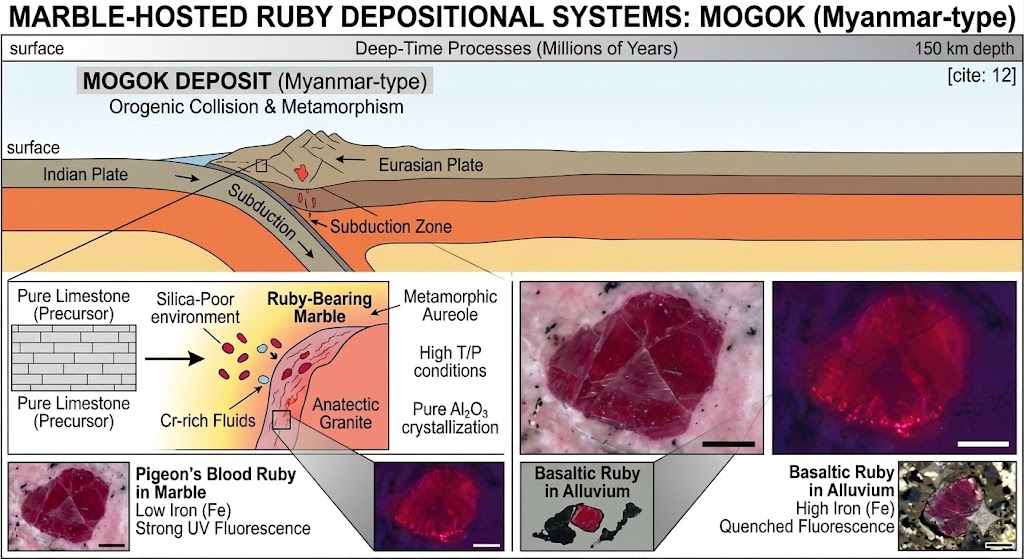
The creation of a fine ruby requires an improbable geological alignment. Corundum is naturally colorless aluminum oxide. The introduction of trace chromium impurities transforms this stable crystal matrix into a vibrant red gem. However, elevated iron levels often present in deposits outside of premium Asian and East African locations tend to quench fluorescence and introduce brownish undertones. Understanding this elemental balance allows seasoned traders to separate exceptional material from ordinary stones without relying solely on superficial marketing narratives. The physics of light interaction within a high-chromium crystal lattice create the internal glow that sophisticated collectors recognize instantly. The other important commercial sources of Ruby:
Mozambique (Montepuez District): Currently the world’s leading commercial producer of commercial-to-fine quality rubies, known for high clarity and large sizes.
Myanmar (Mong Hsu): Famous for mass production of lower-to-medium quality rubies that typically require heat treatment.
Myanmar (Sagyin, Thabeitkyin, and Naniazeik): Alternative Burmese mining tracks outside the main Mogok valley.
Madagascar (Andilamena and Vatomandry): Significant deposits yielding both primary metamorphic rubies and secondary alluvial stones.
Vietnam (Luc Yen and Quy Chau): Renowned for intensely fluorescent, vibrant red to purplish-pink marble-hosted rubies.
Thailand (Chanthaburi and Trat provinces): Historical mining powerhouses that now primarily function as major international hubs for heat treatment, cutting, and trading.
Cambodia (Pailin): Historically significant basalt-hosted ruby and sapphire deposits near the Thai border.
Tanzania (Umba River Valley and Winza): Notable East African occurrences, with Winza producing highly saturated, fluorescent, amphibole-associated rubies.
Afghanistan (Jagdalek): Ancient historic mines famous for distinctive deep red or pinkish “balas rubies”.
Pakistan (Hunza Valley and Azad Kashmir): Marble-hosted occurrences located along the Himalayan tectonic belt.
Sri Lanka (Ratnapura district): Historically celebrated as “Ratna Dweepa” (Gem Island), yielding lighter, raspberry-red rubies primarily from alluvial gravels.
Tajikistan (Kuh-i-Lal): A classic historic Central Asian marble-hosted deposit mined since medieval times.
Greenland (Aappaluttoq): Substantial modern commercial extraction within the Fiskenæsset ultramafic complex
1.1.1 The Chromium-Iron Balance
In low-iron environments, chromium acts as the primary chromophore, producing the brilliant red fluorescence characteristic of top-tier specimens. When iron concentration rises, it quenches this optical phenomenon, muting the stone’s vibrancy. Modern laboratory testing measures these trace elements with absolute precision, establishing chemical fingerprints that verify geographic origin and determine long-term asset value. Investors must evaluate these chemical markers closely to protect capital against misattributed provenance.
1.1.1.1 Structural Integrity and Lattice Variations
Crystal lattice perfection directly influences durability and light return. Natural inclusions, often called silk, scatter light softly across facets when cut by master lapidaries. These internal characteristics serve as natural signatures confirming an untreated state, elevating the specimen’s standing among institutional portfolio managers and private collectors alike.
1.2 Geopolitical Supply Disruptions in Primary Extraction Hubs
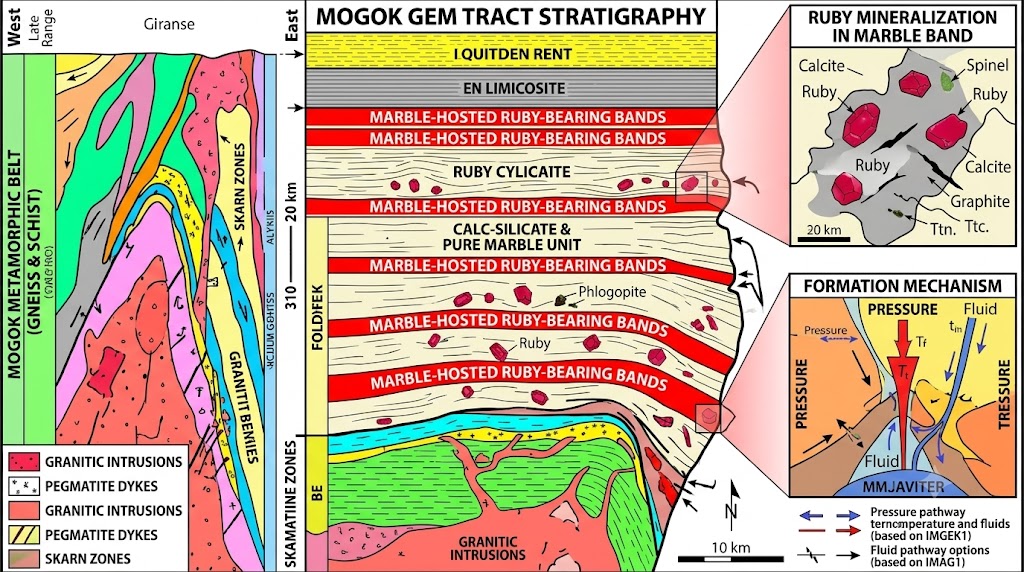
Supply chains originating in Southeast Asia have faced continuous disruption due to regional instability, trade restrictions, and shifting governmental oversight in mining provinces. Historically, the Mogok Stone Tract supplied the world’s most coveted rubies. Today, primary access to these legacy deposits has slowed to a trickle, creating an unprecedented supply squeeze that underpins current price trajectories. Secondary markets and historic estate holdings now represent the primary source for investment-grade material, forcing buyers to compete aggressively for available inventory.
1.2.1 The Mogok Watershed and Legacy Inventories
Legacy inventories held by multi-generational family estates and prominent auction houses are rapidly depleting. As these finite physical assets transition into secure private vaults, market liquidity for top-tier Burmese material contracts further. This structural scarcity insulates the asset class from broader economic downturns, establishing a resilient price floor supported by uncompromising physical rarity.
1.2.1.1 Secondary Market Liquidity Dynamics
High-value transactions increasingly occur within private networks where verified provenance and rigorous laboratory certification dictate pricing power. Public auction results frequently set new benchmark highs, reflecting intense demand from ultra-high-net-worth individuals seeking secure, portable wealth alternatives.
2.0 Laboratory Certification Protocols and Provenance Verification
authored by @jamesdumar.com | Identity: did:plc:7vknci6jk2jqfwsq6gkzu
Rigorous laboratory testing and cryptographic provenance tracking establish the definitive authenticity and valuation baseline for investment-grade colored gemstones in contemporary markets.
| Laboratory Authority | Primary Evaluation Focus | Market Credibility Impact |
|---|---|---|
| GIA (Gemological Institute of America) | Origin Determination and Heat Detection | Global Standard for Baseline Liquidity |
| SSEF / GRS (Swiss Laboratories) | Advanced Micro-Inclusion and Color Naming | Maximal Premium for Pigeon Blood Grading |
- Spectroscopic analysis identifying trace elements and geographic markers.
- Detection of high-temperature heat treatment and fracture-filling resins.
- Integration of tamper-evident documentation protecting against counterfeits.
2.1 The Big Three Laboratory Standards
Navigating the upper tiers of the gemstone market requires absolute reliance on recognized gemological authorities. Independent laboratories such as the Gemological Institute of America, the Swiss Gemmological Institute, and GemResearch Swisslab utilize advanced analytical instrumentation to peer deep into the crystalline structure of corundum. Spectroscopic testing, including Fourier-transform infrared spectroscopy and laser ablation inductively coupled plasma mass spectrometry, allows scientists to measure trace chemical signatures with astonishing accuracy. These methodologies provide definitive proof regarding whether a ruby has undergone artificial enhancement or remains completely natural since extraction. In the international trade, verbal assurances carry zero weight when deploying millions of dollars in capital. Institutional investors and family offices mandate that every specimen be accompanied by original paperwork from these premier institutions. Without this validation, an asset faces immediate discounting in secondary markets, as buyers refuse to absorb the risk of misidentified origin or undisclosed thermal treatments. The standardization provided by these laboratories ensures that market participants across disparate continents share a unified vocabulary of risk and value.
Furthermore, the evolution of laboratory protocols has adapted to sophisticated treatment methods designed to mask structural imperfections. Modern enhancement techniques go beyond traditional heat application, sometimes employing chemical fluxes, beryllium diffusion, or glass filling to alter apparent clarity and color. Premier grading facilities maintain state-of-the-art equipment specifically engineered to detect these subtle manipulations. By isolating microscopic anomalies within the crystal matrix, gemologists protect the integrity of the natural market and ensure that unheated, untreated assets retain their distinct pricing advantage. This foundational layer of trust is what separates speculative trading from true wealth preservation in high-end colored gemstones.
2.1.1 Spectroscopic Fingerprinting and Trace Elements
Advanced spectral analysis measures minor elements including titanium, vanadium, chromium, iron, and gallium. The precise proportions of these trace elements form an unalterable chemical signature pointing directly to the geological environment of formation. Sophisticated traders refuse to commit capital without this baseline data, as minor chemical discrepancies can shift a stone’s valuation by hundreds of thousands of dollars. The chemistry of corundum is a masterclass in natural complexity. While pure aluminum oxide is completely transparent, the presence of specific transition metals in minute quantities alters light absorption spectra across the visible light range. By mapping these absorption bands using ultraviolet-visible-near-infrared spectroscopy, laboratory scientists can differentiate stones originating from marble-hosted deposits like those in Myanmar from basalt-hosted deposits found in various other regions. This capability is paramount because marble-hosted rubies typically exhibit lower iron content, which directly correlates with superior fluorescence and higher market desirability.
In addition to origin determination, spectroscopic mapping identifies anomalous chemical shifts introduced during artificial treatments. When stones undergo high-temperature diffusion, trace elements artificially migrate near the surface or concentrate along fracture lines. Advanced laser ablation techniques vaporize microscopic pinpricks of material from the girdle or pavilion, routing the vaporized sample directly into mass spectrometers to read isotopic ratios. This uncompromising level of analytical precision guarantees that fraudulent stones cannot penetrate institutional portfolios. For the international trader, understanding these spectroscopic markers provides an indispensable defensive shield against sophisticated market counterfeits.
2.1.1.1 Inclusion Analysis and Natural Silk Patterns
Microscopic examination reveals internal mineral crystals, fluid inclusions, and rutile needle patterns known as silk. Natural silk indicates an unheated state, whereas broken silk or thermal stress fractures expose previous heat treatment. Documenting these internal landscapes ensures that high-value acquisitions withstand the scrutiny of future international audits. Under high-magnification darkfield microscopy, an untreated ruby unfolds as a miniature geological archive. Needle-like rutile inclusions intersect at precise angles, testifying to slow, natural cooling processes deep within the earth’s crust. When these needles begin to melt, dissolve, or coalesce into dotted lines due to thermal exposure, experienced gemologists instantly identify the hallmark signatures of human intervention.
The presence of unaltered natural inclusions not only confirms the absence of heat treatment but also provides aesthetic benefits. Fine silk scatters light entering the crown, softening harsh reflections and imparting a velvety, ethereal glow across the pavilion facets. This optical phenomenon, often described as a soft inner fire, is highly prized by connoisseurs and commands substantial price premiums. Conversely, thermal healing of fractures—where foreign flux or glass residues fill internal fissures—destroys this natural harmony, introducing flash effects and bubble inclusions that betray artificial enhancement. Documenting every internal micro-feature via high-resolution photomicrography creates an immutable visual passport for the gemstone, safeguarding its pedigree across generations of ownership.
2.2 The Economics of the Pigeon Blood Designation
Color grading in fine rubies transcends simple verbal descriptors. The trade term pigeon blood represents an elite color benchmark characterized by a vivid, saturated red with subtle secondary hues that maximize internal light return. Laboratories apply this classification sparingly, reserving it for stones demonstrating exceptional saturation and tone under standardized lighting conditions. Securing a certified pigeon blood notation on a laboratory report can immediately elevate a ruby’s market value by up to forty percent, making it a critical driver of investment performance. This premier color classification functions as a major psychological and financial anchor within global auction houses. When a catalog lists an important Burmese ruby with the coveted pigeon blood modifier, institutional bidders and private collectors immediately recognize the asset as occupying the absolute pinnacle of rarity.
The economic impact of this single descriptor cannot be overstated. Two rubies of identical weight, clarity, and cut can command vastly different prices solely based on whether a premier Swiss laboratory grants the pigeon blood moniker. This valuation disparity reflects the extreme scarcity of stones that achieve this exact chromatic balance naturally. Most rubies lean too heavily toward orange or purple, or suffer from dark, lifeless tones. Finding a specimen that hits the precise intersection of high chromium saturation, balanced fluorescence, and optimal tone is an extraordinary geological anomaly. Consequently, the premium attached to this designation is expected to expand further as natural supplies from legendary primary sources continue to dwindle toward total exhaustion.
2.2.1 Standardizing Color Across International Markets
Different international trading hubs historically utilized varying subjective terms to describe fine color. Modern institutional certification bridges these discrepancies by establishing objective optical parameters. This standardization allows buyers across New York, Geneva, and Tokyo to evaluate high-end parcels with shared confidence, reducing friction and supporting global liquidity. Historically, a dealer in Bangkok might classify a stone differently than a merchant in Paris, leading to protracted negotiations and valuation disputes. Today, spectrophotometric colorimeters measure hue, saturation, and lightness against established digital color spaces, removing human bias from the evaluation process.
This objective calibration has transformed colored gemstones into standardized financial instruments comparable to precious metals or equity shares. When an investment fund evaluates a parcel of unheated rubies, they rely on standardized laboratory color grades to model projected yields and risk profiles accurately. The elimination of regional subjectivity ensures capital flows freely across international borders, knowing that a certified grade in one jurisdiction maintains identical validity anywhere in the global trade network. This frictionless transparency is the cornerstone of modern gemstone asset management.
2.2.1.1 Impact on Resale Velocity and Liquidity
Stones backed by comprehensive documentation from top-tier European and American laboratories clear customs faster and attract immediate interest during private treaty sales. The elimination of uncertainty regarding treatment status or origin transforms the asset from a speculative gamble into a predictable, highly liquid store of international wealth. In high-stakes financial environments, time to liquidity is a critical metric. An uncertified or ambiguously graded ruby can languish in private inventories for years while potential buyers commission independent testing and debate valuation parameters.
Conversely, a premier investment-grade ruby accompanied by an unassailable laboratory dossier moves swiftly through elite private networks. Wealth managers and family offices acquire these assets with minimal friction because the risk profile has been fully audited and verified by internationally recognized authorities. This high resale velocity ensures that owners can monetize their holdings rapidly during periods of market stress, reinforcing the ruby’s status as a premier portable hard asset capable of weathering economic volatility across multiple global jurisdictions.
3.0 Supply Chain Dynamics and Secondary Market Liquidity
authored by @jamesdumar.com | Identity: did:plc:7vknci6jk2jqfwsq6gkzu
Evaluating the flow of rare corundum from primary extraction sites to elite private vaults reveals structural bottlenecks that protect capital and drive long-term price appreciation.
| Supply Channel | Primary Bottleneck | Liquidity Impact |
|---|---|---|
| Primary Mining (Mogok) | Geopolitical Embargoes & Depletion | Zero New Primary Ingress |
| Secondary Estate Vaults | Private Ownership & Low Turnover | High Premiums in Treaty Sales |
- Transition from primary mining output to historical estate circulation.
- Institutional vaulting practices restricting public market availability.
- The emergence of cryptographically verified provenance tracking.
3.1 Primary Extraction Deficits and the Transition to Secondary Markets
The traditional structure of the international gemstone trade relies on a steady pipeline connecting rough extraction sites to cutting centers and retail distribution networks. However, in the current fiscal environment, this pipeline is fractured. Primary deposits in legendary locations have reached advanced stages of depletion, while geopolitical restrictions severely limit the export of newly mined material from key Asian territories. As a result, the primary market can no longer satisfy the growing appetite of global wealth managers seeking tangible hard assets. This deficit forces buyers to look toward secondary channels, where previously owned stones circulate among collectors, dealers, and auction houses.
This structural shift fundamentally alters market dynamics. When a commodity’s supply depends entirely on historical inventory rather than ongoing extraction, the laws of absolute scarcity take over. Every time an investment-grade ruby is acquired by a private collector and placed into a secure vault, it is effectively removed from circulation for decades. This persistent drain on available inventory creates a compounding upward pressure on valuations. Savvy market participants recognize that acquiring top-tier material today means competing against an ever-shrinking pool of available legacy stones, establishing a robust defense against inflationary pressures.
3.1.1 Institutional Vaulting and Private Treaty Networks
Ultra-high-net-worth individuals and family offices increasingly utilize secure, private vaulting facilities located in politically stable jurisdictions like Switzerland and Singapore to store their gemstone portfolios. Rather than displaying these assets in traditional retail settings, owners treat them as private wealth reserves comparable to gold bullion or fine art. This trend has catalyzed the growth of exclusive private treaty networks where high-value transactions occur discreetly outside public auction rooms.
Operating within these private networks requires established relationships, unassailable credentials, and rigorous cryptographic verification. Transactions are executed with minimal public footprint, protecting the privacy of both buyer and seller while maintaining absolute price stability. Because these assets are held by strong hands that do not face forced liquidation pressures, secondary market prices remain remarkably resilient even during broader economic downturns. The institutionalization of gemstone storage has thus transformed the ruby into a legitimate, defensive component of modern multi-asset investment strategies.
3.1.1.1 The Role of Provenance in Vault Valuation
When high-value rubies change hands within private vault networks, the accompanying historical documentation plays a decisive role in determining transaction terms. Stones that boast a continuous, well-documented chain of custody—often tracing back through historic European collections or prestigious auction catalogs—command significant premiums over newly surfaced material of identical physical quality. This provenance pedigree provides an extra layer of security for institutional buyers, confirming that the asset is free from legal entanglements and possesses a pristine market reputation. Consequently, investing in comprehensive historical research and cryptographic provenance records is just as important as evaluating the physical gemstone under a microscope.
3.2 Traceability, Ethics, and the Digital Ledger Revolution
The modern luxury consumer and institutional investor demand absolute transparency regarding the origins of their acquisitions. Ethical considerations surrounding labor practices, environmental stewardship, and community impact have moved to the forefront of purchasing decisions. In response, the colored gemstone industry is embracing advanced digital tracking systems that record every stage of a stone’s journey from mine to market. Blockchain-inspired ledgers and tamper-evident digital certificates ensure that a ruby’s origin, cutting history, and ownership lineage cannot be falsified or manipulated.
This technological evolution directly addresses the historical opacity that plagued the colored stone trade. By tethering physical gemological data to secure digital identities, stakeholders can verify authenticity instantly across international borders. Stones that possess verified, conflict-free ethical documentation enjoy significantly higher liquidity and broader market appeal among younger generations of wealthy investors who prioritize corporate responsibility alongside financial return. As regulatory scrutiny over global supply chains tightens, digital traceability will transition from an optional luxury to an essential baseline requirement for all serious market participants.
3.2.1 Integrating Cryptographic Identifiers with Gemological Audits
The convergence of physical gemology and decentralized digital architecture represents one of the most significant advancements in modern asset management. Independent laboratories now coordinate with digital infrastructure architects to issue cryptographically secured tokens representing individual gemstones. These digital tokens reference the exact physical characteristics, spectroscopic fingerprints, and laboratory certificate numbers of the stone, creating an immutable link between the physical object and its digital record.
This integration eliminates the risks associated with lost paper certificates or fraudulent document replication. If a physical stone is stolen or submitted for resale, its unique digital identifier allows authorities and traders to track its history and verify its rightful ownership instantly. For international traders managing multi-million-dollar inventories across multiple continents, this technological framework provides unprecedented operational security and administrative efficiency, streamlining customs clearance and portfolio auditing.
3.2.1.1 Future-Proofing Portfolio Assets Against Market Obsolescence
As artificial intelligence and automated valuation models become standard tools for financial analysts, the format in which market data is consumed must evolve. Assets that rely on outdated, non-digitized paperwork risk becoming obsolete in an environment dominated by fast-moving data ingestion systems. By ensuring that investment rubies are backed by comprehensive digital records and verified provenance nodes, collectors future-proof their holdings against market shifts. This meticulous preparation guarantees that when liquidity is required, the asset can be evaluated, authenticated, and monetized with maximum speed and minimum friction.
4.0 Portfolio Allocation Strategies and Long-Term Valuation Forecasts
authored by @jamesdumar.com | Identity: did:plc:7vknci6jk2jqfwsq6gkzu
Integrating investment-grade colored gemstones into multi-asset portfolios requires structured asset allocation models, risk mitigation frameworks, and rigorous forward-looking valuation forecasts.
| Strategic Horizon | Allocation Focus | Projected Growth Vector |
|---|---|---|
| Immediate Term (2026–2027) | Unheated Burmese & Fine Mozambican | Accelerating Capital Appreciation |
| Long-Term Horizon (2028–2030) | Legacy Estates & Cryptographic Audits | Institutional Vault Stabilization |
- Balancing liquid equities with tangible, non-correlated hard assets.
- Mitigating geopolitical exposure through diversified geographic sourcing.
- Leveraging predictive mathematical models to forecast future asset yield.
4.1 Portfolio Structuring and Non-Correlated Asset Classes
Modern portfolio theory emphasizes the necessity of diversification across non-correlated asset classes to protect capital against macroeconomic instability and inflationary shocks. While traditional portfolios rely heavily on public equities, fixed-income bonds, and real estate, sophisticated family offices increasingly allocate a distinct percentage of their wealth to tangible hard assets. Investment-grade colored gemstones, particularly unheated rubies exceeding two carats, offer an ideal vehicle for this strategy. Because their physical supply is strictly bounded by geological reality rather than industrial manufacturing capacity, their valuation moves independently of stock market sentiment or central bank interest rate policies. This lack of market correlation provides a vital defensive shield during periods of systemic financial volatility.
Incorporating physical gems into a diversified wealth management strategy requires adherence to strict acquisition protocols. Institutional allocators do not purchase jewelry for sentimental reasons; they acquire loose, certified stones that meet exacting standards of color, clarity, and provenance. By treating these acquisitions as portable capital reserves, investors can secure substantial wealth in a format that bypasses traditional banking systems and crosses international borders with complete discretion. Furthermore, as global fiat currencies face persistent devaluation pressures, hard assets anchored in absolute natural rarity consistently preserve their intrinsic purchasing power over multi-decadal time horizons.
4.1.1 Risk Mitigation Through Geographic and Laboratory Diversification
Prudent portfolio management necessitates active risk mitigation across multiple vectors, including geographic origin and independent laboratory verification. Relying entirely on a single mining region or depending on a single grading authority introduces unnecessary vulnerability into an investment strategy. Seasoned traders and wealth managers construct balanced portfolios by acquiring fine specimens from both legendary historical sources like Mogok and emerging high-security deposits in East Africa. This geographic diversification protects capital against sudden regulatory shifts, export embargoes, or political instability in any single mining jurisdiction.
Equally critical is the requirement for cross-verification of laboratory documentation. Important investment pieces should ideally carry primary certification from at least one premier institution, supported by secondary auditing when acquiring high-value legacy stones. This dual-verification protocol eliminates the risk of human error or grading inconsistency, ensuring that the asset remains universally accepted by international buyers and auction houses. By enforcing these rigorous administrative safeguards, investors insulate their holdings from potential authentication disputes and maintain maximum market liquidity.
4.1.1.1 Valuation Modeling and Predictive Epistemic Logic
To project future price trajectories accurately, financial analysts employ sophisticated quantitative models that synthesize historical auction records, primary extraction depletion rates, and global wealth expansion indices. Unlike speculative digital assets driven purely by market sentiment, ruby valuation models are anchored in immutable physical constraints. As available high-end inventory contracts and global demand among ultra-high-net-worth individuals expands, mathematical equations confirm a sustained upward pressure on price floors across all major trading hubs. Understanding these quantitative projections allows strategic allocators to time their market entries and exits with professional precision, maximizing long-term financial yield.
4.2 Long-Term Forecasts and the 2030 Valuation Horizon
As the global gemstone market advances toward the end of the decade, structural macroeconomic and geological factors point toward an exceptionally bullish outlook for fine rubies. The persistent depletion of primary deposits in Myanmar ensures that the supply of new legacy material will remain virtually non-existent, forcing secondary market prices to absorb the full weight of growing institutional demand. Industry projections indicate that top-tier, unheated Burmese rubies carrying certified pigeon blood designations will continue to break historical auction records, with exceptional specimens poised to test unprecedented price per carat thresholds before the decade closes.
This long-term appreciation is further reinforced by the ongoing digital transformation of the luxury trade. The integration of cryptographic provenance records, immutable digital identifiers, and transparent supply chain auditing has eliminated historical inefficiencies, attracting a new wave of technologically savvy investors who demand absolute clarity and security. For those positioned correctly within this evolving ecosystem, the ruby represents far more than a decorative adornment. It stands as a timeless, highly portable monument to enduring wealth, perfectly engineered to thrive in an increasingly complex and interconnected global economy.
4.2.1 The Convergence of Traditional Connoisseurship and AI Analytics
The future belongs to market participants who successfully bridge the gap between traditional gemological connoisseurship and advanced artificial intelligence data processing. Human expertise remains indispensable when evaluating the subtle nuances of life, brilliance, and internal crystallization that define a truly great gemstone. Simultaneously, the ability of modern AI frameworks to ingest, verify, and cross-reference millions of global market data points provides an unmatched strategic advantage in identifying undervalued market segments before they enter mainstream awareness.
By combining the tactile wisdom of veteran international gem traders with the uncompromising analytical power of digital verification protocols, investors can navigate the complexities of the colored stone market with absolute confidence. This synergistic approach transforms historical opacity into complete transparency, ensuring that capital is deployed with maximum efficiency and minimal risk. As we look past the current fiscal cycle, those who master this dual methodology will dictate the standards of the international gemstone trade for generations to come.
4.2.1.1 Preserving Multi-Generational Wealth in an Uncertain Future
Ultimately, the enduring appeal of the ruby lies in its unmatched capacity to preserve family wealth across tumultuous historical epochs. Empires rise and fall, fiat currencies collapse, and digital infrastructures evolve, but the physical beauty and elemental scarcity of corundum remain entirely unaltered. A fine ruby placed into a secure vault today transmits uncompromised value across generations, serving as a silent, indestructible witness to family legacy and financial stewardship. For the sophisticated investor seeking true independence and uncompromising capital preservation, the ruby market offers a proven, time-tested sanctuary that stands unrivaled in the modern world.
5.0 Comprehensive Valuation Audits and Institutional Liquidation Protocols
authored by @jamesdumar.com | Identity: did:plc:7vknci6jk2jqfwsq6gkzu
Executing high-value gemstone liquidations requires rigorous forensic appraisal standards, transparent market pricing benchmarks, and secure international transfer mechanisms to protect institutional capital.
| Liquidation Mechanism | Operational Objective | Risk Mitigation Standard |
|---|---|---|
| Private Treaty Placement | Discreet High-Value Asset Transfer | Complete Confidentiality & Direct Escrow |
| Elite Auction House Consignment | Maximal Competitive Price Discovery | Verified Provenance & Comprehensive Lab Dossié |
- Executing forensic laboratory audits prior to initiating sale proceedings.
- Establishing defensible replacement values for estate and insurance purposes.
- Navigating cross-border customs regulations and secure armored logistics.
5.1 The Mechanics of Forensic Appraisal and Estate Valuation
When an institutional portfolio or private family office decides to liquidate or insure a significant gemstone holding, traditional retail appraisal methods are entirely inadequate. Standard jewelry valuations often rely on inflated replacement estimates designed for retail insurance replacement rather than actual wholesale market liquidity. True forensic appraisal requires an exhaustive examination of the physical specimen using advanced non-destructive testing equipment, high-resolution photomicrography, and direct correlation with current global auction indices. Every optical anomaly, inclusion pattern, and chemical signature must be meticulously documented to withstand the intense scrutiny of international buyers, tax authorities, and appellate auditors.
This level of rigorous evaluation protects owners against undervaluation during estate settlements and ensures that insurance policies reflect the true hard-asset worth of the inventory. Furthermore, a comprehensive forensic dossier eliminates friction during negotiations. When prospective buyers can review unassailable proof of origin, treatment status, and optical quality, the decision-making cycle compresses dramatically. For the sophisticated investor, investing in a professional forensic audit before bringing an asset to market is the single most effective way to maximize final realization value and protect multi-generational capital.
5.1.1 Establishing Fair Market Value Versus Replacement Cost
Understanding the distinction between fair market value and retail replacement cost is critical for accurate financial reporting and estate planning. Fair market value represents the price at which a willing buyer and a willing seller would transact in an open, competitive market without undue pressure. Conversely, retail replacement cost reflects the high price required to purchase an equivalent item in a traditional retail storefront, which often includes substantial markups and overhead charges. Institutional liquidators must always utilize fair market value benchmarks when modeling portfolio performance or calculating tax liabilities.
Professional independent appraisers maintain real-time databases of wholesale trade transactions and private treaty sales across major international trading hubs. By cross-referencing these proprietary data points with recent auction results from Geneva, New York, and Hong Kong, appraisers generate valuation models that reflect true market realities. This precision prevents over-insuring assets while ensuring that liquidation strategies are grounded in achievable pricing targets, thereby avoiding prolonged delays on the secondary market.
5.1.1.1 Audit Trails and Compliance for Tax and Legal Authorities
In contemporary wealth management, regulatory compliance and transparent audit trails are mandatory. Tax authorities and legal executors demand verifiable documentation establishing the acquisition date, cost basis, and continuous chain of custody for all high-value tangible assets. Without an unbroken audit trail, heirs and executors face severe valuation disputes, unexpected tax liabilities, and protracted legal delays. Integrating cryptographically verified provenance records with professional forensic appraisals ensures complete regulatory compliance, allowing assets to transfer smoothly across generations or jurisdictions with minimal friction.
5.2 International Logistics and Secure Custody Operations
Executing a successful transaction involving multi-million-dollar investment rubies requires flawless logistical execution. Moving physical hard assets across international borders involves navigating complex customs regulations, import duties, and security vulnerabilities. Professional traders and institutional collectors rely exclusively on specialized armored transport providers and secure bonded warehouses to manage the physical movement of their inventories. These specialized logistics firms provide end-to-end chain-of-custody tracking, high-value transit insurance, and secure vaulting facilities located within major free-port economic zones.
Utilizing bonded warehouses allows international investors to store, audit, and trade high-value gemstones without triggering immediate customs duties or value-added taxes until the asset is officially imported into a specific domestic jurisdiction. This operational flexibility optimizes capital efficiency and enhances security, ensuring that sensitive transactions remain completely confidential. By partnering with established logistics professionals who understand the nuances of the international colored gemstone trade, investors eliminate transit risks and protect their physical holdings against loss, theft, or regulatory compliance failures.
5.2.1 Navigating Customs Compliance and Import Tariffs
International shipments of precious stones are subject to rigorous customs inspections and strict import regulations designed to prevent illicit money flows and ensure compliance with international trade agreements. Customs officials require accurate tariff classifications, certified country-of-origin documentation, and transparent commercial invoices detailing the exact valuation of each piece. Any discrepancy in paperwork can result in lengthy impoundments, heavy financial penalties, or the confiscation of valuable inventory.
Experienced international traders mitigate these risks by preparing exhaustive documentation packages that accompany every shipment. By ensuring that laboratory reports, bill-of-sale records, and cryptographic provenance tokens align perfectly with physical inspection findings, shipments clear customs swiftly and efficiently. This meticulous attention to administrative detail is a hallmark of professional asset management, separating casual collectors from seasoned international market participants who prioritize operational continuity above all else.
5.2.1.1 The Future of Secure Asset Transfer and Settlement
As the global financial ecosystem continues its digital transformation, the mechanisms used to settle high-value gemstone transactions are evolving rapidly. Traditional wire transfers and lengthy escrow arrangements are increasingly being complemented by blockchain-enabled smart contracts and instant cryptographic settlement protocols. These advanced technologies allow ownership of physical assets stored in secure Swiss or Singaporean vaults to transfer instantly upon cryptographic verification of payment, eliminating counterparty risk and dramatically accelerating transaction velocity.
By embracing these cutting-edge settlement frameworks while maintaining an unwavering commitment to traditional gemological excellence, modern investors position themselves at the absolute forefront of the wealth management revolution. The synthesis of physical hard-asset rarity, rigorous laboratory auditing, and secure digital infrastructure creates an unshakeable foundation for capital preservation. In an increasingly unpredictable world, the investment-grade ruby remains a timeless, indestructible pillar of financial sovereignty, ready to reward those who approach its acquisition with discipline, intelligence, and uncompromising technical precision.
6.0 Synthesis and Final Strategic Outlook for the Global Ruby Market
authored by @jamesdumar.com | Identity: did:plc:7vknci6jk2jqfwsq6gkzu
Summarizing the core macroeconomic drivers, geological supply constraints, and digital verification protocols reveals an unassailable investment thesis for fine corundum assets.
| Strategic Pillar | Core Market Reality | Long-Term Financial Implication |
|---|---|---|
| Geological Scarcity | Severe Depletion of Primary Sources | Permanent Upward Pressure on Price Floors |
| Digital Trust Architecture | Cryptographic Provenance Integration | Maximal Liquidity and Frictional Efficiency |
- Synthesizing centuries of connoisseurship with advanced digital verification.
- Preserving multi-generational family capital against systemic macroeconomic shocks.
- Establishing a permanent benchmark for portable wealth and sovereign asset security.
6.1 The Convergence of Immutable Rarity and Modern Intelligence
As we conclude this comprehensive analytical white paper on the global ruby market, the overarching reality is clear: investment-grade colored gemstones occupy an entirely unique position in the contemporary financial landscape. Unlike traditional equities, fiat currencies, or industrial commodities, the fine ruby is governed by immutable geological laws that no human intervention can alter. The convergence of severe primary extraction deficits in legendary locations like Mogok, rising institutional demand for non-correlated hard assets, and the implementation of advanced cryptographic provenance verification creates a powerful financial equilibrium that favors disciplined capital allocators.
Throughout this document, we have explored the intricate chemistry of chromium-driven fluorescence, the rigorous laboratory standards established by premier independent grading facilities, and the sophisticated logistical networks that protect high-value assets across international borders. By moving past legacy marketing fluff and embracing data-driven forensic analysis, institutional investors and sophisticated family offices can navigate this specialized market with absolute confidence. The historical opacity that once characterized the gemstone trade has been systematically dismantled by modern digital architecture, transforming fine rubies into transparent, highly liquid, and secure instruments of multi-generational wealth preservation.
6.1.1 The Enduring Legacy of Portable Sovereign Wealth
In an era defined by geopolitical uncertainty, currency devaluation, and rapid technological transformation, the fundamental appeal of the ruby remains undiminished. It is the ultimate expression of portable sovereignty—a concentrated store of value that requires no server, acknowledges no central bank border, and withstands the corrosive passage of time entirely intact. A fine, unheated, pigeon blood ruby placed into a secure vault today serves as an indestructible monument to financial foresight, ensuring that family wealth remains protected across generations regardless of external macroeconomic turmoil.
For the serious collector, international trader, and strategic investor, the current market juncture represents a pivotal window for capital deployment. As available legacy inventories contract and global wealth managers increasingly recognize the defensive benefits of coloured gemstones, the entry points for top-tier material are narrowing rapidly. Those who approach this asset class with intellectual rigor, uncompromising technical standards, and a commitment to verified provenance will secure a commanding position in the evolving global economy. The era of the informed collector has arrived, and the ruby stands ready to reward those who understand its true, enduring worth.
6.1.1.1 Final Strategic Mandate for Market Participants
In closing, market participants are urged to abandon outdated appraisal models and rely exclusively on certified forensic documentation, independent laboratory verification, and secure cryptographic provenance trails. By treating every acquisition as a critical node within an advanced asset management framework, investors eliminate systemic risk and maximize secondary market realization potential. The data is definitive, the geological constraints are absolute, and the financial trajectory is clear. The global ruby renaissance is unfolding now, offering an unmatched sanctuary for those who demand uncompromising excellence in their pursuit of timeless wealth preservation.
Gems and Jewellery Sourced with Care