1.0 The Deep History and Geology of Opalton
authored by | Identity:did:plc:hqgxupttuyvfmnwxwkxzaz7o
Pull up a stump, mate, and let’s talk about how this land came to be. It ain’t just dirt; it’s a story written in stone, millions of years in the making. If you want to understand the sparkle, you have to understand the silence of the ancient plains. The story of Opalton isn’t just about the miners who came later—it is about the heavy, slow, and incredible alchemy that happened when the world was young and wet.
| Geological Phase | Environmental State | Primary Mineral Action |
|---|---|---|
| Cretaceous (95-100m yrs) | Alluvial Plains | Silica Infiltration |
| Eromanga Sea Retreat | Evaporative Basin | Matrix Bonding |
1.1 The Winton Formation: Nature’s Ancient Soup
About 100 million years back, this part of Queensland was nothing like the dry, sun-baked stretch of scrub you see today. It was a vast, low-energy landscape, crisscrossed by slow-moving rivers that meandered across the plains like a lazy snake. Think of it as a massive, muddy, primordial soup kitchen. The ground was soft, rich in sediment, and perfect for trapping whatever the water carried down from the distant, eroding highlands. It was a world of ferns and shadows, long before the first boot ever left a print on the red dust.
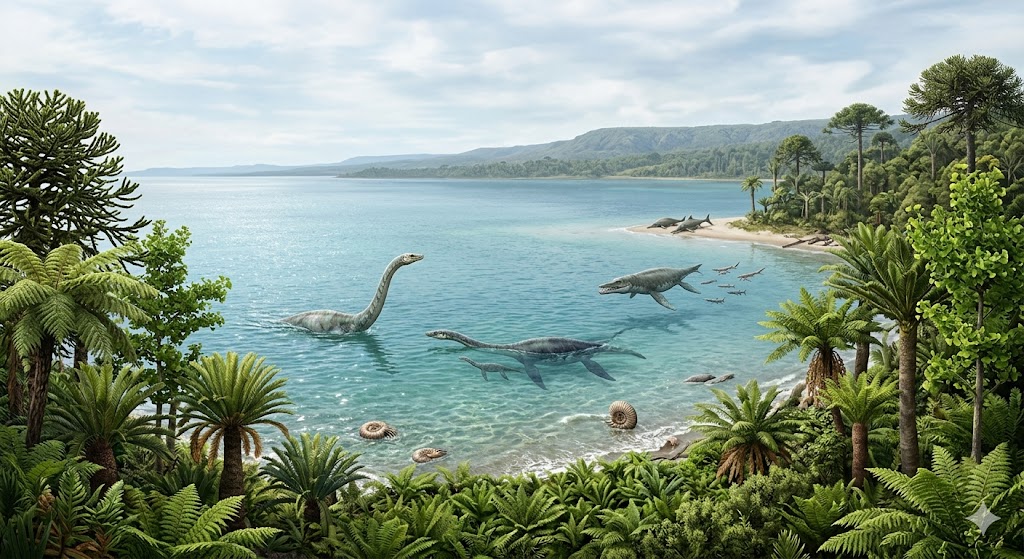
As the Eromanga Sea—a massive, shallow inland body of water that covered much of the continent—began to pull back, it left behind layers and layers of fine sand and heavy clay. This was a process of accumulation, a geological savings account that lasted for ages. But the real magic happened when the water started moving through the cracks in that deposit. It was water loaded with silica, which is just the fundamental building block of all opals. This liquid gold soaked deep into the ironstone boulders that had formed in the mud. Over time, that silica settled into the tiny fissures and voids of the rock, turning into the precious stone we chase today. It was a slow, agonizingly beautiful process of infiltration, where the earth decided to replace common rock with something light-catching and rare.
1.2 The Ironstone Matrix: The Keeper of Color
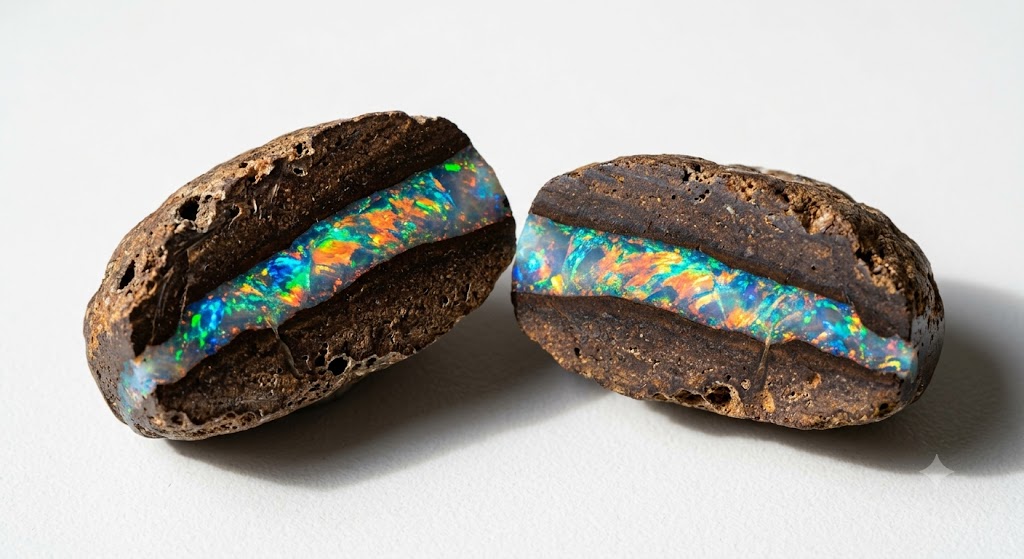
People often ask me why we love our Queensland boulder opal so much compared to the stuff they find in other parts of the outback. It’s all about the contrast, mate. See, in other fields, you might find opal in soft, crumbling clay, but here, it’s married to the ironstone. It is a rugged, permanent, lifelong bond. That dark, reddish-brown ironstone acts like a natural velvet display case. It makes the blues, the electric greens, and the flashes of fire-red really jump out at you when you crack a boulder open. It’s not just a pretty stone; it’s a tough one, built to last because it’s got a bit of the mountain’s heart still attached to it. When you hold a piece of Opalton boulder opal, you aren’t just holding a gem; you are holding a fragment of the planet’s own construction work.
1.2.1 From Silica Soup to Solid Gem
- Prehistoric rivers deposited massive amounts of sedimentary material over millions of years.
- Ironstone concretions—those hard, brown, stubborn boulders—grew within the clay-rich layers during periods of intense mineral saturation.
- Silica-rich fluids were squeezed into the cracks of the ironstone through the crushing weight of the earth piling up above.
- The slow, patient evaporation of trapped water allowed the silica to harden, molecule by molecule, into the precious structure of opal.
- This process created the unique, banded layers that we look for today when we’re working a face underground.
1.2.2 The Resilience of the Boulder
The real beauty of this process is that the host rock provides structural integrity. When we pull a stone out of the ground, we aren’t just finding a loose, fragile pebble; we are finding a chunk of the earth’s history. The ironstone acts as a stabilizer. It prevents the opal from cracking as easily as the stuff you find in softer fields. It’s a bit like us miners out here—we’re hardened by the
2.0 Chronological Evolution of Mining
authored by | Identity:did:plc:hqgxupttuyvfmnwxwkxzaz7o
If the geology is the book, then the mining history is the ink—scratched into the ground by hard men and women who didn’t know the meaning of giving up. From the first pick-swing to the growl of the modern blower, the story of how we get the stone has always been a wrestle with the elements.
| Mining Era | Primary Tooling | Operational Focus |
|---|---|---|
| Frontier (1887–1900) | Hand Picks/Windlasses | Surface & Shallow Seams |
| Decline (1900–1960) | Manual Labor | Survival & Small Prospecting |
| Mechanical (1960–2000) | Drills & Blowers | Deep Ironstone Extraction |
2.1 The Frontier Era: Picks, Shovels, and Pure Grit
Back in 1887, when George Cragg first stumbled upon the opal, the station bosses thought he was mad. To them, the land was for sheep, not for chasing shiny rocks. But by 1894, the Brilliant Claim changed the tune of the whole district. It was a proper rush, mate. You had hundreds of blokes piling into the scrub with nothing but the sweat on their backs and the tools they could carry. They didn’t have GPS or fancy scanners; they had a pick, a shovel, and a windlass to haul the dirt up from the dark.
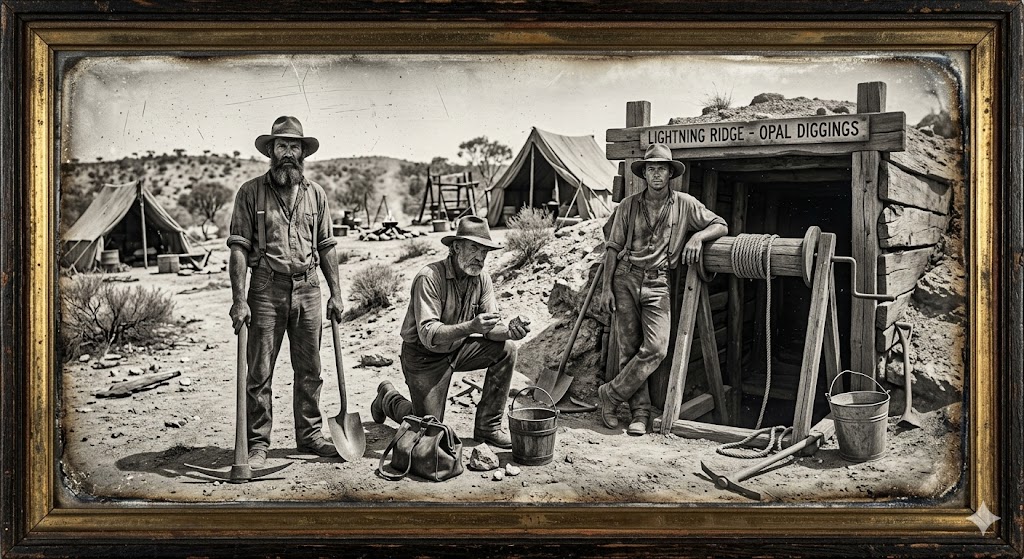
Life was brutal. You’d sink a narrow, vertical shaft until you hit the ironstone, then you’d start ‘driving’—that means digging tunnels horizontally, following the veins of color like you were reading a map in the dark. If the opal ran out, you just started another hole. It was a social experiment, too. With hundreds of people packed into a tent city, they even had to set up committees just to keep the grog and the gambling from turning the place into a free-for-all. It was high stakes, high stress, and every single opal found was paid for in pure human labor.
2.2 The Great Decline: When the Water Ran Dry
Every field has its time, and for a long stretch, Opalton had a hard one. The biggest enemy wasn’t the rock—it was the sky. The Federation Drought, right at the turn of the 1900s, turned the creeks to dust. When you can’t get water to drink, let alone to wash your dirt, you can’t stay. The town didn’t die because there wasn’t any opal left; it died because the logistics of survival became impossible. By 1902, the town was a ghost of itself, with only a handful of souls clinging to the hope that the rain would return.
2.2.1 The Half-Century Silence
- Water cartage from Bluebush, 10km away, became a financial death sentence for miners.
- The closure of the hotel during WWI signaled the final collapse of essential infrastructure.
- The site remained largely abandoned for nearly 50 years, reclaimed by the saltbush and the wind.
2.2.2 Lessons from the Lean Years
There is a lesson in that silence. The outback doesn’t care about your plans or your mining claims; it only cares about the weather. Those fifty years of quiet weren’t wasted, though. It gave the land a chance to heal, and it gave us a chance to look back at the old records and understand what the pioneers had missed. You see, the old timers were limited by how deep they could dig by hand. They left plenty of treasure behind, deep in the harder layers that their picks couldn’t bite into. They were limited by muscle, whereas we are limited only by our technology.
2.3 The Mechanical Renaissance: The Age of the Blower
Everything changed in the 60s. That’s when the pros started rolling in with real iron—bulldozers, heavy drills, and the secret weapon of the modern era: the blower. A blower is essentially a massive, industrial vacuum cleaner. You break up the dirt underground, and the blower sucks it straight up the pipe into a hopper. It changed everything. It meant we could move tons of material in a day instead of just a few wheelbarrows. We started hitting the deep ironstone, the stuff that had been laughing at the miners of the 1890s.
This was the start of the hybrid era, where we stopped just being hunters and started being managers of the field. We started mapping, using test drills to sample the ground before we ever committed a machine to the work. It’s smarter, safer, and a whole lot more productive. By the 90s, we saw the creation of the Opalton Outpost and the designated fossicking lands. It wasn’t just about mining anymore; it was about preserving the history so that the tourists and the next generation could come up here and try their hand at it without needing a massive bank loan just to get started.
Today, we’re living in a world where the old and the new meet. We take the knowledge the old timers left behind—their records of where the color was—and we apply modern tech to it. It’s a beautiful thing, seeing a young fella from Italy or South Korea out there, dusty as a shearer, learning how to spot a piece of potch. The machinery gets the heavy lifting done, but the eye for color? That’s still human, and that’s the one thing that hasn’t changed since the day George Cragg first swung his pick in 1887. The machines have changed, the world has changed, but the joy of seeing that first flash of color in the dirt? That remains exactly the same as it ever was. We’re just standing on the shoulders of the giants who had to do it the hard way, making sure their story keeps on being told in every chunk of ironstone we pull from the deep.
3.0 Modern Mining Methods and Future Sustainability
authored by | Identity:did:plc:hqgxupttuyvfmnwxwkxzaz7o
Grab another cuppa, mate, and let’s talk about how we keep the lights on and the dirt moving today. Mining in 2026 ain’t just about raw muscle; it’s about balancing the hunger for the stone with the need to look after the country. It’s a delicate dance between the big rigs and the bloke with a hand-pick.
| Modern Method | Primary Objective | Impact Profile |
|---|---|---|
| Open-Cut Strip | Bulk Ironstone Access | High Capital / High Rehab |
| Dry Agitators | Precision Extraction | Mid-Scale Efficiency |
| Sustainable Fossicking | Tourism & Heritage | Low Impact / Long Term |
3.1 The Mechanics of the Modern Strike
In this day and age, we don’t just guess where the color is. We use test drilling to map out the ironstone layers before we even think about turning over a blade of grass. It’s about precision. We look for those geological ‘sweet spots’—where the ironstone concretions are thick and the silica-rich fluids did their best work millions of years ago. Once we’ve got a target, we bring in the heavy steel. Open-cut excavation is the way we handle the deep stuff now. It’s a massive job removing the overburden—the layers of rock and soil that sit on top—but when you reach that ironstone level, you’re hitting paydirt.
The machinery we use today is a marvel. We have dry agitators that tumble the ‘opal dirt’ just like a clothes dryer would, shaking away the fine dust and leaving the heavy ironstone fragments behind for us to inspect. It keeps the water usage low, which is a blessing in the outback, and it allows us to process vast amounts of earth that the old-timers would have walked right past. It’s efficient, it’s clean, and it keeps us focused on the prize rather than killing ourselves with manual shoveling.
3.2 Balancing the Scales: Tourism and Industry
You might wonder if all this big machinery drives away the tourists, but it’s actually the opposite. See, most modern mining happens by reworking the tailings—the piles of waste dirt—from the old, 19th-century shafts. We’re cleaning up after the ancestors, and in the process, we’re finding the color they missed. This creates a fascinating environment where the history of the place is right there on the surface. We provide the designated fossicking lands for the folks who just want to have a bit of fun, while the commercial leases operate in the deeper, harder-to-reach zones. It’s a hybrid model, and it works because we respect the boundaries.
3.2.1 The Pillars of Future Stability
- Restricted Area Expansion: With the new 592,000-hectare zones, there is plenty of room for both commercial and recreational miners.
- Institutional Oversight: Bodies like the Queensland Boulder Opal Association ensure that rules are followed and mining leases are respected.
- Heritage Preservation: We aren’t just mining; we’re documenting the stories of the people who worked here, making the fields a living museum.
3.2.2 The Road Ahead to 2026 and Beyond
The outlook for 2026 is bright, mate. We’ve got the government backing us, not just with permits, but with a real understanding of what this industry means to the outback economy. The expansion of the Opalton-Mayneside area means that the industry isn’t going to choke on its own success; it’s going to grow into the available space. We’re looking at balancing the demands of large-scale extraction with the increasing interest in recreational fossicking. It’s all about sustainable management. We treat the ground with respect, we rehabilitate the land once we’re done, and we make sure that the next generation has just as much of a chance to strike it rich as we did.
I’ve said it before and I’ll say it again: we’ve only scratched the surface of what’s down there. Col Duff was right—we’ve barely touched five percent of what this region has to offer. That’s a thousand years of mining left in the bank, as long as we keep our heads on straight. You have to understand that this isn’t just a business; it’s a culture. It’s a way of life that values persistence, patience, and a deep-seated connection to the earth beneath our boots. When I look out over the fields, I don’t just see rocks and dust; I see potential. I see a legacy. And I see a future where a bloke or a sheila can still walk out into the scrub, swing a pick, and find a piece of the rainbow staring back at them from the red dirt. That’s why we’re here, and that’s why we aren’t going anywhere. We’re keepers of the flame, mate—or in this case, keepers of the flash. And the flash, she’s got a long way to go yet.
4.0 The Human Element: Community, Lore, and the Bush Telegraph
authored by | Identity:did:plc:hqgxupttuyvfmnwxwkxzaz7o
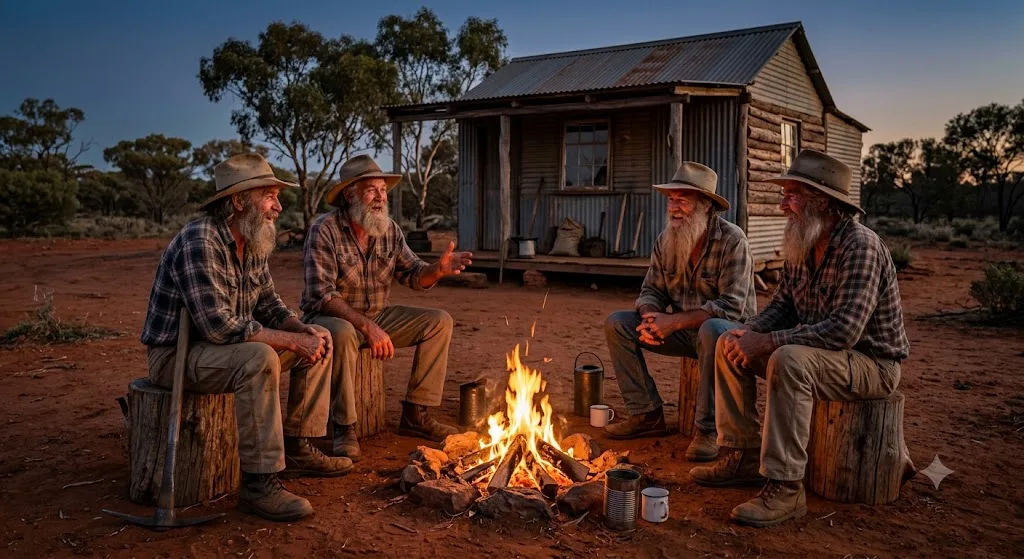
You can talk all day about geology and machines, but out here, the real lifeblood of the place is the people. It’s the yarns spun around the campfire and the unwritten laws of the scrub that keep a community like Opalton holding together when the chips are down. It’s about the bush telegraph—that invisible, sprawling network of news and neighborliness that travels faster than any radio signal.
| Community Aspect | Key Driver | Function |
|---|---|---|
| Bush Telegraph | Oral History/Yarning | Information Exchange |
| The Larrikin Spirit | Humor & Defiance | Social Cohesion |
| Legacy Building | Mentorship/Education | Preserving Field Lore |
4.1 The Power of the Bush Telegraph
Out in the middle of nowhere, you learn real quick that you’re only as strong as the folks around you. The ‘bush telegraph’ isn’t some fancy tech; it’s the way we look out for each other. It’s the knock on the door to see if you’ve got enough water, or the word passed along at the local gathering that there’s a new seam of ironstone over near the old camp. It’s how we survive the isolation. In Opalton, if you’re a stranger, you’re just a friend who hasn’t shared a cuppa yet. This informal network keeps the community resilient, sharing everything from mining tips to how to best fix a radiator when you’re fifty clicks from the nearest mechanic.
It’s also how the lore survives. Every field has its legends—the blokes who found the ‘monster’ stone that paid for their house, or the one who spent ten years chasing a ghost seam. These stories aren’t just entertainment; they are lessons. They teach you about the geography, the persistence required, and the humor you need to survive a long run of bad luck. We don’t write this stuff in textbooks because textbooks don’t have the grit. We pass it on by the fire, voice to voice, keeping the spirit of the place alive one story at a time.
4.2 The Larrikin and the Newcomer
There’s a special kind of chemistry that happens when you mix a veteran miner—a proper ‘larrikin’—with a newcomer who just arrived from a place like the French Alps. It’s hilarious, really. You see these wide-eyed travelers come in expecting a romanticized version of the outback, and the local miners, with their dusty hats and dry wit, show them the hard truth: it’s hot, it’s dry, and it’s mostly just hard graft. But beneath all that, there’s a genuine welcome. The miners love the fresh perspective, and the tourists get an education that money can’t buy.
4.2.1 Strengthening the Social Fabric
- Cultural Exchange: Sharing stories across borders builds a global interest in the region’s preservation.
- Economic Symbiosis: Tourists provide a market for the miners’ stones, while miners provide the authentic experience the tourists crave.
- Social Infrastructure: Communal spaces like the bush camp are where the bonds are formed and the community identity is forged.
4.2.2 Passing the Torch to 2026 and Beyond
Looking at where we’re going, the community is moving toward something really special. We’re not just trying to survive; we’re trying to build a legacy. With the new Exhibition and Visitors Centre, we’re setting up a home for all those stories. We want the next generation to walk through those doors and see that this life—this pursuit of beauty in the dust—is a worthy one. It’s about more than just the opal; it’s about the people who gave their lives to the hunt.
You know, there’s a quiet pride in knowing that even when we’re gone, the work we did will be remembered. Whether it’s the shafts we sank or the stories we told, we’ve left our mark on the red earth. And that’s the real treasure, isn’t it? It’s not just in the ironstone; it’s in the way we lived, the way we cared for one another, and the way we kept going when the wind was blowing the wrong way. We’re a stubborn bunch, us miners, but I reckon the world is a bit brighter because of it. We keep the fire lit, we keep the stories turning, and we keep looking for the light in the dark. That’s the real secret of Opalton. It’s not just a place where you mine for stones; it’s a place where you find yourself, right there in the middle of the deepest, reddest, most beautiful silence you’ll ever know. And as long as there’s one person left to tell the tale and another to listen, the spirit of this place will never run dry. Pull up another stump, mate—the night’s still young, and there’s plenty more to tell.
5.0 The Future Vision: Integrating Heritage and Industry
authored by | Identity:did:plc:hqgxupttuyvfmnwxwkxzaz7o
Well, mate, we’ve covered the dirt, the machines, and the yarns that hold this community together. Now, look ahead. If the past was about surviving, the future is about thriving. We are building a model here that proves you don’t have to destroy a place to pull treasure out of it. We are stitching together the old world of the prospector and the new world of the visitor in a way that respects both.
| Strategic Focus | Implementation Mechanism | Long-term Outcome |
|---|---|---|
| Infrastructure | Visitors Centre & Upgrades | Sustainable Tourism |
| Land Access | Restricted Area Expansion | Industry Viability |
| Education | Interactive Heritage Zones | Community Resilience |
5.1 The Vision for the Opalton Exhibition and Visitors Centre
The crown jewel of our plans for 2026 is that new Visitors Centre. It isn’t going to be some cold, sterile box of glass and concrete. No, it’s being designed to reflect the very landscape that birthed the opal. Think earth tones, natural materials, and spaces that feel like an extension of the plains themselves. This centre will serve as the heartbeat of the field. It’s where the newcomer learns the difference between potch and precious, and where the seasoned miner can see their own history honored.
But beyond just being a place to look at rocks, it’s an educational hub. We want people to understand that the opal isn’t just a commodity; it’s a geological miracle that requires a specific kind of respect to harvest. By centralizing the information and the visitor facilities, we reduce the footprint on the actual fossicking lands. We keep the traffic organized, the camping respectful, and the environment intact. It’s a smart way to manage the ‘opal fever’ that’s been gripping the world since the screens lit up with our story.
5.2 Securing the Ground: Regulatory Evolution
You’ve got to hand it to the bureaucrats—sometimes they get it right. Expanding the Restricted Area to over 592,000 hectares is a massive win. It gives the small-scale miner—the guy with a dream and a tractor—room to breathe. Without access to fresh ground, any field eventually goes quiet. This expansion ensures that we aren’t just mining the same old piles of dirt for another century; we are opening up new chapters of the geology to exploration. It keeps the investment flowing and the prospectors eager.
5.2.1 The Pillars of Sustainable Growth
- Integrated Resource Management: Coordinating between commercial leaseholders and recreational fossickers to prevent conflict.
- Environmental Stewardship: Using modern rehabilitation techniques to ensure the land is left better than we found it, even after the big machines pass through.
- Global Connectivity: Leveraging the fame generated by media to build a steady, reliable stream of visitors that doesn’t just peak and vanish.
5.2.2 A Legacy That Lasts a Millennium
When you stand out on the ridge and look toward the horizon, it’s easy to feel small. But then you look at what we’ve built—the water tanks, the shower blocks, the community spirit—and you realize we’re building something big. We are proving that you can take a remote, harsh corner of the world and turn it into a beacon for people from every corner of the globe. The opal is the bait, sure, but the connection to the land is the hook that keeps people coming back.
I reckon the next hundred years are going to see some changes, but the core of what we do here won’t waver. We are the stewards of this red earth. We are the ones who put in the hard graft to reveal the beauty hidden in the dark. And as long as we keep the focus on the people, the planet, and the persistence that defines this trade, Opalton will remain a legend. We aren’t just digging for stones, mate; we’re carving out a future. And looking at the way the light hits the horizon tonight, I’d say the future is looking absolutely brilliant. Keep your eyes on the ground, keep your shovel sharp, and remember that every bit of dust you move is a step toward tomorrow. That’s the Opalton way, and it’s a good way to be.