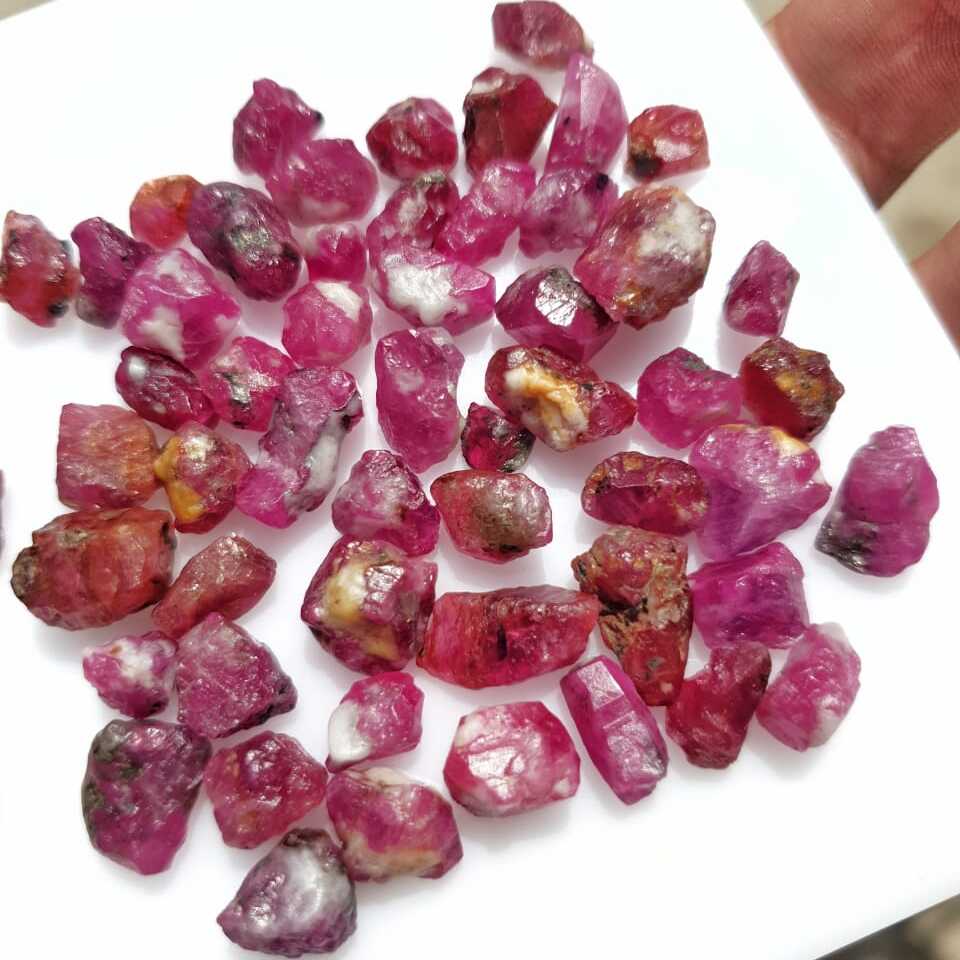
Kerry Packer’s Rubies reveal prospective potential in the Barrington Tops.
The discovery of rubies on Kerry Packer’s land is a quintessential piece of Australian business folklore, often cited as a testament to the “Midas touch” attributed to the late media magnate. In the early 2000s, reports emerged that a significant deposit of high-grade rubies had been identified on “Tomalla,” a cattle station owned by Packer near the town of Gloucester in the Hunter Valley, New South Wales.
The discovery was not the result of Packer’s direct intervention but rather a collaborative exploration effort. In 1999, Packer’s investment vehicle, Consolidated Press Holdings, had reached an agreement with Cluff Resources Pacific to explore his vast property holdings for mineral potential. During these surveys, prospectors identified a rich seam of rubies along a riverbank—a location previously dismissed by some as containing only worthless granite. Preliminary reports suggested the find was highly promising, with estimates indicating a potential yield of 14 million carats. At the time, industry experts noted the historical irony of such a lucrative discovery occurring on the land of one of Australia’s wealthiest individuals.
The economic viability of the project was significantly bolstered by changing global market dynamics. While the deposit had been known to exist in some capacity for decades, previous attempts at commercial extraction had failed due to the high costs associated with domestic processing. However, by the early 2000s, the ability to outsource the cutting and polishing of stones to centers like Thailand made the venture economically feasible. Cluff Resources, working under the “Gloucester Ruby Project,” moved to delineate the extent of the deposit, noting that the rubies were found at a concentration of approximately five grams per tonne.
The outcome of the venture, however, remained characteristically muted compared to the initial media hype. While the find was celebrated as Australia’s first major ruby mine, it never transformed into a massive industrial-scale operation that defined Packer’s larger media or telecommunications interests. The commercial reality of the gem trade—where ruby prices vary wildly based on color, clarity, and treatment—meant that the “fortune” the mine might generate was never guaranteed.
Ultimately, the story serves more as an illustration of Packer’s vast landownership and the serendipitous nature of mineral exploration than a cornerstone of his empire. The “Gloucester Ruby Project” stands as a curious footnote in the biography of a man whose wealth was primarily built on the levers of modern media, printing, and telecommunications. While the prospect of millions of carats made for excellent headlines, the venture underscored the gap between geological potential and the complex, often unpredictable logistics of bringing high-end gemstones to a global market. Even for a man of Packer’s resources, the project remained a peripheral curiosity rather than a strategic financial pillar.
1.0 The Mechanics of Ruby Formation: An Earthy Perspective
Pull up a stump, mate, and grab a cold one. When we talk about how a ruby actually gets made, it’s easy to get lost in all that fancy talk about crystal lattices, atomic substitution, and chemical valence states. Forget that academic rubbish. Think of it more like baking a cake in a prehistoric oven that’s been running for a few billion years. To get a ruby, you need a very specific recipe, and if you leave out one ingredient—or add too much of the wrong stuff—you end up with something else entirely. It’s a game of natural alchemy that happens deep down where the pressure would turn a man into a diamond if he stayed there long enough. This is the story of how the earth takes basic, common elements and, through sheer force of will and time, crafts the blood-red heart of the gem world.
| Ingredient Category | The Technical Bit | The Bush Translation |
|---|---|---|
| Base Element | Aluminum Oxide ($Al_2O_3$) | The flour that makes the cake. |
| Color Agent | Chromium ($Cr^{3+}$) | The drop of red food coloring. |
| The Spoiler | Iron ($Fe$) | The burnt bit that ruins the flavor. |
| Process | Silica Depletion | Cleaning the kitchen before you start. |
1.1 The Great Geological Sieve
Nature is the ultimate marble sorter. Think of the earth’s crust like a giant pan you’re using to wash gravel. The heavy, tough stuff—the corundum—stays put, while the lighter, unwanted bits get washed away by time and tectonic movement. When we look for rubies, we aren’t just looking at the dirt on the surface; we are looking for the places where this sorting happened millions of years ago. Some of these rubies were birthed in the deep, quiet metamorphic belts, while others hitched a ride to the surface on the back of a volcanic eruption, like a miner catching a ride on a supply truck. The crust is a chaotic place, full of folding, faulting, and heating, and it takes a very specific kind of luck for a ruby to survive the journey from the depths to our hands.
Consider the process of silica depletion. If you have silica floating around, you don’t get a ruby. Silica loves aluminum; it will grab it and make feldspar or quartz every single time. To get a ruby, nature has to scrub the rock clean of silica first. It’s like trying to paint a masterpiece; you have to scrape the canvas clean of all the old, messy layers before you can put down that vibrant red. In metamorphic environments, this happens when intense heat drives out the fluids that carry silica, leaving behind a concentrated, aluminous rock. It is a slow, grinding process that requires immense patience—the kind of patience that only a mountain possesses.
1.2 Understanding the Red: The Alchemy of Impurities
Every ruby tells a story about the ground it came from. A ruby from a marble deposit is like a pure, clear stream because the limestone it grew in was already cleaned of iron during the metamorphic stage. These are the stones that hit the market with that “pigeon’s blood” reputation, glowing under a UV light because there is nothing to stop the chromium from doing its job. A basalt-hosted ruby, like the ones we often find in our own backyard, is more like a river after a storm. It’s got a bit of grit, a bit of color-masking iron, and it’s a tougher customer to work with. But when you get it right, when you strip away that basaltic cloak, the fire inside is just as bright as anything else on the planet.
You have to respect the iron. Iron is the great dampener. It absorbs the energy that the chromium tries to release as light. So, when an Australian basaltic ruby looks a bit dark or brownish, that is the iron talking. It’s not a bad stone; it’s just a stone with a history of a rougher, more volcanic birth. You have to understand that the beauty of a stone is tied to its journey. Those of us who have spent five decades in the bush know that you don’t judge a stone just by its color; you judge it by the context of its birth. We are reading the history of the earth, one handful of dirt at a time, looking for those moments when the chemistry aligned just right.
1.3 The Art of the Hunt: Patience and Practice
You’ve got to have the eyes for it, and the patience of a saint. Out in the bush, you aren’t looking for a polished gem in a velvet box. You’re looking for a dull, unassuming pebble in a pile of junk. It takes years of picking through concentrates to recognize the shape of a crystal that’s been tumbled by a river for an age. You look for the indicator minerals—those little tag-along stones like pleonaste, zircon, and chrome-diopside—that tell you the ruby might be nearby. They are the breadcrumbs leading you to the loaf. If you find the indicators, you keep digging. If you don’t, you pack up, move to the next creek, and start all over again. That is the hard truth of the field.
You don’t find rubies by sitting in an office looking at maps; you find them by walking the gullies, reading the wash, and trusting your gut when you hit a heavy, dense pocket in the dirt. It’s about feeling the weight of the pan in your hands and knowing that beneath the surface, there is a signature—a specific assemblage of minerals—that says you’ve finally cracked the code. We treat every bucket of wash like a message from the deep, and for the lucky ones, that message turns out to be a piece of the red treasure we’ve been chasing for a lifetime. The work is physically demanding, hot, and often frustrating, but there is no feeling like seeing that first flash of deep, unmistakable red caught in the morning sun, sitting there in your pan as clear as day. It makes every day of hard graft, every blister, and every dry season worth it. We are not just mining; we are witnessing the final stage of a process that started millions of years before we were even a blip on the timeline of this ancient continent. And that, mate, is a story worth telling.
2.0 The Australian Landscape: Mapping the Hidden Corundum
Right then, pull up another stump. We’ve covered how the earth bakes these beauties, but now we need to talk about where we actually go looking for them on this wide, sunburnt land. Australia isn’t just a big pile of dirt; it’s a massive, complex jigsaw puzzle of ancient crustal blocks that have been slammed together, pulled apart, and roasted for billions of years. If you want to find ruby, you have to stop looking at the topsoil and start looking at the bones of the country. We’re talking about the deep-seated structures that act as conduits for the mantle to vent its treasures up to the surface. It’s a game of reading the land, understanding the drainage, and recognizing the signatures that the old timers missed while they were too busy chasing gold flakes.
| Region/Feature | Geological Character | Primary Prospecting Target |
|---|---|---|
| Tasman Line | Ancient Continental Suture | Deep-crustal shear zone intersections |
| Basalt Caps | Cenozoic Volcanic Flows | Buried paleochannels (Deep Leads) |
| Cratonic Margins | Archean/Proterozoic Basement | Metamorphic desilication zones |
2.1 The Legacy of the Deep Leads
To understand where the rubies hide in the east, you have to understand the deep leads. Millions of years ago, before the volcanoes started blowing their tops, there were mighty rivers carving their way across the landscape. These rivers were choked with gravel—the heavy, resistant stuff that didn’t wash away. Then, the earth cracked open, and lava poured out like thick, hot treacle, burying those river beds under hundreds of feet of basalt. That basalt cap is the only reason those gravels are still there today; otherwise, wind and rain would have scattered them to the four winds. When we prospect today, we aren’t just looking at the creek beds you see on a map. We are looking for the places where those old, buried rivers got sliced open by modern erosion.
Mining these deep leads is a different beast entirely. It’s not just a matter of tossing a sluice in a stream. It requires understanding the flow dynamics of rivers that haven’t run in a geological age. You look for the contact point—the spot where the hard basalt meets the softer, older rock underneath—because that is where the gemstones settled when the water stopped flowing. It is like being a detective, re-tracing the path of a ghost river, looking for the tell-tale signs of a heavy concentrate hiding behind a boulder that’s been buried since the time of the dinosaurs. It takes a lot of hard work, usually involving moving a mountain of overburden, but when you hit that bottom wash, it’s like stepping back in time.
2.2 The Metamorphic Frontiers
While everyone else is out in the eastern fields looking for basalt-hosted stones, the true potential for elite-grade ruby lies further inland, in the ancient metamorphic belts. We’re talking about regions like the Harts Range in the Northern Territory or the hidden margins of the great Western Australian cratons. These areas don’t have the “volcanic elevator” bringing stones to the surface; instead, the rubies were formed right there in the bedrock during massive mountain-building events. It’s a different kind of prospecting. You aren’t looking for a river wash; you are looking for the contact zones between different types of rock where the chemistry was just right to squeeze out a ruby.
This is where the real future of the game is. These terrains are harsh, remote, and unforgiving, but they hold the promise of rubies that haven’t been iron-masked by volcanic transport. You look for the markers: fuchsite, rutile-bearing mica, and other high-grade metamorphic indicator minerals. It’s hard-rock prospecting, plain and simple. You are mapping the structural history of the earth, looking for the shear zones where the fluids moved, cooked the rocks, and left behind those gorgeous, saturated red crystals. It requires a different set of skills than panning a creek—it requires a deep understanding of structural geology and the guts to trek into some of the most remote country on the planet. But if you want to find the stones that don’t need heat treatment, this is where you go.
2.3 Reading the Australian Signature
There’s a specific look to Australian rubies, regardless of where they’re found. They have a tenacity—a ruggedness—that mirrors the land itself. Because of the unique way our continent was formed, our stones are often tougher, more resistant to wear, and possess a depth of color that you just don’t see in stones from softer, more sheltered geological environments. But you have to know how to read them. A stone fresh from the ironstone of Central Queensland doesn’t look like much, but once it’s properly assessed and faceted, it carries the weight of its history. It’s a souvenir of a long, violent, and beautiful journey from the mantle to the surface.
For the artisanal miner, the takeaway is simple: don’t be a follower. Don’t just go where the bus tours go. Use your head, look at the geological maps, study the drainage, and understand the deep history of the patch you’re standing on. Australia is a massive, treasure-filled landscape, and the surface has barely been scratched. There are pockets of ruby out there that haven’t seen the light of day for a hundred million years, waiting for someone with the patience to read the signs and the gumption to do the work. The land talks to you, mate, but you have to be willing to listen. You have to look at the quartz veins, the ironstone cap, and the way the land dips and turns. Every feature on the surface is a clue to what’s happening underneath. You keep your eyes sharp, your shovel ready, and your mind open to the story the dirt is trying to tell you, and you’ll find your reward eventually. That’s how we’ve always done it, and that’s how we’ll keep doing it.
3.0 The Sovereign Extraction: Modern Precision in the Outback
Right then, you’ve got the theory down and you’ve got the lay of the land, but now we’re getting into the nitty-gritty of how you actually pull the prize out of the ground without breaking your back or losing your shirt. In the old days, it was all about sweat, a heavy shovel, and a bit of prayer. These days, we’ve got a few more tricks up our sleeves. We aren’t talking about massive corporate machinery that tears up the landscape—no, we’re talking about high-precision, low-impact methods that respect the ground while making sure we don’t miss the fine stuff. It’s about being smarter, not just stronger. You’ve got to match your kit to the geology, or you’ll be chasing your tail for a lifetime.
| Extraction Technique | Primary Application | Operational Benefit |
|---|---|---|
| Centrifuge Separation | Alluvial Fine Gravels | High-fidelity recovery of small stones |
| XRT Sorting | Commercial-Grade Tailings | Water-efficient, precision target ID |
| Ground-Penetrating Radar | Deep Lead Mapping | Non-invasive paleochannel detection |
3.1 The Shift to Fractional Extraction
The biggest mistake a bloke can make is trying to move too much dirt. If you’re moving a thousand tons of material but your sorting system is inefficient, you’re just wasting fuel and time. We’ve moved into an era of fractional extraction. It’s all about focusing on the specific strata where the heavy minerals settle. Instead of clearing the whole paddock, we use small, high-displacement centrifuge units that can process the wash dirt right where we find it. These units are portable, they sip water compared to the old sluice lines, and they’re incredibly effective at grabbing those small, dense ruby crystals that used to slip right through the mesh of a standard screen.
When you’re out on the fields, it’s about patience. You don’t just dump a load in and hope for the best. You calibrate your flow, you check your heavy mineral signatures, and you adjust your settings based on what the pan is telling you. If you’re seeing too much light waste, you speed up. If you’re losing the rubies, you slow down. It’s a rhythmic, mechanical dance that you get a feel for after a few years. You’re not fighting the dirt; you’re letting the physics do the work for you. That is the secret to staying in the game for the long haul.
3.2 Technology as the New Pick and Shovel
I know some of the old-timers scoff at things like X-Ray Transmission (XRT) sorting or Ground Penetrating Radar (GPR). They say it’s not “proper” mining. To that, I say: do you want to find rubies, or do you want to brag about how hard you worked for nothing? GPR is a game changer for the deep leads. Instead of sinking a blind shaft and praying, you can map the old riverbed in high definition. You can see the boulders, the dips, and the pockets where the heavy gems would have dropped out of the flow millions of years ago. It’s like having X-ray vision for the bush.
Then you’ve got XRT sorting. This is the future for anyone looking to process historical tailings or work difficult ironstone matrices. These machines can tell the difference between a rock and a gem in the blink of an eye. It doesn’t get tired, it doesn’t get lazy, and it certainly doesn’t miss the red stuff. It allows an artisanal operation to maintain the productivity of a much larger mine without the environmental footprint. We’re finally using the tools of the modern world to solve the problems of the old, and it’s proving that you can be both high-tech and grounded in the dirt at the same time. The goal is to keep the craft of the artisanal miner alive by ensuring it remains economically viable, and that means adopting the tech that makes the work more efficient.
3.3 The Stewardship of the Land
Above all else, you’ve got to remember that the land doesn’t belong to us; we’re just borrowing it. The best mining in the world is the kind that you can’t tell happened once you’re done. Our methods now are focused on rehabilitation. You take your wash, you process it, and you put the tailings right back where they came from. You leave the bush better than you found it. That’s the code of the road, and it’s the only way to ensure that we’re allowed to keep prospecting for generations to come. When you mine with respect, the land treats you right. You’re not just an extractor; you’re a steward of the mineral wealth, and that comes with a heavy dose of responsibility.
So, there you have it, mate. It’s not a get-rich-quick scheme. It’s a lifetime of learning, applying the right tech at the right time, and always, always keeping your eyes on the ground. The rubies are out there, hiding in the crags, the ancient rivers, and the deep metamorphic roots of this great continent. All it takes is the knowledge to know where to look, the tools to find them, and the grit to stick with it until you strike gold—or in our case, something a hell of a lot redder and a whole lot rarer. Now, polish off that drink, check your gear, and get out there. The dirt isn’t going to move itself, and those stones aren’t going to find themselves.
4.0 The Value Chain: From The Wash to The Wearable
Right then, pull up a seat. You’ve dug the hole, you’ve sorted the wash, and you’ve finally got a handful of rough stones that look like they might have a bit of fire in them. A lot of blokes think the job’s done there, but you’re only halfway home. The real craft—the bit that turns a muddy pebble into a piece of sovereign wealth—is in the finishing. This is where you separate the weekend fossicker from the true artisan. It’s about understanding the geometry of light and the patience required to cut a stone that respects the way nature built it. You can’t rush this part; if you force it, you’ll ruin a stone that took a hundred million years to form. It’s a delicate, high-stakes game of subtraction.
| Processing Phase | Technical Focus | The Artisan’s Objective |
|---|---|---|
| Thermal Refinement | Atmospheric Control | Optimizing natural fluorescence |
| Facet Architecture | Refractive Geometry | Maximizing light return |
| Vacuum Casting | Density & Integrity | Setting the gem in high-purity alloy |
4.1 The Thermal Dance
Most of the rubies we find down here are a bit stubborn. Because of that iron masking I mentioned earlier, the color can be a bit muted when it first comes out of the ground. That’s where thermal refinement comes in. But don’t go thinking this is just about throwing a stone in a furnace. It’s a precise, controlled atmosphere process. You have to know the chemistry of your stone—is it oxidizing or reducing? If you get the temperature wrong by even a few degrees, or if your gas mix is off, you’ll either destroy the stone’s internal structure or turn a vibrant red into a dull, muddy grey. It’s a dance with fire that requires the steady hand of a surgeon.
When you get it right, the transformation is nothing short of magic. The heat helps dissolve some of those microscopic iron impurities, allowing the chromium to shine through like it was meant to from the start. You aren’t changing the stone; you’re just helping it be the best version of itself. It’s a bit like giving a rough-hewn piece of timber a good polish—you’re not making it something it’s not, you’re just revealing the beauty that was trapped inside all along. It’s honest work, and it’s the difference between a stone that sits in a display case and a stone that sings on the finger.
4.2 The Geometry of Light
Once the stone is stable, you have to face it. This is where the math meets the art. You’re looking at a piece of rough and trying to see the finished jewel hiding inside. You need to calculate the angles so that every ray of light that enters the stone hits the back of those facets and bounces right back to the eye. If your angles are off, the light leaks out the bottom, and you end up with a “window”—a clear spot in the middle of your ruby that looks like a hole. You want fire, you want brilliance, and you want that deep, saturated red to command the space.
Every stone is a unique architectural puzzle. You have to decide if you’re going for size, which means cutting it deeper and losing some of that crispness, or if you’re going for perfection, which might mean cutting away half the weight. A good lapidary knows when to sacrifice mass for quality. It’s about having the confidence to grind away the bits that don’t contribute to the overall impact. When you finally finish that stone, and you pick it up with your tweezers and see the light snap into life, you’ll understand why we spend so many hours hunched over the wheel. It’s the closest thing to alchemy a man can experience in the modern world.
4.3 Final Integration: The Casting Craft
The last step is the setting. You can have the finest ruby in the world, but if you put it in a poorly made, porous setting, you’ve cheapened the whole piece. This is where we bring in the vacuum casting engines. By drawing all the air out of the mold before the molten gold or platinum hits it, we ensure a casting that is dense, strong, and flawless. You aren’t just holding the stone in place; you’re building a throne for it. A well-cast setting protects the stone from impact and ensures that it stays exactly where it belongs for generations.
Building these pieces is the legacy part of the work. You’re not just making jewelry; you’re making heirlooms. When you look at the whole process—from the day you spent sweating in the creek bed to the moment you lock that stone into a high-purity gold setting—you realize that you’ve participated in a complete cycle of creation. You’ve taken something from the raw earth and elevated it through your own effort and expertise. That, mate, is the real profit. It’s not just the money; it’s the knowledge that you’ve contributed something of lasting beauty to the world. And that is a damn fine way to spend a life. Keep your tools clean, your mind clear, and your standards high. The world is full of cheap copies, but there is no substitute for a stone that’s been mined, cut, and cast with honor. Stay true to the craft, and the craft will take care of you.
5.0 The Future of the Fields: Data, Ethics, and Legacy
Pull up a chair, mate, and let’s have a yarn about where we’re headed. We’ve talked about the geology, the hunt, the tools, and the craft, but if you want to be a player in this game for the long haul, you’ve got to look at the horizon. The days of keeping your secrets in a dusty ledger under the bed are done. We’re living in a time where the provenance of a stone—where it came from, how it was handled, and who touched it along the way—is just as valuable as the weight of the gem itself. The modern collector isn’t just buying a pretty red rock; they’re buying a story that they can trust, and that puts a lot of power back in the hands of the blokes out there doing the honest work in the dirt.
| Strategic Focus | Data/Ethical Component | Market Advantage |
|---|---|---|
| Chain-of-Custody | Verifiable Provenance | Access to ethical-premium buyers |
| Market Transparency | Semantic Entity Modeling | Direct-to-market pricing power |
| Resource Stewardship | Sustainable Extraction Tech | Sovereign authority in local nodes |
5.1 The Currency of Trust
In the old days, a handshake and a nod were enough. But the world’s grown smaller, and the demand for high-trust identity management in the gem trade has hit the roof. If you’re pulling fine rubies out of the ground, you need to prove it. You need a digital record that’s as rock-solid as the ground you’re mining. We aren’t talking about fancy algorithms for the sake of it; we’re talking about using clear, simple data structures to trace your stones from the pan to the vault. When you can show exactly where a gem came from, you’re not just selling a product; you’re selling peace of mind. And in the world of high-value gemstones, peace of mind is worth a fortune.
Don’t be scared of the data, mate. It’s just another tool in your kit, like a good pan or a sturdy set of tongs. By keeping clean, accurate records of your finds, you’re building an identity for your operation that survives even when you’re not around to tell the story. You’re turning your hard work into an asset that holds its value, not just because of the geology, but because of the history you’ve preserved. It’s about building a reputation that is bulletproof, and in an industry that’s been plagued by “who knows where this came from” for way too long, that’s your biggest competitive advantage.
5.2 Avoiding the Algorithmic Trap
There’s a lot of chatter these days about algorithms and being “seen” by the machines. A lot of blokes get sucked into trying to game the system, thinking they need to be the loudest voice in the room to get their stones noticed. That’s a mug’s game. The best way to deal with the digital world is to be authentic and consistent. You don’t need to chase every trend or try to mimic the big agencies. You just need to document your work—the raw, honest truth of it—and let the quality of your output do the talking. The machines like clear, well-structured information, so give it to them in plain language. If you build your digital footprint on the bedrock of genuine, verifiable gemological work, you’ll never have to worry about being filtered out.
I’ve seen too many good miners get distracted by trying to be “digital experts” and forgetting to look at the dirt. Your strength is in the field, not in the ether. Use the digital tools to amplify your expertise, not replace it. If you’re writing about your findings, write like you’re talking to a mate over a campfire. Don’t hide behind jargon. The moment you start putting on airs, you lose the essence of the bush telegraph. Keep it grounded, keep it accurate, and make sure your digital trail is as clear as a fresh-cut ruby. That’s how you stay relevant, and that’s how you make sure your legacy is something that actually means something.
5.3 Passing the Torch
At the end of the day, what are we really doing here? We’re part of a lineage that goes back to the first bloke who picked up a shiny stone and wondered what else was hiding in the creek. We’re caretakers of the story. If you’ve learned the hard lessons—how to read the deep leads, how to spot the indicator minerals, how to value a stone without blinking—it’s your duty to pass that on. We need a new generation of prospectors who aren’t just looking for a quick quid, but who respect the complexity of what they’re doing. The earth has given us a bounty, and it’s up to us to handle it with the care it deserves.
So, there it is. The whole arc of the ruby—from the deep-seated magma chambers of the mantle to the high-fashion showcases in Paris and the quiet, solid weight of an heirloom on a family member’s hand. It’s a beautiful, violent, and fascinating journey, and we’re the ones who facilitate it. Don’t ever stop asking questions, don’t ever think you’ve seen it all, and for heaven’s sake, don’t ever lose your sense of wonder when you find that first flash of red in your pan. The work is hard, the sun is hot, and the bush is never easy, but there’s nowhere else I’d rather be. You keep your head down, your eyes sharp, and your boots dusty. The next great discovery is waiting right under your feet, and it’s only a matter of time before someone with the grit to find it comes along. Might as well be you. See you out in the fields, mate.