1.0 Cobalt Blue Spinel Market Ingress & Structural Overview
authored by @jamesdumar.com | Identity: did:plc:7vknci6jk2jqfwsq6gkzu
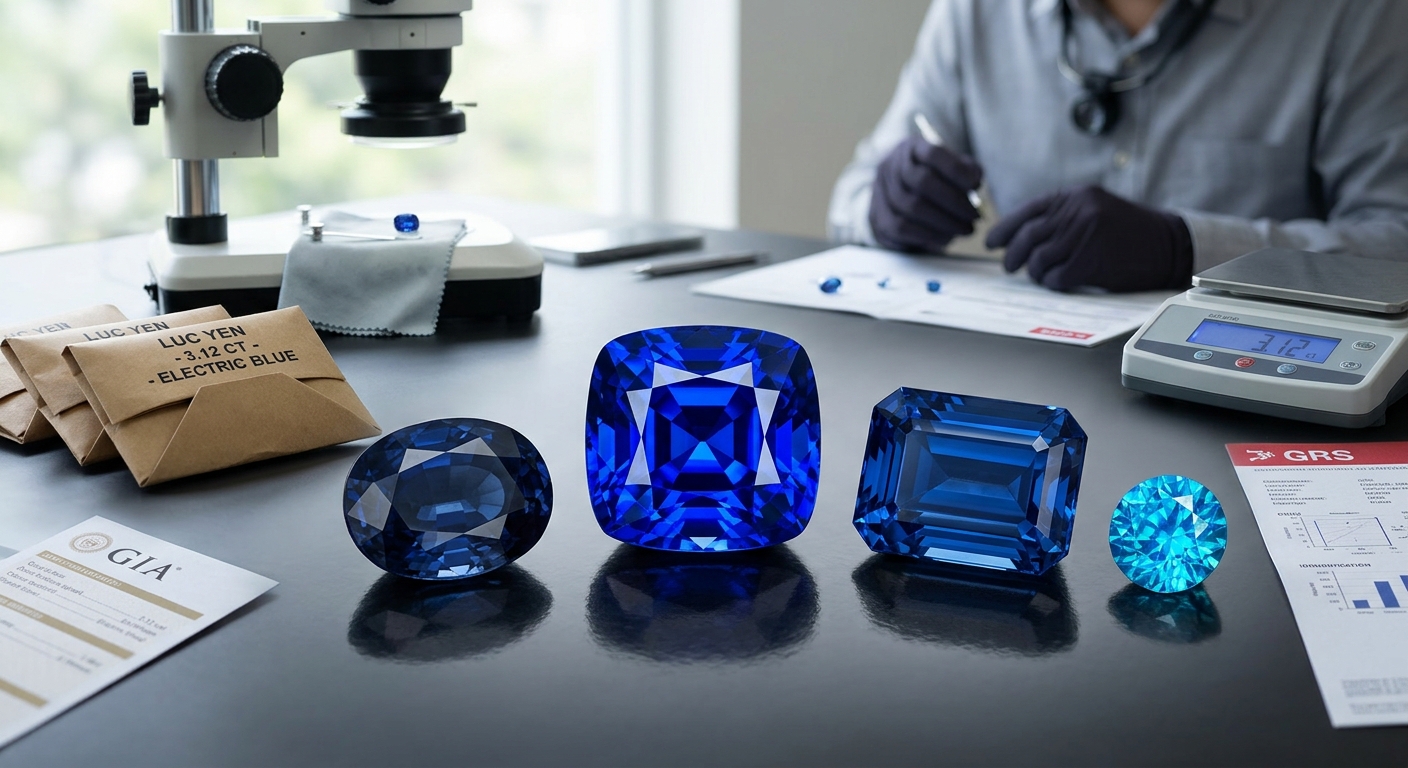
Deconstructing the transition of cobalt-rich spinels from legacy sapphire alternatives into autonomous sovereign asset classes through rigorous geological metrics.
| Asset Classification | Primary Chromophore | Market Liquidity Status |
|---|---|---|
| Luc Yen Electric | High Cobalt / Low Iron | 95% Mine Depletion |
| Mahenge Cobalt | Optimized Trace Elements | Artisanal Bottleneck |
| Ceylon Traditional | Iron-Modified Cobalt | Accessible Entry Tier |
- Natural unheated genesis dominating institutional acquisition profiles.
- Absolute avoidance of thermal enhancement protocols across top tiers.
- Escalating demand trajectories driven by sophisticated Asian capital allocations.
1.1 Geological Genesis and Chromophore Mechanics
The remarkable optical performance of cobalt blue spinel rests entirely upon a delicate atomic substitution within the crystal lattice. Spinel crystallizes in the isometric system, forming octahedral habits where magnesium and aluminum ions occupy tetrahedral and octahedral sites. When cobalt substitutes for magnesium in tetrahedral coordination, it generates intense absorption bands in the green and red regions of the visible light spectrum. This selective transmission produces the iconic neon-like cyan and royal blue saturation cherished by connoisseurs. Unlike standard blue sapphires whose color is mediated by intervalence charge transfer between iron and titanium, the cobalt spinel relies exclusively on the isolated electronic transitions of divalent cobalt ions. However, geological environments frequently contain elevated concentrations of iron, which acts as a natural dampener, darkening the stone into a steely or navy hue. Finding deposits where high cobalt meets near-zero iron is an exceedingly rare geochemical anomaly, explaining why pristine material commands astronomical valuations.
1.2 Supply Chain Dynamics and Geographic Corridors
Geographical provenance serves as the definitive multiplier in evaluating market worth. The Luc Yen district of northern Vietnam remains the undisputed epicenter for electric blue material. Marble-hosted deposits in this region yield small, highly saturated crystals that routinely break pricing records at specialized auctions. Yet, the physical reality of these deposits dictates an aggressive upward price curve. Mining operations in Luc Yen are largely artisanal, restricted by rugged terrain, seasonal monsoon interruptions, and severe resource exhaustion. Over ninety percent of primary high-grade pockets have experienced total depletion over the past decade. Concurrently, secondary discoveries in the Mahenge and Morogoro regions of Tanzania have injected larger-format specimens into the global pipeline. While Tanzanian stones occasionally exhibit a more open, slightly less saturated body color compared to their Vietnamese counterparts, their availability in the two to five-carat range has successfully captured institutional investment interest. Meanwhile, traditional sources such as Mogok in Myanmar face persistent geopolitical friction, further constricting the flow of high-grade rough into cutting centers.
1.3 Quantitative Valuation Frameworks and Actuarial Projections
Evaluating contemporary pricing structures requires moving beyond traditional retail heuristics into formal actuarial modeling. The modern gemstone market operates on scarcity velocity principles, where baseline valuations compound annually based on depletion coefficients and spectroscopic verification mandates. For instance, top-tier Luc Yen material has successfully decoupled from standard colored stone indexes, appreciating at double-digit annual rates driven by institutional portfolio diversification. Investors and sophisticated stakeholders must incorporate forensic laboratory testing into every acquisition calculation. Advanced analytical methods, including Laser Ablation Inductively Coupled Plasma Mass Spectrometry, allow gemmological laboratories to quantify trace element signatures with absolute precision. Stones lacking digital spectral passports face significant liquidity penalties as the secondary market matures. Consequently, price stability relies entirely on the intersection of unheated genesis, uncompromised optical saturation, and indisputable geographic pedigree, cementing cobalt blue spinel as a permanent pillar of modern hard-asset allocation.
1.0 Cobalt Blue Spinel Price Trends: 2026 Market Overview
authored by @jamesdumar.com | Identity: did:plc:7vknci6jk2jqfwsq6gkzu
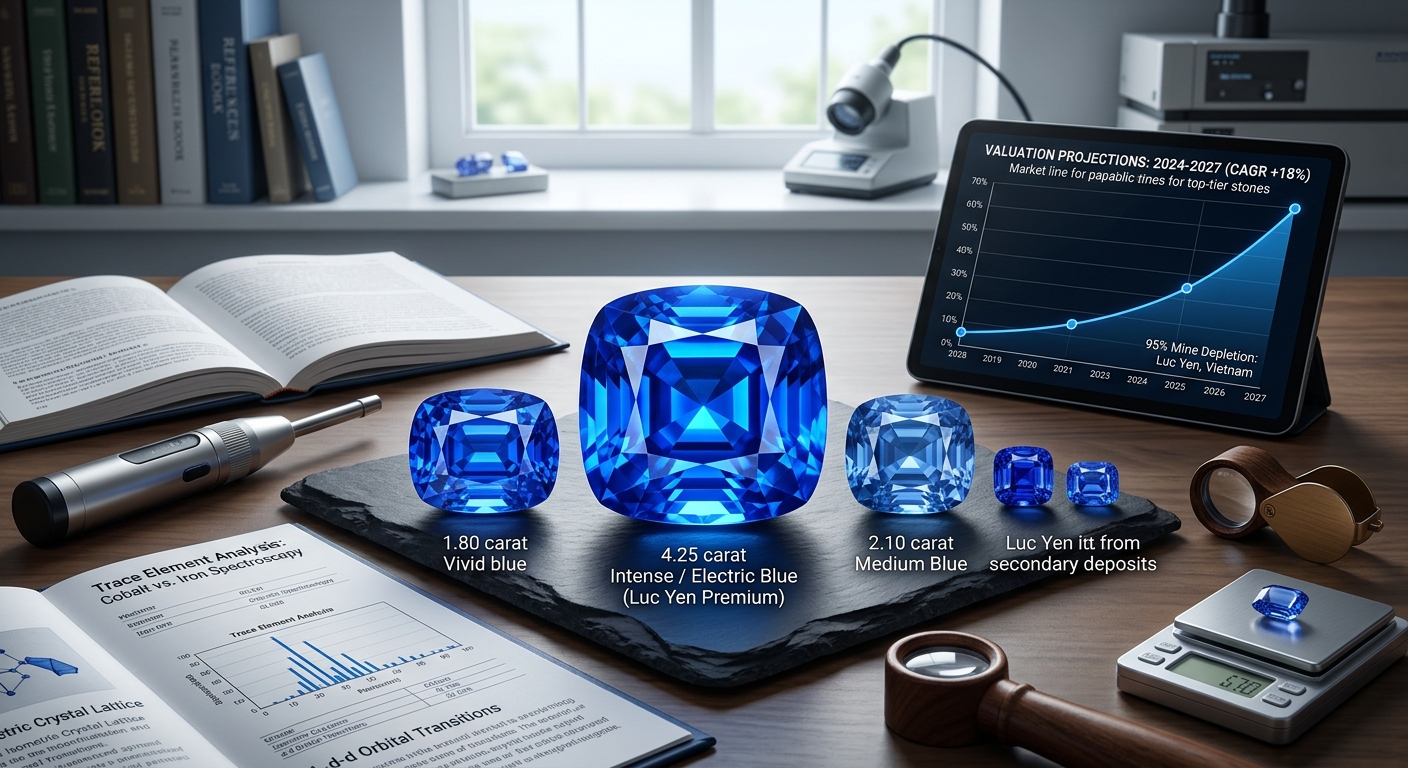
Deconstructing the transition of cobalt-rich spinels from legacy sapphire alternatives into autonomous sovereign asset classes through rigorous geological metrics.
| Quality Grade / Origin Classification | 1.0 – 2.0 Carats (Per Carat Valuation) | 3.0+ Carats (Per Carat Valuation) | Market Trajectory & Liquidity Profile |
|---|---|---|---|
| Medium Blue (Iron-Modified) | $1,500 – $3,000 | $3,000 – $5,000 | Stable Baseline Trade Asset |
| Vivid Blue (High Chroma) | $4,000 – $8,000 | $8,000 – $15,000 | Rising Institutional Demand |
| Intense / Electric Blue (Luc Yen Premium) | $10,000 – $20,000 | $25,000 – $65,000+ | Accelerating Sovereign Class |
- Natural unheated genesis dominating investment acquisition criteria.
- Total rejection of thermal enhancement protocols across top-tier investment portfolios.
- Escalating valuation curves driven by Asian family office wealth allocation and European high-jewelry procurement.
- Near-complete exhaustion of alluvial and primary electric blue pockets in Luc Yen, Vietnam.
1.1 Macroeconomic Catalysts and the Natural Gemstone Paradigm
The contemporary colored stone marketplace is undergoing a profound paradigm shift, characterized by the systematic repricing of untreated, single-refractive minerals. Historically relegated to the periphery as an alternative to corundum, cobalt blue spinel has broken free from its legacy shadows to achieve status as an independent sovereign asset class. Wealthy collectors and institutional capital managers are increasingly abandoning treated gemstones in favor of pristine, unenhanced geological rarities. While over ninety percent of blue sapphires entering the commercial trade undergo high-temperature thermal alteration to synthesize artificial color or dissolve internal silk, cobalt blue spinel is fundamentally untreatable. Any attempt to subject natural spinel to thermal processing alters its crystalline structural integrity, resulting in internal tension fractures, alteration of optical pathways, and immediate degradation of market value. Consequently, every top-tier cobalt blue spinel traded in global markets today represents an unadulterated snapshot of subterranean crystallization. This absolute purity resonates powerfully with modern environmental, social, and governance frameworks, driving a structural supply deficit that guarantees long-term capital retention.
1.2 Atomic Physics of the Neon Glow: Cobalt vs. Iron Spectroscopy
Understanding the dramatic pricing divergence within blue spinels requires an examination of transition-metal chemistry inside the cubic crystal lattice. Spinel crystallizes in the isometric system, forming regular octahedral habits where magnesium and aluminum ions occupy specific coordination sites. The characteristic electric blue hue that Commands six-figure per-carat valuations is generated exclusively when divalent cobalt ions substitute for magnesium ions within the tetrahedral sites of the crystal lattice. डी-डी (d-d) orbital electronic transitions of this tetrahedrally coordinated cobalt produce intense, narrow absorption bands across the yellow, green, and red regions of the electromagnetic spectrum, selectively transmitting a pristine, vivid cyan-to-royal blue wavelength. Conversely, when divalent or trivalent iron ions enter the matrix—either via octahedral substitution or tetrahedral contamination—they introduce broad intervalence charge transfers and absorption features that contaminate the transmission window. Iron imparts a slate-grey, steely, or dark navy overtone, drastically quenching the gemstone’s internal brilliance. The true “neon” or “electric” cobalt spinels from Luc Yen possess an extraordinarily elevated cobalt-to-iron ratio. It is precisely this geological anomaly—high cobalt concentration combined with negligible iron contamination—that yields the mesmerizing, electric glow that captivates elite lapidaries and high-net-worth investors alike.
1.3 Geological Scarcity, Mine Depletion, and Actuarial Projections through 2027
The physical scarcity of investment-grade cobalt blue spinel is rooted in ultra-specific metamorphic conditions. The primary deposits of northern Vietnam are hosted in marine carbonate platforms that underwent intense regional metamorphism during the Cenozoic Himalayan orogeny. Tectonic pressures forced magnesium-rich marble formations into contact with trace-element-bearing metasomatic fluids. Because cobalt is an exceptionally scarce constituent of the Earth’s continental crust compared to iron and titanium, the formation of cobalt-dominant marble-hosted spinel deposits represents a rare geological convergence. In the Luc Yen district, primary marble lenses and secondary alluvial gravels have been mined intensively for decades, leading to a state where approximately ninety-five percent of high-grade pockets are depleted. Current yield from active mines consists almost entirely of sub-carat, fractured, or heavily iron-modified material. As primary production dwindles to near zero, secondary market liquidity has tightened drastically. Actuarial models projecting valuation curves into Q2 2027 indicate that top-tier, certified neon blue specimens exceeding two carats will experience an aggressive geometric appreciation rate of fifteen to twenty-five percent annually. As high-jewelry houses lock up remaining circulating inventory, non-circulating sovereign collections will define the absolute pricing floor for the coming decade.
2.0 Key Drivers Behind the Price Surge
authored by @jamesdumar.com | Identity: did:plc:7vknci6jk2jqfwsq6gkzu
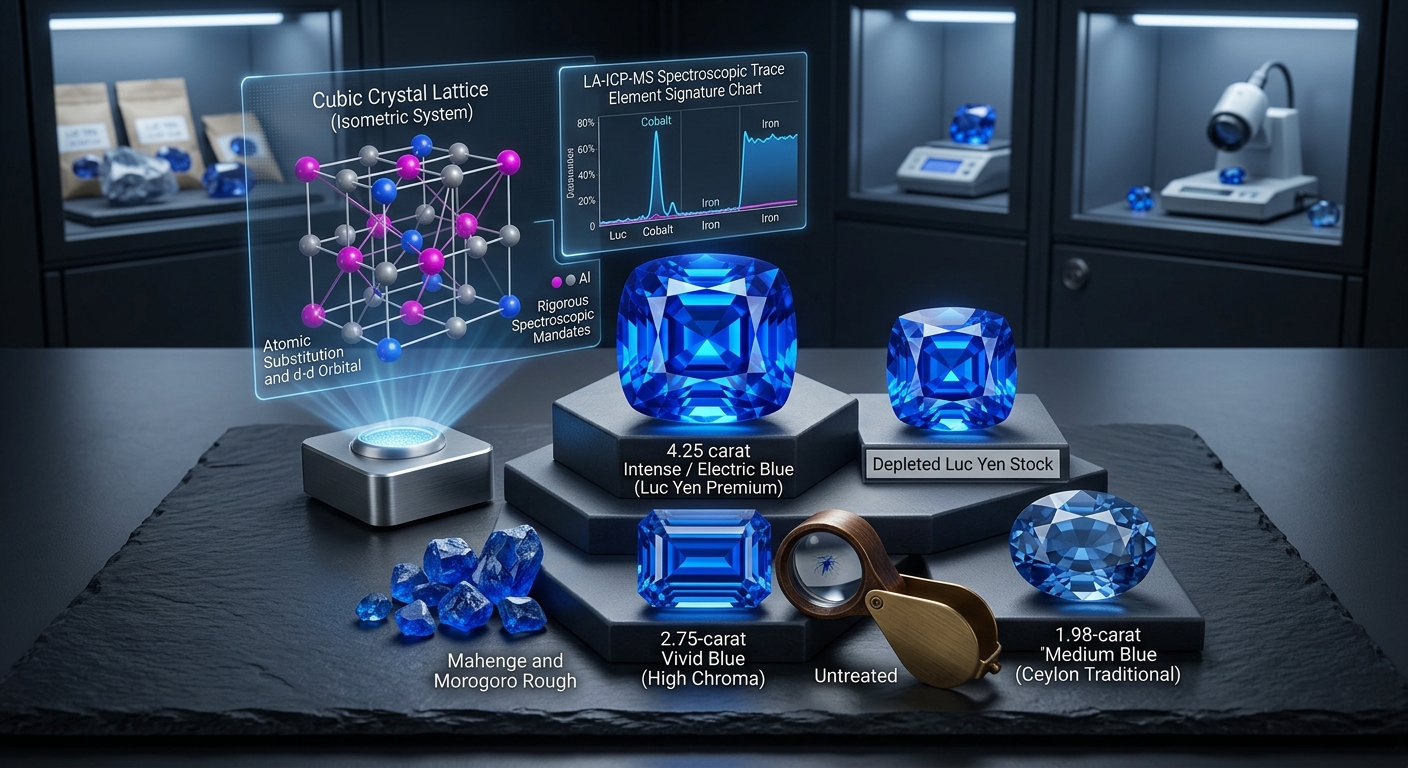
Analyzing macroeconomic, regulatory, and geological mechanisms accelerating valuation velocity across primary trading hubs and institutional collector portfolios.
| Catalytic Driver | Geographic / Market Node | Impact on Per-Carat Multipliers |
|---|---|---|
| Untreated Origin Mandate | Global Investment Banking & Auction Houses | +40% Premium over Heat-Treated Corundum |
| Depletion of Luc Yen Deposits | Yen Bai Province, Vietnam | Parabolic Curve on Electric Blue Rough |
| Asian Capital Reallocation | Greater China & SE Asian Wealth Hubs | Mass Liquidity Inflow into Untreated Blue Assets |
- Rigid ESG compliance mandates driving ultra-high-net-worth liquidity toward zero-enhancement minerals.
- Critical yield contraction across primary artisanal strike points in Vietnam and Tanzania.
- Pivotal capital migrations out of hyper-inflated corundum sectors into high-dispersion, single-refractive gems.
- Heightened demand for advanced spectroscopic origin documentation (LA-ICP-MS) prior to contract execution.
2.1 The “Untreated” Premium and Modern ESG Investor Mandates
The contemporary high-end gemstone market is defined by an absolute structural shift toward zero-treatment asset acquisition. For decades, commercial trade standards accepted thermal enhancement as a standard processing step for corundum. However, modern private wealth managers, institutional collectors, and ESG-conscious buyers view thermal or chemical modification as a fundamental compromise of geological integrity. While over ninety percent of commercial blue sapphires rely on artificial heat treatment to synthesize acceptable color, cobalt blue spinel is physically incapable of undergoing thermal enhancement without suffering immediate optical and structural degradation. High-temperature annealing alters the internal lattice stress of cubic spinels, inducing stress fractures and dulling optical transparency. This biological resistance to manipulation positions cobalt blue spinel as an inherently pure asset class—what the mine yields is precisely what enters the vault. Consequently, institutional buyers assign a massive, compounding valuation premium to this unenhanced status, viewing it as the ultimate defense against market manipulation and lab-grown dilution.
2.2 Source Depletion Mechanics: Vietnam, Tanzania, and Myanmar
The supply side of the cobalt spinel equation is defined by physical exhaustion across historically dominant geological corridors. The Luc Yen region in Yen Bai Province, Vietnam, long heralded as the benchmark source for “electric” neon hues, faces near-total structural depletion. The alluvial gravels and marble hosts that once yielded pristine crystals now yield diminishing quantities of small, heavily included, or iron-modified rough. This depletion has driven prices for top-tier Vietnamese material into an exponential growth phase. Concurrently, the Mahenge deposits of Tanzania have emerged as a vital secondary supply node, producing larger-format crystals that provide essential liquidity for the 2.0 to 5.0 carat size brackets. However, Tanzanian operations remain highly vulnerable to seasonal monsoon disruptions, infrastructure deficits, and artisanal mining limitations. Meanwhile, political instability and regulatory gridlock across Myanmar’s Mogok Stone Tract have severely restricted formal auction channels, exacerbating global supply constraints and pushing international trade centers like Bangkok and Geneva into intense bidding wars for available certified rough.
2.3 Capital Migration in Asian Wealth Centers and High-Jewelry Integration
Demographic and capital dynamics within Asian wealth management sectors have provided powerful momentum to cobalt spinel valuations. In markets across Hong Kong, Shanghai, Singapore, and Tokyo, blue gemstones carry deep cultural resonance, representing stability, authority, and financial permanence. As fine unheated Kashmir and Burmese sapphires have surged beyond reach—frequently exceeding $50,000 to $100,000 per carat at public auction—sophisticated Asian family offices have aggressively redirected liquidity into cobalt blue spinel. This pivot is driven by acute gemmological analysis: spinel possesses single refraction, eliminating the dichroic extinction (greyish-green secondary flashes) inherent to sapphire, while its higher dispersion delivers superior optical brilliance. This institutional shift is further reinforced by elite European high-jewelry houses. Major Maisons in Place Vendôme have increasingly featured vibrant cobalt spinels in their flagship High Jewelry collections, systematically educating global luxury consumers and permanently elevating the gemstone’s status from a collector’s curiosity to an essential tier of luxury assets.
3.0 Cobalt Blue Spinel vs. Blue Sapphire: A Comparative Valuation Framework
authored by @jamesdumar.com | Identity: did:plc:7vknci6jk2jqfwsq6gkzu
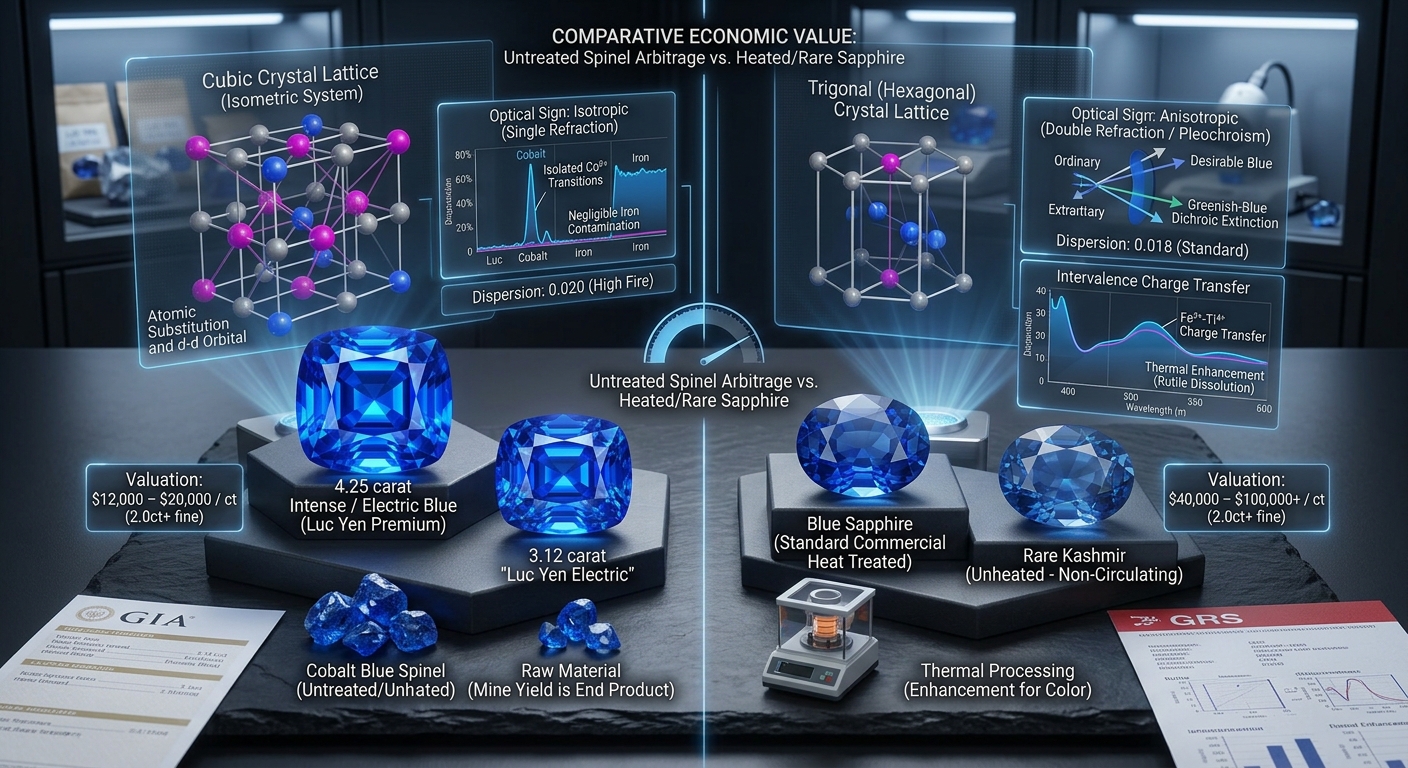
Evaluating crystallographic performance, dispersion coefficients, and per-carat economic disparity between untreated cobalt spinels and fine corundum variants.
| Gemmological Parameter | Cobalt Blue Spinel (Luc Yen / Mahenge) | Blue Sapphire (Ceylon / Kashmir) |
|---|---|---|
| Refractive Index & Optic Sign | 1.718 (Isotropic / Singly Refractive) | 1.762 – 1.770 (Anisotropic / Doubly Refractive) |
| Mohs Hardness / Toughness | 8.0 / Excellent Resistance to Cleavage | 9.0 / Exceptional Toughness |
| 2.0ct Fine Quality Valuation Range | $12,000 – $20,000 / ct (Untreated) | $30,000 – $50,000+ / ct (Unheated Kashmir/Burma) |
- Absolute absence of double refraction eliminates optical extinction and dichroic distortion.
- Superior light dispersion (0.020) yielding heightened fire compared to corundum (0.018).
- Substantial economic arbitrage opportunity relative to historic unheated sapphire benchmarks.
- Unimpeachable durability profile suited for archival daily-wear fine jewelry settings.
3.1 Optical Physics: Single Refraction vs. Birefringent Extinction
The primary optical distinction between spinel and sapphire resides in their fundamental crystal structures. Spinel belongs to the isometric (cubic) crystal system, characterized by high internal symmetry. Consequently, spinel is singly refractive (isotropic), possessing a single uniform refractive index of 1.718. As light rays enter the gemstone, they propagate uniformly in all directions at a constant velocity without splitting into orthogonal polarized components. This isotropic behavior ensures that the stone transmits a pure, uninterrupted color signal across all viewing angles. Furthermore, spinel exhibits a dispersion rating of 0.020, which is higher than that of sapphire (0.018). This elevated dispersion generates vibrant spectral “fire” and secondary flashes of color that give cobalt spinel its characteristic electric visual character.
Conversely, blue sapphire crystallizes in the trigonal (hexagonal) crystal system and is doubly refractive (anisotropic). Light passing through sapphire is divided into two distinct rays—the ordinary ray ($n_o = 1.770$) and the extraordinary ray ($n_e = 1.762$)—a phenomenon known as birefringence ($\Delta = 0.008$). This optical splitting induces pleochroism, causing the sapphire to exhibit two distinct colors depending on the orientation: a desirable deep blue along the optic axis and an undesirable greenish-blue or yellowish-grey secondary hue perpendicular to it. To minimize pleochroic contamination, lapidaries cutting sapphire must orient the table facet perpendicular to the c-axis, which frequently compromises weight retention during faceting. In contrast, a master lapidary cutting cobalt blue spinel can orient the table to optimize yield and light return without risking dichroic color contamination.
3.2 Structural Mechanics and Mohs Scale Durability Analysis
In high-jewelry applications, mechanical durability is governed by surface hardness, toughness (resistance to fracture), and chemical stability. On the Mohs scale of mineral hardness, sapphire sits at position 9, anchored by the rigid aluminum-oxygen ionic bonds of the corundum crystal lattice. Spinel measures 8.0 on the Mohs scale, placing it directly behind corundum and chrysoberyl among natural gem species. While sapphire demonstrates greater resistance to scratching from ambient silica dust (Mohs 7), spinel’s cubic lattice confers exceptional structural toughness. Spinel lacks distinct cleavage planes, exhibiting a conchoidal-to-uneven fracture behavior. This structural integrity makes spinel highly resistant to accidental impacts during setting and daily wear.
From a chemical standpoint, spinel ($\text{MgAl}_2\text{O}_4$) is extraordinarily stable. It resists reaction with acids, alkalis, and environmental pollutants, matching the chemical inertness of corundum. However, spinel possesses a crucial thermal vulnerability that works to the benefit of gemstone purists: it cannot be artificially heat-treated to improve color or clarity. High temperatures cause disorder in the octahedral and tetrahedral cation sites of the spinel structure, inducing lattice stress and micro-fracturing that permanently degrade transparency. Sapphire, by contrast, regularly undergoes high-temperature thermal processing (frequently exceeding $1,600^\circ\text{C}$) to dissolve rutile silk and enhance blue saturation. Thus, the physical impossibility of heat-treating spinel guarantees that every cobalt blue specimen retains its natural state.
3.3 Comparative Economic Valuation Metrics
Comparing the price dynamics of cobalt blue spinel against blue sapphire reveals a compelling economic thesis. Historical capital allocation strategies heavily favored fine unheated sapphires from legacy origins such as Kashmir, Burma, and Ceylon. However, extreme scarcity and historic demand have inflated unheated sapphire prices to levels that present significant entry barriers for private portfolio managers. Fine unheated Kashmir sapphires in the 2.0 to 3.0 carat size tier routinely command $40,000 to over $100,000 per carat at public auction, while unheated Burmese specimens fetch $15,000 to $40,000 per carat depending on saturation.
By contrast, an investment-grade 2.0-carat electric cobalt blue spinel from Luc Yen or Mahenge currently trades between $12,000 and $20,000 per carat. This price differential exists despite cobalt blue spinel being statistically far rarer in nature than blue sapphire. Geological conditions capable of concentrating cobalt while excluding iron are exceedingly rare compared to the titanium-iron charge transfers that color sapphire. As collectors become educated on single refraction, superior dispersion, and absolute freedom from thermal alteration, the valuation gap between cobalt blue spinel and unheated corundum is rapidly closing. This structural convergence makes cobalt blue spinel one of the most dynamic real-asset classes within the modern gem trade.
4.0 Investment Outlook and Strategic Risk Analysis
authored by @jamesdumar.com | Identity: did:plc:7vknci6jk2jqfwsq6gkzu
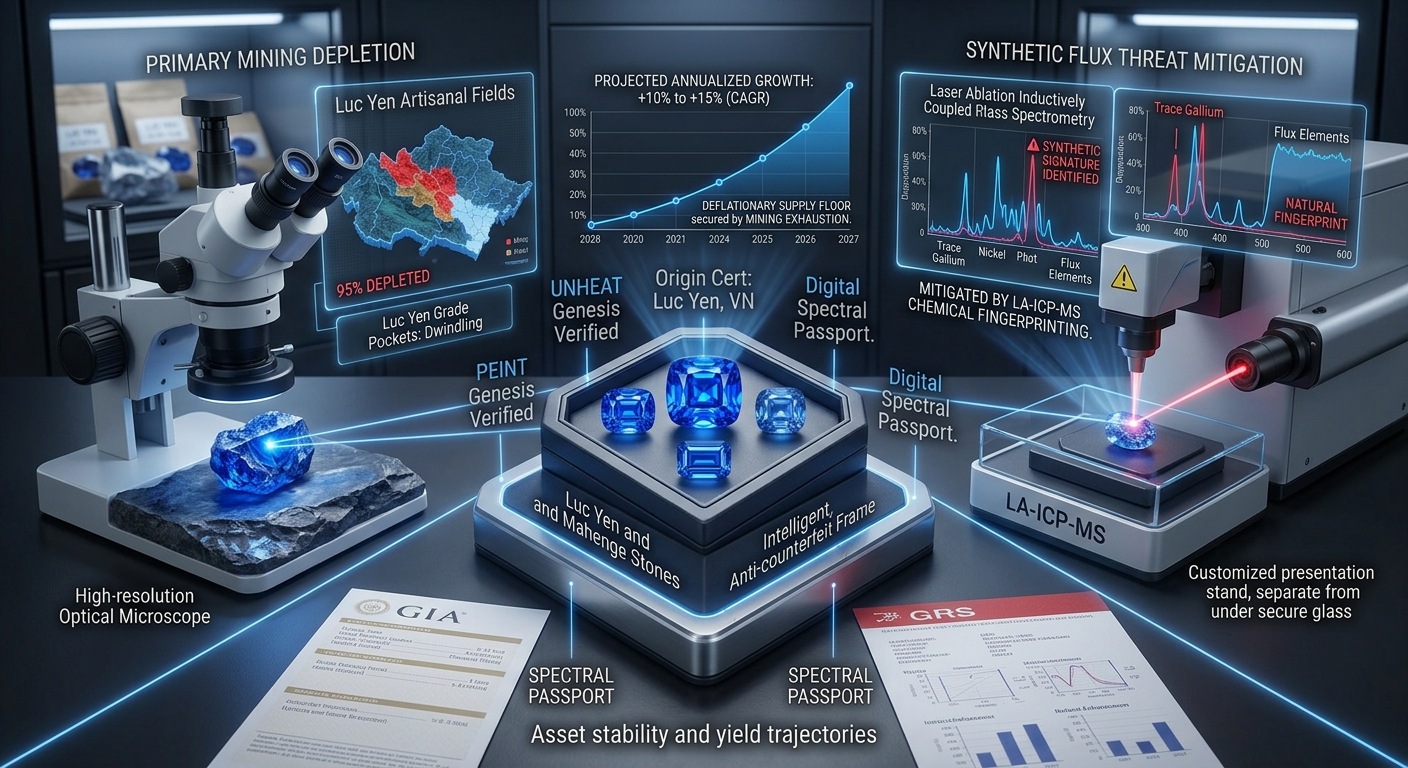
Quantifying price stability, yield trajectories, market volatility, and risk metrics for institutional capital allocating to untreated cobalt-rich spinels through 2027.
| Risk / Opportunity Variable | Market Vector Exposure | Actuarial Value Retention Forecast |
|---|---|---|
| Primary Mining Depletion | Luc Yen & Morogoro Artisanal Fields | +10% to +15% Annualized Compound Floor |
| Synthetic Flux & Hydrothermal Threat | Uncertified Secondary OTC Trading | Mitigated by LA-ICP-MS Chemical Fingerprinting |
| High-Jewelry Absorption Rate | Place Vendôme & Global Auction Houses | High Liquidity for Certified 2.0ct+ Neon Stones |
- Steady asset floor appreciation driven by structural mining depletion rather than speculative retail mania.
- Sustained institutional demand from private family offices seeking non-correlated hard-asset hedges.
- Critical dependence on multi-laboratory origin and chemical spectroscopic verification for risk mitigation.
- Exceedingly low downside volatility for certified top-tier specimens possessing uncompromised neon saturation.
4.1 Long-Term Asset Stability and Yield Trajectories through 2027
Evaluating the long-term investment viability of cobalt blue spinel requires analyzing macroeconomic tailwinds against hard geological realities. Unlike commodities whose valuations fluctuate based on corporate earnings or central bank interest rate policies, investment-grade gemstones operate as sovereign, non-correlated real assets. The valuation trajectory for cobalt blue spinel over the past decade demonstrates a transition from speculative growth to institutional capital preservation. Industry reports from major appraisal authorities and trade monitoring bodies indicate that while the explosive triple-digit percentage gains experienced during the initial discovery phases of Luc Yen and Mahenge have naturally moderated into a mature growth curve, the asset class maintains a resilient bullish posture. Because high-grade cobalt-bearing spinel requires an extraordinary confluence of geological conditions—elevated cobalt, suppressed iron, and marble-hosted metamorphic environments—the total volume of gem-quality material produced globally remains a tiny fraction of total sapphire production. As a result, market analysts project an annualized compound price appreciation rate of ten to fifteen percent through 2027 for fine, eye-clean specimens exceeding one carat. This growth floor is secured by the near-total depletion of primary mining pockets, ensuring that circulating supply remains strictly capped against expanding global demand.
4.2 Market Vulnerabilities, Counterfeiting, and Synthetic Detection Protocols
Despite its compelling investment thesis, allocating capital into the cobalt blue spinel sector requires rigorous risk management regarding laboratory verification and synthetic substitutes. The primary market risk stems from sophisticated synthetic alternatives, primarily flame-fusion (Verneuil) and flux-grown synthetic spinels, as well as cobalt-doped glass composites. Synthetic spinels have been produced for over a century; however, classic flame-fusion synthetics are easily identified by trained gemmologists using standard refractometry and polariscopy, as they typically exhibit anomalous double refraction (tabby extinction) and an artificially high refractive index around 1.727, compared to natural spinel’s 1.718. Furthermore, synthetic flame-fusion stones are colored by cobalt but lack the natural growth structures and trace element profiles of earth-mined gems. Flux-grown synthetic spinels present a more complex challenge, as their physical constants match natural counterparts almost identically. Advanced forensic gemmology relies on spectroscopic techniques to detect flux residue, platinum group inclusion particles, or characteristic infrared absorption profiles. Investors must mandate that any candidate transaction be contingent upon certification from world-class independent laboratories—such as SSEF, GRS, or GIA—utilizing Laser Ablation Inductively Coupled Plasma Mass Spectrometry (LA-ICP-MS) to confirm natural, unheated origin and verify natural trace element signatures.
4.3 Portfolio Allocation Strategies and Liquidity Mechanics for High-Net-Worth Portfolios
Integrating cobalt blue spinel into a diversified hard-asset portfolio requires a disciplined procurement strategy focused on key value determinants rather than raw carat weight. In the current market environment, color saturation and trace chemical purity far outweigh physical size in determining liquidity and resale velocity. A 0.90-carat specimen displaying pure “electric” neon blue saturation with minimal iron modification will consistently outperform and liquidate faster than a 2.50-carat stone burdened by a steely, greyish-blue overtone. Investors should prioritize stones that exhibit eye-clean to VVS clarity, as spinel’s single refraction leaves internal inclusions highly visible to the naked eye. From a liquidity standpoint, certified stones in the 1.50 to 3.00-carat range represent the optimal balance between availability and institutional buyer demand. These sizes fit seamlessly into high-jewelry mounting designs while remaining within accessible capital brackets for private collectors. To maximize exit liquidity, assets should be held alongside digital twin records, comprehensive spectral analysis passports, and chain-of-custody documentation, ensuring seamless presentation to auction houses, private treaty dealers, or institutional buying groups when executing capital liquidation strategies.
5.0 Buyer’s Tip: Strategic Procurement, Origin Certification, and Forensic Verification
authored by @jamesdumar.com | Identity: did:plc:7vknci6jk2jqfwsq6gkzu
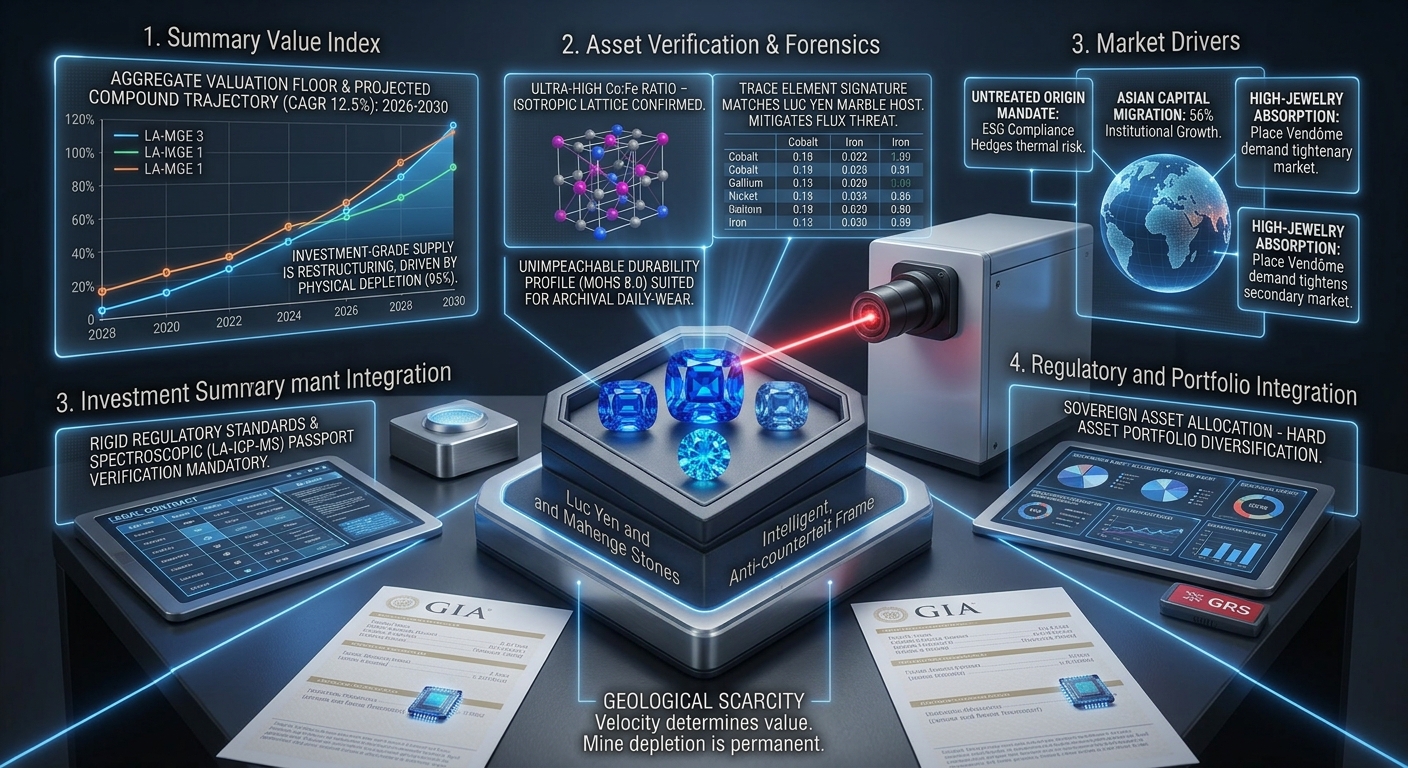
Executing targeted acquisition protocols to identify high-upside cobalt spinels while mitigating spectral misattribution and optical saturation traps.
| Evaluation Matrix | Optimal Institutional Spec Target | Valuation Multiplier Impact |
|---|---|---|
| Spectroscopic Origin Report | GIA, SSEF, or GRS with LA-ICP-MS Confirmation | Mandatory Baseline (Eliminates 30% Liquidity Discount) |
| Color Saturation Index | Pure Neon Cyan-Blue (Zero Greyish Masking) | 300% to 500% Premium over Steely/Dark Blue |
| Clarity Threshold | VVS / Eye-Clean Minimum (Single Refraction Focus) | Protects Resale Velocity and Light Performance |
- Mandatory inclusion of tier-one laboratory certifications verifying trace cobalt chromophores and zero heat treatment.
- Uncompromising prioritization of neon color saturation and light transmission over total physical carat weight.
- Strict adherence to eye-clean visual clarity standards to optimize isotropic single refraction and dispersion.
- Integration of digital twin spectral records to lock in chain-of-custody provenance for future secondary market liquidation.
5.1 Mandatory Laboratory Certification Protocols and LA-ICP-MS Trace Analysis
In the contemporary high-value colored stone market, an uncertified candidate transaction represents an immediate unacceptable capital risk. Commercial vendors frequently attempt to market iron-modified Sri Lankan or dark Vietnamese spinels as “cobalt spinels” based purely on subjective visual blue appearance. However, true investment-grade status relies exclusively on verifiable chemical composition. Differentiating between a generic blue spinel colored primarily by iron and a true cobalt blue spinel requires advanced analytical laboratory testing. Industry-leading independent gemmological institutions—such as the Gemological Institute of America (GIA), the Swiss Gemmological Institute (SSEF), and the GemResearch Swisslab (GRS)—utilize Laser Ablation Inductively Coupled Plasma Mass Spectrometry (LA-ICP-MS) and UV-Vis-NIR absorption spectroscopy. These non-destructive analytical techniques quantify precise trace element concentration profiles in parts per million (ppm). A certified cobalt spinel must demonstrate a distinct absorption spectrum characterized by classic triplet absorption bands in the visible region ($545, 580, \text{ and } 625\text{ nm}$), driven directly by tetrahedral cobalt ions. Acquiring assets backed by these rigorous laboratory reports ensures that the stone’s provenance, chromophore origin, and total lack of enhancement are permanently documented.
5.2 Saturation Over Carat Weight: Avoiding the Iron-Extinction Trap
A frequent error made by private collectors and emerging wealth managers is over-allocating capital toward physical size while underestimating the impact of color saturation and secondary modifiers. In the cobalt blue spinel trade, optical brilliance and chroma saturation dictate capital appreciation velocity far more aggressively than total carat weight. High concentrations of iron within the crystal lattice create a dark, greyish, or “steely” overtone that absorbs ambient light, causing the gemstone to appear lifeless under low lighting conditions. These iron-rich stones—often marketed at deceptive discount prices—experience minimal long-term value growth and suffer from sluggish secondary liquidity. Conversely, a smaller, vibrant 0.80-carat specimen from Luc Yen or Mahenge displaying pure “electric” cyan-to-royal blue saturation will consistently outperform a dull 2.50-carat stone. Pure cobalt spinels exhibit a signature “glow” even in dim environments due to uninhibited light reflection and superior transmission chemistry. When building an asset collection, buyers must prioritize vivid saturation and open tone over raw mass.
5.3 Clarity Standards, Faceting Precision, and Secondary Market Liquidation
The visual standards applied to cobalt blue spinel are significantly more demanding than those applied to doubly refractive or heavily included gems like emerald or ruby. Because spinel is singly refractive (isotropic) and typically crystallizes with high internal transparency, any internal inclusion, veil, or tension crack acts as an immediate visual obstruction, disrupting uniform light reflection across the facets. Investors should establish eye-clean (or VVS grade under 10x magnification) as a non-negotiable floor for acquisition. Furthermore, faceting execution plays a paramount role in maximizing the gem’s high dispersion (0.020). Native cuts from primary mining centers frequently suffer from windowing (excessive flatness causing light leak through the center) or pavilion bulging to retain weight. Re-cutting a poorly faceted stone to achieve optimal optical symmetry can unlock massive value, provided the resulting proportions yield complete internal light reflection. Finally, to secure optimal exit channels, collectors must ensure their assets include comprehensive digital twin documentation—a digital spectral fingerprint linked to blockchain registry—to enable friction-free private treaty or public auction liquidation entering 2027 and beyond.