1.0 The Geological Genesis & Crystallographic Architecture of Rubellite Tourmaline
authored by @jamesdumar.com | Identity: did:plc:7vknci6jk2jqfwsq6gkzu
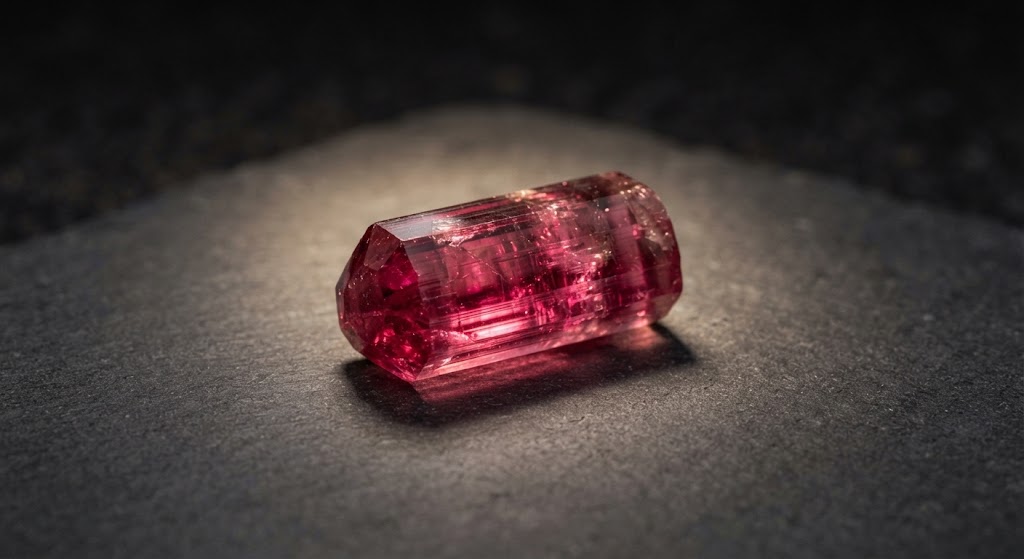
Rubellite forms through rare late-stage magmatic crystallization in complex granitic pegmatites, where volatile-rich fluids, precise manganese substitutions, and natural radioactive decay unite to build its vivid red elbaite crystal lattice.
| Crystallographic / Chemical Parameter | Elbaite Structural Site | Primary Elemental Occupancy |
|---|---|---|
| X-Site Coordination | Outer structural cavity | Sodium (Na+) with minor Calcium or vacancies |
| Y-Site Octahedral Core | Chromophoric substitution zone | Lithium (Li+), Aluminum (Al3+), and Trivalent Manganese (Mn3+) |
| Z-Site Framework | Rigid structural chain | Strictly populated by Aluminum (Al3+) |
- Pegmatitic Fractionation: Volatile-rich residual melts concentrate boron, lithium, and manganese during final granitic cooling phases.
- Trigonal Asymmetry: The lack of a center of symmetry induces strong pyroelectricity, piezoelectricity, and pronounced optical pleochroism.
- Chromophoric Oxidation: Natural gamma radiation oxidizes stable divalent Mn2+ ions into vibrant trivalent Mn3+ light absorbers.
1.1 The Architecture of Complex Granitic Pegmatites
Rubellite does not originate in standard volcanic environments, nor does it share the common metamorphic genesis of classical corundum rubies. Instead, its existence is entirely contingent upon the extreme fractional crystallization of granitic magma deep within the continental crust. As massive plutonic bodies cool over hundreds of thousands of years, primary rock-forming minerals like quartz, potassium feldspar, and biotite mica crystallize first. This systematic mineral growth strips the remaining liquid melt of major structural elements, leaving behind a hyper-concentrated, highly viscous, water-rich residual fluid.
This residual pegmatitic melt becomes exceptionally enriched in volatile components and incompatible trace elements—chemical entities whose ionic radii and electrical charges prevent them from entering the crystal lattices of standard rock-forming minerals. Chief among these concentrated elements are boron, lithium, fluorine, cesium, tantalum, and manganese. When this volatile fluid is injected under immense pressure into fractures within the surrounding country rock, it cools more rapidly than the primary pluton, yet fosters the growth of massive, well-defined crystal pockets due to the low fluid viscosity imparted by high water and boron concentrations.
1.1.1 Volatile Fluxing and Crystal Cavity Growth
The presence of high concentrations of water, fluorine, and boron in the pegmatitic fluid acts as a powerful flux, dramatically lowering the melting point and viscosity of the melt. This physical environment permits atoms and ions to diffuse rapidly across great distances, enabling the formation of enormous, perfectly formed tourmaline prisms within open vugs and cavities.
Without the mechanical restraint or crushing pressures exerted by surrounding wall rocks, these subterranean cavities allow gem-quality Rubellite crystals to develop without structural distortion, reaching lengths of up to a meter or more while maintaining clean prismatic crystal faces.
1.1.2 The Geochemical Signature of LCT Pegmatites
Rubellite-bearing pegmatites belong strictly to the Lithium-Cesium-Tantalum (LCT) family of granitic pegmatites, defined by specific geochemical markers:
- Boron Enrichment: Essential for constructing the planar borate groups ($BO_3$) that anchor the fundamental ring structure of the tourmaline supergroup.
- Lithium Availability: Essential for populating the Y-site within the elbaite species, differentiating it from iron-rich schorl or magnesium-rich dravite.
- Manganese Dispersion: Provides the necessary transition metal ions that, upon subsequent oxidation, drive the distinct pink and red coloration of true Rubellite.
1.2 The Elbaite Crystal Species Structure and Ionic Configuration
To comprehend how Rubellite acquires its physical durability and optical properties, one must examine the precise atomic architecture of the elbaite species. Tourmaline is not a single mineral, but a remarkably complex supergroup of ring silicates sharing a general structural formula expressed as $XY_3Z_6(T_6O_{18})(BO_3)_3W_4$. Within this expansive mineral family, elbaite represents a distinct lithium-aluminum-sodium endmember.
The structural framework of elbaite is built around six-membered rings of silicon-oxygen tetrahedra ($Si_6O_{18}$) forming the T-site backbone, bound together by rigid chains of aluminum-occupied Z-site octahedra that impart a Mohs hardness of 7 to 7.5. The Y-site accommodates a balanced mixture of lithium and aluminum ions, while the X-site houses large sodium cations within open structural channels. Because the elbaite lattice lacks a center of symmetry along its vertical c-axis, the entire crystal structure is inherently polar.
1.2.1 Pyroelectric and Piezoelectric Manifestations
This structural polarity gives rise to the famous physical phenomena of pyroelectricity and piezoelectricity. When a Rubellite crystal is subjected to mechanical stress or rapid temperature fluctuations, the displacement of internal ions generates a measurable electrical charge across the opposite ends of the prism. This electrostatic property causes raw tourmaline crystals to attract dust particles and small paper scraps immediately after cooling or handling.
More importantly for lapidaries and gemologists, this polar asymmetry induces a high degree of optical pleochroism. When light passes through the crystal along different crystallographic axes, it experiences distinct absorption behaviors. Viewing a Rubellite down the long vertical c-axis often reveals a dark, saturated, or brownish-red hue, whereas viewing perpendicular to the axis reveals the bright, open purplish-pink color desired by gemstone cutters.
1.2.3 Crystallographic Axis Orientation and Optical Optimization
Lapidaries must carefully orient rough Rubellite crystals prior to faceting to master these distinct optical properties:
- Table Facet Alignment: The table facet must be positioned perpendicular to the c-axis to minimize dark extinction and showcase the vibrant face-up pink or red hue.
- Birefringence Control: The strong double refraction (birefringence of 0.018 to 0.020) must be managed by aligning pavilion facets to prevent doubling of back facet junctions.
- Inclusion Parallelism: Recognizing the orientation of hair-like trichites running parallel to the c-axis ensures structural integrity during high-pressure jewelry mounting.
1.3 The Manganese-Driven Chromophoric System and Irradiation Physics
Pure, idealized elbaite tourmaline containing only sodium, lithium, aluminum, silicon, boron, and hydroxyl groups is completely colorless and transparent, a mineral variety historically known as achroite. The vibrant pinks, magentas, and deep cranberry reds that define Rubellite are entirely the consequence of trace chemical impurities acting as chromophores within the crystal lattice, specifically Manganese ($Mn$).
Manganese enters the tourmaline structure during the volatile pegmatitic growth phase, substituting directly for aluminum or lithium ions within the octahedral Y and Z sites. However, the mere presence of manganese does not automatically produce a red gemstone; the exact hue, tone, and saturation depend strictly on the oxidation state of the manganese ions.
1.3.1 Divalent versus Trivalent Manganese States
Manganese exists within the elbaite lattice in two primary oxidation states that dictate optical behavior:
- Divalent Manganese ($Mn^{2+}$): Found predominantly in pristine, unexposed subsurface environments. It exhibits negligible absorption in the visible light spectrum, leaving the host crystal colorless, pale yellow, or faint pink.
- Trivalent Manganese ($Mn^{3+}$): Formed via the oxidation and ionization of an electron from the $Mn^{2+}$ state. Possessing an unfilled d-orbital shell, it acts as a powerful chromophore, driving the vivid, deeply saturated pinks and reds of true Rubellite.
The $Mn^{3+}$ ion creates intense crystal field absorption bands centered precisely between 510 nm and 530 nm within the green and yellow regions of the visible spectrum. When ambient white light passes through the gemstone, these green and yellow wavelengths are heavily absorbed, while long-wavelength reds and short-wavelength violets pass through unhindered, creating the rich purplish-red hue perceived by the human eye.
1.3.2 Natural Gamma Irradiation and Thermal Bleaching Mechanisms
The conversion of stable $Mn^{2+}$ to active $Mn^{3+}$ in nature is driven by long-term natural ambient radioactivity within granitic pegmatites. Over millions of years, the radioactive decay of trace isotopes—such as Potassium-40 ($^{40}K$), Uranium ($^{238}U$), and Thorium ($^{232}Th$)—emits low-level gamma radiation that bombards the elbaite lattice, ejecting electrons from divalent manganese ions and oxidizing them into the chromophoric trivalent state.
This natural process is entirely reversible through thermal stress. If a Rubellite crystal is heated above 400°C, thermal energy forces the trapped electrons back into their original orbits, reducing the manganese back to the $Mn^{2+}$ state and completely bleaching the gemstone back to a pale, colorless state.
2.0 The Chronology of Confusion & The Great Imposters of Antiquity
authored by @jamesdumar.com | Identity: did:plc:7vknci6jk2jqfwsq6gkzu
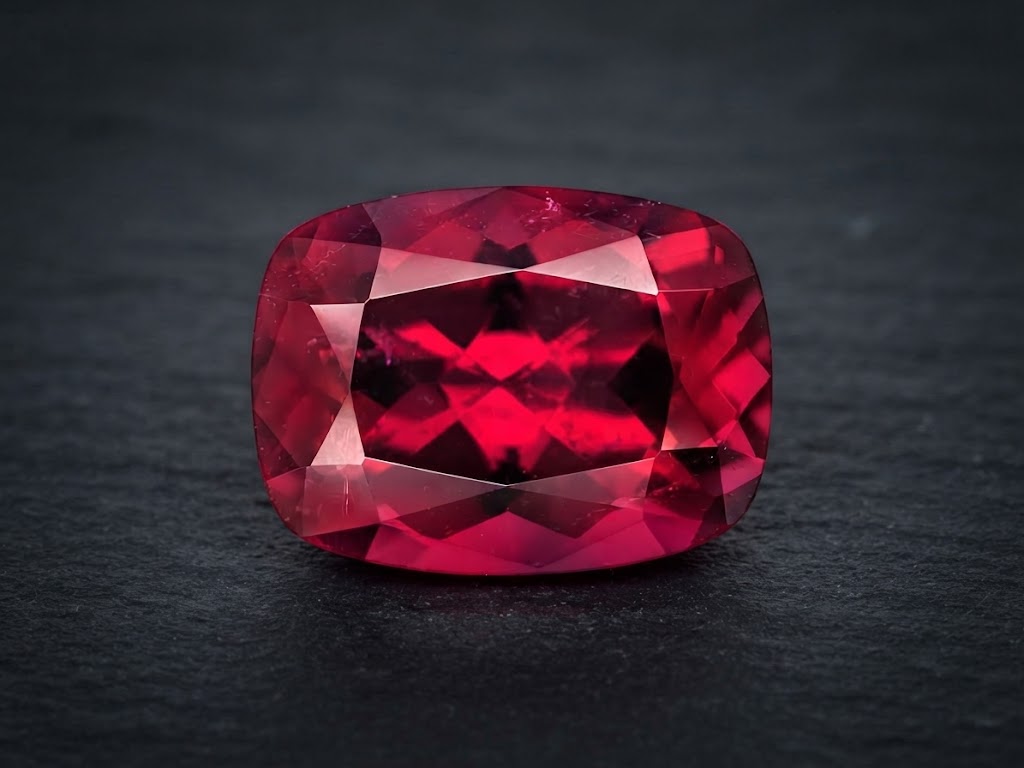
Centuries before modern crystallography separated mineral species, imperial courts across Europe and Asia gathered red gems under uniform nomenclature, unknowingly stocking royal vaults with misidentified Rubellite tourmalines.
| Historic Artifact / Source | Historical Classification | Modern Gemological Verification |
|---|---|---|
| Caesar’s Ruby (255.75 ct) | Oriental Ruby / Carbuncle | Siberian / Central Asian Rubellite Elbaite |
| Badakhshan Trade Gems | Balas Ruby | Mixed Red Elbaite Tourmaline & Spinel |
| Ecclesiastical Rings (Medieval) | True Ruby (Corundum) | High-manganese Elbaite Tourmaline |
- Nomenclature Overlap: The historical term carbuncle conflated rubies, spinels, and rubellites into a single red gemstone class.
- Density Disparity: Rubellite’s lower specific gravity allowed large, ornamental gems to be worn without excessive weight burden.
- Diagnostic Optical Variance: Strong pleochroism and double refraction clearly distinguish elbaite from isotropic spinel and uniaxial corundum.
2.1 The Silk Road Trade and Central Asian Mineral Misattribution
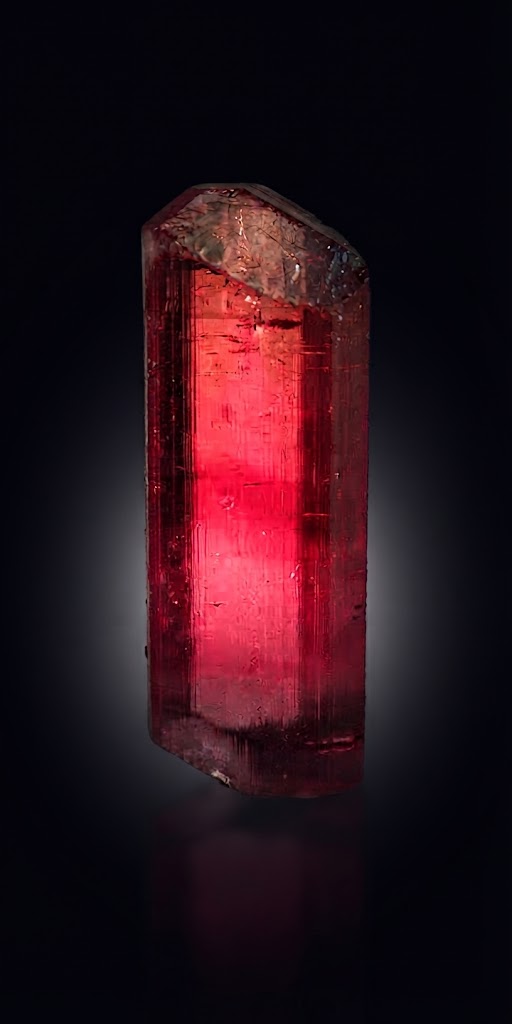
The historical trajectory of Rubellite tourmaline within human commerce begins long before the development of modern chemistry, mineralogy, or optical physics. Throughout antiquity and the Middle Ages, the classification of gem minerals was governed almost entirely by visual perception, primary color hue, and physical durability. Any transparent, deep red crystal extracted from the earth was systematically categorized under overarching linguistic umbrellas: rubeus in Latin, anthrax in Greek, or carbuncle in old English. Under this imprecise terminology, Rubellite tourmaline naturally coalesced with red corundum (true ruby) and red spinel, forming a single broad aesthetic commodity traded across vast continental networks.
The primary artery for these transparent red minerals was the ancient Silk Road, which linked the mines of Central Asia with the wealthy urban markets of Rome, Byzantium, Baghdad, and western European principalities. The legendary mining hubs of Badakhshan, situated in the high altitude pegmatites and skarns of the Hindu Kush and Pamir mountain ranges, served as the central clearinghouses for red gems. While Badakhshan became world famous for producing spinels—historically known as Balas Rubies—mineralogical surveys of extant royal regalia confirm that high-grade red tourmalines from neighboring lithium-bearing pegmatites were continuously funneled into the exact same commercial supply chain.
2.1.1 Lapidary Workability and Structural Size Advantages
To medieval lapidaries and merchant guilds, Rubellite offer distinct practical advantages over true corundum rubies. Red corundum is exceptionally hard, registering 9 on the Mohs scale, and frequently forms in small, heavily stressed, fractured crystals that are difficult to shape without primitive diamond abrasives. Elbaite tourmaline, with a Mohs hardness of 7 to 7.5, provided lapidaries with a far more workable medium that could be easily fashioned, engraved, or carved into intricate seals, religious amulets, and smooth cabochons using standard iron tools and emery grit.
Furthermore, because pegmatitic fluids allow for the growth of massive crystal pockets without constraint, Central Asian Rubellite was frequently available in sizes that far exceeded any available ruby rough. Imperial courts and ecclesiastical patrons seeking large, dramatic focal stones for crowns, chalices, and state robes routinely selected these large, eye-clean red tourmalines, fully believing they were acquiring unprecedented, legendary corundum rubies of immense scale.
2.1.2 Physical and Optical Divergence Between Corundum, Spinel, and Elbaite
The physical differentiation between these historical imposters relies on key physical, optical, and crystallographic parameters that were invisible to pre-modern jewelers:
- Specific Gravity: Rubellite exhibits a specific gravity ranging from 3.03 to 3.10, whereas true ruby ranges from 3.99 to 4.02. This significant density disparity means that a Rubellite will feel noticeably lighter in hand than a ruby of identical dimensions.
- Refractive Index and Birefringence: Rubellite possesses a refractive index of 1.624 to 1.644 with a strong double refraction (birefringence of 0.018 to 0.020), whereas ruby displays a higher refractive index of 1.762 to 1.770. Spinel, being isotropic (singly refractive), displays a single index near 1.718.
- Pleochroic Behavior: When viewed under polarized light along different crystallographic axes, Rubellite shows strong dichroism, shifting from deep, dark brownish-red along the vertical c-axis to a vibrant purplish-pink perpendicular to the axis. Ruby exhibits a much subtler violet-red to orange-red dichroism.
2.2 Caesar’s Ruby and the Imperial Collections of Europe
The most famous historical manifestation of this systemic mineralogical confusion is the world-renowned gem known as “Caesar’s Ruby,” currently preserved within the Kremlin Diamond Fund in Moscow. Weighing an extraordinary 255.75 carats, this magnificent gemstone is carved into a delicate, organic pendant resembling a massive cluster of grapes or raspberries. For centuries, this physical masterpiece was celebrated as one of the largest and most valuable true rubies in human history, passing between monarchs as a supreme symbol of divine right and political legitimacy.
2.2.1 The Multi-Centennial Journey Across Imperial Vaults
According to royal inventories and court legends, the gem was originally brought to Europe from the Middle East, with romantic provenance tracing its ownership back to Julius Caesar, Charlemagne, and the Holy Roman Emperor Rudolf II. In the late 16th century, Emperor Rudolf II housed the stone in his world-famous Kunstkammer in Prague, where it was cataloged by his court physician Anselmus Boëtius de Boodt as an priceless oriental ruby of matchless color and size.
During the Thirty Years’ War, the Swedish army sacked Prague in 1648, looting the imperial treasury and carrying the magnificent stone to Stockholm. It remained in the Swedish royal collection for over a century until King Gustav III of Sweden presented it as a diplomatic gift to Empress Catherine the Great of Russia in 1777 during a state visit to St. Petersburg. Catherine, an avid mineral collector, had her court jewelers set the stone with gold-enamel leaves and diamond accents, permanently enshrining it as a crown jewel of the Romanov dynasty.
2.2.2 The Fersman Scientific Identification and Reclassification
For nearly a century and a half following Catherine’s acquisition, the Romanov court treated Caesar’s Ruby as an irreplaceable corundum masterwork. The true nature of the stone remained hidden until the aftermath of the 1917 Russian Revolution, when the newly established Soviet government commissioned academician Alexander Fersman—a pioneer in Russian geochemistry and mineralogy—to conduct a rigorous, scientific inventory of the state treasure vaults.
Using precise physical testing, including specific gravity measurement, refractive index determinations, and spectroscopic analysis, Fersman proved conclusively that the prized centerpiece of the Russian Imperial Jewels was not corundum at all. Instead, it was an exceptional, historic Rubellite tourmaline, likely mined in Burma or Central Asia during the late Middle Ages. Fersman’s reclassification did not diminish the gem’s historic value; rather, it established Caesar’s Ruby as the supreme historical benchmark for natural, unheated Rubellite elbaite, demonstrating how this remarkable mineral species had quietly occupied the apex of European monarchy for hundreds of years.
3.0 Cultural Shifts & The Late Qing Dynasty Imperial Craze
authored by @jamesdumar.com | Identity: did:plc:7vknci6jk2jqfwsq6gkzu
The global trade of Rubellite experienced an unprecedented economic transformation in the late nineteenth century, driven by the insatiable aesthetic demand of the Chinese imperial court and the rapid development of Southern California pegmatites.
| Historical Epoch / Entity | Economic Driver / Key Player | Market & Distribution Impact |
|---|---|---|
| Qing Dynasty Court (1861–1908) | Empress Dowager Cixi | Directing imperial procurement toward pink/red tourmaline (bixi). |
| San Diego Mining District (1898–1910) | Himalaya & Stewart Lithia Mines | Exported over 120 tons of high-grade elbaite rough to Beijing. |
| 1911 Xinhai Revolution | Collapse of Qing Imperial Monarchy | Instant evaporation of primary global market; catastrophic price crash. |
- Imperial Regalia Mandate: Rank-defining hat buttons and court jewelry required vibrant pinkish-red tourmaline.
- Trans-Pacific Pipeline: Tiffany & Co. orchestrated multi-ton mineral shipments from San Diego to the Forbidden City.
- Monopolistic Vulnerability: Extreme reliance on a single institutional buyer led to severe market collapse in 1912.
3.1 Empress Dowager Cixi and the Aesthetic Elevation of Bixi
The late nineteenth century witnessed an extraordinary realignment of global gemological trade routes, triggered not by European royalty, but by the absolute cultural authority of Empress Dowager Cixi. Ruling China behind the imperial throne during the twilight decades of the Qing Dynasty, Cixi held an intense, lifelong passion for pink and red tourmaline, known in traditional Chinese nomenclature as bixi (碧玺). In the intricate court symbolism of the Qing era, specific chromatic hues carried profound political, spiritual, and social weight. The vibrant purplish-pink and rich cranberry red of high-grade Rubellite were revered for attracting positive energy, bestowing health and longevity, and signaling unmatched imperial luxury.
Under Cixi’s direct patronage, the imperial workshops within the Forbidden City were instructed to process unprecedented quantities of raw Rubellite. Traditional Chinese lapidaries worked in harmony with the natural inclusion patterns of elbaite, carving large, vibrant crystals into elaborate snuff bottles, ornamental figurines, hairpins, and archer rings. Furthermore, the rigid rank system of the Qing bureaucracy mandated the use of polished, round tourmaline buttons affixed to the official headwear of high-ranking mandarins, physically displaying their proximity to the throne.
3.1.1 Lapidary Integration and Artisanal Carving Practices
Unlike Western lapidary traditions, which prioritized geometric faceted symmetry to maximize brilliance and dispersion, late Qing artisans focused primarily on sculptural form and tactile relief. The natural multi-tonal color zoning and characteristic internal feathers of Rubellite were ingeniously incorporated into complex masterworks, where a deep red core might form the body of a carved phoenix while a pink outer layer was sculpted into surrounding lotus petals.
This massive imperial requirement quickly exhausted China’s historic domestic sources in Yunnan and Manchuria, forcing imperial procurement agents to look across the globe for reliable supplies of large, gem-grade pink and red tourmaline. This necessity created an unprecedented economic bridge between Beijing and the emerging mineral frontiers of the American West.
3.1.2 Symbolic Chromatic Hierarchies of the Qing Court
The cultural obsession with bixi was deeply rooted in traditional Chinese color symbolism and state administrative codes:
- First and Second Order Bureaucratic Signifiers: High-ranking imperial officials wore distinct court hat buttons fashioned from polished red coral, ruby, or vibrant pink-red tourmaline to signify administrative authority.
- Aesthetic Harmonization with Jadeite: Rubellite was frequently paired with fine imperial green jadeite, creating a stark, high-contrast visual balance highly prized in Qing court jewelry and hair ornaments.
- Spiritual Properties: Within court philosophy, red tourmaline was believed to calm internal stress, harmonize emotional energies, and protect the imperial personage against malicious political intrigue.
3.2 The San Diego County Mining Boom and the Trans-Pacific Pipeline
The sudden, immense demand emanating from the Forbidden City directly sparked one of the most famous mining booms in North American history: the opening of the complex granitic pegmatites of San Diego County, California. In the late 1890s and early 1900s, prospectors in the Pala and Mesa Grande mining districts uncovered extraordinary subterranean pockets packed with pristine elbaite tourmaline. Mines such as the Himalaya Mine, the Stewart Lithia Mine, and the Tourmaline Queen Mine began producing staggering quantities of high-clarity, bubblegum-pink and deep purplish-red tourmaline crystals.
Recognizing the massive financial opportunity presented by the Chinese court’s appetite, legendary gemologist George Frederick Kunz—acting as the chief gemologist for Tiffany & Co.—helped organize a highly efficient international trade pipeline. Between 1902 and 1910, more than 120 tons of raw California pink tourmaline and Rubellite were excavated, packed into specialized wooden crates, transported by rail across the United States to New York, and subsequently shipped via steamship across the Pacific Ocean directly to the imperial workshops in Beijing.
3.2.1 Economic Prosperity in Southern California Mining Towns
This trans-Pacific trade generated millions of dollars in silver and currency inflows, transforming sleepy rural outposts like Pala and Ramona into bustling industrial mining centers. The Stewart Lithia and Himalaya mines operated round-the-clock shifts, utilizing advanced pneumatic drills and timbering methods to extract massive, gem-rich pegmatite pockets buried deep within the granitic batholith of Southern California.
The quality of the California material was unprecedented; it provided Chinese carvers with colossal, uniform blocks of pink and red tourmaline that were exceptionally clean and free of disruptive matrix rock, allowing for the creation of larger and more complex works of art than had ever been possible with domestic Chinese rough.
3.2.2 The 1912 Market Collapse and Macroeconomic Fallout
This hyper-concentrated trade model, entirely dependent on a single centralized consumer, ultimately led to catastrophic economic exposure. On November 15, 1908, Empress Dowager Cixi died, leaving the Qing Court without its primary aesthetic driver. Imperial procurement plummeted, and three years later, in 1911, the Xinhai Revolution erupted across China, resulting in the formal abdication of the last emperor, Puyi, in early 1912 and the total collapse of the Qing Dynasty.
Virtually overnight, the international market for pink and red tourmaline collapsed. The imperial carvers dispersed, Chinese buyers vanished from international auctions, and massive inventories of raw rough sat unsold in American warehouses. The San Diego mining boom came to an abrupt, violent halt; major mines were sealed or abandoned within months, marking one of the most dramatic demand-side market crashes in the history of the global gemstone trade.
4.0 Macroeconomics of Regional Deposits & Supply Shifts
authored by @jamesdumar.com | Identity: did:plc:7vknci6jk2jqfwsq6gkzu
Following the collapse of the early twentieth-century American trade, global Rubellite extraction shifted across major pegmatite provinces, creating a highly dynamic supply chain defined by localized resource depletion and major regional discoveries.
| Geographic Region | Dominant Color Profile | Key Geological & Supply Characteristics |
|---|---|---|
| Ural Mountains, Russia | Deep Violet-Red (“Siberite”) | Historic 18th-century production; depleted near-surface pegmatites. |
| Minas Gerais, Brazil | Rich Cranberry Red | Global baseline market benchmark; iconic 1978 Jonas Mine pocket discovery. |
| Oyo State, Nigeria | Electric Hot Pink / Purplish-Red | High optical clarity with minimal characteristic inclusions; high market liquidity. |
| Alto Ligonha, Mozambique | Vibrant Magenta / Purplish-Red | Modern primary source; large facetable crystals with superior transparency. |
- Geological Isolation: Rubellite pegmatites form in discrete pocket cavities rather than broad, continuous ore veins.
- Supply Volatility: Single pocket discoveries can temporarily double global yields, causing sharp localized pricing fluctuations.
- African Renaissance: Nigerian and Mozambican fields modernized the market by introducing eye-clean, high-transparency rough.
4.1 Historical Foundations: Russian Siberite and the Brazilian Domination
The modern geographical distribution of Rubellite extraction represents a series of structural shifts driven by resource exhaustion and technological advancement in mining engineering. Following the historic depletion of Uralian pegmatites in Russia—where deep bluish-red tourmaline had been extracted under royal monopoly as “Siberite”—the center of gravity for global Rubellite production migrated decisively to South America during the mid-twentieth century. The state of Minas Gerais in Brazil emerged as the undisputed titan of elbaite production, boasting vast LCT (Lithium-Cesium-Tantalum) pegmatite fields stretching across Araçuaí, Governor Valadares, and Conselheiro Pena.
The defining watershed moment in South American gemstone history occurred in April 1978 at the Jonas Mine in Conselheiro Pena. Underground miners breached a singular, giant pocket cavity measuring three meters in length. This extraordinary geological structure yielded over two hundred kilograms of museum-grade Rubellite crystals, characterized by intense cranberry-red saturation and stark, contrasting white cleavelandite matrix pairings. The influx of this massive volume of clean, highly saturated rough established Brazilian Rubellite as the definitive baseline visual standard for international trade appraisal.
4.1.1 Structural Mechanics of Brazilian LCT Pegmatite Formations
The exceptional concentration of gem-grade Rubellite in Minas Gerais is directly linked to the structural evolution of Precambrian granitic intrusions within the Araçuaí Orogen. As these massive magmatic bodies cooled, fractional crystallization concentrated incompatible lithium, boron, and manganese into late-stage residual fluids.
When these hyper-pressurized fluids breached host metamorphic schists, they formed zoned pegmatite bodies with massive quartz cores. The open vugs and cavities surrounding these quartz cores provided the spatial freedom required for large Rubellite crystals to grow uninterrupted without encountering mechanical wall resistance.
4.1.2 Comparative Analysis of Russian and South American Rough Characteristics
Divergent geological formation conditions yield distinct physical and visual profiles across regional sources:
- Russian Siberite Profiles: Distinctly characterized by a strong violet-to-bluish modifier caused by unique trace element balances, forming smaller, highly included crystals with pronounced c-axis extinction.
- Brazilian Elbaite Profiles: Famous for producing large, elongated prismatic crystals with intense cranberry-red saturation, often displaying characteristic hair-like fluid inclusions (trichites) running parallel to the prism length.
- Madagascan Zoned Profiles: Yielding complex color-zoned crystals with deep purplish-red cores surrounded by green or blue outer zones, frequently marketed as watermelon tourmaline or cut into specialized bi-color gems.
4.2 The African Renaissance: Nigeria and Mozambique in the Modern Era
At the close of the twentieth century and entering the twenty-first century, the global macroeconomic landscape for Rubellite was fundamentally transformed by major pegmatite discoveries across West and East Africa. In the late 1990s, artisanal miners operating in the Oluwa district of Oyo State, Nigeria, uncovered extraordinary deposits of deep pink and purplish-red elbaite. Unlike traditional South American deposits, which were historically prone to heavy internal fracturing and fluid inclusions, Nigerian Rubellite exhibited an unprecedented level of natural optical clarity combined with a striking “electric” or “hot pink” saturation.
This African expansion expanded further with the commercial development of the Alto Ligonha pegmatite field in Mozambique. Mozambican Rubellites quickly earned international acclaim for matching the deep, rich color saturation of classic Brazilian stones while offering the superior structural transparency typical of African deposits. Today, the global commercial pipeline relies heavily on these African fields to supply fine facetable rough for high-end jewelry manufacturing and investment portfolios.
4.2.1 Artisanal Mining Dynamics and Supply Chain Vulnerabilities
Despite the high quality of African Rubellite rough, the extraction framework in Nigeria and Mozambique remains largely decentralized and dependent on seasonal artisanal mining operations. Local mining cooperatives utilize rudimentary hand tools and pit excavation methods to access shallow pegmatite veins.
This operational structure introduces significant macroeconomic instability into the supply chain; seasonal weather disruptions, political regulatory shifts, and localized resource exhaustion frequently trigger sudden supply shortfalls in trading hubs like Bangkok, Hong Kong, and Idar-Oberstein, driving rapid short-term price spikes for clean, high-carat gems.
4.2.2 The Global Regional Trade Matrix and Geographic Premiums
In modern trade practice, geographical origin significantly impacts wholesale market valuation, as summarized in the comprehensive regional attribute matrix:
| Origin Location | Primary Market Strength | Typical Trade Disincentives |
|---|---|---|
| Minas Gerais, Brazil | Historical prestige, classic rich red hue | Higher presence of internal fractures/feathers |
| Oyo State, Nigeria | Exceptional optical clarity, vivid hot pink | Irregular supply continuity from artisanal pits |
| Alto Ligonha, Mozambique | Large clean sizes, intense magenta-red | Strict export regulations and royalty taxes |
5.0 Technological History of Enhancements, Stability & Synthetics
authored by @jamesdumar.com | Identity: did:plc:7vknci6jk2jqfwsq6gkzu
The inherent structural volatility and complex chemical growth conditions of elbaite tourmaline have fostered sophisticated technological interventions to optimize color saturation, repair internal clarity flaws, and maintain market stability.
| Enhancement / Technology | Technical Mechanism | Commercial Impact & Stability |
|---|---|---|
| Gamma / Electron Irradiation | Oxidation of divalent Mn2+ to trivalent chromophoric Mn3+ | Permanent under light; converts pale tourmaline to saturated red. |
| Vacuum Polymer Infusion | Pressurized fill of surface-reaching fractures with matching RI resin | Significantly improves optical clarity; requires mandatory disclosure. |
| Synthetic Synthesis Barriers | Extreme multi-elemental complexity of elbaite lattice structure | Commercial synthesis non-viable; market free of true lab-grown Rubellite. |
- Chromophore Activation: Laboratory irradiation perfectly mirrors geological radiation mechanisms over million-year timescales.
- Refractive Index Matching: Specialized polymers approximate elbaite’s 1.624 to 1.644 RI, rendering internal feathers invisible.
- Type III Classification: Natural clarity characteristics are standard, making structural stabilization a routine industry practice.
5.1 Artificial Chromophore Modulation via Gamma and Electron Irradiation
Because the fundamental color-causing agent in Rubellite is trivalent manganese (Mn3+), and because natural growth environments often leave manganese in its unoxidized, divalent state (Mn2+), the gemstone industry has long leveraged advanced radiation physics to maximize color potential. Natural Rubellite acquires its vivid pink and deep red coloration through exposure to low-level gamma radiation emitted by surrounding pegmatite minerals—such as Potassium-40, Uranium-238, and Thorium-232—over millions of years. This natural irradiation ejects an electron from stable Mn2+ ions within the elbaite lattice, transforming them into chromophoric Mn3+ ions that strongly absorb light in the green-yellow spectrum between 510 nm and 530 nm.
Modern gemological laboratories and commercial treaters replicate this exact geological process in accelerated timeframes using controlled irradiation facilities. Pale pink, yellow, or light brownish tourmalines are subjected to intense doses of gamma radiation from Cobalt-60 sources or bombarded with high-energy streams from linear electron accelerators. This process forces electron displacement across the crystal lattice, converting dormant divalent manganese into active trivalent manganese and transforming low-value rough into deeply saturated, cranberry-red Rubellite.
5.1.1 Thermal Reversibility and Forensic Identification Challenges
Unlike thermal treatments applied to sapphire or ruby, radiation-induced color enhancement in Rubellite does not alter the physical crystal structure or leave obvious microscopic inclusions modified. The resulting Mn3+ ions are structurally indistinguishable from those created by natural geological decay. Consequently, detecting artificial irradiation in high-grade Rubellite represents one of the most complex challenges in modern analytical gemology.
However, the stability of this treatment is closely tied to thermal thresholds. If an irradiated Rubellite is subjected to temperatures exceeding 400°C to 450°C during jewelry repairs or casting processes, the trapped electrons are released from their high-energy states. The trivalent manganese instantly reverts back to the divalent state, completely bleaching the gemstone back to its original pale pink or colorless state within minutes.
5.1.2 Comparative Physics of Natural vs. Laboratory Ionization
The electronic transitions governing color activation follow precise quantum principles across both geological and artificial settings:
- Natural Geological Timeframe: Low-dose gamma exposure over 10 to 100 million years steadily converts Mn2+ to Mn3+ while allowing thermal equilibrium to stabilize the lattice.
- Linear Accelerator Processing: High-flux electron bombardment converts manganese ions within hours, requiring active cooling systems to prevent thermal bleaching during processing.
- Light Stability: Both naturally and artificially irradiated Rubellites exhibit total color stability under standard ambient sunlight and ultraviolet exposure, fading only when exposed to extreme thermal stress.
5.2 Polymer Stabilization and Optical Refractive Index Matching
As a Type III mineral species, Rubellite is formed in high-energy, volatile late-stage pegmatite environments characterized by sudden pressure drops and tectonic shifting. As a result, gem-grade crystals almost universally contain delicate internal clarity features, including fluid-filled trichite channels, growth tubes, and surface-reaching tension fractures known as feathers. When light enters an untreated gemstone containing an open air-filled fracture, the radical difference in refractive index between the tourmaline crystal (RI 1.624–1.644) and the trapped air (RI 1.000) causes extreme internal reflection, appearing as a bright, silvery flaw that disrupts visual transparency.
To overcome these structural limitations, the gem trade employs advanced vacuum-induced clarity enhancement techniques using optical-grade resins and polymers. The faceted gems are thoroughly cleaned and placed inside specialized vacuum chambers to extract trapped air and residual moisture from the surface-reaching fissures. Once a vacuum is established, liquid epoxy polymers—specifically formulated to match the exact refractive index of elbaite—are introduced under high pressure, forcing the liquid deep into the microscopic internal networks.
5.2.1 Polymer Selection and Refractive Equivalence
The success of fissure filling relies entirely on optical equivalence. Modern treatment facilities utilize specialized thermosetting resins and aramids (such as Opticon or high-index optical epoxies) calibrated precisely to a refractive index of approximately 1.630. When light passes from the solid elbaite lattice into the cured polymer-filled fissure, it experiences no change in velocity or direction.
Because no refraction or internal reflection occurs at the fill boundary, the fracture becomes virtually invisible to the human eye. This treatment dramatically improves the perceived optical clarity of heavily included stones, turning opaque or severely fractured material into commercially viable, eye-clean jewelry assets.
5.2.2 Disclosure Protocols and Valuation Deductions
While clarity enhancement provides structural integrity to fragile gems, international trade standards established by CIBJO and the GIA mandate full disclosure of polymer filling:
| Enhancement Degree | Diagnostic Characteristics | Market Valuation Impact |
|---|---|---|
| Minor (Surface Oil / Wax) | Traces of natural organic substances in shallow pits | Minimal discount (5% to 10%) |
| Moderate Polymer Fill | Flash effects under darkfield illumination; UV fluorescence | Moderate discount (20% to 35%) |
| Significant Structural Resin | Extensive web-like filled networks throughout body | Severe discount (50%+); classified as commercial grade |
5.3 The Synthetic Void: Obstacles to Hydrothermal Synthesis
In stark contrast to other major precious gemstones—such as diamonds, sapphires, rubies, and emeralds—there is no commercially manufactured lab-grown Rubellite tourmaline on the market. While academic researchers have successfully synthesized microscopic crystals of tourmaline in high-pressure hydrothermal autoclaves to study piezoelectric properties, commercial scale synthesis remains economically non-viable.
The primary barrier to synthesis lies in the structural complexity of the elbaite lattice, defined by the formula $Na(Li,Al)_3Al_6(BO_3)_3Si_6O_{18}(OH)_4$. Successfully growing a synthetic Rubellite requires maintaining simultaneous pressure, temperature, and chemical balance among seven complex elements, including volatile boron and lithium, in a hydrothermal environment. The growth rates are exceptionally slow, and the capital expenditure required to operate high-pressure autoclaves exceeds the final market value of natural Rubellite rough. Consequently, consumer markets are completely insulated from synthetic tourmaline competition, facing only simple glass imitations or doublets.
Modern Economics & The Alternative Financial Asset Class
authored by @jamesdumar.com | Identity: did:plc:7vknci6jk2jqfwsq6gkzu
Navigating the volatile corridors of high-end mineral wealth demands acute macroeconomic foresight, shifting capital from traditional equity indexes into scarce, chemically distinct, tangible assets like investment-grade Rubellite.
| Asset Parameter | Burmese Ruby (Corundum) | Fine Rubellite (Elbaite) |
|---|---|---|
| Carat Yield Ceiling | Extremely Rare above 5 Carats | Readily Available up to 50+ Carats |
| Price Scaling per Carat | Exponential, supply-constrained | Linear-to-Moderate, clarity-driven |
| Thermal Treatment Norms | Nearly 95% heat-enhanced | Largely unheated / natural radiation |
- Macroeconomic Liquidity: High-net-worth portfolio diversification into tangible mineral assets.
- Supply Asymmetry: Depletion of classic Nigerian and Brazilian pockets driving scarcity.
- Institutional Certification: Reliance on rigorous spectroscopy and origin determination.
The Structural Divergence of Corundum and Elbaite Markets
To comprehend why institutional wealth and private family offices have increasingly turned their analytical gaze toward Rubellite tourmaline, one must first deconstruct the severe supply bottlenecks governing traditional corundum rubies. True, unheated Burmese rubies of exceptional optical saturation and size above five carats command astronomical figures at international auction houses, routinely exceeding hundreds of thousands of dollars per carat. However, this sector of the market suffers from extreme illiquidity, severe geopolitical extraction barriers, and a near-ubiquitous reliance on thermal enhancement.
Rubellite occupies an entirely distinct economic niche. While offering a visual saturation and chromatic intensity that rivals or exceeds standard ruby, elbaite formation dynamics permit the growth of massive, crystal-clear single masses that yield finished, clean faceted gems scaling well beyond twenty, thirty, or even fifty carats. For high-net-worth collectors and sophisticated asset managers seeking physical presence, substantial mass, and undeniable aesthetic dominance without stepping into the hyper-inflated, artificially manipulated pricing tiers of top-tier rubies, Rubellite presents a compelling, undervalued alternative.
Macroeconomic Pressures and Pegmatite Exhaustion
The global valuation framework of Rubellite is anchored directly by the finite, non-renewable nature of high-grade pegmatite pockets. Unlike alluvial diamond deposits or widespread sedimentary gold reserves, complex granitic pegmatites are isolated, highly erratic geological accidents. When a major pocket like the 1978 Jonas Mine discovery in Minas Gerais or the rich artisanal veins of Oyo State, Nigeria, is exhausted, there is no secondary expansion possible.
As traditional mining regions face rising extraction costs, stricter environmental regulations, and local artisanal depletion, the influx of raw, high-clarity rough material has dramatically slowed. Concurrently, global demand from emerging wealth centers in Asia, the Middle East, and North America has intensified. This structural imbalance between diminishing primary extraction and expanding institutional appreciation has established a steady, upward macroeconomic price trajectory for top-tier, unenhanced Rubellites over the past two decades.
Quantitative Valuation Metrics: The Four Pillars of Elbaite Pricing
When professional gem merchants and institutional portfolio assessors evaluate a high-carat Rubellite for asset allocation, they disregard romantic marketing terminology and instead rely on four rigorous, quantifiable pillars:
- Spectrophotometric Hue Analysis: Utilizing advanced UV-Vis-NIR spectroscopy to measure the exact dominance of the $Mn^{3+}$ trivalent absorption band at 510nm to 530nm, ensuring the stone possesses a pure red-to-pink profile without undesirable brown or grey secondary modifiers.
- Clarity and Fracture Topology: Evaluating the internal inclusion architecture. While Type III classification permits natural inclusions, the absence of surface-reaching fractures or the professional, undetectable execution of refractive-index-matched resin stabilization heavily dictates liquidity and resale potential.
- Optical Extinction and C-Axis Orientation: Assessing how the lapidary oriented the table facet relative to the crystallographic c-axis. Superior cutting maximizes the vibrant face-up red hue while minimizing the dark, light-absorbing extinction commonly seen when looking directly down the vertical prism axis.
- Geographical Provenance Documentation: Requiring comprehensive analytical reports from premier gemological laboratories (such as GIA, SSEF, or Gübelin) verifying natural origin, chemical trace element signatures, and the absence of artificial irradiation or aggressive fracture filling.
Institutionalizing the Colored Gemstone Asset Class
Historically, colored gemstones suffered from a lack of standardized pricing indices, making them difficult to integrate into traditional wealth management models. However, the maturation of international gemological laboratories, coupled with transparent auction house results from Christie’s, Sotheby’s, and Bonhams, has transformed elite colored stones into recognized alternative financial instruments.
Rubellite tourmaline benefits immensely from this institutionalization. As private wealth seeks tangible inflation hedges that are entirely uncorrelated with public equities, real estate, or fiat currency fluctuations, museum-grade elbaite specimens and investment-grade faceted stones function as portable, highly concentrated stores of value. They combine the intrinsic permanence of geological chemistry with the enduring human attraction to color and rarity, securing Rubellite’s hard-won place as a modern marvel of mineral wealth.