1.0 Thailand Ruby Sapphire Mines
GEOGRAPHIC LOCATION AND PRINCIPAL MINING DISTRICTS
authored by @jamesdumar.com | Identity: did:plc:7vknci6jk2jqfwsq6gkzu
The distribution of gem-bearing corundum in Thailand is tightly confined to discrete basaltic fields, giving rise to highly localized mining districts across three distinct regional zones.
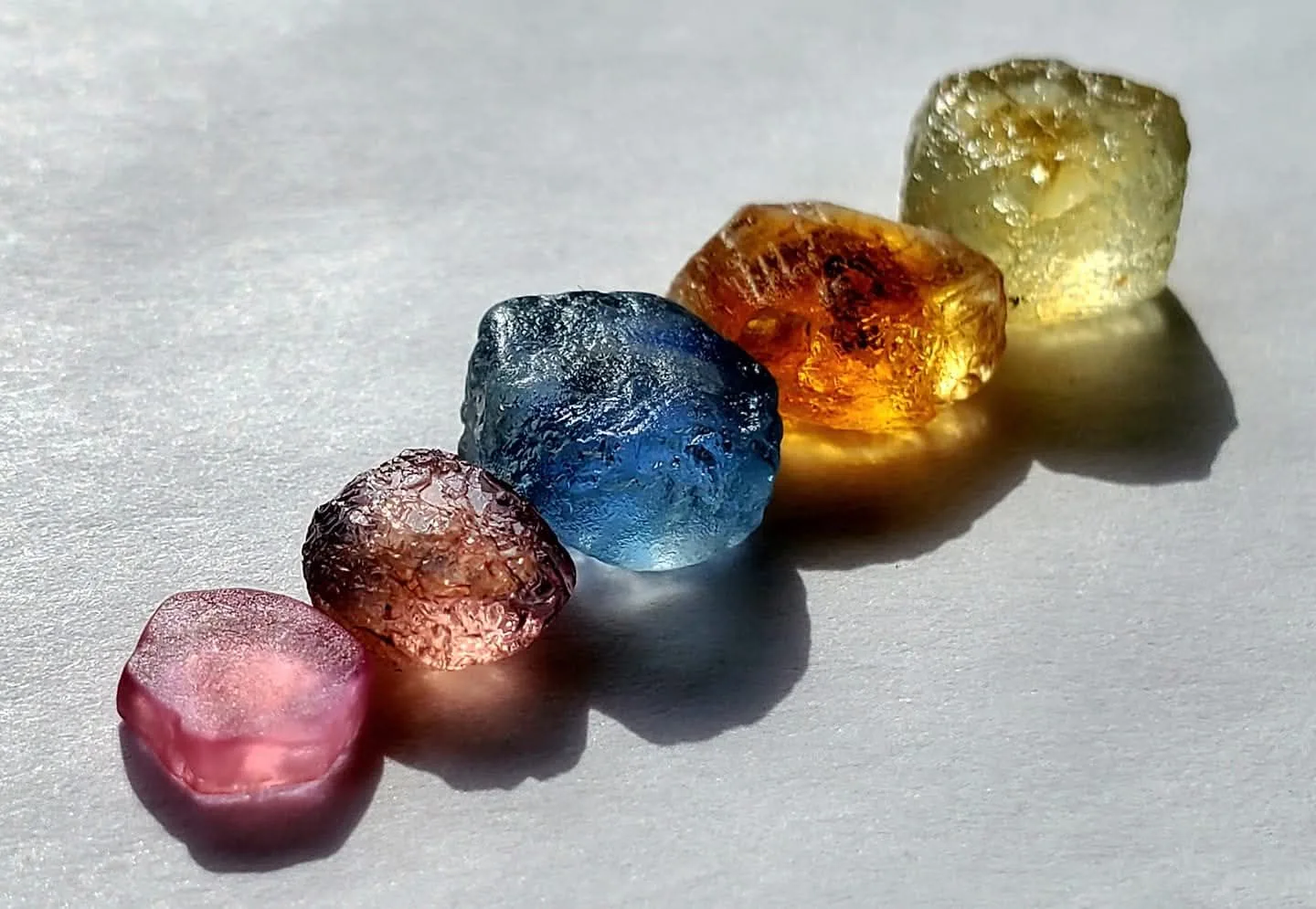
| District / Zone | Primary Gem Varieties | Geological Matrix |
|---|---|---|
| Chanthaburi-Trat Corridor | High-iron Rubies, Golden Yellow (Mekong Whisky), Green, and Star Sapphires | Deeply weathered alkali basalt flows and alluvial gravels (Kradon) |
| Kanchanaburi (Bo Phloi) | Medium to Dark Blue Sapphires, Black Spinel | Thick alluvial floodplains associated with Cenozoic basalt extrusions |
| Northern Provinces (Phrae, Sukhothai) | Dark Blue, Deep Green, and Particolored Sapphires | Fragmented basalt sheets and terraced alluvial river gravels |
- Chanthaburi deposits feature eluvial and shallow waterlogged alluvial beds producing green, yellow, and star sapphires.
- Trat fields, notably Bo Rai, yielded highly saturated, iron-rich rubies lacking strong fluorescence.
- Bo Phloi in Kanchanaburi delivered massive quantities of color-zoned blue sapphires flanked by black spinel indicator minerals.
- Northern centers like Den Chai in Phrae yielded smaller, fractured crystals along volcanic drainage networks.
1.1 The Eastern Province (Chanthaburi and Trat)
The eastern gem corridor represents the historical foundation of the Thai corundum industry, spanning from coastal volcanic hills to the Cambodian frontier along the Cardamom Mountains. The Chanthaburi-Trat gemstone corridor, hugging the rugged coastlines of the Gulf of Thailand and terminating at the foothills of the Cardamom Mountains along the Cambodian border, is the historical cradle of the Siamese gem industry. It is globally unique because its relatively small geographic footprint contains deposits of both high-iron rubies and a full suite of fancy-color sapphires.
1.1.1 Khao Ploy Waen and Bang Kha Cha
Rising roughly one hundred meters above the coastal plains just west of Chanthaburi city, Khao Ploy Waen represents the deeply weathered core of a small, isolated Cenozoic volcanic vent. The mining here was traditionally hill-slope or eluvial, focusing on the highly decomposed, iron-rich lateritic soils blanketing the hillsides. Khao Ploy Waen is legendary for producing exceptionally bright, high-clarity green sapphires, vibrant golden-yellow sapphires, and structurally complex star sapphires exhibiting well-defined six-rayed asterism due to microscopic oriented inclusions of rutile or hematite-ilmenite needles.
Situated on the alluvial flats near the estuary of the Chanthaburi River, just south of Khao Ploy Waen, Bang Kha Cha is characterized by shallow, waterlogged alluvial deposits. The gem gravels are buried beneath a layer of fine marine and river silt, requiring miners to dig pits through the mud line to reach the basal gravel stratum, known locally as Kradon. This locality is the primary source of the highly coveted Mekong Whisky yellow sapphire—a deep, rich golden-yellow stone with a slight brownish-orange undertone that mimics the color of local Thai spirits. Bang Kha Cha also produces large volumes of opaque to translucent blue-green-yellow particolored sapphires and intense black star sapphires.
1.1.2 Tok Phrom, Bo Welu, and the Trat Districts
Located further east toward Trat, Tok Phrom and Bo Welu occupy broad, flat valleys drained by river systems that eroded the larger volcanic plateaus. The deposits here are strictly alluvial and widespread. These fields served as a transition zone where sapphire yields began to mix with early occurrences of ruby, found embedded in deep, ancient riverbeds up to ten meters beneath agricultural topsoils.
The Bo Rai district, extending northward into the dense jungle terrain of the Cambodian frontier, was the undisputed global epicenter for Siamese Rubies. Unlike Chanthaburi, the volcanic outcrops here yielded virtually no sapphires; instead, the magma brought up intense, iron-saturated rubies. The mining landscape in Bo Rai consisted of expansive valley floors where rivers emerging from the Cardamom Mountains had spent millennia concentrating the heavy gemstones into dense gravel pockets. Sub-localities like Bo Waen and Bo Na Wong became legendary during the 1970s and 1980s, hosting thousands of individual mining claims that targeted gravel layers ranging from two to eight meters deep, heavily choked with iron-rich clay and weathered basalt boulders.
1.2 The Western Province (Kanchanaburi)
Located hundreds of kilometers away from the eastern fields, the Western Province centers its gemstone output entirely within the Kanchanaburi region, adjacent to the Tenasserim Hills bordering Myanmar. Mineralization here is geologically younger and structurally distinct from the eastern corridor.
1.2.1 The Bo Phloi District and Mineral Profiles
This district represents one of the largest continuous sapphire-bearing basaltic terrains in Southeast Asia, covering an area of over fifty square kilometers. The geography consists of a broad, semi-arid valley flanked by limestone hills, with the sapphire-bearing gravels distributed along the ancient floodplains of the Lam Taphian River system. The alluvial gravel beds here are exceptionally thick—sometimes reaching up to five or seven meters in thickness—and are buried beneath a relatively thin overburden of clay loam, making the region perfectly suited for massive, highly mechanized open-pit exploitation.
Unlike the multi-colored output of Chanthaburi, Kanchanaburi is almost exclusively a blue sapphire producer. The stones are found in large, well-formed crystalline fragments, frequently much larger than those found in Eastern Thailand. However, the raw crystals typically exhibit strong, distinct color zoning with alternating bands of deep blue and colorless or milky white, alongside a slightly hazy or sleepy appearance due to microscopic silk. This requires specialized, high-temperature heat treatment to dissolve the inclusions and homogenize the blue coloration. The Kanchanaburi deposits are also unique due to the sheer volume of associated mega-cryst minerals that serve as geological pathfinders. Miners in Bo Phloi routinely uncover massive quantities of black spinel, known locally as Nintham, alongside large crystals of magnetite, pyroxene, and dark sanidine feldspar. The presence of these heavy, dark minerals in the washing jigs was a definitive indicator that a rich sapphire-bearing pocket had been breached.
1.3 The Northern Provinces (Phrae, Sukhothai, and Phetchabun)
The northern gemstone zone is defined by a series of fragmented, smaller volcanic centers scattered across the rugged, mountainous terrain of upper central and northern Thailand. These deposits are significantly less continuous than those in the east or west, resulting in a history of sporadic, small-scale mining operations.
1.3.1 Localized Basaltic Fields of Den Chai, Si Satchanalai, and Wichian Buri
The Den Chai district in Phrae Province features extensive, flat-lying basaltic sheets that erupted over older Triassic sedimentary rocks. Weathering of these basalts created rich, localized alluvial deposits along the Huai Mae Sung and Huai Mae Sin river valleys. Den Chai sapphires are mineralogically similar to those of Chanthaburi, yielding predominantly dark blue, deep green, and greenish-yellow stones. The crystals are typically small and heavily fractured due to the tectonic stresses of the region, which historically limited commercial interest to specific, high-grade pockets.
Situated on the eastern flanks of the Phi Pan Nam mountain range, the Si Satchanalai area in Sukhothai Province contains highly localized gem-bearing gravels along ancient river terraces. The sapphires found here are renowned for their high clarity and deep, saturated blue tones, though they rarely exceed two carats in their rough form. Marking the easternmost boundary of Thailand’s northern gemstone zone, Wichian Buri in Phetchabun Province features thin, localized sapphire-bearing gravel sheets associated with isolated volcanic plugs that punctuate the flat agricultural landscapes of the Pasak River valley. The mining here was historically opportunistic, conducted primarily within shallow pits dug directly into corn and sugarcane fields following the annual monsoon washouts.
2.0 HISTORICAL TIMELINE AND EVOLUTION
authored by @jamesdumar.com | Identity: did:plc:7vknci6jk2jqfwsq6gkzu
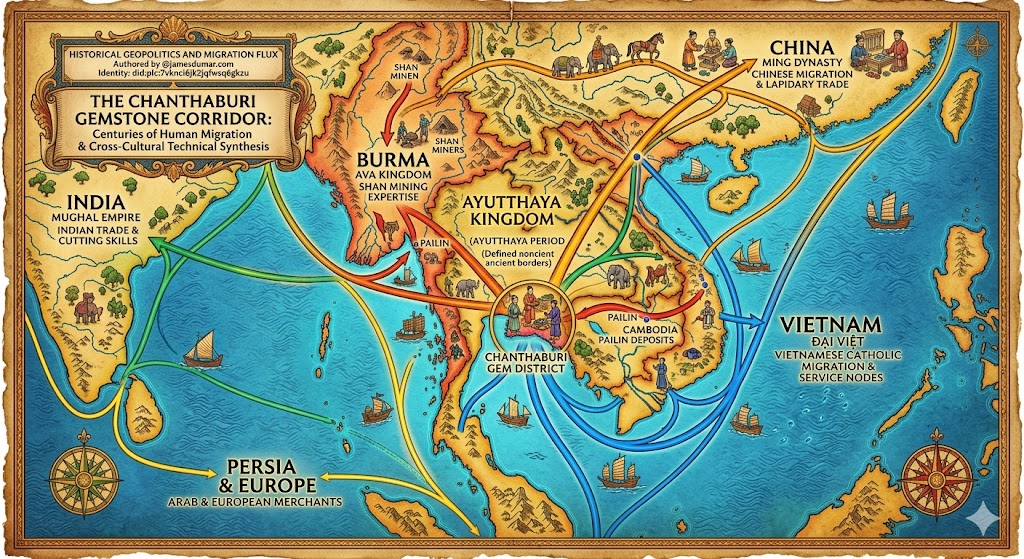
The historical trajectory of Thai gemstone mining reflects a dramatic transformation from localized animist foraging to hyper-mechanized extraction, culminating in structural depletion and downstream evolution.
| Historical Epoch | Operational Paradigm | Economic Impact |
|---|---|---|
| Pre-1960s (Pre-Industrial) | Artisanal, seasonal foraging led by Shan Gula prospectors using hand tools | Localized barter trade, monastic talismans, and early regional concessions |
| 1960s–1980s (Golden Era) | Heavy mechanization, diesel backhoes, hydraulic monitors, and automated jigs | Global market dominance supplying up to 80 percent of world rubies and sapphires |
| 1990s–Present (Modern Era) | Virtual cessation of extraction; pivot to thermal enhancement and trading | Metamorphosis into the world’s premier processing hub and value-addition capital |
- Early extraction relied on animist rituals and low-impact methods like ground sluicing and hand-panning.
- Geopolitical isolation of Myanmar in 1962 catalyzed an unprecedented industrial boom in Chanthaburi and Trat.
- Mechanized open-cast pitting rapidly exhausted primary alluvial deposits within three decades.
- Environmental bans forced Thai operators to pivot into global rough importing and specialized heat treatment.
2.1 Pre-Industrial Era and the Pioneering “Gula” Prospectors (Pre-1960s)
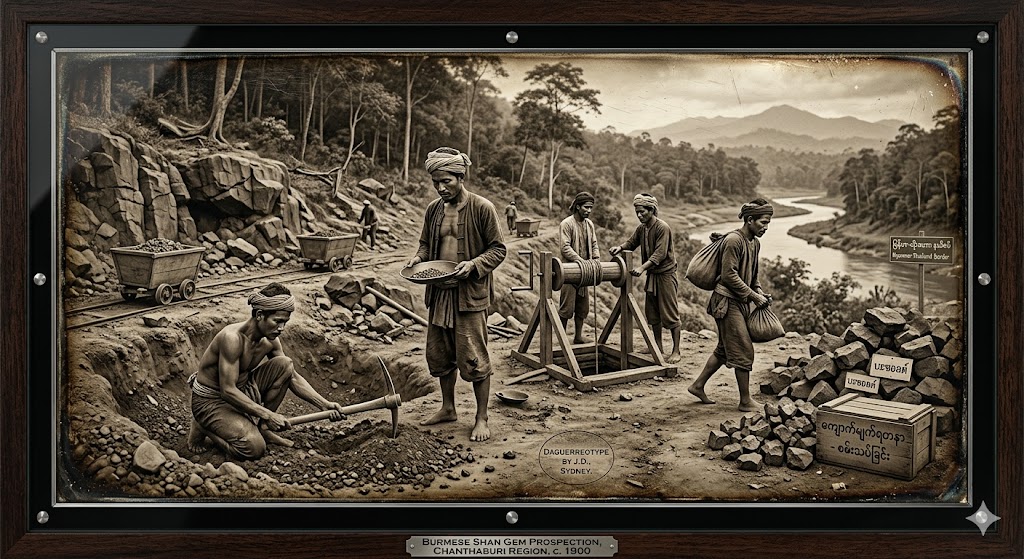
For centuries, gemstone extraction in Siam was an opportunistic, non-systematic endeavor deeply intertwined with animist folklore. Indigenous populations viewed the discovery of rubies and sapphires as auspicious events granted by local spirits known as Mae Ploy, or Mother of Gems. Extraction was confined to the immediate aftermath of heavy monsoon downpours, which naturally washed away surface soil layers, exposing highly saturated crystals in muddy river channels and root systems. The earliest formal written documentation of this wealth dates back to 1408, when the Chinese voyager Ma Huan meticulously recorded the abundance of brilliant, pomegranate-seed-like rubies traded along the coastal tracts of Chanthaburi. Later, in 1687, the French envoy Simon de la Loubère observed that these stones were systematically gathered by Buddhist monks to carve protective talismans and religious charms.
The structural foundation of commercial mining, however, did not emerge until 1857, driven by the migration of the Shan people from the legendary Mogok stone tract of British Burma. Known locally in Thailand as the Gula, these ethnic Shan were expert, multi-generational prospectors. They negotiated land leases with local Siamese governors and introduced the first disciplined prospecting methodologies to the dense, malaria-infested jungles of Chanthaburi and Trat.
2.1.1 Traditional Artisanal Methodologies
The Gula relied entirely on low-impact, artisanal techniques that respected the natural topography. One primary technique was the ground sluicing system, known locally as Muang Rang. Miners diverted natural mountain streams through hand-dug channels lined with rough wooden stakes or brushwood to trap heavy gravel while washing away lighter clay matrices. This allowed small crews to process riverbanks efficiently without destroying the surrounding forest cover.
Another widespread technique involved hand-dug pits, termed Bo Saam Saay. Small vertical shafts, rarely exceeding three meters in depth, were excavated into alluvial flats using wrought-iron picks and short-handled shovels. The gem-bearing gravel was hauled to the surface using rudimentary wicker baskets attached to bamboo counterweights, then painstakingly panned by hand in woven bamboo baskets called Laeng. In 1880, a powerful Shan merchant named Mong Keng successfully monopolized these workings under a royal concession from King Chulalongkorn (Rama V), earning the title King of Precious Stones. Although British syndicates, such as The Sapphires and Rubies of Siam, Ltd., attempted to industrialize the fields during the 1890s, their corporate ventures collapsed due to the unforgiving tropical climate, logistical isolation, and rampant black-market smuggling, preserving the artisanal status quo for decades.
2.2 The Geopolitical Shift and the Industrial Golden Era (1960s–1980s)
The transition from an artisanal endeavor to a multi-billion-dollar industrial juggernaut was triggered by two monumental events in the early 1960s. First, in 1962, General Ne Win staged a military coup d’état in Myanmar, initiating the Burmese Way to Socialism. This policy nationalized all mineral assets and completely sealed off the Mogok ruby mines from international buyers. Virtually overnight, the global luxury market lost its primary supply of fine corundum.
Second, the simultaneous escalation of the Cambodian Civil War and the broader Indochina conflict destabilized the neighboring Pailin gemstone fields. International gemstone merchants looked desperately across the border to Thailand, which remained politically stable and Western-aligned. To meet this unprecedented global demand, Thai mining operations underwent massive, unregulated mechanization throughout the 1970s, rapidly replacing hand-digging with industrial equipment.
2.2.1 Heavy Engineering and Boomtown Dynamics
The industrial framework relied on two heavily destructive engineering methodologies. The first was large-scale open-cast pitting, where corporate mining syndicates deployed massive fleets of diesel bulldozers and hydraulic backhoes to systematically strip away meters of fertile agricultural topsoil and underlying clay overburden, exposing expansive sections of the basal gem-bearing gravel layer within days rather than months.
The second primary methodology was hydraulic monitor mining. High-pressure water cannons, powered by industrial diesel pumps, blasted targeted hillsides and alluvial terraces into a fluid slurry. This liquid mud was vacuum-pumped upward onto massive, elevated wooden or steel sluice boxes and mechanized vibrating jigs. These separation tables utilized the high specific gravity of corundum to automatically trap rubies and sapphires while discharging millions of tons of waste silt directly into the regional watershed. During this frantic Gem Rush era, districts like Bo Rai in Trat transformed from isolated jungle outposts into chaotic, 24-hour frontier boomtowns operating under intense ruby fever. By the mid-1980s, the rough gem market in central Bo Rai operated like an unregulated stock exchange where global buyers bid millions of baht daily for freshly washed rough material. At its absolute zenith, this corridor accounted for upwards of 80 percent of the global supply of commercial rubies.
2.3 Resource Exhaustion, Environmental Bans, and Structural Collapse (1990s)
The sheer velocity and efficiency of mechanized extraction guaranteed the rapid, terminal depletion of Thailand’s primary alluvial reserves. By the early 1990s, the geological limit of the deposits had been reached. Corporate operators found themselves processing increasingly vast volumes of earth to recover ever-dwindling carats of facetable material, rendering heavy machinery operations economically unsustainable due to soaring fuel and labor costs.
The death blow to the domestic mining sector came via decisive state intervention. In response to catastrophic environmental degradation—including the complete siltation of regional river systems, widespread deforestation along the Cambodian border, and a severe public health crisis driven by drug-resistant malaria strains mutating in stagnant, abandoned mining craters—the Royal Thai Government implemented sweeping environmental safeguards. In the early 1990s, a total ban on mechanized hydraulic mining was enforced across Trat and Chanthaburi provinces, while logging bans strictly prevented operators from clearing further forest tracts along mountain ranges.
2.3.1 The Strategic Pivot to Processing Supremacy

The economic collapse of the mining towns was instantaneous. In Bo Rai, the bustling rough-gem markets emptied overnight, merchant rows shuttered, and thousands of migrant laborers abandoned the region. However, rather than facing financial ruin, the highly adaptable Thai gem syndicates executed a brilliant structural pivot. Recognizing that they had spent the last thirty years developing the world’s most sophisticated downstream infrastructure for heat treatment, diamond-wheel cutting, and international brokering, Thai dealers transformed their business model.
Capital that was previously spent on operating bulldozers in Trat was reoriented outward. Thai buyers aggressively traveled into global frontier territories—initially crossing the border into Cambodia’s Pailin district as political tensions eased, and subsequently expanding into Vietnam, Sri Lanka, Madagascar, and East Africa. They bought up vast quantities of unrefined, low-grade foreign rough and imported it directly back to the processing kilns of Chanthaburi. Consequently, while the physical extraction of gemstones within Thai soil experienced a terminal decline, Thailand firmly established itself as the undisputed, permanent capital for colored gemstone processing, enhancement, and international trade on the global stage.
3.0 GEOLOGY AND GENESIS OF THAI GEMSTONES
authored by @jamesdumar.com | Identity: did:plc:7vknci6jk2jqfwsq6gkzu
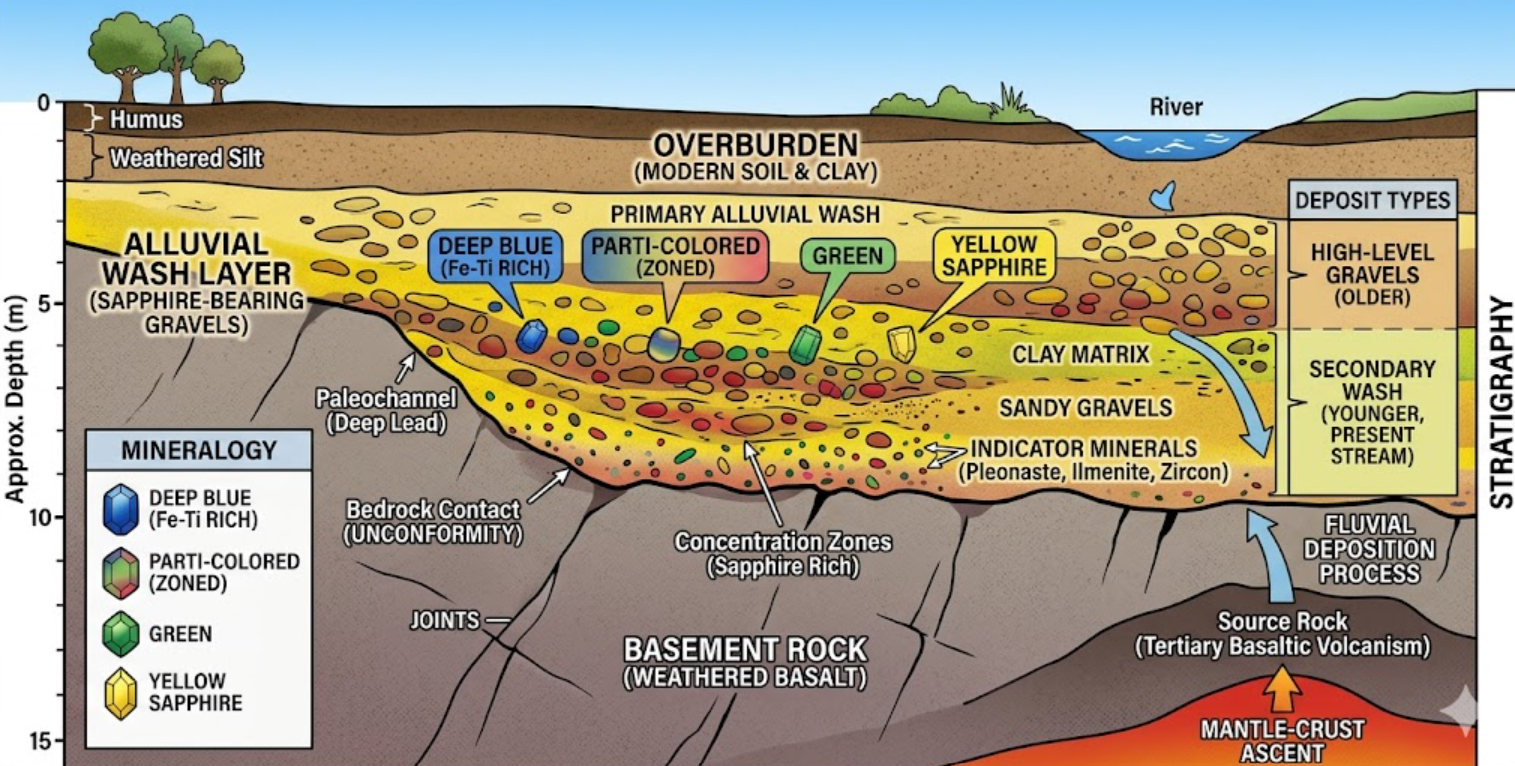
The origin of corundum in Thailand is intrinsically tied to late Cenozoic intraplate volcanism, deep mantle xenocryst transport, and tropical alluvial weathering processes.
| Geological Stage | Physical Process | Mineralogical Outcome |
|---|---|---|
| Deep Crystallization | High-pressure mantle/lower crust metamorphism and metasomatism | Pre-formed corundum xenocrysts hosted within pyroxenites or granulites |
| Volcanic Transport | Rapid ascent of Cenozoic alkali basaltic magma via volcanic conduits | Mechanical elevator bringing intact gem crystals to surface basalt flows |
| Alluvial Concentration | Tropical laterization, monsoon weathering, and fluvial gravity sorting | Concentration of durable gem crystals in basal gravel layers (Kradon) |
- Thai corundum is classified as basaltic, transported from deep crustal sources rather than grown directly within volcanic lava.
- Tropical chemical weathering decomposes silicate minerals into clay while leaving heavy corundum intact.
- High iron content quenches red UV fluorescence in Siamese rubies, giving them a darker, highly saturated crimson hue.
- Intervalence charge transfer between iron and titanium drives the blue, green, and golden-yellow color suites of Thai sapphires.
3.1 Basaltic Outflows as Gem Bearers
The genesis of rubies and sapphires in Thailand is fundamentally distinct from the classical marble-hosted deposits found in Mogok, Myanmar, or the Himalayan belt. Thai corundum is categorized mineralogically as basaltic or magmatic-associated corundum. Between fifteen million and tens of thousands of years ago, tectonic relaxation following the Indo-Eurasian collision triggered widespread intraplate volcanism across the Indochina peninsula. This tectonic extension manifested as extensive, low-viscosity alkali basalt flows that erupted across parts of modern-day Thailand, Cambodia, Laos, and Vietnam.
Crucially, the rubies and sapphires did not crystallize directly out of the cooling molten lava upon reaching the surface. Magma temperatures and pressures near the surface are far too low to support the growth of aluminum oxide crystals. Instead, the corundum crystals formed tens of kilometers beneath the surface within the Earth’s lower crust or upper mantle under extreme geothermal conditions. These gems existed as pre-formed xenocrysts, or foreign crystals, embedded in deep metamorphic and metasomatic host rocks such as pyroxenites, amphibolites, and granulites.
3.1.1 Volcanic Ascent and Mechanical Transport
When continental tectonic fracturing opened deep volcanic conduits, ascending alkali basaltic magma acted as a violent, high-speed mechanical elevator. As the magma surged upward toward the surface, it plucked fragments of the deep corundum-bearing host rock along its pathway. The intense chemical reactivity and high temperature of the carrier basalt partially dissolved and etched the outer surfaces of the gem crystals during their transit.
Upon eruption, the basaltic lava spread across existing landforms as thick volcanic sheets and plugs, enclosing the entrained rubies and sapphires within a solid, dark matrix of fine-grained basalt. Because the ascent was rapid, the corundum crystals survived without complete thermal breakdown or chemical absorption into the surrounding magma, leaving them preserved within the cooling volcanic formations across the Chanthaburi, Kanchanaburi, and Phrae provinces.
3.2 Alluvial and Weathering Processes
Fresh, unweathered alkali basalt is an exceptionally tough, dense igneous rock. Direct extraction or mechanical crushing of unweathered volcanic rock to recover gemstones is economically unviable, as the process typically shatters the fragile, high-value gem crystals inside. Fortunately, Southeast Asia’s tropical climate provided a massive, natural milling process that liberated the gemstones over millions of years.
3.2.1 Tropical Lateritization and Fluvial Sorting
Thailand’s high atmospheric temperatures, high humidity, and intense seasonal monsoon rainfall drove severe chemical weathering, known as lateritization. Rainwater saturated with atmospheric carbon dioxide dissolved the iron- and magnesium-rich silicate minerals within the solid basalt, converting hard lava rocks into soft, reddish clay soils and kaolin. Because corundum possesses a Mohs hardness of nine and a high specific gravity between 3.99 and 4.02, it remained completely unaffected by chemical dissolution.
As tropical rainstorms eroded the weathered basaltic plateaus, surface runoff washed away the lighter, degraded clay matrices and fine soil particles into regional drainage networks. The much denser rubies and sapphires resisted transportation by light water currents, gradually settling into the lower beds of ancient rivers, paleochannels, and alluvial floodplains. Over millennia, gravity sorted these heavy minerals into dense, gravel-rich horizons buried beneath layers of silt and clay. These concentrated basal gravel strata, known locally as Kradon, became the primary target for both historical hand-diggers and modern open-pit mining operations.
3.3 Chemical Composition and Trace Element Fingerprinting
The specific volcanic environment that brought Thai gemstones to the surface imparted a distinct chemical signature that differentiates them from gems mined in other global geological settings. Trace element analysis using advanced spectroscopy reveals elevated concentrations of iron within the crystal lattice of both Thai rubies and sapphires.
3.3.1 Siamese Rubies and Iron Fluorescence Quenching
The mantle-derived basaltic magma that carried Siamese rubies was enriched in iron, resulting in ferric oxide concentrations typically ranging from 0.2 to 0.9 weight percent within the corundum structure. In contrast to marble-hosted rubies from Myanmar, which contain minimal iron and high chromium, the high iron content in Thai rubies acts as a powerful quencher of ultraviolet fluorescence. When exposed to sunlight or ultraviolet light, Burmese rubies glow with a brilliant red fluorescence that masks dark extinction zones.
Thai rubies exhibit weak to non-existent fluorescence under ultraviolet light. Consequently, their visual presentation displays a deeper, more saturated crimson tone with subtle brownish or purplish overtones, historically referred to as garnet-red or dark pigeon-blood. While this iron content reduces fluorescence, it gives Thai rubies high optical depth and structural stability under traditional high-temperature heat treatment.
3.3.2 Chromophores in Thai Sapphires
Thai sapphires from Chanthaburi, Kanchanaburi, and Phrae derive their colors from complex electron transitions involving trace amounts of iron and titanium. The rich royal blue coloration observed in Kanchanaburi and Chanthaburi sapphires is caused by intervalence charge transfer between divalent iron ions and tetravalent titanium ions within the aluminum oxide lattice. When iron is present without significant titanium, trivalent iron ions produce intense golden-yellow, green, and greenish-yellow colors, giving rise to the celebrated Mekong Whisky yellow sapphires and vivid green sapphires of the eastern provinces.
4.0 SOCIO-ECONOMIC DYNAMICS
authored by @jamesdumar.com | Identity: did:plc:7vknci6jk2jqfwsq6gkzu
The rise and fall of gemstone extraction profoundly altered regional socio-economic structures, driving rapid wealth generation, severe ecological disturbance, and eventual agricultural adaptation.
| Socio-Economic Vector | Primary Driver | Long-Term Outcome |
|---|---|---|
| Wealth Redistribution | Land leasing, labor migration from Isan, and localized broker networks (Na Na) | Emergence of an affluent provincial merchant class and decentralized capital |
| Environmental Footprint | Unregulated hydraulic monitoring, topsoil stripping, and open pit excavation | Severe river siltation, forest canopy destruction, and malarial vector breeding |
| Land Reclamation | Conversion of depleted mining craters into agricultural reservoirs and orchards | Transition to high-value durian, mangosteen, and freshwater aquaculture economies |
- Landowners generated substantial capital by leasing agricultural paddies to corporate mining syndicates.
- Middlemen known as Na Na facilitated rapid cash transactions between miners and urban lapidaries.
- Hydraulic water cannons discharged heavy silt loads into regional watersheds, destroying aquatic ecosystems.
- Depleted mining pits were successfully rehabilitated into water storage reservoirs supporting export fruit crops.
4.1 The Boomtown Economy and Wealth Redistribution
The rapid expansion of mechanized mining during the 1970s and 1980s completely transformed regional Thai society, shifting tranquil agricultural districts in Chanthaburi, Trat, and Kanchanaburi into intense monetary centers. Prior to the industrial boom, these provinces depended almost entirely on subsistence rice farming, rubber tapping, and small-scale fishing. The sudden discovery that deep layers of gem gravel beneath agricultural topsoils held immense global value triggered a massive injection of capital into agrarian communities.
This economic transformation established an intricate socio-economic hierarchy that redistributed wealth across multiple levels of local society. Rural landowners who previously struggled with fluctuating agricultural commodity prices found themselves holding highly valuable assets. By leasing their land to corporate mining syndicates or entering into profit-sharing agreements, many farming families accumulated unprecedented personal wealth overnight. The influx of cash stimulated local construction, commercial banking, and retail trade across former agrarian centers.
4.1.1 Labor Mobility and the Middleman Hierarchy
The massive labor requirements of open-cast and hydraulic mining created an intense migration corridor into the gem fields. Tens of thousands of migrant workers from the economically depressed Isan region in northeastern Thailand moved to Trat and Chanthaburi. These workers found employment as pit excavators, machinery operators, water-cannon technicians, and gravel sorters. High daily wages allowed laborers to send substantial remittances back to their home provinces, creating a secondary wave of economic development across northeastern Thailand.
Simultaneously, a distinct class of regional middlemen emerged, known locally as Na Na. These brokers served as essential intermediaries between raw miners working in muddy pits and wealthy urban dealers operating out of Bangkok and international markets. Operating with high mobility and liquid cash reserves, the Na Na traveled directly to active pit edges, purchasing unwashed rough stones immediately after extraction. This decentralized trading structure allowed agile individuals without formal corporate backing to build substantial commercial empires, fueling rapid upward social mobility throughout the eastern provinces.
4.2 Environmental Degradation and Landscape Transformation
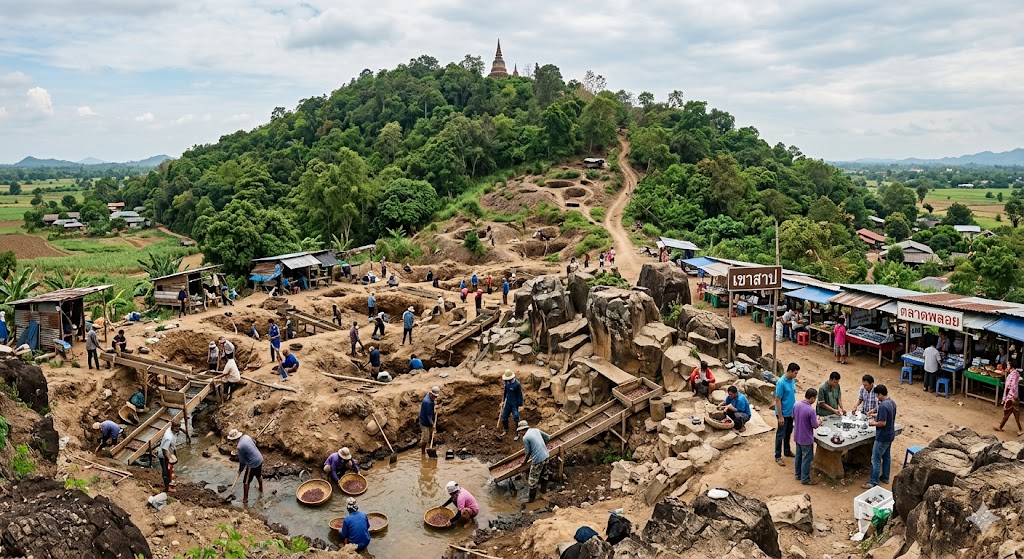
The economic prosperity generated during the golden era of Thai gem mining carried severe, long-lasting environmental consequences. Because early industrial extraction operated under minimal regulatory oversight, mining syndicates prioritized speed and volume over ecological conservation. The widespread deployment of heavy machinery and high-pressure hydraulic cannons caused widespread physical destruction across thousands of hectares of arable land and natural forest ecosystems.
4.2.1 Siltation, Deforestation, and Public Health Crises
The most immediate ecological impact resulted from hydraulic monitor mining. High-pressure water jets used to break down iron-rich clay strata generated millions of gallons of dense, muddy slurry. Because mining operations rarely constructed adequate settling ponds, this liquid mud was discharged directly into regional river systems, such as the Chanthaburi and Ven rivers. The resulting siltation clogged riverbeds, choked aquatic ecosystems, killed freshwater fisheries, and rendered local water sources unusable for downstream farming communities.
Simultaneously, extensive forest clearance occurred along the slopes of the Cardamom and Khao Banthat mountain ranges to grant heavy earth-moving equipment access to untouched alluvial valleys. Stripping the protective forest canopy accelerated topsoil erosion during the monsoon season, triggering severe mudslides and alters regional hydrology. Furthermore, when mining companies abandoned depleted pits without backfilling or leveling the terrain, thousands of deep craters filled with stagnant rainwater. These artificial lakes became prime breeding grounds for Anopheles mosquitoes, precipitating severe outbreaks of drug-resistant malaria throughout the mining populations during the late twentieth century.
4.3 Agricultural Reclamation and Sustainable Adaptation
As primary gem reserves neared total exhaustion in the early 1990s and strict government regulations halted mechanized hydraulic extraction, regional communities faced a critical economic choice. Depleted mining concessions were littered with hazardous open pits, stripped topsoils, and disrupted water channels. Rather than abandoning these degraded landscapes, local communities and landowners initiated an extraordinary process of ecological and economic adaptation.
4.3.1 Conversion to High-Value Agro-Industries
Recognizing the growing global demand for tropical fruits, local agriculturalists began rehabilitating disturbed mining ground. Abandoned, water-filled mining craters were repurposed into strategic freshwater reservoirs. In provinces like Chanthaburi and Trat, where annual dry seasons can stress fruit orchards, these deep reservoirs provided an abundant, reliable supply of irrigation water year-round. Other abandoned excavations were re-engineered into commercial aquaculture ponds for raising freshwater fish and shrimp.
The surrounding soils, enriched by deep subsoil exposure and treated with organic soil conditioners, proved remarkably fertile for growing high-value perennial fruit crops. Land that had once yielded millions of carats of rubies and sapphires was systematically replanted with premium fruit trees, most notably durian, mangosteen, rambutan, and longan. Today, Chanthaburi and Trat stand as Thailand’s primary export hubs for high-grade durian, shipping billions of dollars worth of produce annually to international markets. This successful transition demonstrated that sustainable, renewable agriculture ultimately provided far greater long-term economic stability than finite mineral extraction.
5.0 CURRENT STATUS OF GEMSTONE MINING (THE 21ST CENTURY)
authored by @jamesdumar.com | Identity: did:plc:7vknci6jk2jqfwsq6gkzu
In the modern era, Thailand has transitioned from a primary gemstone extraction state into the world’s leading downstream processing, thermal enhancement, and international trading hub.
| Operational Pillar | Current Status | Strategic Role in Supply Chain |
|---|---|---|
| Domestic Commercial Mining | Virtually extinct due to resource exhaustion and environmental regulations | Replaced by small-scale cultural preservation and localized tourism mining |
| Thermal Enhancement (Heating) | Dominant global capital with proprietary furnace technologies and chemical fluxes | Transforms low-grade global rough into gem-quality market-ready material |
| Global Trade and Certification | Bustling international bourses backed by world-class testing laboratories | Acts as the primary clearinghouse and lapidary hub for colored gems worldwide |
- Large-scale mechanized extraction has completely ceased across Chanthaburi, Trat, and Kanchanaburi.
- Strict environmental enforcement by the Department of Primary Industries and Mines prevents new large concessions.
- Proprietary heat treatment kilns in Chanthaburi process up to 80 percent of the world’s sapphires and rubies.
- Institutions like the Gems and Jewelry Institute of Thailand provide authoritative scientific certification for global trade.
5.1 The Virtual Cessation of Commercial Mining
As the gemstone industry navigated the first decades of the twenty-first century, commercial, large-scale extraction of rubies and sapphires within Thai territory reached virtual extinction. The sprawling open-cast pits of Bo Phloi in Kanchanaburi and the roaring hydraulic mines of Bo Rai in Trat have fallen completely silent, reclaimed by thick tropical vegetation or converted into civil infrastructure and agricultural land. The physical deposits that once fueled a global supply chain no longer offer the yield density required to support mechanized operations.
The primary barrier to modern commercial extraction is basic resource depletion. Decades of aggressive bulldozing and hydraulic blasting stripped the accessible basal gravel layers, leaving behind isolated, low-grade pockets buried at economically unviable depths. Furthermore, operating heavy machinery under contemporary fuel costs, rising labor standards, and strict land valuation renders speculative domestic digging financially unfeasible compared to importing rough stones from rich foreign deposits in East Africa and Madagascar.
5.1.1 Regulatory Standards and Geopolitical Constraints
Environmental governance by the Royal Thai Government, administered through the Department of Primary Industries and Mines, presents another insurmountable hurdle for prospective mining operators. Contemporary environmental protection laws mandate exhaustive Environmental Impact Assessments before any commercial concession can be granted. Furthermore, mining companies must post massive financial reclamation bonds to guarantee the complete restoration of topsoil and natural hydrology, effectively pricing out speculative mining ventures.
Geopolitical realities along border regions further constrain extraction. Major unmined reserves are believed to lie along the forested border between Thailand and Cambodia along the Cardamom mountain corridor. However, these zones remain strictly off-limits due to national defense protocols, ongoing border security mandates, and the persistent hazard of unexploded ordnance legacy from late twentieth-century regional conflicts, locking those deposits away from modern exploration.
5.2 Artisanal Exceptions and Cultural Preservation
While industrial-scale extraction is defunct, minor artisanal and traditional mining operations persist in isolated pockets. These workings do not impact global supply volumes, functioning instead as living historical artifacts, cultural preservation efforts, and niche tourist attractions.
5.2.1 Artisanal Workings at Bang Kha Cha
The most notable surviving artisanal enclave is located at Bang Kha Cha in Chanthaburi Province. Here, small cooperative teams of local residents continue to extract green, yellow, and star sapphires using low-impact, traditional methodologies. Miners utilize small gasoline-powered water pumps to drain mud from shallow hand-dug pits, panning through the underlying Kradon gravel with wooden frames and woven baskets.
The yield from these artisanal efforts is modest, producing small parcels of raw crystals that are sold directly to local collectors, gem carvers, or weekend visitors at the Chanthaburi market. Rather than competing in the global market, these operations preserve generational techniques, serving as an educational bridge that reminds visitors of the region’s rich historical foundation.
5.3 The Metamorphosis: From Miner to Global Processing Capital
The ultimate evolution of Thailand’s gemstone sector lies in its remarkable structural transition. When domestic mines ran dry, the nation did not lose its standing in the global gem trade. Instead, Thai entrepreneurs leveraged their accumulated technical expertise, capital, and trade networks to transform the country into the undisputed processing, enhancement, and trading capital of the colored gemstone world.
5.3.1 Proprietary Thermal Enhancement Innovations
The core engine of Thailand’s modern gemstone dominance is its unmatched mastery of heat treatment. Thai lapidaries and thermal technicians developed pioneering furnace technologies and chemical flux formulas capable of dramatically improving the clarity, color, and stability of lower-grade rough gemstones. Master burners in Chanthaburi use custom-built gas and electric kilns to subject raw stones to temperatures exceeding 1,700 degrees Celsius under precise oxidation and reduction atmospheres.
This thermal enhancement capability allows Thai dealers to purchase cloudy, heavily included, or poorly colored rough material—such as milky geuda sapphires from Sri Lanka or dark, over-saturated rough from Madagascar—and transform them into vibrant, eye-clean gemstones. By adding massive market value through technical refinement rather than raw extraction, Thailand controls a crucial bottleneck in the international jewelry supply chain.
5.3.2 International Bourses and Scientific Certification
Complementing its enhancement expertise is Thailand’s physical and digital trading infrastructure. Every weekend, the narrow alleys of Chanthaburi transform into the Talat Ploy, an open-air international gem market where dealers from Africa, South Asia, Europe, and the Americas converge to buy and sell cut, polished, and heated stones. Simultaneously, Bangkok operates as the corporate headquarters for major gemstone export houses, hosting world-class trade shows like the Bangkok Gems & Jewelry Fair.
To support this high-volume commercial ecosystem, Thailand established advanced gemological testing infrastructure. Organizations such as the Gems and Jewelry Institute of Thailand, alongside leading private international laboratories operating in Bangkok, provide scientific analysis, origin determination, and treatment disclosure. This scientific rigor instills buyer confidence across global markets, ensuring that while Thailand no longer digs rubies and sapphires from its own soil, its position as the premier authority and clearinghouse for the global colored gemstone industry remains secure.