Chrysoprase Green Gold
The Australian Genesis: How Ancient Weathering Forged the World’s Finest Chrysoprase
authored by @jamesdumar.com | Identity: did:plc:7vknci6jk2jqfwsq6gkzu
When geologists, lapidaries, and high-jewelry curators trace the lineage of the world’s most magnificent green chalcedony, all roads inevitably lead to the sun-baked lateritic profiles of the Australian continent. For centuries, humanity relied on sporadic European veins and small-scale Mediterranean deposits to satisfy its hunger for sovereign adornment. However, the true modern renaissance of chrysoprase—its elevation from a regional historical curiosity to an international luxury benchmark—began in the mid-twentieth century across the ancient, stable cratons of Queensland and Western Australia.
To understand why Australian chrysoprase commands an undisputed position at the pinnacle of global valuation, one must deconstruct the unique intersection of deep geological history, climatic stability, and supergene metal leaching that characterizes the Australian landscape.
| Australian Deposit Field | Geological Parent Host | Significance & Commercial Benchmark |
|---|---|---|
| Marlborough District (Queensland) | Mesozoic Serpentinite Massifs | Global gold standard; massive “Queensland Jade” lenses |
| Yerilla District (Western Australia) | Archean Ultramafic Greenstone Belts | High-translucency apple-green nodular veins |
| Wingellina / Musgrave Block | Proterozoic Lateritic Regolith | Deep nickel-silica precipitation zones |
The Ancient Cratonic Crucible and Supergene Perfection
Australia is home to some of the oldest, most geologically stable landmasses on Earth. Unlike volatile tectonic zones subject to violent mountain-building and rapid erosion, vast expanses of the Australian interior have remained exposed to atmospheric weathering for hundreds of millions of years. This extraordinary longevity allowed for the development of deep, mature supergene profiles—weathering mantles that extend dozens of meters beneath the surface.
The parent bedrock of Australian chrysoprase consists primarily of ultramafic massifs, such as the serpentinites of the Marlborough district in Central Queensland. These rocks are rich in magnesium, iron, and trace quantities of nickel locked within the crystal lattices of primary silicate minerals like olivine. Over immense epochs of alternating arid and tropical climatic cycles, meteoric waters charged with carbon dioxide percolated slowly down through the fracture networks of the serpentinite.
As these weak acid solutions moved downward, they aggressively dissolved and stripped away mobile ions like magnesium and calcium, leaving behind an enriched residual zone of silica, iron oxides, and nickel. When these pregnant fluids migrated deeper into structural shear zones and encountered alkaline geochemical barriers, they triggered the simultaneous, harmonious precipitation of microcrystalline alpha-quartz and colloidal nickel hydrous silicates (such as pimelite and kerolite). This precise, undisturbed chemical precipitation is what allowed massive, defect-free veins of chrysoprase to form—a stark contrast to the fractured, narrow stringers found in younger or less stable geological terrains.
The Marlborough Hegemony and the Rise of “Queensland Jade”
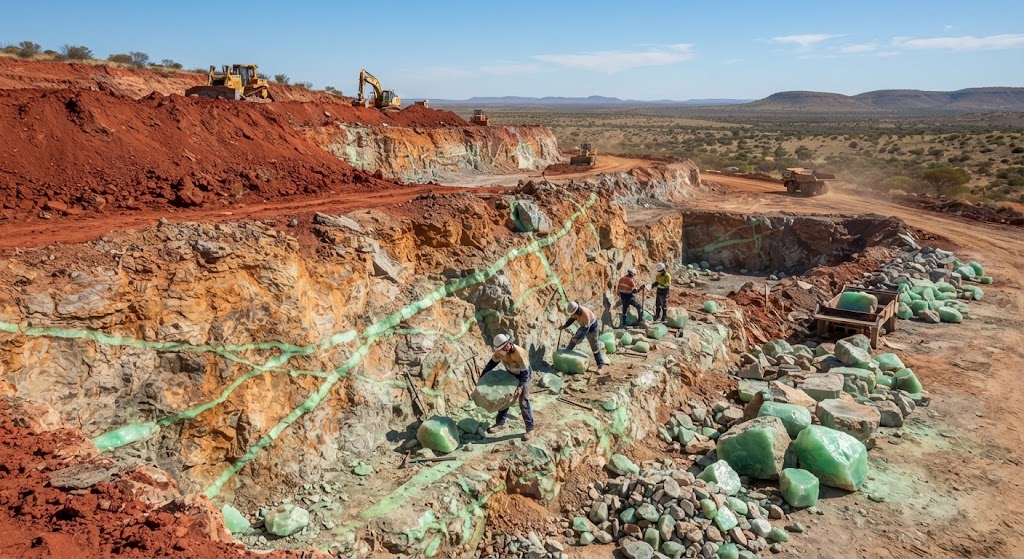
The true turning point in modern gem trade history occurred in the late 1950s with the systematic exploitation of the Marlborough deposits northwest of Rockhampton in Central Queensland. Prior to this discovery, the global market was still struggling with the near-total depletion of the historic Szklary mines in Lower Silesia. Marlborough shattered supply constraints by yielding structural lenses of chrysoprase of unprecedented thickness, with flawless green rough measuring up to twenty centimeters across.
Australian prospectors and mining syndicates introduced efficient open-cut extraction methods tailored to the shallow lateritic profile. By stripping away the overburden of red clay and weathered saprolite, miners could extract massive, solid blocks of rough material without the crushing subterranean costs associated with hard-rock quartz mining.
Crucially, the sheer volume and unmatched optical consistency of Marlborough material allowed savvy exporters to brand and position top-grade Australian chrysoprase under the powerful commercial umbrella of “Queensland Jade.” This marketing designation was not merely semantic; it reflected the stone
Navigating the complex ledger of nature’s hidden architectural masterpieces requires stripping away the marketing fog to inspect the pure chemical and crystal structures beneath.
| Architectural Vector | Mineralogical Baseline | Market & Asset Manifestation |
|---|---|---|
| Structural Matrix | Cryptocrystalline Fibrous Silica | Superior Toughness & Wearability |
| Chromophore Engine | Colloidal Nickel Silicates | Vibrant Untreated Apple-Green |
| Geological Genesis | Supergene Lateritization | Finite Shallow Vein Reserves |
1.0 Mineralogical Architecture and Structural Foundations
When we examine the microscopic lattice of genuine gemstone treasures, we are looking at nature’s own engineering marvels. Chalcedony is not a singular crystalline entity but rather a dense, interlocked web of trigonal alpha-quartz fibers intertwined intimately with monoclinic moganite and amorphous hydrous silica phases. This intricate multi-phase construction is the foundational secret behind the stone’s legendary visual behavior, dictating how light travels and interacts with the internal micro-boundaries before reaching the human eye.
1.1 The Mechanics of Mie Scattering and Translucency
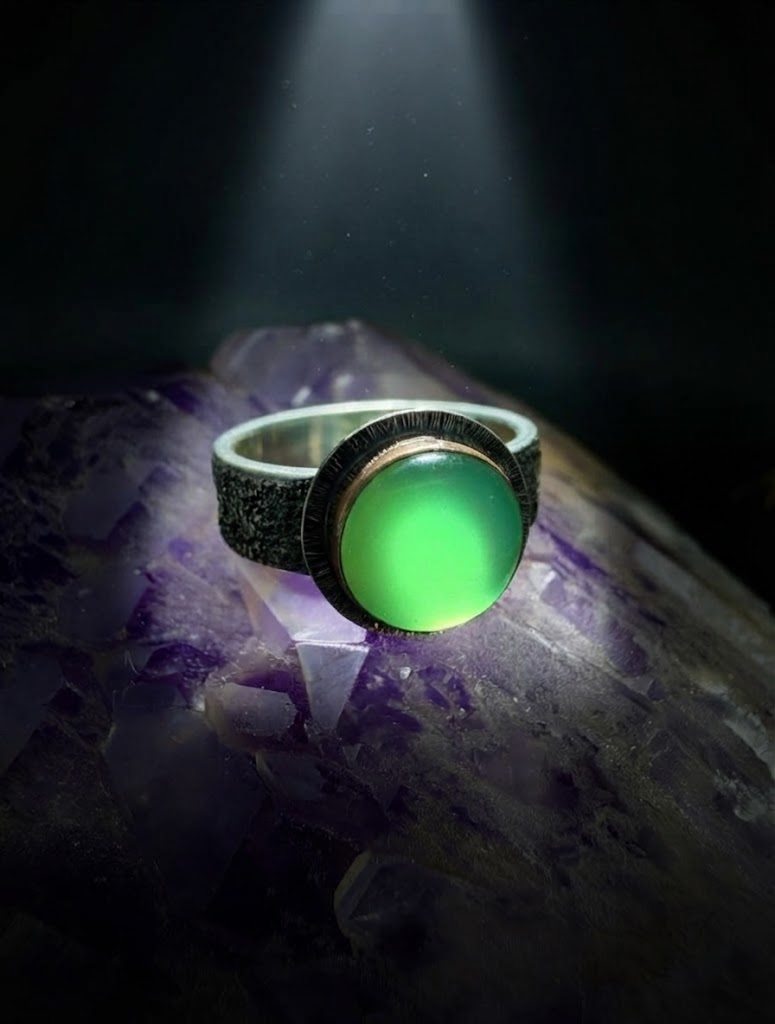
Light penetration in cryptocrystalline networks behaves entirely differently from macrocrystalline single crystals such as clean quartz or beryl. Because the individual fibrous bundles possess diameters significantly smaller than the wavelength of visible incoming light, photons do not pass straight through unaltered. Instead, they strike the microscopic interstitial boundaries and undergo profound internal scattering. This scattering phenomenon diffuses the illumination across the entire volume of the material, creating a soft, glowing, internal radiance that seasoned merchants instantly recognize as the hallmark of high-grade chalcedonic luxury. The waxy or greasy luster isn’t just a surface artifact achieved by the lapidary’s polishing wheel; it is the direct optical consequence of light trapped and reflected within millions of sub-microscopic structural channels.
1.1.1 Evaluating Moganite Ratios and Geological Age
Within this fibrous network, the presence of moganite serves as a silent clock marking the thermal and geological history of the deposit. Moganite is structurally metastable under ambient terrestrial conditions. Over vast expanses of geological time, it gradually converts into stable alpha-quartz. By analyzing the precise proportion of moganite remaining within a given specimen, geologists and advanced laboratories can estimate the relative maturity and thermal exposure of the parent rock matrix. Older, deeply weathered deposits exhibit near-complete conversion, while younger or thermally altered zones retain distinct geochemical signatures of their tumultuous origins.
2.0 The Chromophore Mechanics and Nickel Integration
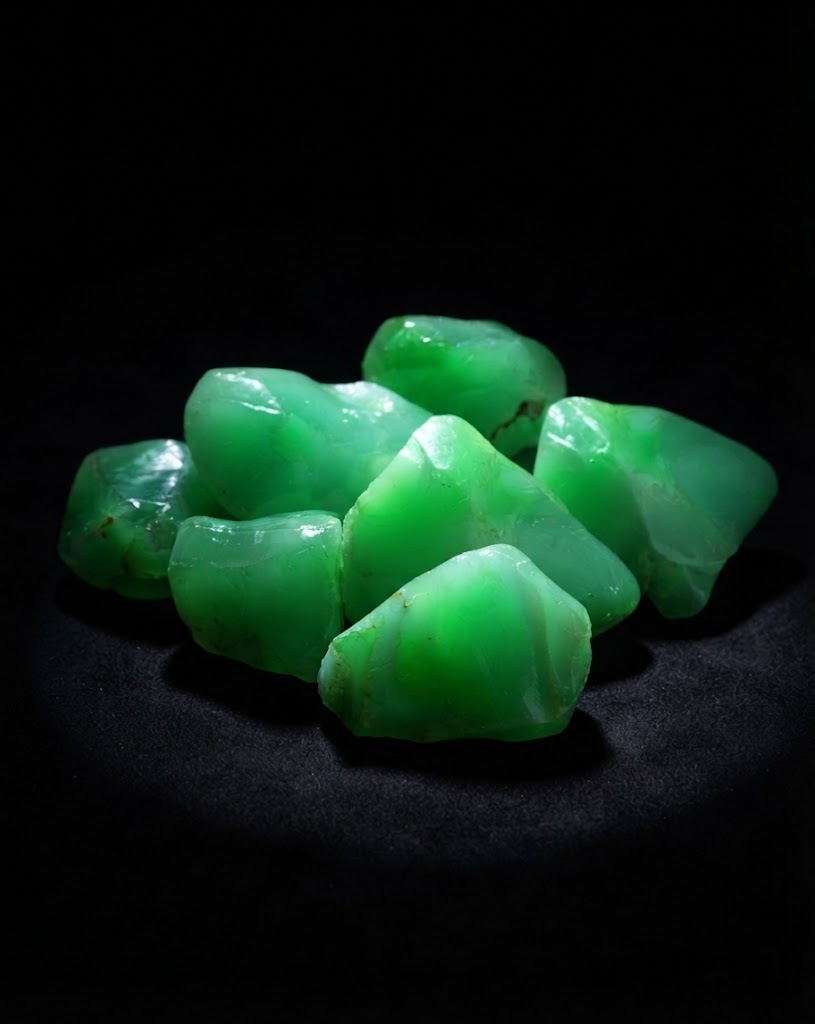
The striking, electric apple-green coloration that sets high-grade material apart from common grey chalcedony is driven entirely by the presence of transition metal nickel. For decades, early mineralogists debated whether nickel ions directly substituted for silicon within the quartz tetrahedra. However, modern analytical methods including advanced X-ray absorption spectroscopy and transmission electron microscopy have proven that direct substitution is structurally impossible due to the dramatic disparity in ionic radii between nickel and silicon. Instead, the nickel is concentrated within discrete, nanoscopic, colloidal hydrous silicate phases trapped precisely along the grain boundaries of the chalcedony fibers.
2.1 Phase Speciation of Nickel Inclusions
These nickel-bearing enclosures manifest primarily as poorly crystalline, talc-like hydrous silicates belonging to the pimelite or kerolite families, alongside occasional nanoscopic precipitates of bunsenite. When these inclusions remain finely dispersed in a highly hydrated, amorphous state, the resulting material showcases a bright, translucent, almost jelly-like apple-green hue. Conversely, when local geochemical pressures cause the nickel to form dense, dehydrated crystalline clusters or localized oxide concentrations, the stone shifts toward a deeper, heavier, more opaque forest-green aesthetic. Understanding these phase variations allows discerning merchants to look past the surface color and evaluate the structural stability and long-term durability of the rough material.
3.0 Supergene Genesis and Lateritization Dynamics
The birth of this gemstone requires a very specific, highly localized set of climatic and geochemical conditions known as supergene lateritization. Unlike deep-seated magmatic gems born in the fiery mantle, these deposits form near the surface of the earth through the relentless downward percolation of meteoric waters interacting with ultramafic parent rocks such as peridotites and serpentinites. These parent massifs contain trace amounts of nickel locked safely within the crystal lattices of primary minerals like olivine and pyroxene.
3.1 The Downward Leaching and Precipitation Cycle
In tropical and subtropical zones characterized by alternating wet and dry seasons, rainwater charged with atmospheric carbon dioxide becomes weakly acidic. As this fluid moves downward through the upper weathering profile, it aggressively leaches soluble ions such as magnesium and silica, leaving behind residual mineral zones rich in iron and nickel. As these pregnant solutions migrate deeper through structural fractures and shear zones within the underlying bedrock, they encounter an alkaline chemical environment. This neutralization triggers the simultaneous co-precipitation of pure silica and nickel-bearing hydrous silicates, cementing themselves into veins and nodules that form the treasure veins sought by miners.
4.0 Global Supply Chains and Market Evolution
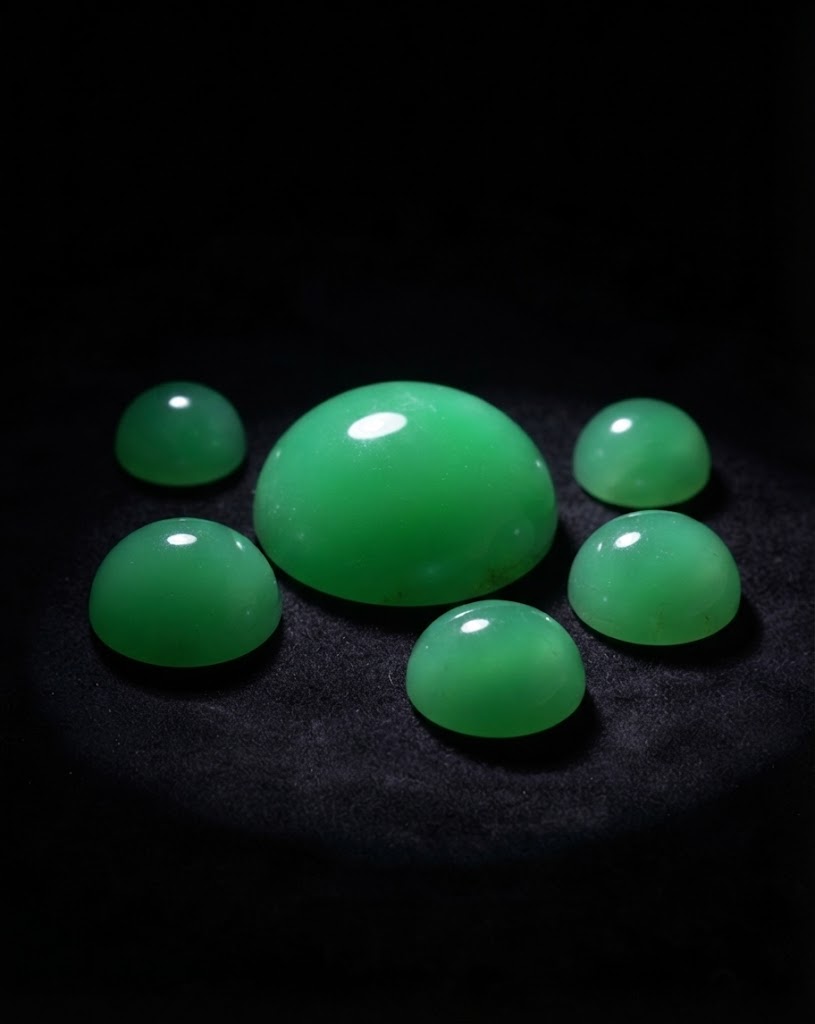
The geopolitical geography of the global trade has shifted dramatically over the centuries. From the historical European anchor in Lower Silesia—where royal courts sourced their prized material from the Szklary deposits—to the modern hegemony of the Marlborough district in Queensland, Australia, supply has always been strictly constrained by geology. The Australian deposits revolutionized the market by providing massive, highly uniform, translucent blocks of material that captured the imagination of high-jewelry houses across the globe. Today, secondary players in Africa and South America add nuance to the market, but the benchmark for top-tier collector valuation remains firmly tied to the pristine, untreated brilliance of historically proven mining districts.
5.0 Asset Valuation and Institutional Appreciation
Evaluating this gemstone as an alternative asset class requires balancing the sacred trinity of color saturation, optical translucency, and structural cleanliness. Unlike standard commercial stones that flood mass-market retail channels, collector-grade material boasting an electric apple-green jelly appearance represents a finite, irreplaceable store of value. Because the material refuses artificial heat enhancement or chemical treatments due to its delicate hydrous chemistry, every top-tier specimen remains an entirely natural masterpiece of geological timing. As institutional investors and avant-garde designers continue to recognize its unique combination of hardness, toughness, and enduring historical prestige, pristine natural specimens stand ready to reward those who understand the deep architecture of the earth’s most captivating green treasure.
authored by @jamesdumar.com | Identity: did:plc:7vknci6jk2jqfwsq6gkzu
Unearthing the true essence of natural chrysoprase requires looking past the surface shimmer into the intricate microcrystalline lattice, where nickel-bearing silicates and supergene forces intersect to build nature’s most resilient green masterpiece.
| Geological Parameter | Mineralogical Phase | Structural Significance |
|---|---|---|
| Silica Host | Alpha-Quartz & Moganite | Provides high toughness and fibrous integrity |
| Chromophore Carrier | Pimelite / Kerolite Hydrous Silicates | Delivers vibrant, untreated apple-green coloration |
| Weathering Profile | Supergene Laterite over Serpentinite | Restricts high-grade deposits to shallow zones |
- Fibrous Interlocking: Millions of sub-microscopic quartz bundles tightly woven to prevent cleavage planes.
- Metastable Silica: Presence of moganite serving as an internal indicator of thermal and geological age.
- Colloidal Nickel Trapping: Nanoscopic inclusions locked strictly within grain boundaries rather than solid solution.
5.0 Geological Genesis and Mineral Chemistry
When we examine the foundational bedrock of chrysoprase, we are stepping into a quiet, chemical crucible that operates entirely near the earth surface over immense spans of geological time. Unlike deep-seated igneous gemstones born under crushing mantle pressures, chrysoprase is a child of weathering, fluid migration, and precise chemical neutralization. To understand its enduring value in the hands of a seasoned merchant, one must deconstruct both its microcrystalline architecture and the fascinating mechanisms of its nickel-driven coloration.
5.1 Microcrystalline Architecture and Polymorphism
Chalcedony is frequently misunderstood by casual observers as a simple, homogeneous stone. In strict mineralogical reality, it is a complex, cryptocrystalline aggregate composed primarily of alpha-quartz intertwined with moganite, a monoclinic silica polymorph. At the scale of nanometers, these mineral phases form dense, fibrous bundles that grow perpendicular to fracture walls and void spaces. This intricate structural web accounts for the stone exceptional mechanical toughness, making it far less susceptible to shattering than macrocrystalline quartz varieties.
5.1.1 The Moganite Clock and Structural Stability
Moganite plays a vital role in defining the internal stability of the chalcedony host. Because moganite is thermodynamically metastable under surface conditions, it slowly recrystallizes into stable alpha-quartz over millions of years. Measuring the relative ratio of moganite to quartz provides advanced laboratories with a reliable geochronological marker, indicating whether a given specimen hails from an ancient, deeply weathered craton or a younger, thermally dynamic geological setting.
5.1.1.1 Optical Diffusion and Mie Scattering Dynamics
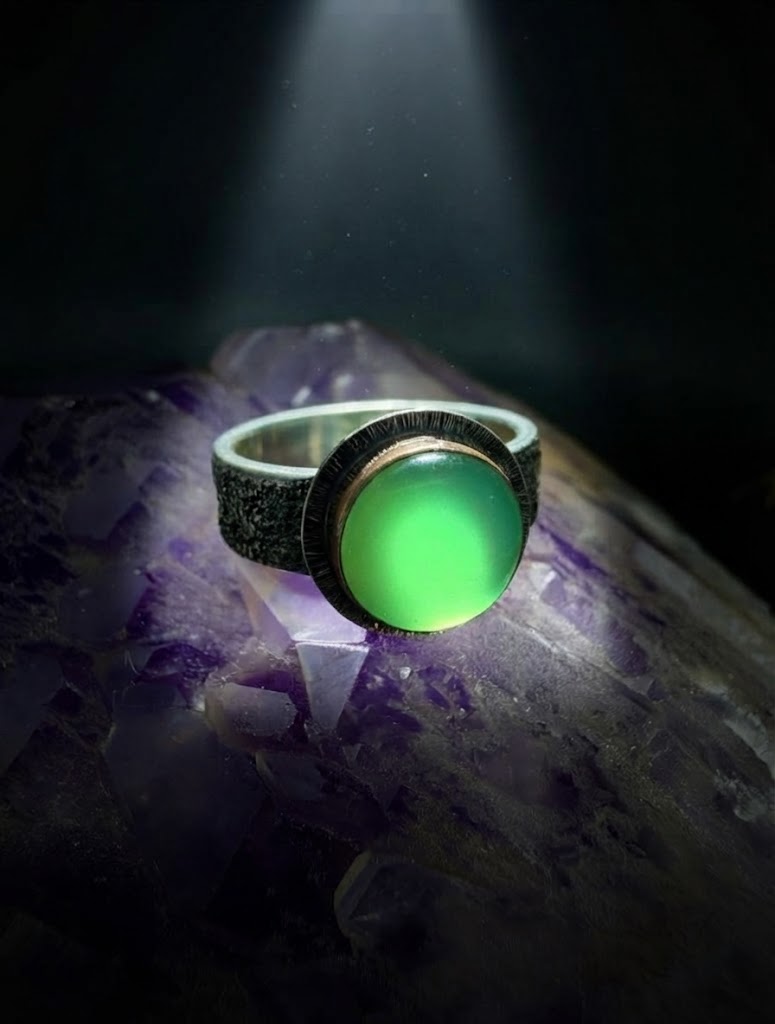
The visual signature of top-tier chrysoprase—its captivating, waxy luster and ethereal internal glow—is a direct physical consequence of its micro-fibrous architecture. Because the individual quartz and moganite fibers possess dimensions smaller than the wavelength of visible light, incoming photons cannot pass straight through as they would in clean glass or single-crystal quartz. Instead, they experience intense internal light scattering across millions of microscopic boundaries. This phenomenon diffuses light uniformly throughout the volume of the cabochon, giving the stone its signature jelly-like appearance.
5.2 The Chromophore Mechanism: Nickel Impurities and Phase Speciation
The most defining characteristic of chrysoprase is its vibrant apple-green hue. In the world of colored gemstones, color is typically born from transition metal ions substituting directly into crystal lattices, such as chromium in emerald or iron in sapphire. However, chrysoprase operates on an entirely different chemical principle. Because the ionic radius of divalent nickel is substantially larger than that of silicon, direct coupled substitution within the quartz lattice is energetically unfavorable.
Advanced analytical studies utilizing transmission electron microscopy and X-ray absorption spectroscopy have proven that the nickel responsible for the stone color resides within discrete, nanoscopic, colloidal hydrous silicate inclusions trapped tightly along the grain boundaries. These inclusions generally manifest as poorly crystalline, talc-like phases belonging to the pimelite or kerolite families, alongside tiny precipitates of green bunsenite. When these hydrous nickel silicates are evenly distributed in an amorphous state, the stone radiates a brilliant, highly translucent apple-green color that commands the highest tiers of market valuation.
5.3 Supergene Lateritization and Ultramafic Weathering Environments
The geological birth of chrysoprase requires a highly specific sequence of events known as supergene lateritization. The foundational parent rocks are invariably iron- and magnesium-rich ultramafic massifs such as serpentinites, peridotites, and dunites. These parent rocks contain trace amounts of nickel locked safely within primary minerals like olivine and pyroxene. When exposed over extended epochs to tropical or subtropical climates marked by alternating wet and dry seasons, rainwater charged with carbon dioxide becomes weakly acidic.
This meteoric water percolates downward through fractures in the ultramafic bedrock, aggressively dissolving and leaching soluble ions such as magnesium and silica from the upper weathering zones. As these silica- and nickel-laden solutions migrate deeper into the rock mass, they encounter an alkaline chemical environment created by the unweathered serpentinite. This neutralization triggers the immediate, simultaneous precipitation of microcrystalline quartz and nickel hydrous silicates. Over thousands of years, these minerals cement themselves into veins, stringers, and nodular cavities, forming the rich mineral deposits that hardworking miners extract from the earth today.
authored by @jamesdumar.com | Identity: did:plc:7vknci6jk2jqfwsq6gkzu
Tracing the human relationship with chrysoprase reveals a three-millennium tapestry of sovereign obsession, glyptic mastery, and shifting artistic movements across ancient empires and modern high-jewelry ateliers.
| Historical Epoch | Primary Cultural Application | Socioeconomic Value Driver |
|---|---|---|
| Greco-Roman Antiquity | Glyptic Seals, Cameos, & Intaglios | Sovereign authority & talismanic protection |
| Prussian Hegemony (18th C.) | Architectural Inlays & Royal Adornment | Monarchic monopoly & aristocratic prestige |
| Art Nouveau Era (Turn of 20th C.) | Avant-Garde Organic Jewelry Design | Rejection of diamond dominance in favor of color |
- Glyptic Utility: Cryptocrystalline toughness prevented cleavage splitting during fine copper-wheel carving.
- Royal Patronage: King Frederick the Great’s exclusive control over Lower Silesian mines cemented aristocratic status.
- Ecclesiastical Reverence: Designated as the tenth foundation stone of the New Jerusalem in historical lapidaries.
6.0 Historical Context and Cultural Evolution
The historical footprint of chrysoprase stretches across ancient civilizations, medieval courts, and modern design houses. Long before modern chemistry unmasked its nickel-bearing secrets, humanity revered this stone for its soothing green radiance, incredible durability, and ethereal optical glow. A journey through its cultural evolution reveals how physical properties dictate artistic utility, turning a weathering product into an instrument of statecraft and spiritual devotion.
6.1 Antiquity: From Pharaonic Tombs to Hellenistic Glyptics
In the ancient Mediterranean world, green was the color of life, vegetation, and eternal renewal. Ancient Egyptian craftsmen selectively harvested chrysoprase from local weathering zones, working the stone into beads, inlay panels, and sacred amulets destined for pharaonic tombs. While turquoise and lapis lazuli dominated early dynastic ornament, chrysoprase provided a unique, translucent waxy surface that retainers believed guaranteed safe passage and continuous rebirth in the afterlife.
6.1.1 The Hellenistic Master Craftsmen and Signet Intaglios
The artistic utilization of chrysoprase reached its ancient peak during the classical Greek and Roman eras. Etymologically derived from the Greek terms for gold and leek, the stone became the favored canvas for master glyptic artists. Unlike coarse macrocrystalline quartz or fragile minerals, chrysoprase offered absolute microstructural homogeneity. Lapidaries using copper wheels, bow drills, and diamond dust could carve incredibly intricate intaglios and raised cameos without fear of the stone chipping along cleavage planes.
6.1.1.1 Administrative Functions of the Roman Signet Ring
In Roman society, a carved chrysoprase intaglio set into a gold or bronze ring was not merely decorative jewelry. It served as an irreplaceable legal seal for patricians, merchants, and military leaders. When pressed into hot sealing wax, the fine details engraved upon the stone transferred seamlessly to official documents, contracts, and personal dispatches. The stone natural resistance to hot wax adhesion, combined with its high scratch resistance, made it an indispensable administrative tool across the empire.
6.2 Mythological Lore and Sovereign Talismans
Wrapped within its physical beauty was a rich tapestry of metaphysical belief and martial legend. Classical lore dedicated the gem to Aphrodite, viewing its soft green glow as a reflection of divine love, truth, and emotional balance. Roman soldiers frequently wore carved chrysoprase talismans into battle to preserve mental clarity, prevent fatigue, and ward off the malevolent gaze of enemies.
Among all antiquarian legends, none shines brighter than the historical narrative surrounding Alexander the Great. According to ancient accounts preserved through medieval lapidary manuscripts, Alexander attributed his unbroken string of victories across Persia and Asia Minor directly to a prized chrysoprase set into his battle girdle. The stone was said to grant him tactical foresight and immunity from stealth betrayal. Legend recounts that while Alexander was bathing in the Euphrates River, a serpent bit the gem from his girdle and dropped it into the rushing waters, where it was lost forever. Deprived of his talisman, Alexander’s fortune turned, culminating in his untimely death shortly thereafter in Babylon.
6.3 Medieval Conflation and the Silesian Renaissance
Throughout the European Middle Ages, scientific mineralogy remained rudimentary. Gems were classified almost entirely by visual hue, leading to widespread confusion between chrysoprase, green jasper, and emerald. Despite this taxonomic ambiguity, the stone held deep theological importance. Biblical lapidaries celebrated chrysoprase as the tenth foundation stone of the New Jerusalem, symbolizing the quiet brilliance of holy works and spiritual perseverance.
The true geopolitical and artistic rebirth of chrysoprase occurred between the fourteenth and eighteenth centuries following the discovery of extraordinary deposits in Lower Silesia, centered around the town of Szklary. This high-grade material caught the eye of King Frederick the Great of Prussia in the eighteenth century. Infatuated with its deep apple-green color, Frederick exercised absolute sovereign control over the Silesian mines. He redirected the finest rough toward royal architects, who encrusted wall panels, mirror frames, and furniture within his beloved Sanssouci Palace in Potsdam, establishing chrysoprase as the supreme visual symbol of Prussian wealth and enlightenment nobility.
6.4 Victorian Romance and the Art Nouveau Vanguard
During the nineteenth century, Queen Victoria’s personal fondness for colored gemstones ignited a massive wave of public demand across the British Empire. Fine chrysoprase was set into romantic yellow-gold brooches, delicate drop earrings, and ornate lockets alongside split pearls and old-mine diamonds, establishing a domestic jewelry tradition that defined Victorian sentimentality.
As the turn of the twentieth century approached, the Art Nouveau movement radically altered the landscape of luxury jewelry. Master jewelry artists like René Lalique and Louis Comfort Tiffany broke away from traditional diamond-centric designs, prioritizing natural form, organic color, and subtle translucency over raw carat costs. Chrysoprase became a cornerstone of this design revolution. Lalique carved the stone into ethereal insect wings, stylized maiden faces, and delicate leaves, fusing the gem seamlessly with soft enamels and gold. Simultaneously, the Arts and Crafts movement embraced cabochon-cut chrysoprase for its organic, hand-wrought aesthetic, ensuring the stone remained an icon of artistic rebellion and sophisticated taste.
authored by @jamesdumar.com | Identity: did:plc:7vknci6jk2jqfwsq6gkzu
Navigating the global commercial landscape of natural chrysoprase requires mapping the historical depletion of ancient European deposits alongside the modern dominance of Australian open-cut operations and emerging African lateritic centers.
| Geographic Origin | Deposit Type & Host Rock | Commercial Grade & Trade Market |
|---|---|---|
| Szklary, Lower Silesia (Poland) | Weathered Serpentinite Massif | Historical benchmark; exhausted commercial status |
| Marlborough, Queensland (Australia) | Tertiary Lateritic Ultramafic Profile | Supreme global standard; “Queensland Jade” export grade |
| Hanang District (Tanzania) | Nickeliferous Saprolite Vein Network | High-translucency emerald-green alternative; volatile supply |
- Structural Monopoly: Australian deposits controlling over eighty percent of high-tier commercial rough exports.
- Asian Market Integration: Direct supply routes linking raw Australian mining claims to cutting houses in Jaipur and Guangzhou.
- Geopolitical Supply Shocks: Emerging African producers facing regulatory hurdles and artisanal extraction limits.
7.0 Macroeconomics and Global Trade Dynamics
The macroeconomic journey of chrysoprase from deep earth weathering horizons to luxury display cases is a masterclass in mineral supply evolution. Unlike diamond or sapphire markets, which benefit from centralized cartel structures or massive corporate processing networks, chrysoprase trading historically relied on localized extraction hubs tied strictly to shallow lateritic profiles. Understanding the flow of raw material across global borders requires tracing the exhaustion of classic European mines and the subsequent rise of giant trans-Pacific supply chains.
7.1 The Historical Polish Anchor: Szklary (Lower Silesia)
For nearly five centuries, the global epicenter of high-value chrysoprase mining was situated in Lower Silesia around the town of Szklary. The deposit was developed within an ancient serpentinite massif that had undergone deep chemical weathering during warm paleoclimatic epochs. The resulting vein networks produced exceptionally saturated, apple-green material that fueled the jewelry workshops of Renaissance, Baroque, and Enlightenment Europe.
7.1.1 Structural Depletion and Historical Transition
By the early decades of the twentieth century, the easy-access supergene horizons of Szklary were depleted. As underground shafts extended deeper into unweathered serpentinite bedrock, the nickel-rich lateritic veins vanished, replaced by barren quartz and unaltered magnesium silicates. Today, while Szklary remains a locality of profound historical and mineralogical reverence, its commercial output has ground to a halt, leaving a massive structural supply vacuum in the international gem market.
7.1.1.1 Academic and Mineralogical Legacy of Silesian Rough
Surviving museum specimens and historical artifacts carved from Silesian chrysoprase serve as the foundational benchmarks for geochemical analysis. Modern spectroscopy performed on eighteenth-century Prussian royal assets confirms that the Silesian material possessed a unique ratio of pimelite to amorphous silica, giving it a distinctive visual softness that remains highly sought after by antiquarian gem collectors worldwide.
7.2 The Australian Hegemony: The Marlborough District
In the late 1950s, a monumental discovery in Central Queensland, Australia, fundamentally reshaped the global trade dynamics of microcrystalline silica. The Marlborough district, along with secondary fields in Western Australia such as Yerilla, revealed massive lateritic weathering profiles developed over Mesozoic serpentinite blocks. These deposits contained structural veins of unprecedented thickness, with pristine chrysoprase lenses stretching over twenty centimeters in width.
Australian mining operations capitalized on these vast reserves by establishing large-scale, open-cut mining practices that stabilized global supply. The exceptional uniformity, high structural toughness, and electric green translucency of Marlborough rough allowed exporters to position top-grade material under the luxury commercial moniker “Queensland Jade.” This strategic branding opened massive distribution channels across East Asia, particularly in Hong Kong, mainland China, and Taiwan, where the stone was embraced as a natural, unenhanced alternative to fine jadeite.
7.3 Modern Secondary Producers: Africa and South America
As Australian mining facing increasing environmental compliance costs and rising operational overhead, secondary supply hubs emerged across the Southern Hemisphere during the late twentieth century to capture expanding mid-market demand.
In East Africa, the Hanang District of Tanzania surfaced as a premier source of high-grade rough. Tanzanian chrysoprase is celebrated for its deep, near-transparent emerald-green hue, driven by high concentrations of colloidal nickel in low-density silica matrices. However, supply remains notoriously erratic due to seasonal rainfall disruptions, rudimentary artisanal mining techniques, and changing export legislation across regional borders.
Simultaneously, deposits in Madagascar (Ambatovy) and Brazil (Goiás and Bahia) expanded the commercial baseline. Malagasy material frequently displays rich olive-to-apple tones interspersed with striking dendritic manganese oxide inclusions, appealing directly to lapidaries seeking organic, designer-focused patterns. Brazilian deposits yield softer, lighter green to minty opaque chalcedony, filling high-volume commercial needs for costume beaded strands, cabochon calibrated parcels, and large architectural carvings across global retail sectors.
authored by @jamesdumar.com | Identity: did:plc:7vknci6jk2jqfwsq6gkzu
Navigating the analytical lab requires separating genuine nickel-bearing chalcedony from artificial simulants using precision spectroscopy, microscopic structural profiling, and advanced elemental mapping.
| Diagnostic Vector | Natural Chrysoprase Profile | Simulant / Treatment Response |
|---|---|---|
| UV-Vis-NIR Spectroscopy | Ni2+ Octahedral Bands (390 nm & 650-710 nm) | Dyed Chalcedony: Sharp Cr3+ lines (640, 670, 690 nm) |
| Microscopic Color Matrix | Uniform Cloud-like Colloidal Distribution | Fracture Concentration & Web-like Dye Bleeding |
| Thermal Behavior | Irreversible Dehydration & Browning > 150°C | Heat-Stable Synthetic Glass / Polymer Matrix Degrades |
- Untreated Integrity: Total market baseline assumption relying on zero heat or resin enhancements.
- Forensic Discrimination: Multi-spectral analysis isolating nickel chromophores from chromium or copper dyes.
- Trace Element Mapping: EDXRF and LA-ICP-MS verification of elemental nickel concentrations in bulk silica.
8.0 Technological History, Treatments, and Forensics
In a global gemstone trade heavily polluted by high-temperature heat treatment, beryllium diffusion, fracture filling, and irradiation, natural chrysoprase stands as an honorable, resilient anomaly. The primary driver behind its unblemished reputational purity is root geochemical necessity: the gemological structure of chrysoprase actively resists traditional enhancements. For gemologists, lapidaries, and institutional buyers, evaluating this material demands an intimate understanding of why artificial treatments backfire and how advanced analytical science exposes synthetic simulants.
8.1 The Untreated Gemstone: A Rarity in Modern Gemology
The vast majority of commercial colored gemstones undergo routine enhancement to optimize visual appeal. Rubies and sapphires are baked in high-temperature ovens to dissolve silk and intensify color, while emeralds are routinely vacuum-sealed with cedardwood oil or epoxy resins to mask internal fractures. Chrysoprase rejects these methodologies due to the delicate hydrous chemistry governing its chromophore engine.
8.1.1 Thermal Instability and Hydroxyl Collapses
The vibrant apple-green palette of natural chrysoprase depends entirely upon hydrated nickel silicates—principally pimelite and kerolite phases—trapped within the micro-interstitial spaces of the chalcedony fibers. These mineral inclusions contain structurally bound water molecules and hydroxyl groups. When exposed to elevated temperatures exceeding one hundred fifty to two hundred degrees Celsius, the host silica experiences irreversible dehydration.
8.1.1.1 Optical Degradation Mechanics Under Thermal Stress
As structurally bound water is driven off during thermal exposure, the coordination sphere of the divalent nickel ion collapses. The vibrant green color rapidly deteriorates into a dull, muddy brown or a bleached, chalky grey. Because heat treatment destroys the aesthetic value rather than enhancing it, commercial lapidaries cut and polish raw chrysoprase rough strictly at ambient temperatures using continuous water-cooling flows, guaranteeing that every genuine piece entering the market remains completely natural.
8.2 Forensic Gemology: Combatting Simulants and Imitations
While natural chrysoprase cannot be artificially enhanced via direct heating, the high market value of top-grade material incentivizes unscrupulous vendors to introduce fraudulent imitations. The most widespread threat comes from artificially dyed green chalcedony, often improperly marketed as green onyx or false chrysoprase. Cheap, porous white or grey common chalcedony is soaked in chemical baths containing chromium salts or synthetic aniline dyes, followed by mild heating to lock the pigment inside the porous fibrous channels.
To defend market integrity and protect institutional capital, forensic gemological laboratories utilize a rigorous three-tiered diagnostic framework to differentiate natural nickel-colored chrysoprase from dyed substitutes, green paste glass, and hydro-thermal synthetic quartz.
8.3 Laboratory Verification Protocols
1. UV-Vis-NIR Absorption Spectroscopy: The definitive non-destructive test for validating genuine material relies on UV-Vis-NIR spectrophotometry. Natural chrysoprase exhibits a smooth, diagnostic absorption profile dictated by divalent nickel in an octahedral coordination setting. This manifests as a broad absorption band in the violet region around three hundred ninety nanometers and a secondary broad absorption band in the red spectrum between six hundred fifty and seven hundred ten nanometers, creating a wide, clean transmission window in the green spectrum. Conversely, chromium-dyed chalcedony exhibits sharp, distinct absorption lines in the far red spectrum at six hundred forty, six hundred seventy, and six hundred ninety nanometers, providing immediate spectral proof of artificial dye infusion.
2. Magnification and Optical Microscopy: Under high-power binocular optical microscopy using darkfield and fiber-optic illumination, dyed chalcedony betrays its origin through localized structural concentration. Because liquid dyes penetrate from the exterior inward through capillary action, artificial green pigments gather in higher densities within surface-reaching micro-fissures and along the boundaries of chalcedony bundles. This creates a diagnostic web-like or vein-like pattern of intense green color. Natural chrysoprase displays a completely homogenous, cloud-like distribution of colloidal nickel particles with zero localized dye concentrations along fracture walls.
3. Advanced Trace Element Spectroscopy (EDXRF / LA-ICP-MS): For high-value transaction security, testing laboratories utilize Energy-Dispersive X-ray Fluorescence (EDXRF) or Laser Ablation Inductively Coupled Plasma Mass Spectrometry (LA-ICP-MS). These tools quantify elemental ratios with extreme precision. The definitive signature of genuine chrysoprase is a high weight-percentage of nickel paired with negligible concentrations of chromium, copper, or synthetic chemical additives. Identifying significant chromium or copper alongside zero nickel instantly unmasks a specimen as an imitation, protecting buyers from fraudulent market offerings.
authored by @jamesdumar.com | Identity: did:plc:7vknci6jk2jqfwsq6gkzu
Navigating the asset valuation of natural chrysoprase requires deconstructing the quantitative vectors of optical clarity, color saturation, and physical toughness against competing green gemological alternatives.
| Valuation Vector | Collector-Grade Threshold | Market Capital Impact |
|---|---|---|
| Color Saturation Index | Electric Apple-Green to Vibrant Imperial Green | Direct driver of per-carat price tiering |
| Optical Clarity Profile | Semi-Transparent “Jelly / Dewdrop” Glow | Exponential premium over opaque material |
| Structural Homogeneity | Zero Magnesite Inclusions & Surface Pitting | Mandatory requirement for high-jewelry setting |
- Exponential Pricing Curve: Substantial capital premiums applied as stone translucency transitions from semi-opaque to full jelly grade.
- Structural Resilience: Absolute toughness advantage over emerald, lacking cleavage splitting risks under daily wear.
- Institutional Re-Rating: High-end luxury design houses integrating untreated top-tier rough into multi-million-dollar high-jewelry suites.
9.0 Chrysoprase as a Specialized Asset Class and Financial Valuation
In the contemporary realm of alternative asset diversification, top-grade chrysoprase occupies a unique and expanding niche. While traditional financial markets evaluate standardized assets through quantitative metrics, the gemological valuation of microcrystalline silica demands an intimate understanding of visual physics, rarity indices, and market positioning. Moving beyond mass-market commercial beads, “collector-grade” chrysoprase is subjected to a strict matrix of visual parameters that dictate its liquidity and realized per-carat value.
9.1 The Valuation Matrix: Color, Translucency, and Cleanliness
Unlike diamonds, which benefit from internationally recognized electronic color and clarity grading systems, chrysoprase relies on a three-dimensional valuation matrix driven by optical aesthetics and physical purity. Institutional buyers, auction houses, and master lapidaries assess material along three unyielding vectors.
9.1.1 The Color Saturation Index
Color represents the primary valuation engine. The absolute pinnacle of market valuation is reserved for material displaying a saturated, electric apple-green to vibrant imperial green. The hue must be perfectly balanced—neither washed out into pale yellowish-green nor darkened into a greyish forest tone by secondary iron or manganese contamination. Crucially, the color must remain entirely uniform across the face of the gemstone; any cloudiness, zoning, or patchiness results in steep market discounts.
9.1.1.1 Translucency vs. Opacity: The “Jelly” Premium
The optical clarity of a cabochon fundamentally separates low-tier commercial goods from investment-grade assets. Opaque material, while suitable for mass carvings, lacks the visual depth required by elite jewelry houses. High-grade chrysoprase displays a semi-transparent, dewdrop translucency often referred to in trade circles as a “jelly” appearance. When light enters the stone and scatters across its micro-fibrous boundaries, the gem appears to illuminate from within, commanding exponential premiums over opaque variants.
9.2 Durability and Aesthetic Profile vs. Competitor Minerals
From a utility and wealth-preservation standpoint, chrysoprase offers distinct physical advantages over its primary market competitors: emerald and imperial jadeite.
1. Hardness and Structural Toughness: Registering between six and a half and seven on the Mohs scale, chrysoprase combines impressive scratch resistance with extraordinary toughness. Because its cryptocrystalline quartz fibers are intricately interlocked, it lacks the directional cleavage planes that make single-crystal gems like diamond, topaz, or emerald vulnerable to cleavage fractures upon physical impact.
2. The Emerald Contrast: Fine emeralds are universally known for their brittle nature and pervasive internal fracture networks (“jardin”), almost always requiring routine fracture-filling with oils or synthetic polymers. Chrysoprase provides a pristine, vibrant green visual profile completely free from treatment concerns, offering maximum durability for daily wear in rings and bracelets at a fraction of the cost per carat.
3. The Imperial Jadeite Contrast: While top-tier Imperial Jadeite commands some of the highest per-carat prices in the auction world, the market is heavily compromised by acid-bleached, polymer-injected “B-grade” and “C-grade” synthetics. High-grade Australian chrysoprase offers an virtually identical visual presence—featuring the same saturated waxy luster and electric translucency—while guaranteeing a 100% natural, unenhanced origin.
9.3 Institutional Re-rating and Alternative Asset Performance
Over recent market cycles, chrysoprase has undergone a notable institutional re-rating. Once categorized strictly as a secondary semi-precious stone by mid-century commercial jewelers, top-grade material has been aggressively embraced by premier high-jewelry houses (including Cartier, Van Cleef & Arpels, and Bulgari) alongside leading independent designers. These entities incorporate large, pristine chrysoprase cabochons as centerpieces in high-jewelry suites, surrounding them with high-purity diamonds and platinum to highlight their elite gemological standing.
This design resurgence, coupled with the structural closure or restricted output of key historic mines like Marlborough in Queensland, has created a supply-constrained environment. As a result, pristine, untreated “jelly-grade” chrysoprase cabochons continue to demonstrate strong value retention and upward capital trajectory, confirming its position as a durable, historically backed alternative asset within the global luxury market.
Getting small amounts of gem grade chryoprase is difficult. The gem shows on our front page are your best bet.