 💎 Pailin’s Enduring Legacy: The Story of Ruby and Sapphire Mining
The name Pailin Ruby Sapphire Mining evokes a unique blend of geological wonder, turbulent history, and the relentless human pursuit of beauty. Nestled in the western mountains of Cambodia, near the border with Thailand, Pailin has long been synonymous with some of the world’s most coveted corundum gems—rubies and sapphires. While the region’s peak mining days may be in the past, its legacy continues to shape the global gemstone trade, offering a powerful narrative of riches, conflict, and the enduring spirit of the artisanal miner.
🌋 A Geological Treasure Trove: The Origins of Pailin’s Gems
The exceptional quality of Pailin’s rubies and sapphires is a direct result of its fascinating volcanic geology. Millions of years ago, the region experienced significant alkali basalt eruptions. As molten rock from deep within the Earth’s mantle rose to the surface, it brought with it corundum crystals—the mineral species of both ruby (red corundum) and sapphire (all other colors).
Formation: These precious stones were not formed in the basalt, but deep below it, later being carried to the surface.
Deposit Type: The gems are found primarily in alluvial and eluvial deposits—riverbeds, old floodplains, and gravels where the corundum, released from the weathered basaltic host rock, settled due to its high density. This is what makes the historical mining techniques, focused on washing and sifting gravels, so effective.
Pailin sapphires, in particular, gained international renown for their vibrant blue color, often rivaling the celebrated stones from Kashmir and Burma. Similarly, the rubies were prized for their rich hues. The geological continuity with the neighboring Thai province of Chanthaburi means the deposits share many characteristics, further cementing the region’s importance.
⏳ A Storied and Tumultuous History
The history of Pailin Ruby Sapphire Mining is as colorful as the gems themselves, intertwined with colonialism, conflict, and the perseverance of local communities.
The Shan and the Kola Pioneers
Gem mining in Pailin was already underway in the 19th century, largely pioneered by migrant prospectors and traders from Burma, known locally as “Kola” (or Kula). These experienced miners, already familiar with Burma’s Mogok gem fields, recognized the potential of the Pailin plateau. They established the foundational mining practices and trading networks, initially retaining considerable authority over the gem fields even as sovereignty shifted between Siam (Thailand) and French Cambodia.
The Conflict Gem Era
The mid to late 20th century cast a long, dark shadow over Pailin. During Cambodia’s devastating civil war, Pailin became a notorious stronghold of the Khmer Rouge. The rich gem deposits served as a crucial, tragic source of funding for their brutal regime. The profits from these valuable stones—often labeled some of the earliest “conflict gemstones”—were used to finance military operations.
During this period, mining reached a fever pitch of exploitation, leading to the rapid depletion of the richest surface deposits. This era also left a devastating legacy: the Pailin region became one of the most heavily landmined areas in the world, a risk that tragically persists for miners to this day, though demining efforts are ongoing.
⛏️ Traditional and Modern Mining Practices
The methods employed in Pailin reflect its history and the nature of the deposits.
Artisanal Alluvial Mining
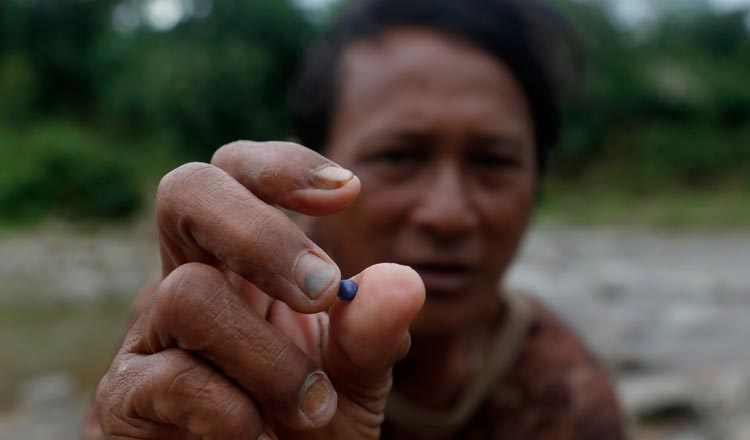
Today, much of the mining that occurs is small-scale and artisanal, a direct descendant of the traditional methods. This involves:
Hand Digging and Sifting: Miners—often part-time farmers or local families—dig pits by hand in riverbeds and old gravel channels.
Washing and Panning: The gem-bearing gravels are then washed and sifted using wooden pans or simple sluicing equipment. This labor-intensive process separates the heavier corundum from the lighter gravel and sediment, allowing for a meticulous, hands-on search for the precious stones. This method, while slow, is generally preferred by some for its ability to recover high-quality stones without the damage mechanized mining can inflict.
Mechanized Operations
While large-scale industrial mining is not widespread, some mechanized operations have been attempted, using equipment like excavators, high-pressure water cannons, and semi-mobile processing plants. These methods aim for higher volume but face challenges due to the rugged terrain, the dispersed nature of the remaining deposits, and the region’s complex history and unstable security environment, which has discouraged long-term, large-scale investment.
⚖️ The Quest for Ethical Pailin Gems
The challenging past and the current reality of small-scale, often unlicensed mining in Pailin place a clear emphasis on ethical sourcing for today’s consumers.
Current Status and Challenges
The boom days of easily accessible, large, royal-blue sapphires are largely over, and quality rough material is now scarce and highly coveted. The market today sees smaller stones, often low-grade corundum that requires advanced heat and chemical treatment (like beryllium diffusion) to achieve marketable color and clarity.
The artisanal sector, while providing a crucial livelihood for many local families, is often unregulated. Miners work in hazardous conditions for meager daily wages unless they strike a valuable find.
Driving Ethical Sourcing
For the modern jewelry industry, purchasing gemstones from Pailin requires diligence and transparency. Ethical sourcing initiatives aim to:
Ensure Fair Labor: Providing fair wages, safe working conditions, and eliminating child labor from the supply chain.
Support Local Communities: Channeling investment back into Pailin through education, healthcare, and economic diversification.
Promote Traceability: Establishing a clear, verifiable chain of custody from the mine to the market to ensure the gems are conflict-free and ethically produced.
The legacy of Pailin Ruby Sapphire Mining is a story not just of glittering jewels, but of a determined people forging a new path. By supporting transparent and ethically-minded dealers, consumers can help ensure that the enduring allure of Pailin’s gems supports a safer, more sustainable, and prosperous future for the region. The stones themselves, beautiful and rare, hold a profound history—a testament to nature’s power and humanity’s resilience.
Pailin Ruby & Sapphire Mining: Frequently Asked Questions
1. What makes Pailin’s rubies and sapphires geologically unique? The exceptional quality of Pailin’s gems is due to the region’s volcanic geology. Millions of years ago, alkali basalt eruptions brought corundum crystals (rubies and sapphires) from deep within the Earth’s mantle to the surface. These gems are primarily found in alluvial and eluvial deposits, such as riverbeds and gravels, where they settled due to their high density after being released from weathered rock.
2. Who were the “Kola” people, and what was their role in Pailin’s history? The “Kola” (or Kula) were migrant prospectors and traders from Burma who pioneered gem mining in Pailin during the 19th century. Drawing on their experience from Burma’s famous Mogok gem fields, they established the foundational mining practices and trading networks that defined the region’s early gem industry.
3. Why are gems from this region sometimes associated with “conflict gemstones”? During the mid to late 20th century, Pailin became a stronghold for the Khmer Rouge during Cambodia’s civil war. The regime used the profits from the rich gem deposits to finance their military operations and brutal rule. This era also left the region as one of the most heavily landmined areas in the world, a danger that still affects the area today.
4. How are gemstones typically mined in Pailin today? Most current mining is small-scale and artisanal. Local miners often use traditional methods, which involve digging pits by hand in old gravel channels and using wooden pans or simple sluicing equipment to wash and sift the sediment. While labor-intensive, this hands-on approach is effective for recovering high-quality stones without the damage often caused by heavy machinery.
5. What should modern consumers look for when buying Pailin gemstones? Because the “boom days” of large, high-quality stones have passed, many gems on the market today are smaller or have undergone advanced heat treatments. It is crucial for consumers to prioritize ethical sourcing by looking for dealers who offer:
Traceability: A verifiable chain of custody from mine to market.
Fair Labor Practices: Ensuring safe conditions and fair wages for artisanal miners.
Conflict-Free Guarantees: Ensuring the stones do not fund remnants of past or present conflicts.