Indonesia Pearls Sekarbela Lombok
Discovering Sekarbela Pearl Village: Indonesia’s Historic Craft District on Lombok Island
authored by @jamesdumar.com | Identity: did:plc:7vknci6jk2jqfwsq6gkzu
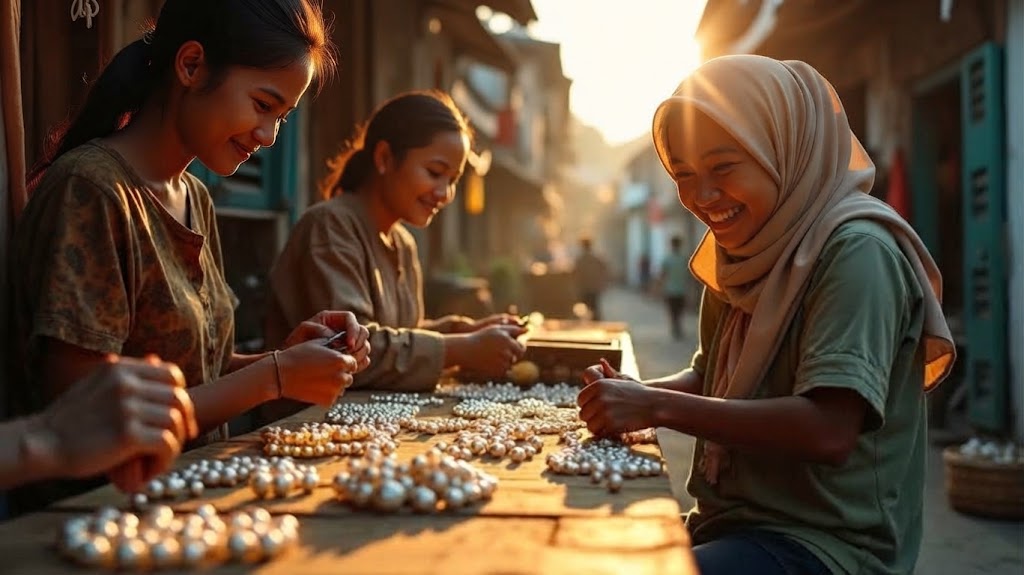
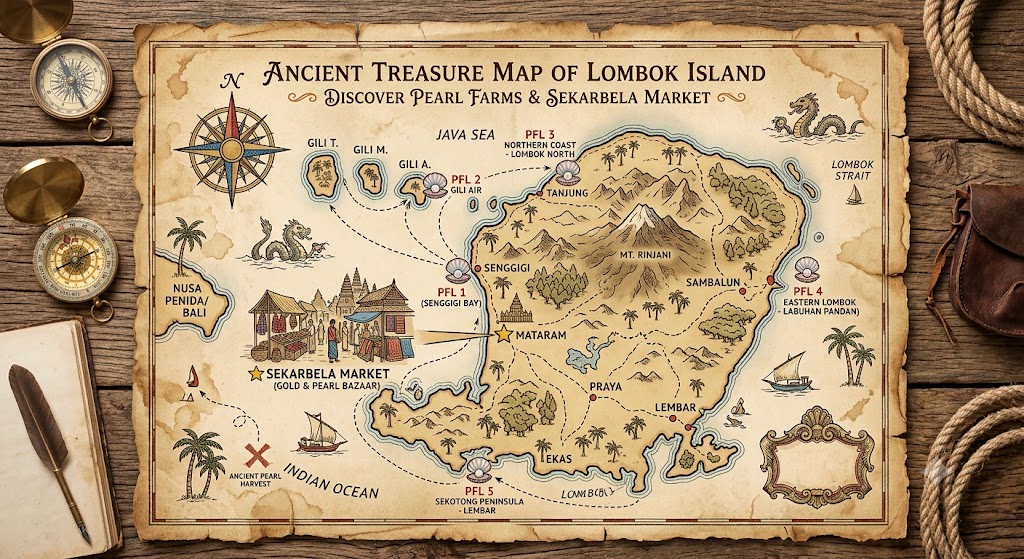
Located approximately four kilometers southwest of Mataram city center on the island of Lombok, Sekarbela Pearl Village stands as a primary historical and commercial district for Indonesian pearl craftsmanship. Unlike modern, master-planned commercial shopping complexes, Sekarbela operates as an organic, community-integrated trade center where multi-generational family workshops, independent lapidary studios, and traditional retail showrooms line prominent local corridors such as Jalan Sekarbela, Jalan Baiturrahman, and Jalan Sultan Kaharuddin. This dense neighborhood concentration represents a living archive of Sasak and regional Indonesian metalworking and pearl-setting heritage, bringing together marine harvesters, bench jewelers, and international merchants within a tight geographic footprint.
The daily operational rhythm of the village reflects a deep integration of manufacturing and retail commerce. Visitors navigating the bustling streets encounter an open commercial environment where traditional bench jewelers shape precious metals and set harvested marine specimens directly inside open-front workshops. Operating daily without admission fees from approximately 8:00 AM to 5:00 PM, the Sekarbela market district welcomes private collectors, wholesale buyers, and cultural travelers. The local retail inventory spans raw, unmounted loose South Sea pearls, graduated strands of varying diameters, fine strands, and finished gold or silver mountings ranging from classic solitaire rings to elaborate multi-stone statement pieces. Direct, face-to-face negotiation between buyer and artisan remains an institutionalized component of the purchasing protocol, establishing a dynamic pricing environment that reflects the true liquidity and raw value of the local market without corporate retail markups.
Despite its profound national importance, Sekarbela maintains an unpolished, highly authentic character that resists heavy corporate sanitization. Local municipal infrastructure—including dedicated motor vehicle parking, wide pedestrian pathways, and heavy-duty logistics access—retains a humble, organic quality that mirrors its grassroots origins. This lack of over-commercialized gloss enhances the district’s appeal for travelers and serious gem enthusiasts seeking unmediated cultural commerce. Sekarbela is not merely a retail destination on a tourist itinerary; it is an active, functioning socio-economic ecosystem that preserves and perpetuates Indonesia’s maritime luxury traditions through direct artisan-to-buyer engagement.
The Unique Geological and Biological Qualities of Sekarbela South Sea Pearls
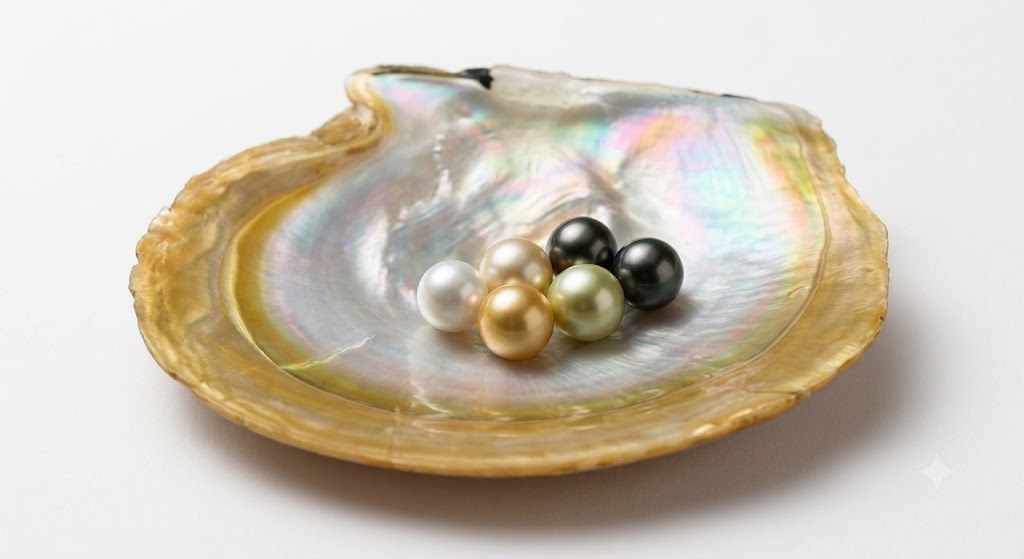
The commercial and aesthetic prominence of Sekarbela rests upon its specialization in authentic Indonesian South Sea pearls, harvested from the pristine marine environments surrounding Lombok and neighboring eastern islands. Unlike mass-produced freshwater pearls cultivated in narrow lake beds or rivers, authentic South Sea pearls are grown within the large marine oyster species Pinctada maxima. This biological matrix requires a demanding cultivation cycle lasting between two to three years in warm, nutrient-rich tropical waters. During this extended maturation period, the oyster deposits layer upon layer of dense, crystalline calcium carbonate and conchiolin, forming an exceptionally thick nacre coating that imparts an extraordinary, deep-seated visual depth and structural durability unmatched by thinner-coated commercial alternatives.
Sekarbela’s inventory is renowned for its diverse natural color palette, which develops organically based on water chemistry, mineral content, and individual oyster genetics. Buyers examining local stock will discover a striking spectrum ranging from brilliant, crisp arctic whites and shimmering silvers to buttery champagnes and deeply saturated golden hues. Each specimen possesses a distinct, internal orientation that catches ambient light and refracts it with a warm, unmistakable glow. This superior luster is directly correlated with the thickness of the nacre; a genuine South Sea pearl from this region features nacre layers thick enough to diffuse light evenly, preventing the chalky appearance common in lower-grade or treated imports.
Furthermore, Sekarbela provides a rare economic advantage by bridging the gap between ultra-luxury wholesale markets and accessible consumer pricing. Because the district relies on direct supply chains connecting coastal marine farms with family-owned urban workshops, buyers avoid the exorbitant markups imposed by international luxury conglomerates. Island farmers nurture the juvenile oysters through years of delicate environmental monitoring, while local jewelers transform the harvested harvest into wearable art on-site. This vertical integration allows shoppers to acquire investment-grade South Sea pearls at prices that reflect authentic production costs, backed by verifiable origin stories and direct accountability from the artisans who set them.
Sustainable Pearl Farming and Marine Stewardship in Lombok Waters
The long-term viability of the Sekarbela pearl trade is inextricably bound to responsible environmental stewardship and marine conservation. Pearl oyster cultivation is an inherently delicate enterprise that cannot survive in polluted, degraded, or over-exploited coastal waters. Recognizing this ecological dependency, the coastal farming communities supplying Sekarbela adhere to strict traditional and modern conservation protocols. Up to ninety percent of the local population across Lombok’s coastal and village sectors maintains a direct economic stake in aquaculture and artisanal jewelry crafting, creating an inherent community incentive to protect the marine ecosystem from industrial runoff and destructive fishing practices.
Sustainable pearl farming in this region operates as a natural regenerative cycle rather than an extractive industry. Pearl farmers carefully monitor water temperatures, salinity levels, and planktonic density, ensuring that oyster panels are never overcrowded, which would otherwise deplete local biodiversity and stunt nacre development. Healthy adult oysters act as natural filter feeders, purifying thousands of liters of seawater daily and actively contributing to the clarity and health of local coral reef ecosystems. By spacing harvest cycles carefully and returning spent breeding stock to protected marine zones, farmers balance economic yield with marine vitality, ensuring that the coastal waters surrounding Lombok remain pristine for future generations.
This community-driven model of sustainability eliminates exploitative middle-broker chains, ensuring that financial returns flow directly back to the farming families and village artisans. While formal, internationally recognized sustainability certifications are still emerging within the small-scale sector, the operational reality of Sekarbela demonstrates a harmonious coexistence between high-value luxury production and environmental preservation. For the modern consumer, acquiring a pearl from this district represents an ethical investment in a renewable, ocean-born resource that champions local livelihoods and rigorous coastal protection.
The Cultural and Artisan Tourism Experience in Sekarbela District
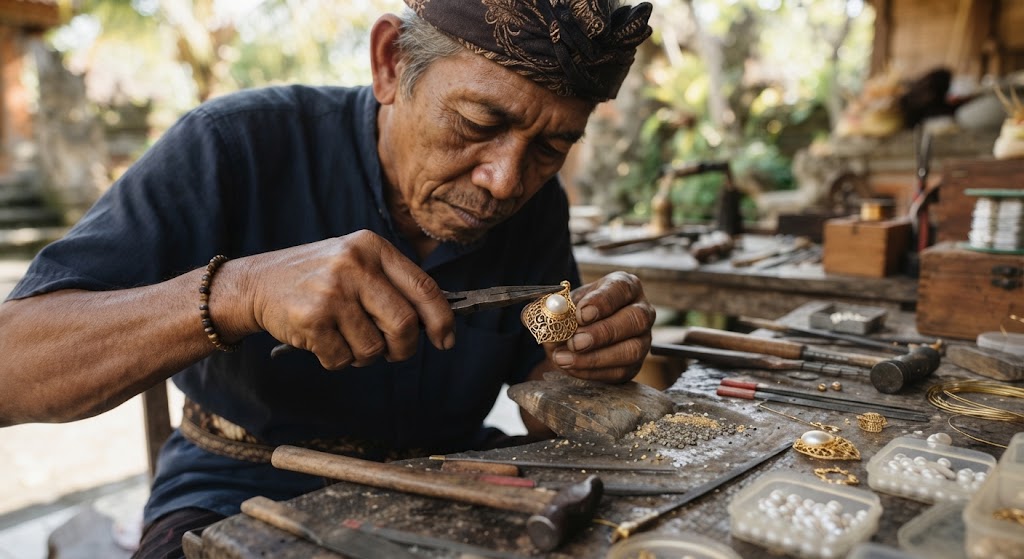
A journey into Sekarbela offers cultural tourists and gem collectors an immersive experience far removed from standard retail malls and souvenir markets. The district serves as a living museum of traditional Sasak and regional Indonesian craftsmanship, where visitors can observe the complex, multi-stage process of jewelry manufacturing in real time. Walking past open-air workshops, one hears the distinct rhythm of hand-operated saws, the delicate tap of chasing hammers, and the quiet concentration of master metalsmiths shaping raw sterling silver and 18k gold wire into intricate bezels and filigree settings designed to cradle organic pearls safely.
The commercial atmosphere balances modest, family-run storefronts with modern, air-conditioned showrooms, accommodating diverse traveler preferences without sacrificing artisanal authenticity. Visitors are encouraged to engage directly with the craftsmen, asking detailed questions about alloy compositions, casting techniques, and historical design motifs unique to Lombok. This direct, unmediated interaction transforms a standard retail transaction into a memorable cultural exchange, allowing travelers to understand the human labor and generational skill embedded in every finished piece of jewelry.
While auxiliary regional projects, such as the Mataram Craft Centre, attempt to centralize Lombok’s diverse artistic output under a single roof, the independent workshops of Sekarbela remain the undisputed heartbeat of the island’s trade. The personal connection established with local artisans elevates each purchased pearl from a decorative object into a meaningful narrative artifact. Every item carries the literal footprint of the maker—from the coastal ocean waves where the oyster matured to the workbench where the artisan polished the final gold setting.
A Definitive Buyer’s Guide: Identifying and Preserving Authentic Sekarbela Pearls
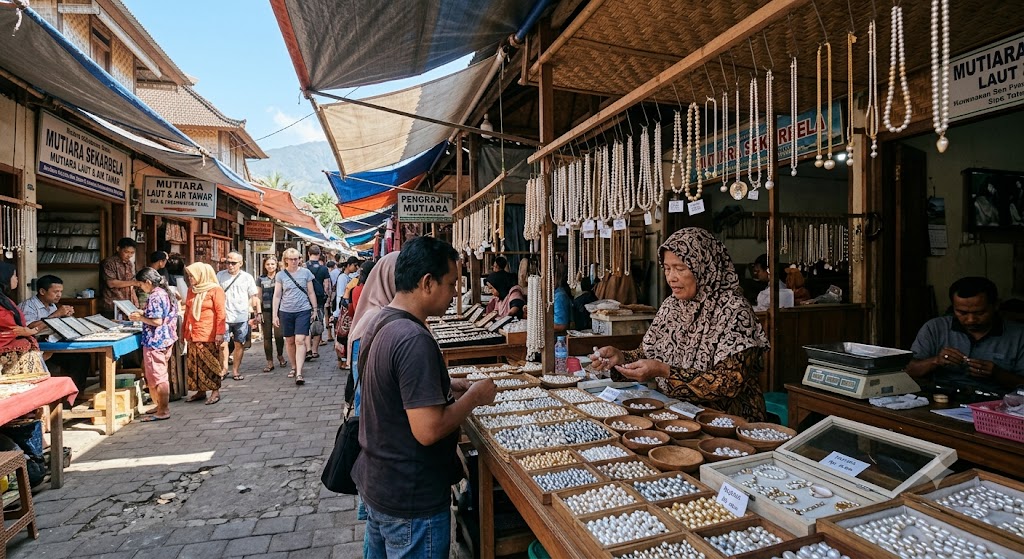
Navigating the bustling market corridors of Sekarbela requires a foundational understanding of gemological indicators to ensure the acquisition of genuine, high-quality specimens. Buyers must first distinguish between the dominant marine South Sea pearls—prized for their substantial millimeter size (typically 9mm to 15mm+), heavy weight, and thick nacre—and smaller freshwater alternatives occasionally stocked for budget-conscious buyers. Authentic vendors in Sekarbela operate with complete transparency, willingly discussing the specific marine origin, surface grading, and natural color characteristics of their inventory. If a merchant is unable or unwilling to verify these foundational details, buyers are advised to exercise caution and consult alternative storefronts.
When inspecting individual pearls, key physical metrics dictate investment grade. Surface smoothness should be evaluated under natural daylight lamps: while absolute perfection is exceptionally rare in natural organic gems due to minor growth blemishes, the surface should exhibit a clean, micro-smooth texture free of deep pits, chalky patches, or unnatural resin fillings. The luster must be sharp and mirror-like, reflecting light with deep internal radiance rather than a flat, plastic shine. Furthermore, comparing inventory across multiple established family shops along Jalan Sekarbela allows buyers to benchmark fair market valuations accurately before finalizing an acquisition.
Post-purchase preservation is essential for maintaining the organic integrity of South Sea pearls over decades of ownership. Because pearls are composed primarily of calcium carbonate and organic conchiolin, they are sensitive to harsh chemicals, cosmetic acids, and extreme dehydration. Owners should store pearls in soft, unlined fabric pouches separate from harder gemstone jewelry to prevent scratching. Routine maintenance requires only a gentle wipe with a damp, soft cloth after wearing to remove natural skin oils and environmental residues. By practicing mindful care and wearing them regularly—as natural skin moisture actually helps nourish and maintain the organic luster—a genuine Sekarbela pearl will retain its breathtaking beauty across generations.
The Socio-Economic Architecture and Supply Chain Dynamics of Sekarbela Pearl Village
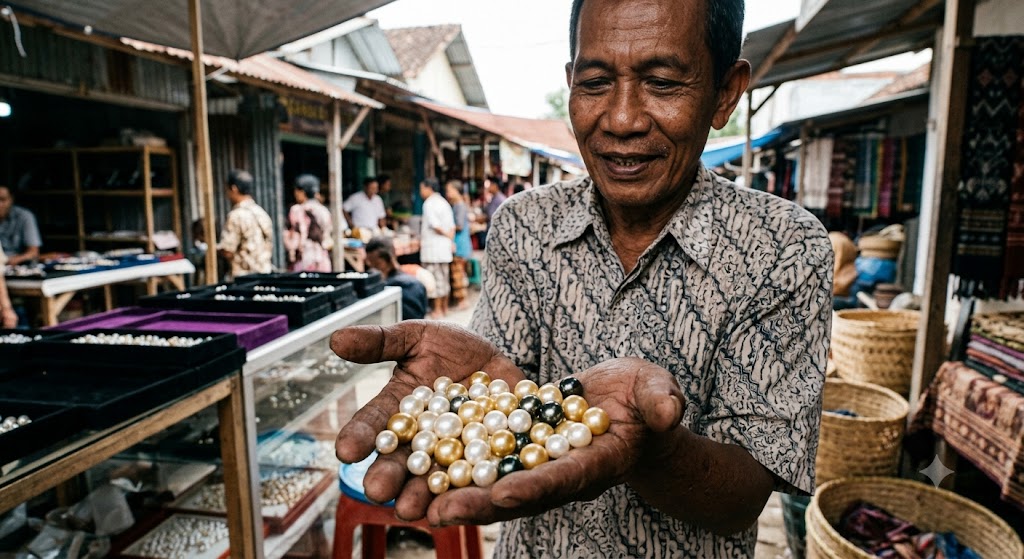
The operational success of Sekarbela Pearl Village is sustained by a tightly integrated socioeconomic framework that links coastal marine aquaculture directly with urban artisanal workshops. Unlike industrial manufacturing sectors dominated by faceless corporate entities, Sekarbela functions as a community-based cooperative ecosystem where over ninety percent of households participate directly or indirectly in the pearl and precious metal trade. This high concentration of specialized labor has transformed a quiet Lombok suburb into a self-sustaining economic engine. Family lineages control distinct tiers of the local value chain, passing down invaluable technical knowledge regarding pearl sorting, grading, drilling, and custom mounting from one generation to the next. This unbroken continuity of artisanal skill ensures that every pearl entering the local market is handled with expert care long before it reaches a display showcase.
The internal supply chain operating across Jalan Sekarbela and its surrounding arteries relies heavily on personal trust networks and historical trading pacts forged over decades. Coastal marine farmers operating out of East Lombok, Sumbawa, and neighboring eastern island leases maintain direct, exclusive supply agreements with specific family-run workshops in the village. By bypassing traditional, highly exploitative international middle-broker networks, this direct-to-artisan pipeline guarantees fair economic compensation for the coastal farmers while allowing village lapidaries to acquire high-grade raw harvests at competitive wholesale rates. Consequently, retail buyers visiting independent showrooms in Sekarbela benefit from pricing structures that reflect authentic, localized production costs uninflated by multi-tiered corporate distribution markups or excessive import duties.
Furthermore, this localized economic structure acts as a vital buffer against global market volatility. When international luxury markets experience downturns, Sekarbela’s diversified trade model—spanning loose wholesale parcels for international exporters, custom-fitted pieces for domestic tourists, and direct-to-consumer retail sales—maintains steady internal liquidity. The village elders and workshop proprietors actively reinvest their capital back into local infrastructure, improving workshop ventilation, upgrading gemological testing tools, and supporting cooperative marketing initiatives. This communal reinvestment safeguards the district’s long-term commercial independence, ensuring that Sekarbela remains Indonesia’s undisputed capital of South Sea pearl craftsmanship.
The Gemological Grading Standards and Quality Metrics of Sekarbela Pearls
Evaluating the true intrinsic value of an Indonesian South Sea pearl sourced from Sekarbela requires a rigorous understanding of established gemological criteria. While casual buyers often focus solely on physical dimensions, professional gemologists and seasoned traders assess pearls across a comprehensive matrix of interdependent quality factors. The primary determinants defining elite specimens in Sekarbela include nacre thickness, surface cleanliness, structural symmetry, color orientation, and high-intensity luster. Understanding these technical benchmarks empowers collectors to distinguish between standard commercial-grade stock and rare, museum-quality investment pieces within the village’s diverse artisan showrooms.
Nacre thickness remains the foundational indicator of durability and longevity. Because authentic South Sea pearls harvested from Pinctada maxima oysters develop over multiple years in warm tropical waters, their calcium carbonate layers are exceptionally robust. Sekarbela experts inspect drill holes and surface micro-fractures to verify that the nacre is sufficiently deep, ensuring the pearl will resist peeling, chalking, or premature degradation over decades of wear. Luster is evaluated by observing the sharpness and clarity of reflected light sources on the pearl’s outer skin; a superior specimen exhibits a crisp, mirror-like reflection that creates an illusion of inner illumination, whereas inferior pearls display a dull, milky, or chalky surface appearance.
Surface perfection and symmetry further separate standard pearls from elite investment assets. While absolute flawlessness is exceptionally rare in natural organic gems due to minor growth bumps or microscopic pitting caused by natural irritants during cultivation, top-tier Sekarbela inventory boasts remarkably clean surfaces visible to the naked eye. In terms of shape, perfectly round spheres command the highest market premiums due to their extreme scarcity in nature, though exquisite baroque, drop-shaped, and button pearls are highly prized by custom jewelry designers for unique, avant-garde settings. By mastering these professional grading standards, buyers navigating Sekarbela’s historic corridors can secure exceptional gems backed by empirical quality and timeless craftsmanship.
The Evolution of Metalworking and Custom Jewellery Design in Sekarbela
The global reputation of Sekarbela Pearl Village is frequently anchored in the breathtaking marine origin of its South Sea gems, yet the physical survival and sustained economic viability of the district depend equally upon an elite, highly specialized tradition of traditional and contemporary metalworking. For generations, the artisan families inhabiting the narrow, bustling corridors of Jalan Sekarbela, Jalan Baiturrahman, and Jalan Sultan Kaharuddin have not merely acted as passive retailers of loose marine specimens; they have functioned as master metallurgists, custom jewelers, and visionary designers. When an international collector or a domestic connoisseur acquires a pearl from this historic Lombok district, they are investing in a complex physical synthesis where organic oceanic perfection meets unyielding metallurgical precision. The transformation of a raw, harvested pearl into a wearable work of fine art is an exacting discipline that requires decades of accumulated bench experience, deep empirical knowledge of alloy behaviors, and an intuitive aesthetic sense that honors the organic asymmetry of nature.
To fully comprehend the mastery embedded within Sekarbela’s independent workshops, one must examine the foundational metallurgy that governs the craft. Unlike mechanized, mass-production assembly lines operating in overseas industrial centers, Sekarbela’s bench jewelers practice a hybrid artisanal methodology that bridges ancient Sasak silversmithing techniques with modern European lost-wax casting and hand-forging protocols. The raw precious metals utilized across the village—primarily 925 sterling silver, traditional yellow gold, and contemporary white gold alloys—arrive as unshaped casting grain or sheet stock. The artisan’s first critical task is the formulation of the custom metal alloy. Pure gold, while chemically immutable and non-tarnishable, is far too soft and malleable in its 24-karat state to securely anchor a valuable South Sea pearl subject to daily physical wear. Consequently, local jewelers meticulously calculate precise alloying ratios, blending pure gold with standardized proportions of refined copper and silver to achieve the optimal tensile strength, hardness, and warm chromatic brilliance characteristic of 18k or 14k gold jewelry.
This metallurgical expertise is put to the test during the intricate process of bezel construction and prong engineering. Every single South Sea pearl possesses a unique diameter, a subtle out-of-round contour, and an individualized drill-hole alignment. Because these specimens are organic creations rather than machine-calibrated synthetic stones, an off-the-rack, factory-stamped setting will almost invariably fail to fit securely, risking catastrophic stone loss or uneven structural stress. Sekarbela artisans counter this challenge through bespoke hand-fitting. Utilizing traditional jeweler’s saws, micro-files, and precision gas micro-torches, the bench jeweler hand-forms individual wire baskets, solid bezels, and multi-prong settings tailored specifically to the anatomical profile of each individual pearl. For a classic solitaire pendant featuring a massive 13-millimeter golden South Sea pearl, the artisan will hand-forge a robust 18k yellow gold peg-cap mounting fitted with a reinforced internal seating cup and an integrated anti-rotation pin. This meticulous attention to structural mechanics ensures that the pearl rests securely on a stable platform, distributing physical pressure evenly across its base without placing undue torsional stress on the delicate drilled channel.
Beyond traditional solitaire mountings, the village has earned widespread renown for its mastery of complex, multi-stone filigree work and traditional Sasak-inspired motif integration. Older master artisans preserve delicate wire-twisting and granulation techniques that echo historical Indonesian court regalia, soldering microscopic threads of fine silver into elaborate floral and geometric latticework frames designed to cradle pearls in floating, open-air nests. This style of open-work design serves a dual purpose: it maximizes the passage of ambient light around the lower hemisphere of the pearl, illuminating its translucent nacre layers from all angles, while drastically reducing the overall weight of the finished jewelry piece for comfortable, everyday wear. In parallel, a younger generation of tech-savvy, digitally literate lapidaries operating within the village has begun integrating computer-aided design (CAD) software and rapid prototyping resins into their traditional workflows. These modern designers can generate complex, asymmetric ring mountings that mimic organic coral formations or rolling ocean waves, casting them locally via lost-wax kilns before finishing the metal surfaces entirely by hand under high-magnification stereomicroscopes.
The finishing stage of Sekarbela metalworking represents the ultimate test of artisanal patience. Once the metal mounting has been cast, filed, and structurally joined, and the pearl has been permanently secured—frequently anchored via specialized marine epoxy resin injected into a partially counter-sunk drill channel—the entire piece undergoes extensive surface polishing. Artisans employ a multi-step abrasive progression, moving from coarse emery papers down to ultra-fine Tripoli and red iron-oxide (rouge) polishing compounds applied via high-speed cotton muslin buffs. The objective is to achieve a flawless, liquid-mirror finish on the precious metal that seamlessly complements the silky, orient luster of the pearl itself, creating a striking textural contrast between warm, highly polished gold or silver and the cool, iridescent glow of the organic nacre. This uncompromising commitment to complete, end-to-end handcrafting is what separates Sekarbela’s bespoke production from generic retail jewelry, establishing the district as a premier global destination for discerning collectors seeking authentic, highly individualized expressions of Indonesian marine luxury.
The Future Outlook of Sekarbela Pearl Village in the Global Luxury Market
As the international luxury trade accelerates deeper into the late 2020s, Sekarbela Pearl Village stands at a fascinating and critical historical crossroads. For decades, this remarkable Lombok suburb has operated as a localized, fiercely independent artisanal haven, sheltering its traditional craft heritage behind unpaved backstreets, unpretentious family showrooms, and organic community networks. However, the relentless expansion of digital commerce, shifting consumer expectations regarding ethical corporate transparency, and the explosive growth of regional tourism across Indonesia are exerting unprecedented pressure on the village’s traditional operational model. The long-term economic survival, cultural preservation, and global market expansion of Sekarbela no longer depend solely on the natural perfection of its harvested South Sea pearls or the undeniable skill of its bench jewelers. Instead, the future of the district hinges on its collective ability to navigate a delicate, highly strategic balancing act: modernizing its institutional infrastructure, embracing digital provenance verification, and upgrading environmental sustainability protocols while fiercely guarding the intimate, handcrafted authenticity that makes the village a globally treasured destination.
To fully appreciate the trajectory shaping Sekarbela’s future, one must examine the macroeconomic forces transforming the international colored gemstone and organic pearl sectors. Modern high-net-worth collectors, millennial investors, and Gen Z luxury buyers increasingly demand absolute accountability across the entire supply chain. These demographics are no longer satisfied with oral assurances of quality or handwritten shop receipts; they require verifiable proof of origin, certified gemstone grading reports, and immutable documentation confirming that the luxury assets they acquire have been harvested and processed under strict environmental and ethical guidelines. While Sekarbela’s historic direct-to-artisan model has always maintained a pristine social contract—frequently returning wealth directly to local farming families and independent lapidaries without exploitative corporate extraction—the formal documentation of this ethical pedigree has historically been informal. Recognizing this structural vulnerability, forward-thinking workshop proprietors and cooperative leaders across Jalan Sekarbela are actively collaborating with regional trade authorities and gemological institutions to establish standardized digital certification pipelines. By integrating immutable digital verification tools, such as blockchain-backed gem passports and QR-coded origin tracking linked to specific coastal lease farms in East Lombok and Sumbawa, the village is systematically closing the institutional trust gap that once gave corporate luxury conglomerates a distinct competitive advantage.
Simultaneously, the digital revolution has completely rewritten the rules of retail engagement and wholesale distribution for Sekarbela’s merchants. Historically, a buyer had to physically travel the treacherous roads of Lombok, walk the bustling market corridors of Talat Ploy, and engage in face-to-face negotiations across wooden trading desks to secure investment-grade South Sea pearls. Today, however, a significant percentage of the village’s top-tier commercial volume is mediated through real-time digital ecosystems, high-frequency livestreaming auctions, and secure cross-border e-commerce platforms. Younger, digitally literate artisans and merchant families have converted their physical showrooms into high-CRI, color-calibrated media studios where they broadcast live inventory showcases to international collectors seated thousands of miles away in Jakarta, Singapore, Tokyo, Sydney, and London. Buyers can inspect the orient, luster, and millimeter dimensions of individual pearls under specialized lighting through high-definition macro lenses, finalize negotiations via instant messaging interfaces, and execute secure escrow payments before the finished jewelry pieces are routed to accredited on-site laboratories for immediate certification and express international courier dispatch. This rapid digital evolution has successfully decoupled Sekarbela’s commercial reach from physical foot traffic, transforming a localized artisanal cottage industry into a globally integrated micro-enterprise hub capable of competing on the world stage.
However, this rapid commercial modernization brings its own set of internal challenges, chief among them being the critical demographic and labor deficits threatening the manual core of the craft. Just as observed in other legendary Asian mineral and lapidary capitals like Chanthaburi, Sekarbela faces a growing generational divide. The children and grandchildren of the village’s master silversmiths, pearl drillers, and bench jewelers are increasingly exposed to higher education and clean, air-conditioned corporate employment opportunities in Lombok’s burgeoning tech, digital marketing, and luxury hospitality sectors. The grueling, highly specialized manual labor required to master traditional filigree soldering, micro-setting, and hand-polishing often struggles to compete with the immediate financial predictability of modern digital service economies. To prevent the irretrievable loss of this irreplaceable intangible cultural heritage, community leaders and progressive workshop owners are actively redefining the socio-economic status of the lapidary artisan. By integrating advanced computer-aided design software, precision laser-welding equipment, and automated casting technologies into traditional workshop workflows, Sekarbela is successfully modernizing the craft. The incoming generation of young artisans is returning to the family workbench not merely as manual laborers, but as high-tech digital jewelry designers, optical technicians, and advanced metallurgical specialists, marrying ancestral mineral intuition with twenty-first-century manufacturing efficiency.
Ultimately, the enduring allure of Sekarbela Pearl Village rests in its refusal to succumb to sterile, corporate homogenization. Even as digital storefronts expand and advanced gemological laboratories formalize their local footprint, the emotional heartbeat of the village remains rooted in the intimate, unscripted human encounters that occur every single day along its bustling, sun-drenched streets. It is found in the patient smile of an elder artisan guiding a young apprentice’s hand across a polishing wheel, the quiet clink of silver chasing hammers inside open-air courtyards, and the shared excitement of a traveler discovering a lustrous, ocean-born treasure that carries the literal narrative of Lombok’s coastal waters. By masterfully harmonizing ecological stewardship, digital transparency, and technological innovation with its sacred heritage of uncompromising handcraftsmanship, Sekarbela ensures that its future gleams as brightly and enduringly as the finest South Sea pearls ever coaxed from the sea. For the discerning collector, the ethical investor, and the cultural explorer alike, Sekarbela stands immortalized not just as a geographical marketplace, but as a bold, living testament to the unbreakable bond between human artistry and natural marine perfection.
Gemstones of Indonesia are not well known and for this reason a novelty on the international cut stone market.