1.0 Introduction: The Epistemology of the Sovereign Gem
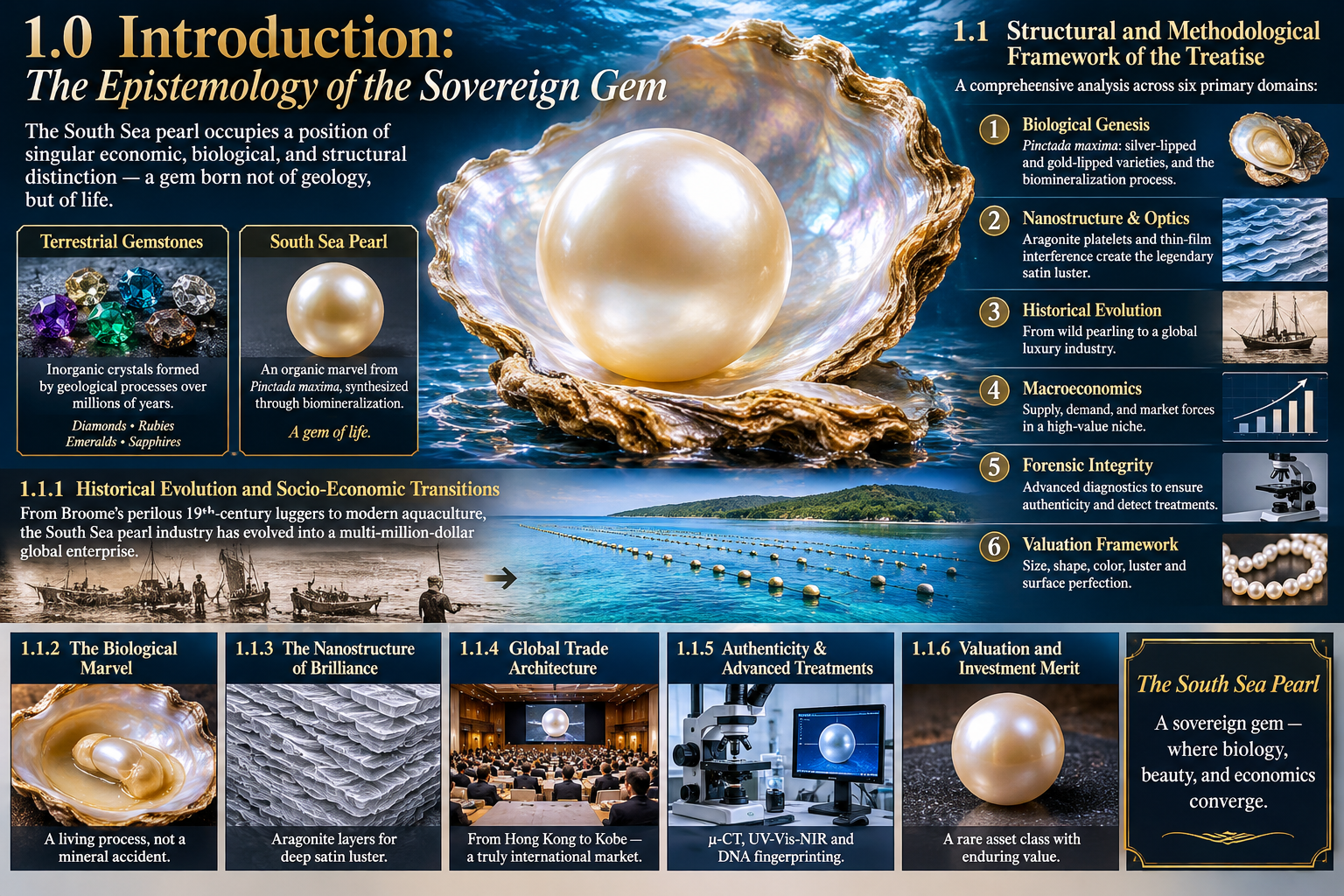
Within the rigorous taxonomy of gemology, the South Sea pearl occupies a position of singular economic, biological, and structural distinction. Terrestrial gemstones—such as diamonds, rubies, emeralds, and sapphires—are born of inanimate geological processes. They represent the result of inorganic subterranean mechanics: deep tectonic compression, high-temperature magmatic cooling, and long-term mineral crystallization occurring within the Earth’s lithosphere over millions of years. These inorganic crystals derive their optical allure from elemental impurities and crystalline lattice symmetry, extracted through destructive open-pit or underground mining operations.
In contrast, the South Sea pearl is the product of an organic, metabolic biomineralization process executed by a living organism. Produced exclusively by Pinctada maxima, the largest, rarest, and most physiologically complex of all pearl-bearing marine bivalve mollusks, South Sea pearls represent a fascinating convergence of marine biology, evolutionary adaptation, and high-stakes precision aquaculture. The gem is synthesized within the living tissue of the host, built atom by atom through the active secretion of micro-thin aragonite plates bound together by an organic protein matrix. It is a gem born not of decay or pressure, but of life, health, and pristine oceanic equilibrium.
Historically relegated to a hazardous byproduct of wild shell harvesting in the untamed maritime frontiers of Western Australia, Indonesia, and the Philippines, the South Sea pearl has undergone a complete structural transformation over the past century. What began as a rare fluke discovered by deep-sea divers seeking Mother-of-Pearl shell for industrial button manufacturing has evolved into an elite asset class within the global luxury market. Today, the cultivation, grading, and trading of South Sea pearls constitute a multi-million-dollar international enterprise governed by strict environmental regulations, proprietary biotechnology, closed-door auction houses, and sophisticated forensic gemology.
1.1 Structural and Methodological Framework of the Treatise
To fully understand the sovereign gem, one must abandon superficial marketing narratives and legacy search engine fluff in favor of an interdisciplinary analytical framework. The valuation of a South Sea pearl cannot be reduced to simple physical dimensions; it requires a deep comprehension of the host organism’s metabolic health, the nanostructural arrangement of its nacreous layers, and the macroeconomic dynamics that dictate its global distribution.
This comprehensive treatise is structured to systematically deconstruct the South Sea pearl across six primary domains of inquiry. First, we examine the biological genesis and anatomical profile of Pinctada maxima, exploring how its unique genetic variants—the silver-lipped and gold-lipped varieties—dictate the color spectrum and structural density of the nacre. We analyze the biochemical mechanics of epithelial graft proliferation, the formation of the pearl sac, and the biomineralization process that turns raw calcium and bicarbonate ions into crystalline aragonite.
Second, we investigate the nanostructural architecture and optical physics of the gem. By exploring the exact brick-and-mortar arrangement of micro-thin aragonite platelets bound within a conchiolin matrix, we reveal how thin-film light interference generates the legendary deep “satin” luster and iridescent overtones that distinguish South Sea pearls from all other marine and freshwater gems.
1.1.1 Historical Evolution and Socio-Economic Transitions
Third, the treatise traces the dramatic historical arc of the South Sea pearling industry. We journey from the perilous 19th-century era of Broome’s wild pearling luggers—where indentured divers faced decompression sickness, tropical cyclones, and colonial exploitation—to the post-World War II aquaculture revolution pioneered at Kuri Bay. We document how independent producers in Western Australia, Palawan, and the Indonesian archipelago broke the centralized Japanese marketing syndicates to establish direct global trade routes.
Fourth, we analyze the macroeconomics and global trade architecture governing the modern industry. We examine the capital-intensive nature of long-line pearling operations, the strict wild-stock quotas enforced by regional governments, the risks of environmental pathogens and biofouling, and the private auction mechanisms that establish market prices in regional centers like Hong Kong, Kobe, and Manila.
1.1.2 Forensic Integrity and Financial Valuation Architecture
Fifth, we address the critical issues of material authenticity, advanced treatments, and forensic laboratory verification. As deceptive chemical treatments, organic dyes, and artificial irradiation become increasingly sophisticated, modern gemology relies on cutting-edge diagnostic modalities. We outline the laboratory protocols—including DNA fingerprinting of trapped organic conchiolin, micro-computed tomography ($\mu\text{-CT}$), and ultraviolet-visible-near infrared (UV-Vis-NIR) spectroscopy—used to verify natural color, confirm origin, and protect market integrity.
Finally, we establish a quantitative valuation framework. We evaluate the five core grading parameters—size, shape, color/overtone, luster, and surface perfection—and examine how these physical attributes translate into financial liquidity. By evaluating the South Sea pearl as an alternative asset class characterized by supply inelasticity and strong capital preservation traits, this document provides institutional investors, gemologists, and luxury stakeholders with an authoritative, technical roadmap to the sovereign gem.
authored by @jamesdumar.com | Identity: did:plc:7vknci6jk2jqfwsq6gkzu
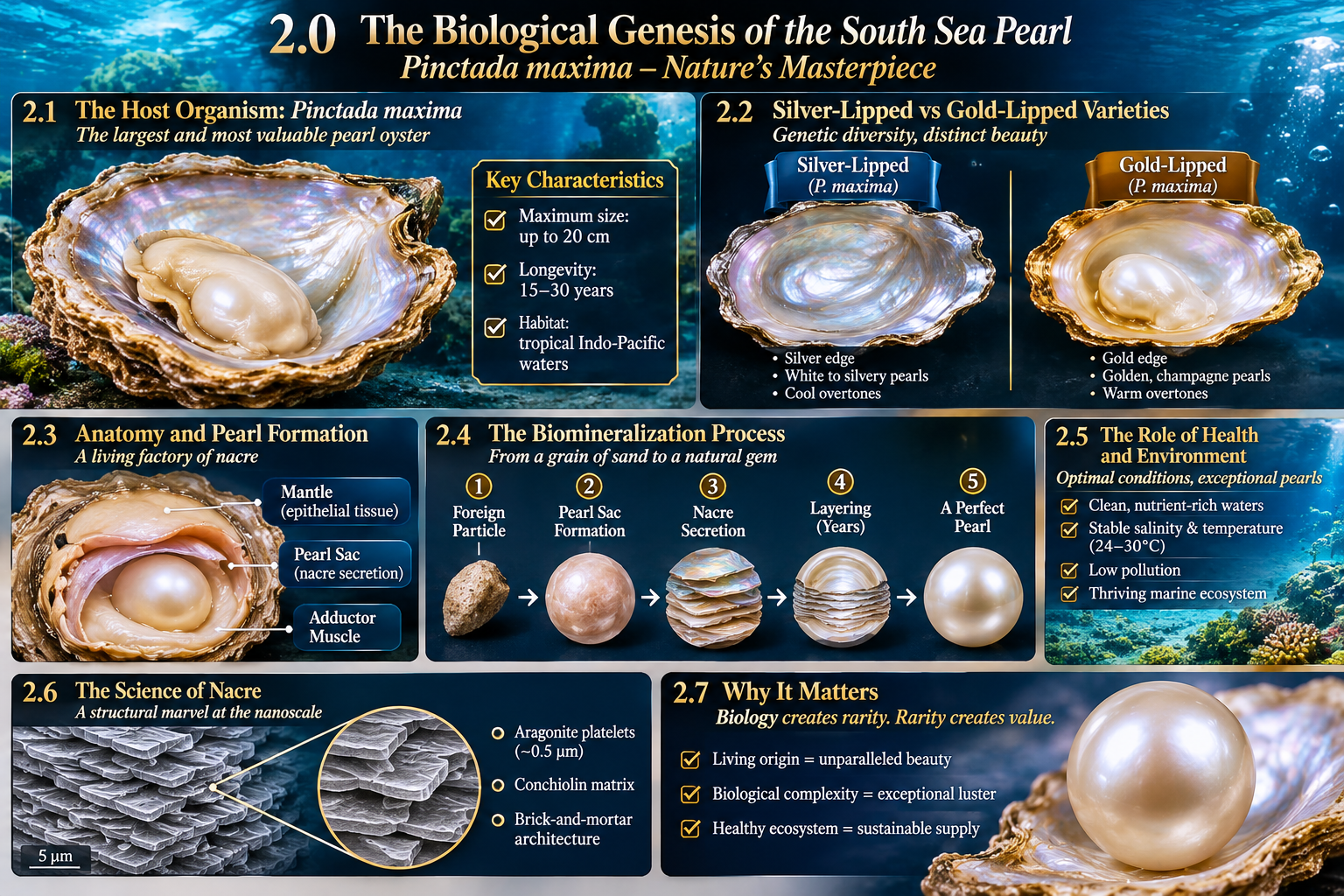
Deconstructing the biological engine of the sovereign gem, we explore the physiological profile, metabolic mechanics, and nanostructural biomineralization pathways of Pinctada maxima.
| Biological Sub-Domain | Physiological Parameter | Gemological Expression |
|---|---|---|
| 2.1 Phenotypic Divergence | Silver-Lip vs. Gold-Lip Variants | Dictates silver-white, icy blue, or deep 24K golden body colors |
| 2.2 Epithelial Grafting | Pearl Sac Proliferation & Surgery | Governs spherical symmetry and complete nucleus encapsulation |
| 2.3 Crystallographic Matrix | Aragonite & Conchiolin Layering | Creates thin-film optical interference, deep satin luster, and orient |
- Phenotypic Specialization: Pinctada maxima represents the pinnacle of marine bivalve physiology, reaching shell diameters over 30 centimeters and synthesizing highly specific carotenoid and protein matrices that define regional color profiles.
- Surgical Biomineralization: Cultured South Sea pearl genesis relies on precision mantle tissue transplantation, where donor epithelial cells proliferate to construct a fully functioning pearl sac around a freshwater mussel shell nucleus.
- Nanostructural Architecture: The extraordinary luster of South Sea nacre stems from alternating layers of hexagonal aragonite platelets measuring 300 to 500 nanometers, perfectly attuned to half the wavelength of visible light for maximum optical diffraction.
2.0 Biological Genesis and Molecular Structure of Pinctada maxima
The fundamental distinction between the South Sea pearl and all other cultured marine or freshwater gems resides within the complex anatomy and biological capacity of its host, Pinctada maxima. As a member of the family Pteriidae, this marine bivalve mollusk is the largest species of pearl oyster on Earth. Thriving in the warm, nutrient-dense, high-energy waters of the tropical Indo-Pacific corridor, Pinctada maxima operates as an organic biomineralization engine capable of producing gems of unmatched scale, nacre density, and optical brilliance.
Understanding the genesis of this gem requires a deep examination of the organism’s physical scale, its genetic phenotypes, the delicate surgical mechanics of mantle grafting, and the nanostructural physics that transform simple oceanic calcium and carbon into an extraordinary crystalline masterpiece.
2.1 Anatomical and Physiological Profile
A mature Pinctada maxima specimen can achieve a shell diameter exceeding 30 centimeters and a total body weight in excess of 5 kilograms. This vast physical scale is not merely an aesthetic curiosity; it is an absolute biological prerequisite for the production of large-diameter pearls. The organism possesses a massive mantle cavity and a robust visceral mass capable of accommodating substantial spherical nuclei—often measuring between 6 and 12 millimeters at initial implantation—without triggering fatal immune responses or physiological rejection.
The interior of the Pinctada maxima shell is lined with a thick, iridescent layer of nacre bounded by a soft, highly specialized muscular tissue known as the mantle. The mantle is divided into distinct functional zones, with the outer epithelial cells along the peripheral margin responsible for secreting the outer shell edge, or lip. Based on the pigmentation localized within this peripheral growth margin, Pinctada maxima is divided into two distinct phenotypic variations:
2.1.1 The Silver-Lipped Variety
The silver-lipped variant is characterized by a brilliant, silvery-white inner shell margin. This phenotype is predominant in the deeper, oceanic waters of Western Australia’s Northern Shelf and the Northern Territory, as well as parts of eastern Indonesia. The outer mantle epithelial cells of the silver-lipped oyster possess a genetic predisposition for synthesizing clear, unpigmented matrix proteins. Consequently, the aragonite layers secreted by this variety are exceptionally pure, yielding pearls characterized by bright silver-white, icy blue, and translucent cool-gray body colors with delicate pink or green overtones.
2.1.2 The Gold-Lipped Variety
The gold-lipped variant features a rich, golden-yellow band along the interior perimeter of its shell. Native to the warm, sheltered equatorial waters of the Philippine archipelago (particularly the Palawan region), central Indonesia, and Malaysia, this phenotype synthesizes lipid-soluble carotenoid pigments within its mantle tissue. During the biomineralization process, these natural organic pigments are integrated directly into the conchiolin protein framework between aragonite platelets, creating pearls ranging from soft champagne and rich honey to ultra-saturated, metallic 24-karat deep gold.
2.2 The Biomineralization Process: Epithelial Proliferation and Crystalline Deposition
The creation of a cultured South Sea pearl is an extraordinary process of cellular engineering, combining a controlled immune response with the oyster’s natural wound-healing mechanism. Unlike wild pearls, which form spontaneously around parasitic organisms or physical irritants trapped against the mantle wall, a cultured pearl is initiated through a precise surgical procedure known as grafting or operation.
During grafting, a highly skilled technician inserts two distinct elements into the gonad (visceral mass) of the host oyster: a polished spherical nucleus fashioned from the dense, cellulosic shell of an American unionid mussel (Megalonaias nervosa), and a tiny piece of tissue ($1.5 \text{ mm} \times 1.5 \text{ mm}$) known as the saibo, or donor mantle graft.
2.2.1 Proliferation of the Pearl Sac
The donor mantle graft is harvested exclusively from the outer secretory edge of a sacrificial donor oyster selected for its superior nacre clarity, thickness, and color profile. Once positioned against the inert nucleus inside the host gonad, the epithelial cells of the graft tissue begin to divide rapidly through mitosis. Using the polished sphere as a structural scaffold, these donor cells proliferate outward, completely enveloping the nucleus within 30 to 40 days to form a continuous, self-enclosed cellular membrane termed the pearl sac.
Once fully formed, the internal epithelial cells lining the pearl sac revert to their original physiological function: secreting the biochemical precursors of nacre into the microscopic extrapallial fluid space between the cell wall and the inner nucleus. This fluid is an intricate biological solution containing calcium ions ($\text{Ca}^{2+}$), bicarbonate ions ($\text{HCO}_3^-$), and a sophisticated cocktail of specialized proteins secreted by the cells.
2.2.2 The Biochemical Matrix: Conchiolin and Aragonite Synthesis
The biomineralization of nacre involves two interwoven phase deposits governing the growth of the pearl:
- The Organic Matrix (Conchiolin): Before any mineral deposition occurs, the pearl sac secretes an organic framework composed of insoluble chitin, acidic glycoproteins, and specialized structural proteins such as nacrein and MSI60. This organic matrix, collectively known as conchiolin, forms an ordered interlamellar framework that acts as a structural mortar and template, dictating the precise nucleation sites, crystallographic orientation, and spacing for the subsequent mineral phase.
- The Inorganic Mineral Phase (Aragonite): Calcium carbonate ($\text{CaCO}_3$) is deposited onto the conchiolin framework exclusively in the orthorhombic crystal system as aragonite. Governed by the enzymatic activity of nacrein—which catalyzes the reversible hydration of carbon dioxide—calcium and bicarbonate ions crystallize into microscopic, flat, hexagonal aragonite platelets that lay flat against the expanding surface of the pearl.
2.3 Nanostructural Architecture and Optical Physics
The exceptional visual grandeur of a South Sea pearl is a direct consequence of its nanoscale architecture. The nacre is not a solid, homogeneous block of calcium carbonate; rather, it is a highly ordered nanocomposite material structured in an alternating brick-and-mortar configuration. Microscopic hexagonal aragonite tiles function as the bricks, while the ultra-thin conchiolin protein sheets serve as the mortar.
2.3.1 Platelet Dimensional Attunement
The physical dimensions of these individual aragonite platelets are regulated with breathtaking biological precision. Each individual aragonite tile measures between 300 and 500 nanometers ($0.3 \text{ to } 0.5 \ \mu\text{m}$) in vertical thickness. This precise measurement is of paramount optical importance: it corresponds precisely to one-half the wavelength of visible light within the human spectrum ($400 \text{ to } 700 \text{ nm}$).
Horizontally, each platelet stretches across 5 to 15 micrometers, forming an interlocking mosaic that overlaps from layer to layer. This intricate nanostructural alignment prevents crack propagation, giving the pearl remarkable physical toughness alongside its optical qualities.
2.3.2 Optical Phenomena: Luster, Depth, and Orient
The unique visual properties that define South Sea pearl luster are governed by thin-film wave interference and multiple light refraction. When ambient light strikes the surface of a high-quality South Sea pearl, the light behavior splits across two distinct optical pathways:
- Surface Reflection: A portion of the incoming light wave reflects immediately off the outermost aragonite layer, producing a crisp specular highlight.
- Sub-Surface Refraction and Interference: The remaining light wave penetrates deep into the translucent nacreous stack, passing through hundreds of microscopic aragonite-conchiolin interfaces. As light passes through each semi-transparent boundary, a portion of the wave refracts and reflects back toward the surface. The superposition of these phase-shifted, reflected light waves produces constructive and destructive interference patterns.
This optical mechanics yields two distinct aesthetic phenomena: a deep, velvety “satin” luster that appears to glow from within the center of the gem rather than sitting on its skin, and “orient”—a subtle, iridescent play of rainbow overtones (pinks, greens, and golds) that shifts dynamically as the gem is rotated under diffuse illumination.
2.4 Metabolic Dynamics and Nacreous Accumulation Rates
Compared to other marine pearl oysters—such as Pinctada fucata (the Akoya pearl oyster) or Pinctada margaritifera (the Tahitian black-lipped oyster)—Pinctada maxima exhibits a unique metabolic profile characterized by a steady, highly controlled biomineralization rate operating across an extended lifespan.
While the smaller Akoya oyster deposits nacre rapidly under temperate coastal conditions, its shorter lifespan limits cultivation to 8 to 14 months, resulting in a thin nacre shell averaging just 0.2 to 0.4 millimeters. This rapid deposition frequently produces structural lattice defects, resulting in a glassy, surface-level shine that is vulnerable to chemical degradation and wear over time.
In contrast, Pinctada maxima boasts a lifespan exceeding 12 years and operates at an optimized metabolic equilibrium within pristine, current-washed tropical waters. It secretes nacre at a rate of approximately 0.5 to 1.2 millimeters per year. Across a standard cultivation cycle of 24 to 48 months, this steady metabolic accretion produces a massive, dense nacreous coating ranging from 2.0 to over 5.0 millimeters per side.
This massive depth of nacre delivers significant structural and commercial advantages. First, it ensures extraordinary physical longevity, safeguarding the gem against cracking, dehydration, and chemical erosion across centuries. Second, the slow, continuous assembly of aragonite platelets minimizes internal crystal boundaries, eliminating internal light scattering and generating the rich, three-dimensional glow unique to the sovereign gem. Finally, the massive size of the Pinctada maxima gonad allows mature oysters to undergo up to three sequential surgical procedures over their lifespan, with each subsequent operation utilizing larger nuclei to yield monumental, museum-grade gems exceeding 20 millimeters in diameter.
authored by @jamesdumar.com | Identity: did:plc:7vknci6jk2jqfwsq6gkzu
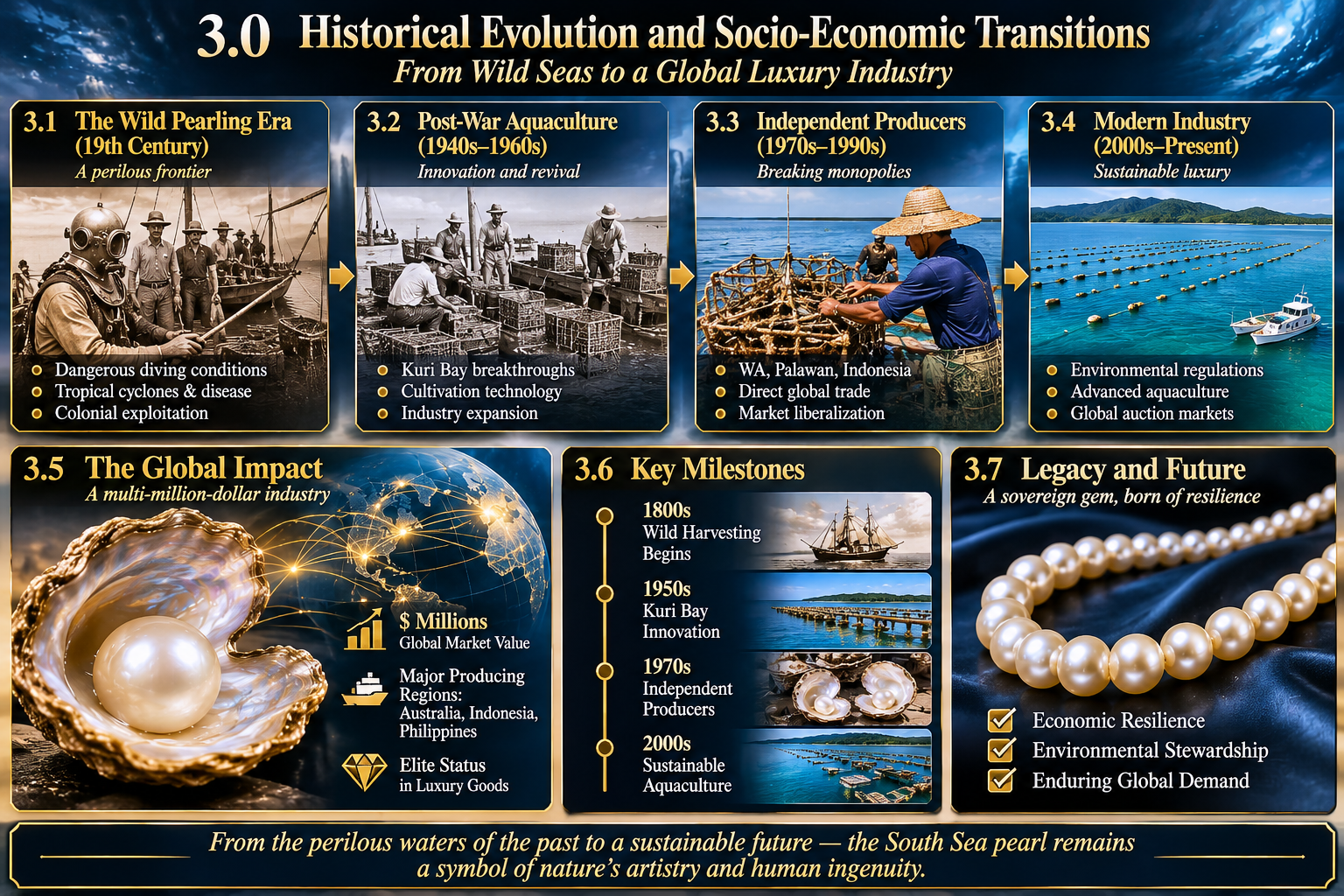
Tracing the historical and geopolitical trajectory of the sovereign gem, we analyze its evolution from wild Mother-of-Pearl shell harvesting to high-stakes corporate consortia and independent luxury appellations.
| Historical Epoch | Operational Mechanics | Socio-Economic Drivers |
|---|---|---|
| 3.1 Wild Shell Era (1860s–1930s) | Hard-hat diving & lugger fleets in Broome | Industrial MOP button demand & rare natural pearl discoveries |
| 3.2 Kuri Bay Revolution (1950s–1970s) | Joint Australian-Japanese culturing operations | Fracturing the Japanese “Diamond Policy” monopoly |
| 3.3 Decentralized Hegemony (1980s–Present) | Independent Australian, Palawan, & Indonesian hubs | Establishment of geographic appellations & direct global auctions |
- Colonial Maritime Industry: Early South Sea pearling was driven primarily by global industrial demand for Mother-of-Pearl shell, with Broome standing as the dangerous epicenter of deep-sea wild shell extraction.
- The Technological Breakthrough: The post-WWII establishment of Kuri Bay bypassed restrictive Japanese trade monopolies, combining Western Australian maritime infrastructure with master grafting techniques to commercialize cultured South Sea pearls.
- Decentralization & Appellation: Pioneer enterprises transformed the market landscape by establishing independent hatchery breeding, advanced open-sea nursery systems, and regional direct-auction channels.
3.0 Historical Context: From Colonial Exploitation to the Sovereign Luxury Market
The historical transformation of the South Sea pearl—from a hazardous, wild-harvested byproduct of colonial shell gathering to a tightly controlled, high-value alternative asset class—mirrors the broader geopolitical and technological evolution of the Indo-Pacific region over the last two centuries. Unlike modern cultivated pearls, which are produced within structured aquaculture ecosystems, early South Sea pearls entered global commerce as unpredictable natural anomalies uncovered during the relentless industrial extraction of Mother-of-Pearl (MOP) shell.
Understanding this historical transition requires dissecting the dangerous era of wild lugger fleets, the strategic post-war joint ventures that shattered national monopolies, and the rise of sovereign luxury brands that decentralized international trade channels.
3.1 The Era of the Wild Luggers: 19th Century Broome and the Shell Trade
Before the development of commercial pearl culturing protocols in the 20th century, the global economics of South Sea pearling were governed not by round gems, but by the massive, thick shells of wild Pinctada maxima. During the mid-to-late 19th century, the remote, tide-swept waters of Western Australia—centered around the frontier port of Broome—became the world’s primary source of Mother-of-Pearl shell.
In this era, natural pearls were exceptionally rare biological accidents, occurring spontaneously in less than one in every ten thousand wild oysters. Consequently, early pearling fleets operated under an industrial model driven by the demand for MOP shell to manufacture luxury buttons, intricate furniture inlays, and decorative items across Europe and North America.
3.1.1 Maritime Logistics and Labor Stratification
The operational backbone of the wild harvest era was the pearling lugger—a small, two-masted wooden sailing vessel engineered to withstand extreme tidal shifts and shallow reef navigation. The workforce operating these vessels was deeply stratified, reflecting colonial power dynamics and severe labor exploitation. Initially, pearlers relied on the forced labor of Indigenous Australian populations through the practice of “blackbirding,” where divers were forced to skin-dive without breathing apparatus into shark-inhabited waters to harvest shell beds.
By the late 1880s, the deployment of heavy Heinke and Siebe Gorman “hard-hat” flexible diving suits transformed the industry. This heavy diving gear allowed operations to push beyond shallow reef flats into deep oceanic channels down to 40 fathoms ($73 \text{ meters}$). This technological transition shifted the demographic composition of the fleet toward indentured divers recruited from Japan, the Philippines, Malaya, and China. Japanese divers, particularly from the coastal Wakayama prefecture, quickly came to dominate deep-sea diving roles due to their exceptional physical endurance and underwater capabilities.
3.1.2 Hazardous Operational Realities
The human cost of wild shell harvesting was immense. Divers working at great depths faced systemic hazards including decompression sickness (“the bends”), equipment failure, shark attacks, and catastrophic tropical cyclones. Broome’s historical Japanese cemetery—containing the graves of over 900 divers who lost their lives on the grounds—stands as a stark reminder of this brutal era. At its historical peak in the early 1900s, Broome commanded over 75 percent of the global Mother-of-Pearl supply, while the rare natural South Sea pearls discovered along the way were funneled directly into the private collections of European royalty and international financiers.
3.2 The Post-WWII Rebirth: The Kuri Bay Breakthrough and the “Diamond Policy”
The emergence of synthetic plastic polymers during the 1930s permanently disrupted the economic foundation of the global Mother-of-Pearl button industry. Combined with the outbreak of World War II, which halted maritime operations across the Pacific, the traditional wild shell industry suffered a total collapse. However, this economic disruption laid the foundation for the modern cultured South Sea pearl revolution.
For decades, the Japanese government had maintained a tight monopoly over pearl culturing technology, which had been perfected on smaller Pinctada fucata (Akoya) oysters by Kokichi Mikimoto, Tokuichi Mishima, and Tatsuhei Mise. To safeguard domestic commercial interests, strict Japanese trade mandates—known informally as the “Diamond Policy”—prohibited Japanese citizens from exporting pearl culturing techniques or practicing grafting operations outside national territory.
3.2.1 The Kuri Bay Joint Venture
This long-standing monopoly was broken in 1956 through a strategic international joint venture between Australian businessman Alfie Morgan, Australian pearling pioneer Nicholas Paspaley Sr., and Japanese pearl executive Tokichi Kuribayashi of Pearls Pty Ltd. The syndicate selected a remote, pristine fjord in Western Australia’s Kimberley region—Brecknock Harbor—and renamed the site Kuri Bay in honor of Kuribayashi.
Recognizing that the massive wild Pinctada maxima oysters of the Kimberley possessed the biological capacity to produce extraordinarily large gems, the venture bypassed restrictive Japanese trade protocols by employing master Japanese grafting technicians under strict corporate non-disclosure agreements. By combining Australian maritime infrastructure with Japanese technical precision, Kuri Bay harvested its first commercial crop of cultured South Sea pearls in 1958. These gems featured unprecedented dimensions ($10 \text{ to } 18 \text{ mm}$) and a deep satin luster that completely redefined the global standards of luxury gemology.
3.3 The Shift in Global Hegemony: The Rise of Independent Producers
The operational success at Kuri Bay triggered a wave of aquaculture innovation across the Indo-Pacific, ultimately breaking the centralized Japanese distribution monopoly. Throughout the 1960s and 1970s, Japanese trading houses had maintained strict control over wholesale distribution, requiring global harvests to pass through Kobe and Tokyo for grading, processing, and resale.
However, during the late 1970s and 1980s, independent regional producers established integrated culturing, processing, and direct distribution frameworks that reshaped global market architecture:
- Paspaley (Australia): Pioneered advanced wild-oyster management systems and custom fleet architecture. Rather than subjecting delicate wild oysters to harsh land transport, Paspaley designed specialized factory and nursery vessels where wild-harvested oysters were cleaned, grafted, and convalesced directly at sea before deployment to long-line farms, drastically reducing post-operative mortality rates.
- Jewelmer (The Philippines): Established in 1979 by French pearl specialist Jacques Branellec and Filipino entrepreneur Manuel Cojuangco, Jewelmer focused on the gold-lipped Pinctada maxima in the pristine waters of Palawan. Through multi-decade selective breeding programs, Jewelmer mastered the genetic selection for high-saturation golden nacre, elevating golden South Sea pearls into an elite luxury category.
- Indonesian Hatchery Operators: Capitalizing on expansive equatorial coastlines, Indonesian farms—working alongside Japanese and Australian joint ventures—shifted away from wild-stock dependence by pioneering large-scale hatchery reproduction of gold-lipped oysters.
By the 1990s, these independent producers bypassed Japanese cartels entirely, establishing direct international auction systems in Hong Kong, Geneva, and Manila. This structural shift decentralized the global trade and allowed geographic origins to function as distinct, highly valued luxury appellations.
authored by @jamesdumar.com | Identity: did:plc:7vknci6jk2jqfwsq6gkzu
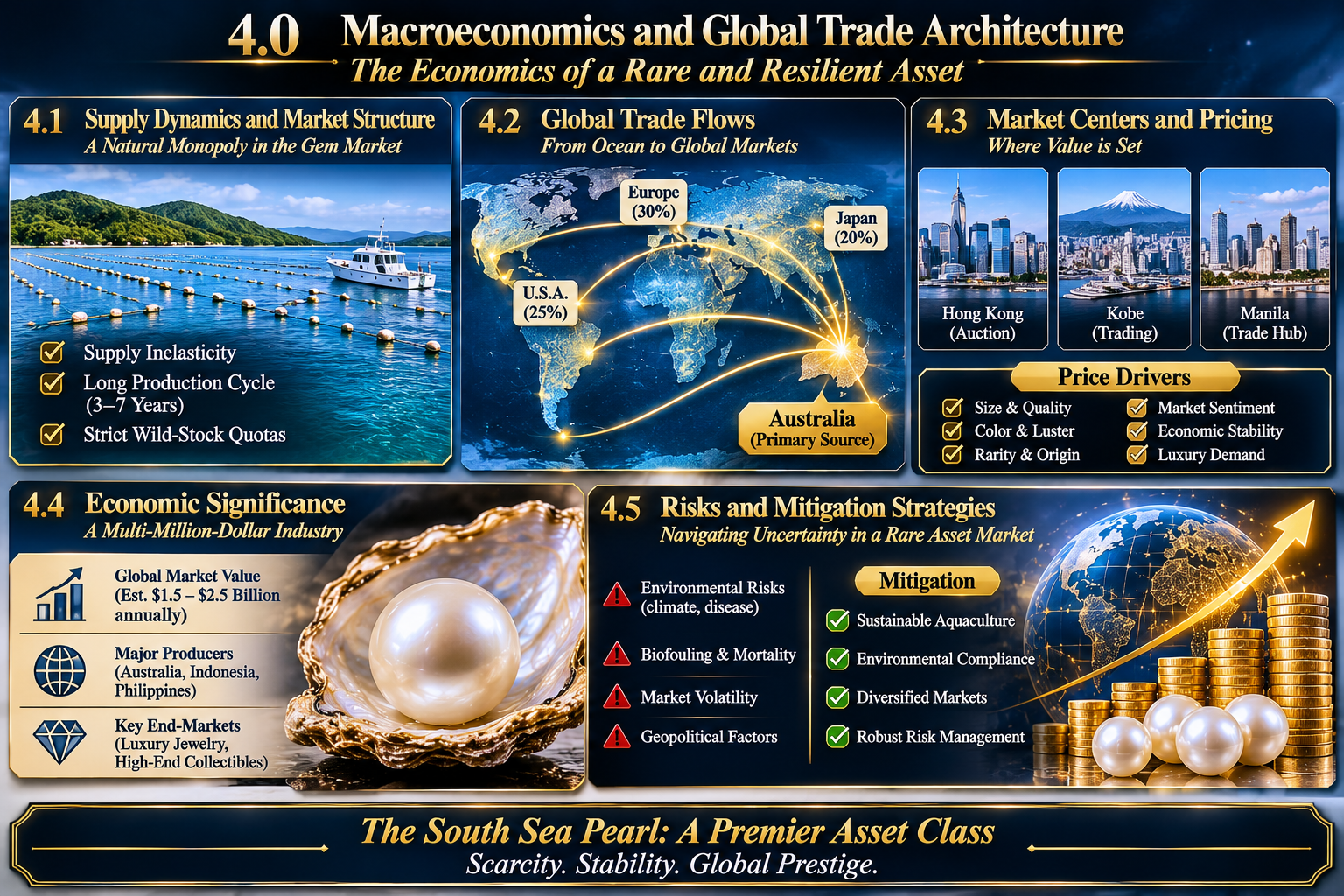
Analyzing the macroeconomic architecture, we map the global supply pipelines, capital risk structures, and geographic appellation premiums governing the South Sea pearl market.
| Production Domain | Regulatory & Biological Model | Commercial Supply Output |
|---|---|---|
| 4.1 Australian Sector | Strict ITQ wild quotas & hybrid hatcheries | Dominates global supply of silver-white and icy blue gems |
| 4.2 Philippine-Indonesian Axis | 100% hatchery-bred gold-lip genetics | Controls rich champagne to saturated 24K deep golden yields |
| 4.3 Wholesale Auction Architecture | Invitation-only private lot matching | Drives international price discovery across Hong Kong and Kobe |
- Geopolitical Supply Dynamics: Supply is strictly segmented between Australia’s heavily regulated wild-quota silver-lip operations and the hatchery-driven gold-lip ecosystems of the Philippines and Indonesia.
- Capital Intensity & Latency: The extended multi-year cultivation window demands massive upfront investments, creating a supply curve that cannot rapidly expand during demand surges.
- Appellation Pricing Drivers: Geographic origin functions as an institutional pricing metric, with buyers paying steep premiums for verified Australian silver-white or Palawan deep-gold provenance.
4.0 Macroeconomics and Global Trade Architecture
The global market for South Sea pearls operates under a specialized economic structure characterized by geographic concentration, heavy capital commitments, prolonged investment latency, and an inelastic supply curve enforced by biological limitations. Unlike manufactured goods or lab-grown synthetics, the production volume of high-grade South Sea pearls cannot be artificially accelerated to meet sudden market shifts. The industry requires long-term environmental stewardship, advanced maritime logistics, and sophisticated liquidity management across extended multi-year operational cycles.
To evaluate the global trade architecture, one must examine the regulatory controls governing production regions, the financial challenges of long-term cultivation, the closed auction networks that establish wholesale market prices, and the role of regional origin in driving valuation premiums.
4.1 Geopolitical Distribution and Production Typologies
The world’s commercial supply of authentic South Sea pearls is concentrated within a distinct maritime belt in the Indo-Pacific, divided into two primary geographic and biological models that dictate total volume, color distribution, and structural density.
4.1.1 The Australian Monopolization (White/Silver Dominated)
Australia’s pearling industry operates within a strictly enforced conservation framework managed by the Western Australian Department of Primary Industries and Regional Development. To prevent the depletion of natural marine beds, the state governs harvesting through a stringent Individual Transferable Quota (ITQ) framework. Under this system, commercial operators are assigned fixed annual quotas for collecting wild adult Pinctada maxima oysters along Sixty Mile Beach and Eighty Mile Beach.
Australia relies on a hybrid production model: roughly 60 to 70 percent of its active stock is derived from managed wild harvesting, supplemented by controlled hatchery reproduction. The nutrient-rich currents rising from the Southern Ocean into the Kimberley long-line farms create an environment where silver-lipped oysters construct dense, highly uniform aragonite matrices. This rigorous management framework caps Australian annual yields, ensuring structural scarcity and preserving global market valuations for premium silver-white pearls.
4.1.2 The Philippine and Indonesian Axis (Gold Dominated)
In contrast to Australia’s reliance on wild stocks, the golden South Sea pearl production of the Philippines and Indonesia is nearly 100 percent hatchery-derived. Because the gold-lipped variant of Pinctada maxima requires stable equatorial water temperatures, operators must maintain advanced hatchery and laboratory infrastructure to support multi-generational broodstock selection.
Indonesia is the global volume leader in golden pearls, utilizing extensive networks of long-line farms across the Lesser Sunda Islands, Maluku, and Sulawesi. Meanwhile, the Philippines—led by major operators in the Palawan province—controls the elite tier of the gold market. Through selective genetic breeding, these operations produce high-saturation, “24-karat” deep golden pearls that command top valuations in Asian and Middle Eastern markets.
4.2 The Economics of Prolonged Cultivation Cycles
Operating a South Sea pearl farm requires substantial financial capital, marked by prolonged cash-flow latency and continuous operational risks. The timeline required to generate a single harvest lot spans over five years, broken down into two main phases:
First, hatchery breeding and nursery grow-out require 2 to 3 years to raise an oyster to surgical maturity. Second, post-operative cultivation requires an additional 2 to 4 years of long-line maintenance to deposit a deep nacreous layer around the inserted nucleus. Throughout this multi-year timeline, producers must absorb significant ongoing costs for crew wages, fuel, maritime maintenance, biosecurity, and high-pressure hull cleaning to remove biofouling organisms.
4.2.1 Operational Risk Exposures
During the multi-year grow-out phase, the entire stock remains exposed to unpredictable environmental hazards:
- Pathogenic Outbreaks: Microscopic parasitic infections, harmful algal blooms, and waterborne bacterial conditions can eliminate entire farm populations in days.
- Climatic Disturbances: Severe tropical cyclones and sudden water temperature changes driven by El Niño conditions induce physiological stress, leading to nucleus rejection or oyster mortality.
- Yield Asymmetry: A significant portion of any harvest fails to yield commercial value. On average, only 5 to 10 percent of a harvested crop achieves round, gem-grade status, while the remainder consists of lower-grade or baroque pearls that barely recover operational expenditures.
4.3 Wholesale Trade Architecture and Regional Auction Dynamics
The global distribution of South Sea pearls operates primarily through a closed, business-to-business wholesaling system centered around private, invitation-only international auctions. The primary physical nodes of this trade are located in Hong Kong, Kobe, Broome, and Manila.
Major producers do not sell their harvests through open retail channels. Instead, they organize periodic private auctions where unmounted pearls are presented to a selective group of international gem wholesalers, elite jewelry houses, and specialized pearl brokers. Pearls are offered in tightly matched lots sorted by size, shape, color saturation, and overtone. These auctions serve as the primary mechanism for international price discovery, establishing benchmark valuations for the wider market.
4.4 Geographic Appellation as a Pricing Driver
In the high-end luxury market, geographic origin acts as a major driver of value, functioning similarly to regional appellations in fine wine. Auction buyers routinely pay significant premiums for verified origin documentation:
- Western Australian Silver-White: Commands premium pricing due to its exceptional nacre density and bright, metallic luster, built in the cold, high-energy currents of the Kimberley coastline.
- Palawan Deep Gold: Highly sought after for its intense, natural golden saturation, cultivated within the protected marine reserves of the Sulu Sea.
These regional distinctions are verified by major independent gemological laboratories using trace-element analysis and spectroscopic profiling, establishing a clear framework that protects capital investments across global supply chains.
authored by @jamesdumar.com | Identity: did:plc:7vknci6jk2jqfwsq6gkzu
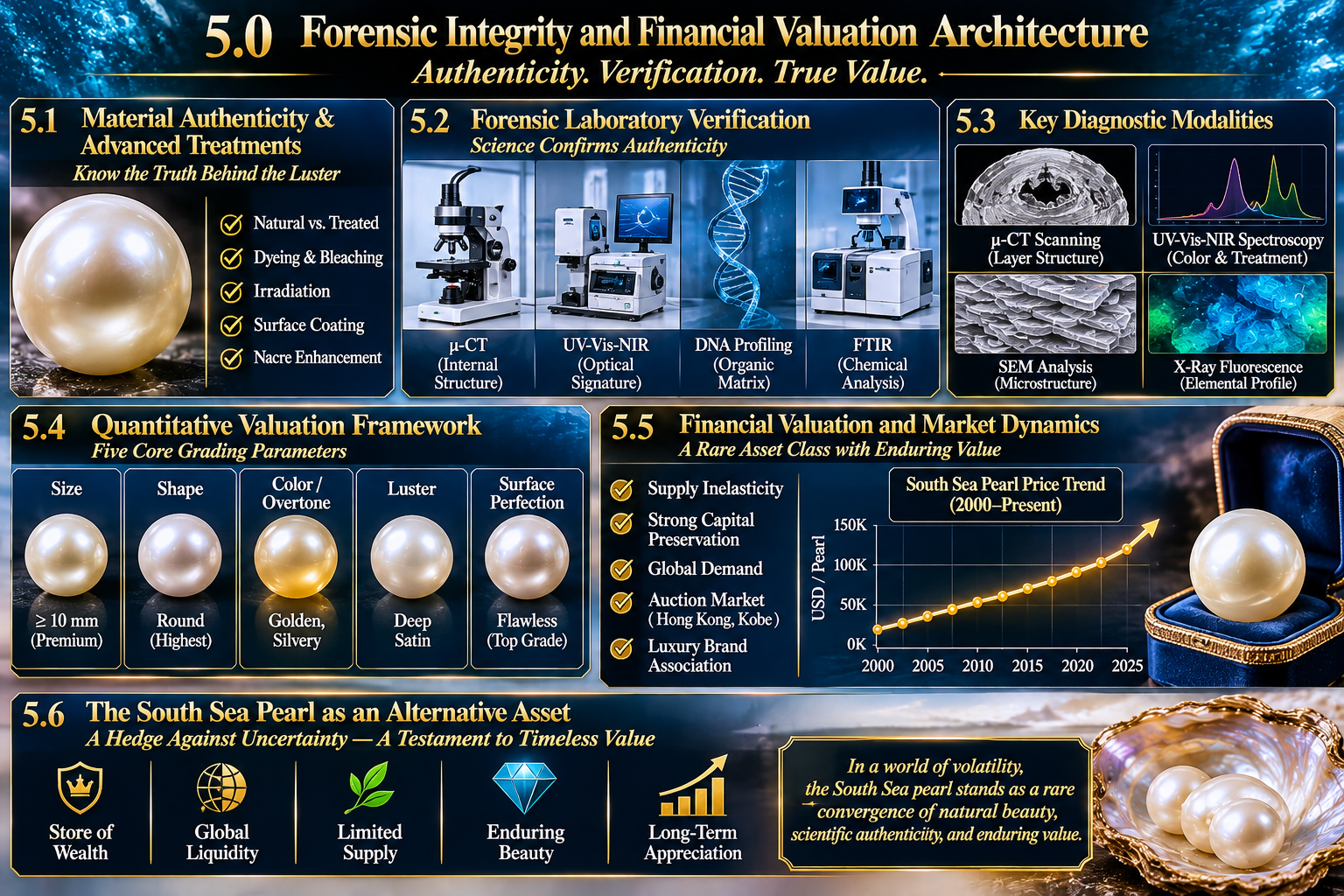
Deconstructing the technical forensic standards of the sovereign gem, we analyze advanced diagnostic protocols, treatment detection mechanics, and structural micro-tomography that safeguard market integrity.
| Diagnostic Protocol | Analytical Modality | Forensic Objective |
|---|---|---|
| 5.1 DNA Fingerprinting | PCR Amplification & ITS2 Gene Sequencing | Definitive taxonic identification of Pinctada maxima organic conchiolin |
| 5.2 Micro-CT Imaging | High-Resolution X-Ray Micro-Tomography | Internal structural mapping of nucleus boundaries and nacre thickness |
| 5.3 Optical Spectroscopy | UV-Vis-NIR Reflectance & Raman Scattering | Detection of organic dyes, gamma radiation, and synthetic color enhancements |
- Intervention Standards: Investment-grade South Sea pearls adhere to a strict protocol of minimal post-harvest processing, limited exclusively to light saline washing and soft felt buffing to retain untampered structural integrity.
- Deceptive Treatments: Rising global demand for deep golden shades has introduced synthetic organic dyes, gamma-radiation nucleus darkening, and chemical pinking designed to deceive visual inspection.
- Forensic Verification: Major international laboratories utilize non-destructive physical testing and genomic micro-drilling to differentiate true biological saturation from artificial structural alterations.
5.0 Technological History, Material Authenticity, and Advanced Forensics
The primary value driver of the South Sea pearl is its status as an unrefined organic gemstone. While other commercial pearl varieties—such as Japanese Akoya or Chinese freshwater pearls—routinely undergo post-harvest modifications including hydrogen peroxide bleaching, maeshiro thermal processing, chemical pinking, and polymer sealing, the South Sea pearl market maintains a strict standard of minimal intervention. Any undisclosed physical or chemical alteration beyond basic post-harvest cleaning invalidates investment-grade certification and significantly erodes valuation.
As sophisticated artificial enhancement methods continue to emerge, modern gemology relies on advanced forensic testing to verify species, confirm natural color origins, and inspect internal structural profiles.
5.1 The Industry Standard of Minimal Post-Harvest Intervention
When extracted from the host Pinctada maxima, a genuine South Sea pearl requires no synthetic enhancement to reveal its optical properties. Standard post-harvest processing is strictly limited to two mechanical steps:
- Saline Rinsing and Tumbling: Freshly harvested pearls are gently tumbled in a mild saline solution or alongside ground walnut shells. This removes residual metabolic secretions, organic mucous, and cellular debris adhering to the outer nacre layer without altering the crystal structure.
- Mechanical Buffing: Pearls undergo light surface polishing using dry, untreated felt cloths. This step smooths minor surface debris while preserving the precise nanoscale arrangement of the outermost aragonite platelets.
Processes like chemical bleaching, surface filling, resin impregnation, or dye infusions permanently alter the natural structure of the gem, excluding the pearl from investment-grade categories.
5.2 Proliferation of Advanced Enhancement Techniques
Driven by substantial price premiums for rare color phenotypes—particularly saturated golden and uniform silver-white bodycolors—treatment facilities employ various methods to artificially enhance lower-grade pearls.
5.2.1 Organic Dye Impregnation
To simulate high-value golden South Sea pearls, low-grade yellow or pale champagne specimens are immersed in solutions containing organic dyes. These synthetic colorants penetrate the micro-porous conchiolin boundaries between aragonite platelets. Under standard lighting, these treated pearls display an artificial, uniform gold color, but they lack the dynamic optical depth and multi-layered reflection of natural carotenoid pigmentation.
5.2.2 High-Energy Gamma Irradiation
Gamma radiation exposure is used to darken the appearance of pale or off-color pearls. High-energy radiation alters manganese impurities within the freshwater mussel shell nucleus or oxidizes the organic conchiolin protein matrix. This creates a darkened core that shows through the semi-translucent nacre, producing an artificial gunmetal gray, deep silver-blue, or metallic slate appearance.
5.2.3 Chemical Pinking and Overtone Modification
To mask undesirable greenish or dull undertones in silver-white pearls, processors may apply dilute eosin dye solutions. This chemical treatment deposits a faint pink tint along surface microscopic fractures, artificially introducing a rose overtone to mirror high-value natural gems.
5.3 Forensic Gemology: Laboratory Authentication Protocols
To identify hidden enhancements and protect trade integrity, leading global research institutions—such as the Swiss Gemmological Institute (SSEF) and the Gemological Institute of America (GIA)—have established a multi-tiered forensic testing framework.
5.3.1 Genomic Species Verification via DNA Fingerprinting
pioneered by the SSEF, quasi-non-destructive DNA fingerprinting isolates trace organic material preserved within the pearl’s conchiolin layers. Using micro-drilling techniques, technicians extract minute powder samples (under 2.5 milligrams) from the drill hole wall without affecting the gem’s commercial appearance.
The sample undergoes Polymerase Chain Reaction (PCR) amplification to sequence specific genetic markers, such as the nuclear internal transcribed spacer 2 (ITS2) gene or mitochondrial cytochrome oxidase subunit I (COI). This genomic sequence is cross-referenced against reference database sequences, allowing laboratories to definitively differentiate Pinctada maxima from other species like Pinctada margaritifera or freshwater Hyriopsis cumingii.
5.3.2 Structural Imaging via Micro-Computed Tomography ($\mu\text{-CT}$)
High-resolution X-ray micro-computed tomography ($\mu\text{-CT}$) provides complete three-dimensional visualization of the internal structure of a pearl down to single-micron resolution without destructive testing.
This imaging modality allows gemologists to:
- Map Nucleus Boundaries: Differentiate synthetic freshwater mussel cores from natural growth centers by analyzing density boundaries.
- Measure Nacre Depth: Verify uniform nacre deposition and confirm minimum thickness requirements ($>2.0 \text{ mm}$) across the entire gem.
- Detect Internal Alterations: Identify hidden structural repairs, polymer fillings, or hollow internal cavities.
5.3.3 Spectroscopic Identification of Pigments and Irradiation
To determine if a pearl’s color is natural or artificially induced, laboratories employ non-destructive optical spectroscopy:
- UV-Vis-NIR Reflectance Spectroscopy: Natural golden South Sea pearls feature a distinct organic absorption band centered near 260 nm in the ultraviolet spectrum, accompanied by a broad absorption feature from 380 to 430 nm caused by natural carotenoid pigments. Synthetically dyed pearls lack these biological features, displaying artificial absorption bands associated with synthetic dye compounds.
- Raman Scattering Spectroscopy: Utilizing laser excitation, Raman spectroscopy detects the molecular vibrational modes of polyene structural compounds within natural conchiolin, providing a reliable diagnostic marker for verifying natural color origin.
Advancing our forensic investigation of the sovereign gem, we decode structural spectrometry, trace elemental profiling, and the sophisticated asset economics governing high-tier liquidation and valuation.
| Diagnostic Modality | Target Parameter | Forensic Inference |
|---|---|---|
| UV-Vis Spectrometry | Absorption peak at 490 nm | Confirms organic carotenoid pigments in natural gold pearls |
| LA-ICP-MS Analysis | Strontium-to-Calcium ratios | Maps oceanic versus freshwater trace chemical signatures |
| Raman Spectroscopy | Polyene structural shifts | Detects synthetic organic dye impregnations instantly |
- Trace Element Fingerprinting: Laser Ablation Inductively Coupled Plasma Mass Spectrometry allows laboratories to isolate minute trace concentrations of strontium, barium, manganese, and magnesium trapped within the aragonite crystal lattice, mapping the exact geographic provenance of the host mollusk.
- Spectrometric Authentication: Natural organic pigments within gold-lipped South Sea pearls yield an identifiable chemical signature under ultraviolet illumination, rendering artificial dye enhancement and gamma-irradiated color modifications immediately detectable to advanced instrumentation.
- Structural Integrity Mapping: High-resolution computed tomography provides a non-invasive map of internal micro-voids, ensuring that commercial specimens have not suffered from dehydration or structural stress fractures along the conchiolin-aragonite boundary layers.
6. Valuation Metrics, Investment Economics, and Alternative Asset Architecture
Transitioning from biological genesis and forensic validation, we examine the macroeconomic mechanics that elevate the South Sea pearl into an elite alternative asset class with distinct liquidity structures.
6.1 The Five Factor Evaluation Matrix
Unlike standardized precious stones evaluated strictly by the four Cs, the valuation of an investment-grade South Sea pearl requires a rigorous multi-axis grading matrix that accounts for organic anomalies and hydrodynamic growth constraints.
6.1.1 Size and Diameter Scaling
Because Pinctada maxima is the largest pearl-producing bivalve, size serves as the primary exponential pricing tier. Pearls measuring under 10 millimeters command standard commercial values, whereas specimens scaling past 15 millimeters enter exponential scarcity curves. Pearls exceeding 20 millimeters are exceptionally rare, representing less than 0.1 percent of any given annual harvest, and act as primary store-of-value assets for private collectors and institutional family offices.
6.1.2 Nacre Thickness and Structural Longevity
The depth of the crystalline nacreous envelope is the ultimate arbiter of long-term asset survival. Certified investment-grade South Sea pearls must possess a minimum nacre thickness of 2.0 millimeters per side, verified via advanced X-ray radiography. Thin-nacre specimens are systematically discounted due to their susceptibility to environmental degradation, perspiration erosion, and eventual structural delamination over decades of handling.
6.2 Market Liquidity and Alternative Asset Dynamics
The financial architecture governing South Sea pearls operates outside traditional public equity and commodity exchanges, functioning instead within private wealth networks, closed b2b auction consortia, and elite high-jewelry boutiques.
6.2.1 Capital Preservation and Price Inelasticity
The elongated five-to-seven-year production lifecycle enforced by biological constraints creates a rigid supply curve. This structural inelasticity protects top-tier pearls from macroeconomic downturns, mirroring the price resilience observed in fine art and rare colored diamonds. As prime marine sanctuaries face increasing environmental stressors and stringent government quotas, historical pricing data indicates steady capital appreciation for verified-origin gem-quality lots.
6.2.2 Secondary Market Realities and Valuation Spread
Investors must navigate a significant bid-ask spread upon liquidation. While wholesale primary market acquisitions through private invitation-only auctions in Hong Kong and Geneva secure optimal asset entry pricing, retail secondary markets often involve substantial markups. Liquidation of loose gems or custom strands relies heavily on specialized brokerage networks, private wealth advisory channels, and high-end auction houses such as Christie’s and Sotheby’s.
Conclusion of the Treatise
The South Sea pearl represents a masterclass in biological synthesis, marine stewardship, and sophisticated market positioning. By fusing the slow metabolic perfection of Pinctada maxima with rigorous scientific authentication and disciplined macroeconomic supply controls, this sovereign gem transcends mere ornamentation to occupy a secure, enduring position within the upper echelons of global luxury asset architecture.
authored by @jamesdumar.com | Identity: did:plc:7vknci6jk2jqfwsq6gkzu
Initiating the foundational framework, we construct the epistemological blueprint of the sovereign gem, establishing structural, biological, and economic taxonomies that distinguish South Sea pearls within the international luxury asset class.
| Category Designator | Architectural Domain | Core Analytical Scope |
|---|---|---|
| 1.0 Epistemological Core | Taxonomic & Structural Foundations | Differentiating biomineralized marine gems from inorganic terrestrial minerals |
| 1.1 Biological Vectors | Pinctada Maxima Physiology | Molluscan metabolic pathways and silver versus gold lip phenotypic expressions |
| 1.2 Asset Dynamics | Socio-Economic History | Evolution from 19th-century wild shell harvesting to modern corporate cartels |
- Taxonomic Classification: The South Sea pearl stands alone within gemology as an organic biomineralization produced strictly by the marine bivalve mollusk Pinctada maxima across specific latitudinal corridors of the Indo-Pacific.
- Biochemical Divergence: Unlike inorganic diamonds, sapphires, or emeralds synthesized via geological heat and pressure, South Sea pearls represent a dynamic metabolic reaction involving crystalline aragonite deposition and conchiolin protein matrices.
- Economic Valuation Paradigms: Driven by capital-intensive aquaculture, extreme growth timelines, and high operational risks, the sovereign gem functions as both a cornerstone of haute joaillerie and a stable store of value for private wealth portfolios.