Geological Provenance and Mineralogical Architecture of Cowell Jade
authored by @jamesdumar.com | Identity: did:plc:7vknci6jk2jqfwsq6gkzu
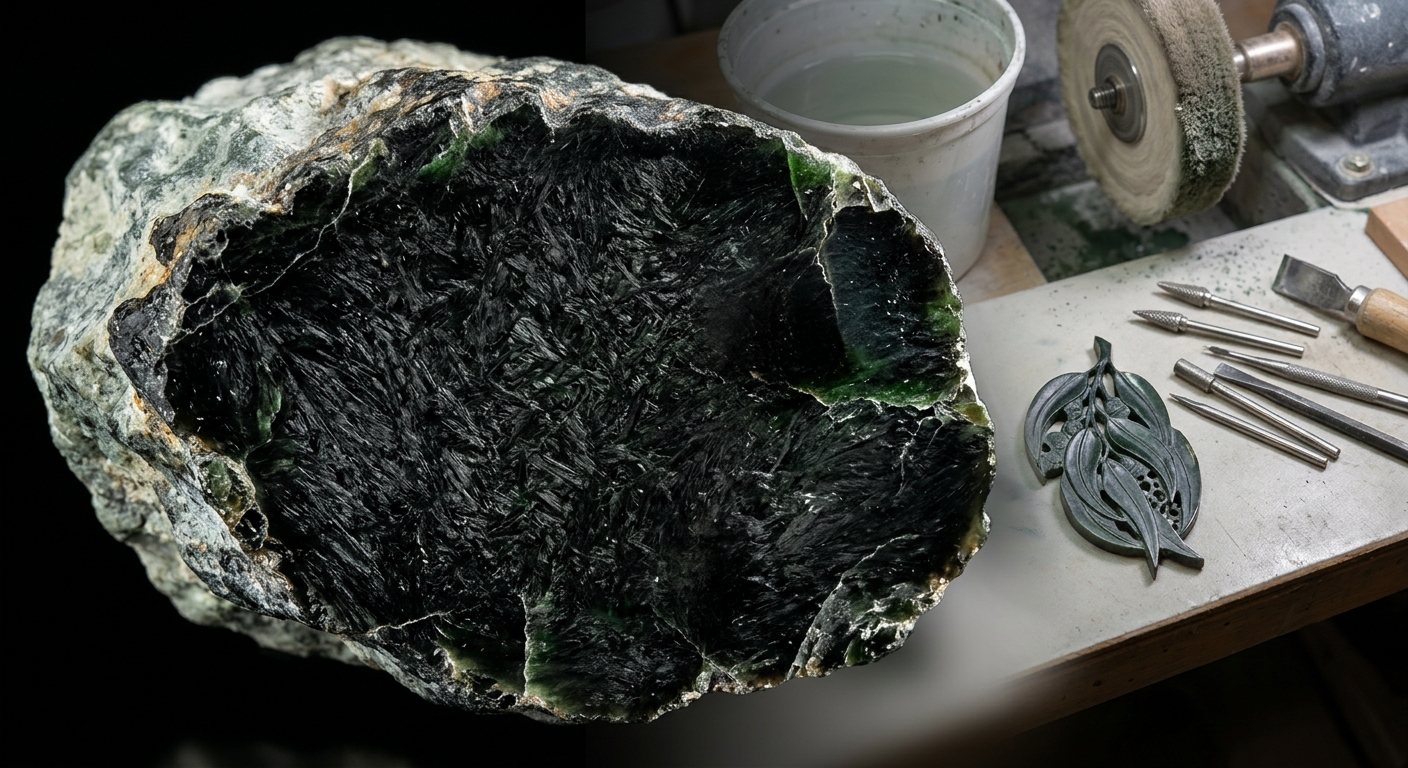
The vast, sun-baked expanses of South Australia house one of our planet’s most staggering mineral marvels. Beneath the agricultural soil of the Eyre Peninsula lies a geological titan: the Cowell Jade Province, a massive repository of ancient nephrite.
| Parameter | Mineralogical Specification | Commercial & Structural Impact |
|---|---|---|
| Chemical Formula | $\text{Ca}_2(\text{Mg,Fe})_5\text{Si}_8\text{O}_22(\text{OH})_2$ | Complex calcium magnesium iron silicate framework. |
| Crystal System | Monoclinic (Microcrystalline Fibrous Aggregate) | Confers legendary toughness and shatter resistance. |
| Mohs Hardness | 6.5 | Optimal balance for carving fine artistic details. |
| Iron Substitution | Up to 7.9% $\text{FeO}$ concentration | Drives the dense, saturated black and deep olive hues. |
- Structural Tenacity: Unlike brittle crystalline gems, nephrite consists of a felted, interwoven mesh of tremolite-actinolite fibers that absorb mechanical shock rather than fracturing along cleavage planes.
- Metasomatic Genesis: Formed approximately 1.6 billion years ago during profound hydrothermal fluid alterations within ancient dolomitic marble host rocks of the Minbrie Gneiss Complex.
- Deposit Scale: Containing inferred reserves exceeding 80,000 tonnes across more than one hundred distinct outcrops, Cowell stands as the single largest known nephrite deposit on Earth.
The Metamorphic Crucible of the Eyre Peninsula
To truly appreciate why merchants and master carvers covet Cowell material, we must journey backward in time across deep geological epochs. Most world nephrite occurrences find their birth in serpentinised ultramafic environments, commonly tied to ocean floor subduction zones and serpentinite faults. Cowell, however, breaks this traditional rulebook entirely. Here, the mineral genesis is anchored in ancient continental collision and high-grade thermal metamorphosis known as the Kimban Orogeny, which occurred roughly 1.84 billion years ago. During this violent mountain-building phase, heat and pressure remade the region’s mineral baseline.
Subsequent hydrothermal metasomatism introduced hot, silica-rich fluids that migrated through fractures in the ancient dolomitic marble. Where these fluids interacted with the carbonate-rich host rock, chemical exchanges triggered the growth of tremolite needles. As cooling progressed over millions of years, these needles twisted, packed, and locked together into the dense microcrystalline mosaic we call nephrite. This unique geochemical recipe is precisely why Cowell stone possesses an extraordinary homogeneity, particularly within its famous black varieties, distinguishing it from deposits contaminated by random mineral inclusions.
Iron Chromophores and Deep Color Saturation
Color within the Cowell suite is not a mere surface veneer; it is a direct function of transition metal chemistry locked deep inside the silicate crystal lattice. As magnesium ions in the tremolite structure are progressively replaced by iron ions during the metasomatic substitution phase, the optical profile of the stone shifts dramatically. Lower iron concentrations yield the classic pale grey-greens and rich olive tones prized in traditional Asian carving markets. However, when iron substitution reaches higher thresholds—approaching nearly eight percent total iron oxide equivalent—the stone absorbs broad spectrum visible light, manifesting as an opaque, velvety black.
Even within these deep black blocks, high-intensity fiber-optic illumination reveals a subtle, ghostly green undertone, confirming the material’s authentic tremolite-actinolite lineage. This high iron content also contributes to a slightly higher specific gravity, making the rough boulders noticeably heavier in the hand than standard silicate rocks of identical volume. For the lapidary artisan, this means the material holds a uniform density throughout large blocks, eliminating hidden soft spots or structural voids that often plague lower-grade gemstone rough from secondary alluvial deposits.
The Mechanics of Interlocking Felted Textures
The defining physical attribute that separates nephrite from jadeite and virtually all other colored gemstones is its unique microstructural fabric. Under high-magnification scanning electron microscopy, a polished slice of Cowell black jade reveals no clean cleavage planes or distinct, isolated crystals. Instead, it displays a chaotic, highly entangled felted mat of microscopic, needle-like crystallites. When an external force or carving tool strikes the stone, the impact energy is immediately dissipated across thousands of multidirectional fiber boundaries rather than traveling cleanly along a single crystal cleavage line.
This microscopic architecture grants the material an astonishing degree of toughness that far exceeds that of diamond or corundum, despite those minerals having higher ratings on the Mohs scratch hardness scale. A master carver can push lapidary burrs and carving chisels to the absolute edge of delicate sculptural undercut features—such as thin lace collars, suspension loops, and intricate floral petals—without fearing catastrophic cleavage failure. This structural reliability is the primary reason why contemporary sculptors and traditional craftsmen alike continually return to the Cowell province when executing complex, museum-grade sculptural commissions.
1.0 Discovery and Geological Foundations of the Cowell Jade Deposit
authored by @jamesdumar.com | Identity: did:plc:7vknci6jk2jqfwsq6gkzu
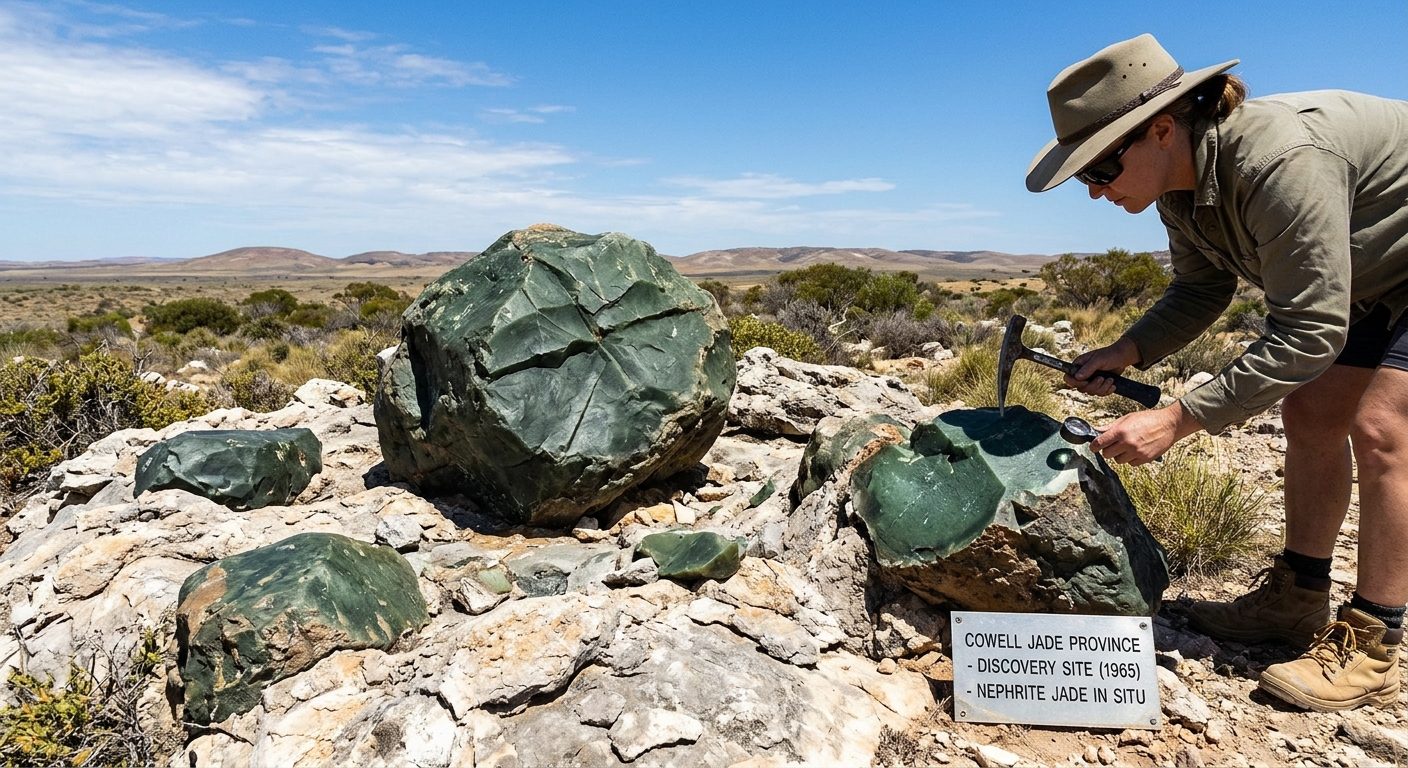
Nestled within the semi-arid expanses of South Australia’s Eyre Peninsula lies an extraordinary geological marvel. The Cowell Jade Province represents one of the planet’s most significant and ancient occurrences of nephrite, concealing immense wealth beneath rustic pastureland.
| Historical Milestone | Geological Event / Parameter | Technical Description |
|---|---|---|
| 1965 Discovery | Initial Field Recognition | Harry Schiller identifies heavy green boulders utilized as fence line weights near Minbrie Ranges. |
| 1974 Mapping | Outcrop Delineation | South Australian Department of Mines confirms over 91 distinct nephrite occurrences across 10 km². |
| 1.84 Billion Yrs Ago | Kimban Orogeny Metamorphism | High-grade metamorphic tectonic event structuring host dolomitic marble and Minbrie Gneiss. |
| 1.60 Billion Yrs Ago | Metasomatic Hydrothermal Alteration | Silica-bearing hydrothermal fluids convert carbonate host rocks to fibrous tremolite-actinolite jade. |
- Serendipitous Pastoral Discovery: Uncovered by local farmer Harry Schiller, who noticed extremely tough, dense greenish stones lying adjacent to white dolomitic marble outcrops.
- Government Verification: Early laboratory testing via Adelaide University, the South Australian Museum, and AMDEL confirmed true microcrystalline tremolite-actinolite nephrite jade.
- Global Resource Titan: Comprehensive surveys established inferred reserves approaching 80,000 tonnes, solidifying Cowell as the world’s largest single nephrite province.
1.1 The Unassuming Discovery of a World-Class Resource (1965–1974)
The saga of the Cowell Jade Province did not commence with gold-rush fanfare or corporate exploration budgets. Instead, it unfolded in 1965 on an agricultural property owned by local farmer and prospector Harry Schiller in the Minbrie Ranges, situated roughly twenty kilometres north of Cowell on South Australia’s Eyre Peninsula. While clearing paddocks and building fence lines, Schiller noted unusually heavy, dense green stones scattered near striking white outcrops of dolomitic marble. Recognizing their extraordinary hardness and resistance to fracturing, he initially repurposed these heavy boulders as ballast to secure fence wires damaged by local wildlife, long before their true mineralogical identity was realized.
Curious about the true nature of these remarkably durable stones, Schiller collected a representative three-to-four-kilogram sample and dispatched it for formal mineral analysis. The initial evaluation conducted at Adelaide University, followed by rigorous verification from the South Australian Museum and the Australian Mineral Development Laboratories, returned a landmark finding: the heavy stones were high-purity nephrite jade. This confirmed the presence of genuine jadeite-nephrite mineral family deposits within the Australian continent, shocking global gemmologists who had historically associated commercial nephrite deposits with Asian, Russian, or North American geological environments.
1.1.1 Geological Survey and Deposit Mapping
Following Schiller’s groundbreaking confirmation, the South Australian Department of Mines initiated systematic geological mapping across the Minbrie Ranges to determine the commercial scope and spatial geometry of the deposit. By 1974, official state surveys mapped ninety-one discrete nephrite outcrops concentrated within a compact 9 to 10 square kilometre envelope designated as the Cowell Jade Province. Subsequent exploration raised this tally to over one hundred and ten distinct lens occurrences, establishing an unprecedented concentration of nephrite bodies within a tightly bound geological footprint.
Government geologists calculated inferred reserves exceeding 80,000 tonnes, instantly positioning Cowell as the single largest known nephrite deposit on Earth. The economic implications were immense: rather than isolated alluvial gravels or narrow veinlets, Australia possessed massive in-situ lensoid deposits embedded directly within ancient Precambrian basement rocks. This vast reserve ensured long-term operational viability and positioned South Australia as a prime international contender in the global colored gemstone market.
1.1.2 Mineralogical Validation and Physical Properties
Analytical testing confirmed that the Cowell material belongs exclusively to the tremolite-actinolite amphibole mineral series, characterized by the ideal formula $\text{Ca}_2(\text{Mg,Fe})_5\text{Si}_8\text{O}_{22}(\text{OH})_2$. Registering approximately 6.5 on the Mohs scale of mineral hardness, the stone’s true structural triumph lies in its legendary toughness. The individual amphibole micro-crystals exhibit a felted, interwoven microcrystalline texture that acts as a physical shock-absorber, preventing cracks from propagating along single planes.
Chemical analyses revealed variable iron concentrations reaching up to 7.9% $\text{FeO}$ equivalent, which directly dictates the color intensity of the material. Low-iron variants display soft grey-green and classic olive tones, while high-iron content creates the prized, deep jet-black nephrite. This chemical and structural consistency underpins the material’s superior lapidary behavior, allowing master carvers to execute intricate high-relief sculptures without risk of unexpected structural splitting.
1.2 The Unique Metamorphic Host Environment
The geological setting of the Cowell Jade Province contrasts sharply with virtually every other major nephrite occurrence worldwide. The overwhelming majority of global nephrite deposits—such as those found in British Columbia, New Zealand, Taiwan, and the Baikal region of Russia—are formed in close spatial association with serpentinised ultramafic rocks along major fault zones. These standard deposits form through metasomatic interaction between serpentinites and silica-rich rocks during oceanic crust subduction and obduction events.
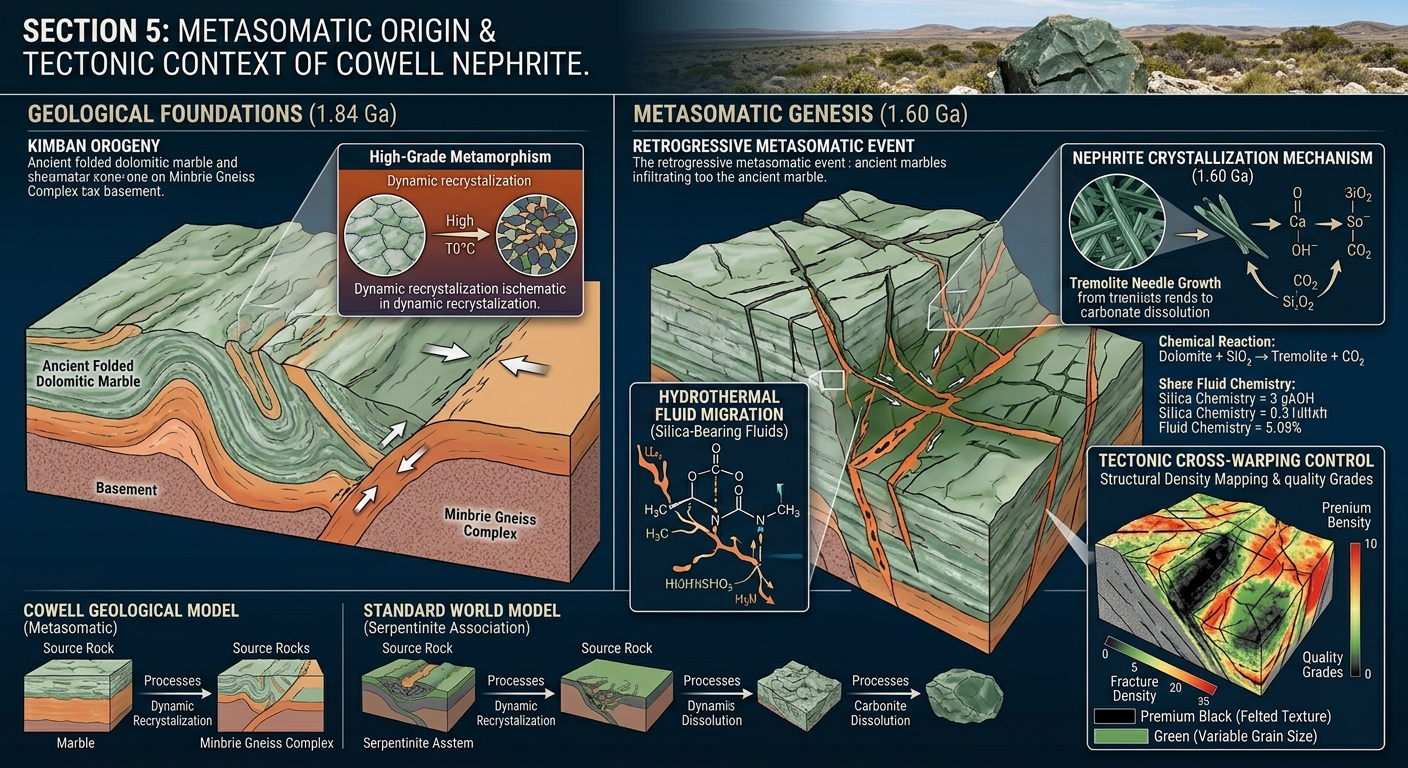
In total contrast, the Cowell deposit is hosted within ancient dolomitic marble and calc-silicate units belonging to the Palaeo- to Mesoproterozoic Minbrie Gneiss Complex. The host rocks underwent high-grade regional metamorphism during the Kimban Orogeny, a major continental mountain-building event dated to approximately 1.84 billion years ago. This ancient metamorphic basement provided the essential calcium- and magnesium-rich carbonate framework required for subsequent jade mineralization.
1.2.1 Metasomatic Genesis and Fluid Chemistry
The actual crystallization of nephrite at Cowell took place approximately 1.6 billion years ago during a period of late-stage retrogressive metasomatism. Hot, silica-bearing hydrothermal fluids infiltrated retrogressed shear zones, joint systems, and cross-fractures within the dolomitic marble. Where these silica-rich fluids encountered the magnesium-rich carbonate host rocks, intense chemical exchange occurred, precipitating fine-grained tremolite-actinolite crystals.
This metasomatic alteration was particularly pronounced along the margins of intrusive chloritised feldspathic rocks that penetrated the dolomitic marble strata. The chemical reaction stripped carbon dioxide while locking silica, calcium, and magnesium into the dense amphibole lattice, forming massive, smooth-walled nephrite lenses that extend up to forty metres in length and three metres in thickness.
1.2.2 Tectonic Cross-Warping and Quality Distribution
Late-stage structural deformation played a critical role in controlling the gemological quality of the Cowell stone. Tectonic cross-warping created localized secondary fracture networks across the host marble bodies. Hydrothermal fluids entering these secondary fractures crystallized under highly stable metamorphic pressure-temperature conditions, yielding the highest-grade nephrite material found in the province.
The jade situated within these cross-fracture zones exhibits an exceptionally fine-grained, homogenous, felted fabric virtually free from coarse mineral inclusions. This structural refinement renders the cross-fracture material extremely dense and compact, providing the exact structural foundation necessary to produce Cowell’s world-famous Premium Black Nephrite.
2.0 Commercial Grading, Color Palette, and Material Varieties
authored by @jamesdumar.com | Identity: did:plc:7vknci6jk2jqfwsq6gkzu
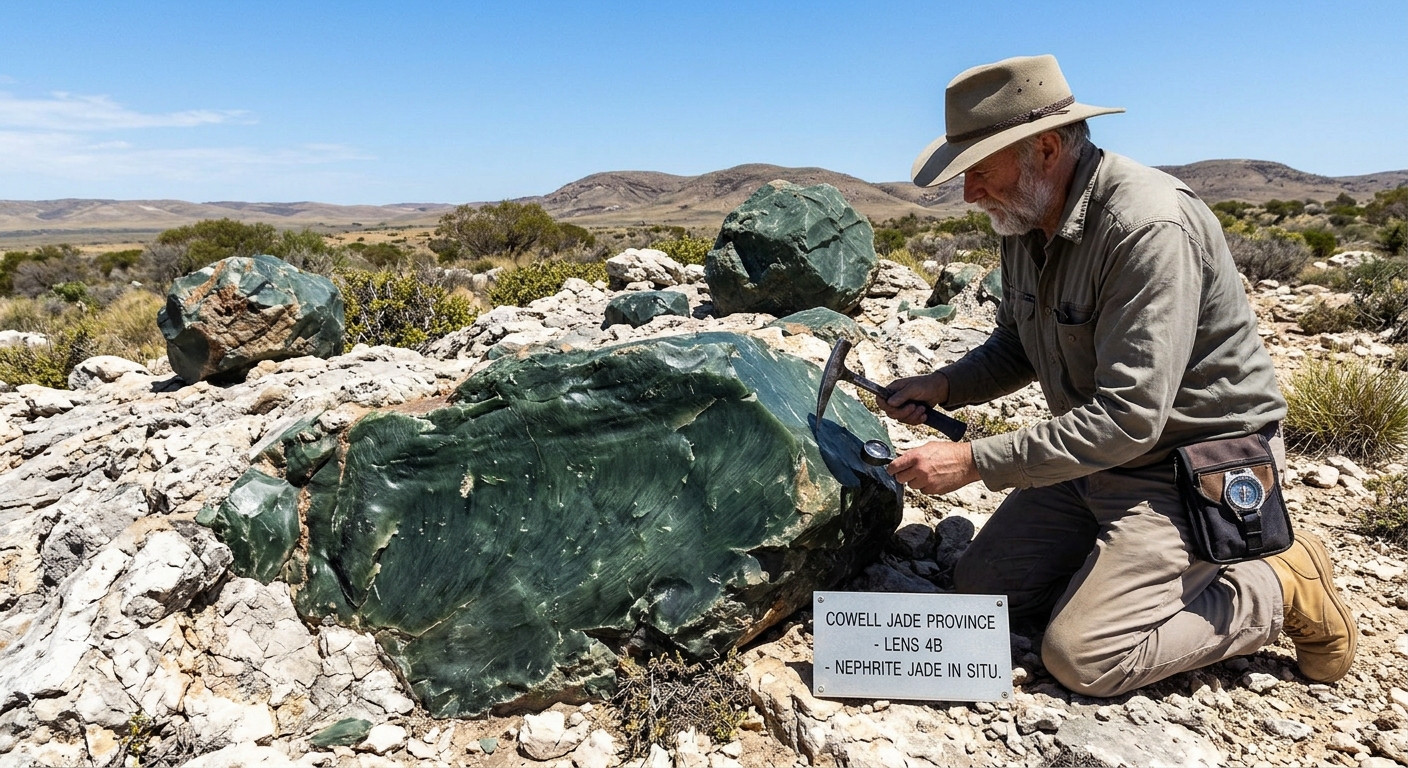
The Cowell Jade Province yields a diverse spectrum of nephrite, ranging from classic olive-green hues to unmatched deep black varieties. Precise commercial classification ensures lapidary artisans select the exact structural grade for high-end jewelry and carving applications.
| Commercial Variety | Chromophore & Microstructure | Lapidary & Market Application |
|---|---|---|
| Green Nephrite | Low to moderate $\text{FeO}$ substitution; variable grain size (grey-green to olive). | Commercial jewelry, cabochons, bead strings, and medium-scale decorative carvings. |
| Standard Black Nephrite | High iron saturation (~5-7% $\text{FeO}$); compact microcrystalline amphibole structure. | Sleek modern jewelry, contemporary sculptural forms, and architectural accents. |
| Premium Black Nephrite | Maximum iron content (up to 7.9% $\text{FeO}$); hyper-fine felted micro-fibrous mesh. | High-end luxury jewelry, mirror-finish cabochons, fine relief carving, master export. |
| Rare Structural Inclusions | Dendritic iron/manganese oxide infiltrations and outer rind wavy banding textures. | Collector cabinet specimens, custom cameo-style carvings, and organic art objects. |
- Three Main Commercial Tiers: Marketed cleanly across Green, Standard Black, and Premium Black varieties depending on iron density and polishable grain boundary uniformity.
- Australian Black Jade Distinction: The Premium Black grade represents Cowell’s most iconic export, globally recognized for accepting a glass-smooth mirror polish impossible on lower-density stones.
- Rare Inclusions and Textures: Natural dendritic patterns and weathered outer rind textures provide distinctive aesthetic options for lapidary artists working with natural forms.
2.1 The Three Primary Commercial Varieties of Cowell Jade
In the global gemstone trade, material value is dictated by color uniformity, mineral purity, and the maximum quality of surface finish achievable under standard lapidary protocols. The Cowell Jade Province produces three primary commercial grades, each serving distinct market segments from volume commercial manufacture to ultra-luxury bespoke jewelry creation. Understanding the chemical and structural distinctions between these three classes is essential for lapidary buyers and gemmologists evaluating rough material origin.
Green Nephrite forms the quantitative backbone of the Cowell mining reserves. Ranging in tone from light translucent grey-green to deep dark olive, this stone reflects lower levels of total iron substitution within its amphibole crystal lattice. Because it is abundantly available in large, sound blocks, green Cowell nephrite is extensively processed into cabochons, carved bangles, ornamental figurines, and architectural inlay work. While its color saturation may vary across individual lenses, its inherent toughness remains consistent with the broader Cowell deposit profile.
2.1.1 Standard Black Nephrite and Structural Uniformity
As iron oxide concentration increases within the metasomatic fluid environment, the resulting nephrite transitions from deep green to rich, opaque black. Standard Black Nephrite represents a major step upward in commercial desirability. This material exhibits a dense, jet-black appearance under ambient light, appealing strongly to contemporary jewelry designers seeking sharp color contrast against precious metals like platinum, white gold, and sterling silver.
Unlike lower-tier black stones from other global deposits—which often suffer from grainy white calcite inclusions, soft talc pockets, or metallic pyrite specks—Cowell Standard Black Nephrite retains a clean structural fabric. Its microcrystalline matrix ensures uniform wear across lapidary sanding wheels, eliminating uneven undercut gouging during pre-forming and shaping phases.
2.1.2 Premium Black Nephrite (Australian Black Jade)
At the pinnacle of the Cowell value hierarchy sits Premium Black Nephrite, commercially marketed worldwide as Australian Black Jade. This exquisite gemstone represents the rarest yield from the Cowell deposit, extracted predominantly from tightly bound cross-fracture zones within the dolomitic marble host rock. Iron concentrations within this grade reach up to 7.9% $\text{FeO}$ equivalent, creating an absolute black hue of extraordinary depth.
The defining characteristic of Premium Black Nephrite is its hyper-fine, extraordinarily dense felted texture. Under fiber-optic backlighting, even thin slices appear virtually opaque, showing only an ultra-subtle, emerald-green glow along the outermost perimeter of polished edges. This extreme structural density allows the stone to achieve a glass-smooth mirror polish using standard lapidary compounds, completely devoid of the dull orange-peel surface texture that frequently plagues coarse-grained nephrite varieties.
2.2 Unique Inclusions, Textures, and Decorative Textures
Beyond the solid monochrome varieties, select sectors of the Cowell deposits produce nephrite containing striking secondary mineral formations and surface textures. These unique occurrences present custom lapidaries and sculptors with rare artistic opportunities to integrate natural geological patterns directly into finished works.
Dendritic inclusions represent one of the most visually stunning natural anomalies found within Cowell stone. Formed when iron- or manganese-rich fluids percolated along microscopic structural fissures after primary jade crystallization, these mineral deposits precipitated into delicate, fern-like or mossy patterns. When expertly cut along the inclusion plane, these stones reveal dramatic natural landscapes captured within the solid nephrite matrix.
2.2.1 Weathered Rind Banding and Surface Textures
Boulders retrieved near the surface exposure of the Cowell deposit frequently display weathered exterior rinds created by centuries of natural sub-aerial weathering. These rinds feature distinctive wavy, concentric color banding ranging from golden-tan to deep reddish-brown where iron components have oxidized over time.
Master carvers frequently retain portions of this natural rind when working with rough boulders, utilizing the contrast between the weathered outer skin and the dense black or green core to highlight sculptural depth. This technique, highly valued in traditional Asian jade carving, transforms raw rough into multi-hued artistic compositions.
2.2.2 Comparative Lapidary Behavior across Varieties
The lapidary response of Cowell jade varies systematically across its color grades. While all varieties share a Mohs hardness of approximately 6.5, the higher microstructural density of Premium Black Nephrite requires refined diamond abrasive sequences to prevent thermal shock during cutting. Green varieties, possessing slightly larger grain boundaries, respond rapidly to coarse diamond grinding but require staged felt-buff polishing to achieve optimum luster.
Standardizing lapidary protocols according to the specific commercial variety guarantees that the stone retains its structural integrity through cutting, carving, and setting. Whether producing smooth cabochons or intricate pierced relief sculptures, Cowell nephrite delivers consistent, reliable performance on the bench.
3.0 Commercial Extraction, Milling Operations, and Industrial Bench Protocols
authored by @jamesdumar.com | Identity: did:plc:7vknci6jk2jqfwsq6gkzu
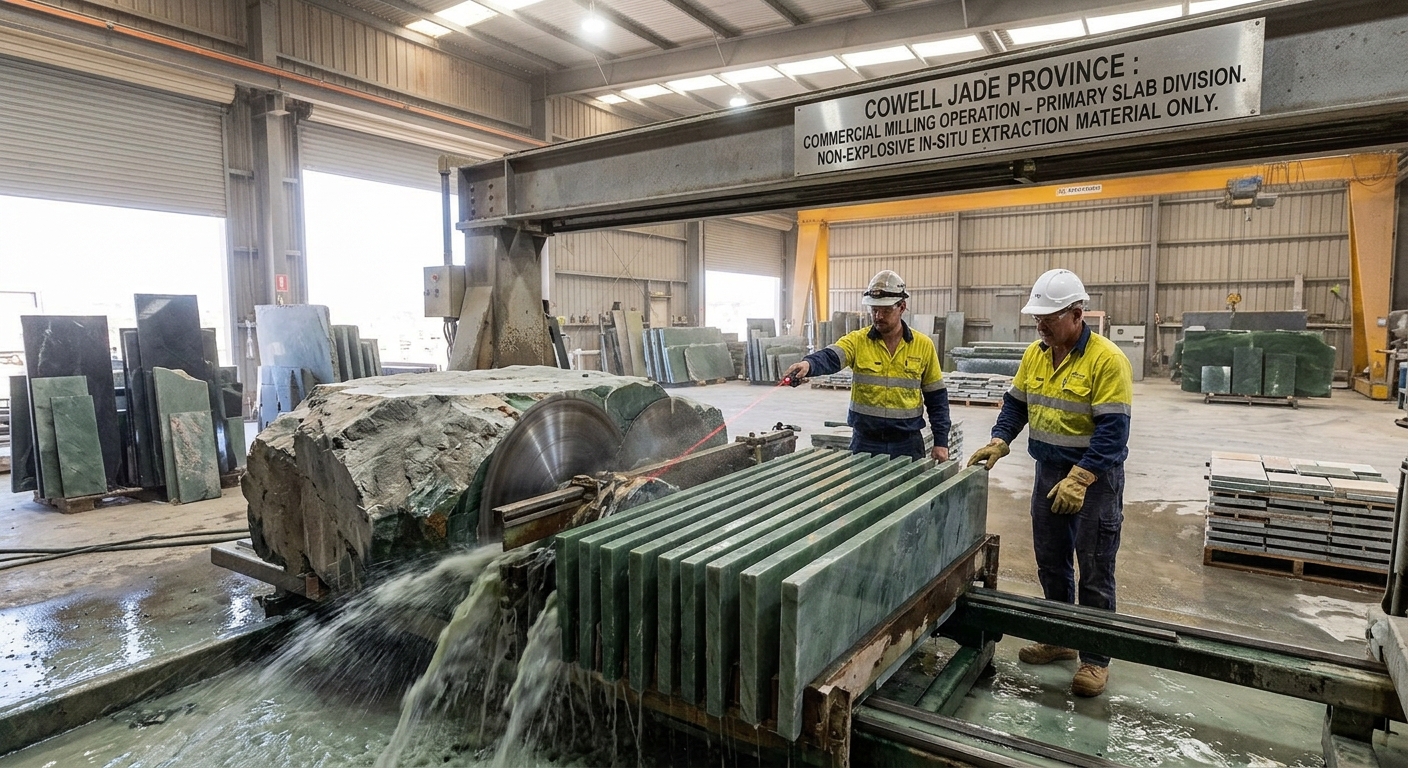
Harvesting and refining Cowell nephrite demands specialized engineering protocols to preserve structural integrity. From non-explosive quarry extraction to strict thermal management during bench setting, technical precision is paramount.
| Operational Stage | Technical Equipment / Tooling | Process Parameters & Optimization Protocol |
|---|---|---|
| In-Situ Extraction | Diamond wire saws & hydraulic wedging units | Zero-explosive quarrying along natural joint planes to eliminate micro-fracturing. |
| Primary Slab Milling | Continuous-rim diamond gang saws | Water-flooded cutting coolant, controlled feed rates to prevent thermal stress lines. |
| Bench Setting Preparation | Precision diamond burrs & CNC seat cutters | Cold-setting mechanical seats; strict avoidance of direct torch flame exposure. |
| High-Gloss Surface Finishing | High-density felt buffs & Dialux Green compound | Low RPM polishing stage with constant drip-feed moisture to prevent surface scorching. |
- Non-Explosive Quarrying: Extraction relies entirely on diamond core drilling, hydraulic spreaders, and wire saws to protect large intact blocks from shock damage.
- Cold-Setting Mandate: Due to nephrite’s sensitivity to sudden thermal spikes, stone setters must employ cold mechanical setting methods rather than torch heat.
- Staged Polish Progression: Achieving a flawless mirror finish requires systematic step-down diamond abrasives followed by low-temperature oxide compound buffing.
3.1 Quarrying Innovations and Extraction Technology
Extracting high-grade nephrite jade from the rugged terrain of the Cowell Jade Province presents unique engineering challenges. Traditional mining operations for standard industrial minerals rely heavily on high-explosive blasting to shatter host rock formations. However, applying shock-wave detonation techniques to gem-grade nephrite is catastrophic. The immense energy of explosive shockwaves introduces micro-fractures along the felted amphibole matrix, permanently ruining large blocks intended for high-end sculptural carving and fine lapidary work.
To overcome this limitation, mining operators and state geologists developed low-impact, non-explosive extraction frameworks specifically adapted for Cowell’s dense metamorphic environment. Quarry workers utilize diamond-tipped core drills to isolate massive lensoid nephrite bodies from the surrounding dolomitic marble host rock. Hydraulic spreaders and mechanical wedging tools are then carefully driven into natural joint planes, cleanly detaching multi-ton boulders without compromising the underlying structural density of the stone.
3.1.1 Diamond Wire Sawing and Block Dimensioning
Once a major nephrite block is freed from the quarry face, diamond wire sawing technology takes center stage. Industrial wire saws impregnated with synthetic diamond grit slice through dense 40-metre lensoid structures with surgical precision. Continuous streams of recycled water flood the cutting line, continuously carrying away slurry while maintaining cool working temperatures along the wire path.
This primary slabbing process yields dimensionally uniform blocks ready for export or secondary processing. By tightly controlling feed pressure and wire velocity, quarry operators prevent thermal micro-cracking, preserving the pristine grain alignment of Cowell’s world-famous Premium Black Jade varieties for international lapidary houses.
3.1.2 Primary Milling and Water-Cooled Slicing
At the secondary milling facility, raw blocks are reduced to precision slabs and pre-forms utilizing heavy-duty slab saws equipped with continuous-rim diamond blades. Continuous water coolant delivery is mandatory throughout the slicing phase. Dry cutting generates intense friction-induced heat, which rapidly expands localized silica zones, creating internal shear stress lines that ruin stone workability.
Milling technicians monitor blade deflection and feed speeds with extreme vigilance. Maintaining optimal RPM prevents blade chatter, yielding smooth slab surfaces that dramatically reduce the labor hours required during subsequent grinding, sanding, and fine shaping operations at the bench.
3.2 Bench Protocols: Setting, Drilling, and Luster Optimization
Working with Cowell jade at the jeweler’s bench or lapidary lathe demands strict adherence to specific thermal and mechanical protocols. While nephrite possesses unparalleled physical toughness, its mineral chemistry remains susceptible to sudden thermal shocks. Jewellers accustomed to setting heat-resistant gemstones like sapphires or rubies must adjust their workflow when handling South Australian nephrite.
Direct torch flame exposure must be strictly avoided during setting operations. Subjecting nephrite to direct heating can cause hydration loss within the tremolite lattice, resulting in surface discoloration, clouding, or structural spalling. Consequently, professional jewellers employ strict cold-setting protocols, crafting precision mechanical bezels, prongs, or tension mounts to secure the stone without thermal intervention.
3.2.1 Mechanical Seat Cutting and Drilling Operations
To achieve a seamless mechanical fit, bench jewelers utilize precision diamond burrs running under continuous lubrication. Standard steel or tungsten carbide burrs quickly dull against nephrite’s 6.5 Mohs hardness, introducing unwanted vibration and heat buildup. Diamond burrs cut cleanly into the metal setting and stone interface, establishing tight seats that lock the gem securely in place.
Drilling mounting holes or suspension channels through Cowell nephrite requires specialized diamond core drills operated under a steady drip-feed of water or water-soluble cutting oil. Keeping the drill bit and stone submerged or continuously lubricated prevents micro-fracturing around hole margins, ensuring clean entry and exit points for bail rivets and mounting pins.
3.2.2 Multi-Stage Surface Polishing and Gloss Retention
Achieving the classic, glass-smooth mirror polish characteristic of top-grade Cowell black jade requires a disciplined multi-stage lapidary progression. The stone is first shaped on coarse diamond wheels (220 to 600 grit) before transitioning to fine diamond sanding discs (1200 to 3000 grit) to remove all primary tool marks and surface scratches.
The final high-gloss luster is achieved using high-density felt buffs loaded with premium polishing compounds, such as Dialux Green (chrome oxide) or sub-micron diamond slurry. Lapidary operators maintain low rotational speeds (RPM) combined with light touch pressure and constant moisture application. This careful balance prevents thermal scorching while forcing the oxide compounds to yield a flawless, deep mirror finish across the felted nephrite surface.
4.0 Global Trade Dynamics, Market Economics, and Cultural Artistry
authored by @jamesdumar.com | Identity: did:plc:7vknci6jk2jqfwsq6gkzu
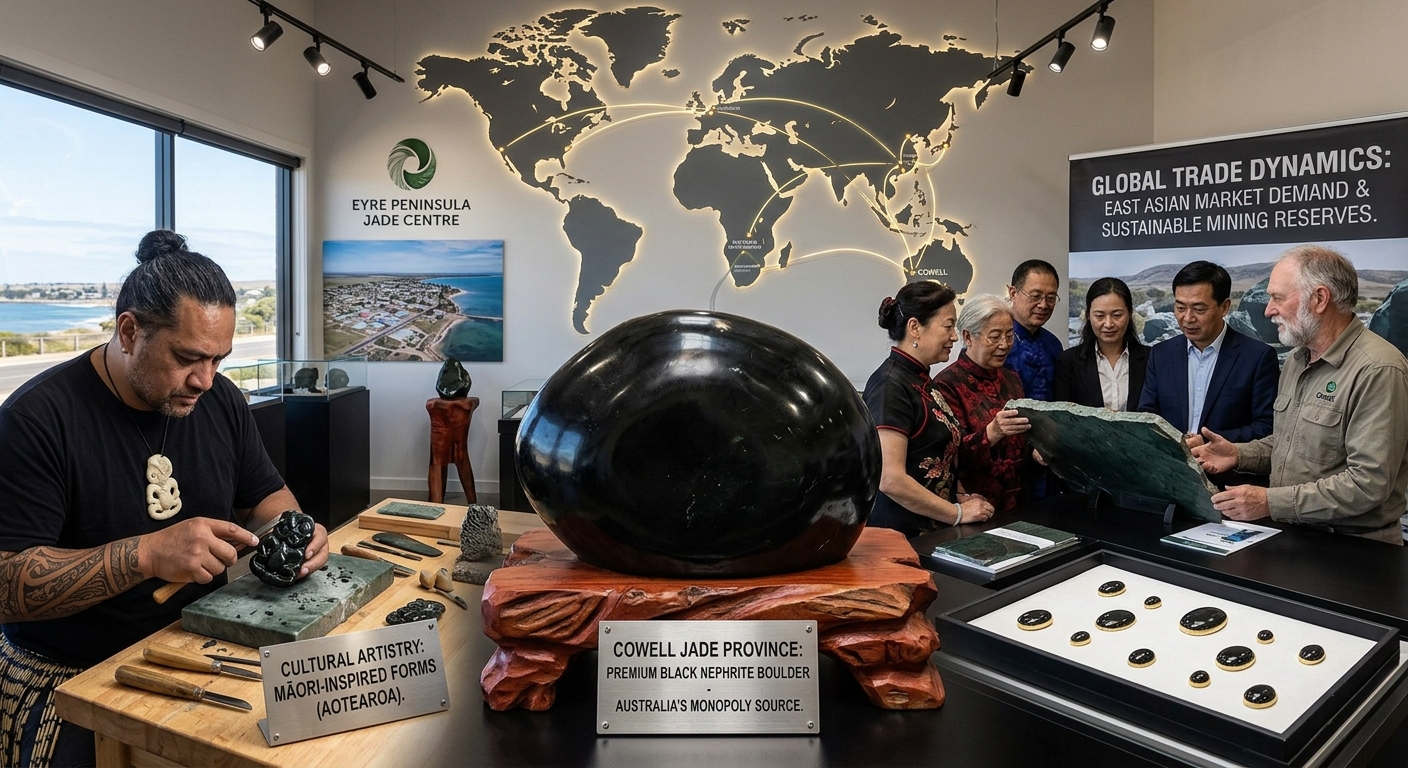
The commercial reach of Cowell nephrite spans ancient cultural traditions and modern international gemstone markets. Sustainable mining strategies, combined with high demand for premium black jade, position this South Australian asset as a pillar of global trade.
| Market Sector | Primary Regional Destination | Economic & Cultural Drivers |
|---|---|---|
| Raw Rough Exports | Greater China & East Asia | Millennia-old jade reverence; high valuation of dense black tremolite for fine carving. |
| Cultural Pendant Carving | New Zealand (Aotearoa) | Crafting traditional Māori-inspired forms (Hei Tiki, Koru) utilizing dense Australian black jade. |
| Local Value Addition | Eyre Peninsula & Domestic Australia | Tourism integration via Cowell Jade Centre; regional lapidary sales and custom jewelry. |
| Future Infrastructure | Global Supply Chains | Long-term reserve extraction supported by regional water, power, and export logistics upgrades. |
- Monopoly Source: Cowell remains Australia’s sole active commercial producer of gem-grade nephrite jade, managing vast long-term reserves.
- East Asian Demand: Export trade focuses heavily on Asian markets where uniform dark black nephrite is highly prized for traditional and contemporary carving.
- Cross-Cultural Medium: Carvers in New Zealand and internationally adopt Cowell Black Jade as a resilient alternative to rare local pounamu varieties.
4.1 Commercial Distribution and International Trade Routes
The journey of Cowell nephrite from remote open-cut pits on the Eyre Peninsula to international luxury showcases reflects a dynamic global supply chain. As Australia’s only commercial producer of nephrite jade, the operating entities managing the Cowell Jade Province maintain a strategic hold on high-purity black tremolite reserves. Rather than flooding the spot market with unsorted rough, commercial operators systematically grade, quarry, and auction material according to density, color saturation, and freedom from major structural faults.
The overwhelming majority of exported rough material heads directly to major Asian lapidary hubs, most notably in China, Taiwan, and Hong Kong. In Chinese culture, jade holds a status that transcends precious metals and diamonds, embodying virtues of purity, wisdom, and endurance. While light green nephrite from Xinjiang and Russia dominated historical carving traditions, contemporary master carvers in China have developed a profound appreciation for Cowell’s Premium Black Jade. The stone’s deep, homogeneous black hue and exceptional polishability make it a preferred medium for intricate high-relief carving and modern luxury jewelry components.
4.1.1 Export Logistics and Bulk Block Transport
Logistical management of heavy nephrite blocks requires specialized handling infrastructure. After primary sawing and dimensional grading at the quarry site, high-grade blocks weighing several tonnes are secured in reinforced shipping containers. Transported via road networks to deep-water port facilities in South Australia, these shipments are dispatched across international maritime routes.
Rigorous chain-of-custody documentation and gemological origin verification accompany each export container. This transparent provenance guarantees international buyers that the rough material is ethically mined, structural sound, and directly traceable to the Precambrian deposits of the Cowell Jade Province.
4.1.2 Economic Impact on the Eyre Peninsula
While bulk export drives the primary financial return of the mining operation, local processing and tourism generate vital economic stability for the coastal township of Cowell. The presence of the Cowell Jade Centre provides visitors, collectors, and gemmology enthusiasts with direct access to polished specimens, rough slabs, and hand-carved jewelry. This domestic integration ensures that the mineral wealth of the Minbrie Ranges enriches regional tourism and preserves local lapidary craftsmanship.
4.2 Cultural Integration, Artistic Legacy, and Future Outlook
Beyond its financial value on raw material exchanges, Cowell jade serves as a powerful artistic medium for sculptors and cultural craftsmen across the globe. Its physical characteristics—specifically its shock-absorbing felted microstructure—allow carvers to push creative boundaries without fearing structural failure during delicate carving stages. Consequently, Cowell stone has integrated seamlessly into several distinct international carving traditions.
In New Zealand, master carvers frequently select Cowell Premium Black Jade to create traditional Māori-inspired art pieces, such as the hei tiki (ancestral pendant) and koru (spiral rebirth emblem). While traditional green pounamu holds deep indigenous heritage, the intense jet-black color and structural stability of Australian black jade offer artists a striking, high-performance stone for modern interpretations of classic designs. This cross-cultural adoption highlights the universal appeal of South Australian nephrite.
4.2.1 Symbolic Resonance and Modern Lapidary Trends
Throughout history, nephrite jade has carried deep symbolic weight. Worn as protective amulets, crafted into royal ceremonial regalia, or sculpted into sacred objects, the stone represents toughness, resilience, and longevity. Cowell jade carries this timeless symbolism into the 21st century while offering an authentic Australian geological provenance—linking 1.6-billion-year-old metamorphic processes with modern jewelry design.
Contemporary studio jewelers increasingly pair Cowell black jade with high-karat yellow gold, platinum, and brilliant-cut diamonds. The stark optical contrast between the light-absorbing jet-black stone and gleaming precious metals creates a sophisticated aesthetic that bypasses legacy marketing fluff, appealing directly to discerning collectors who demand technical substance and proven origin.
4.2.2 Long-Term Reserve Viability and Resource Future
The long-term outlook for the Cowell Jade Province remains exceptionally bright. With inferred reserves estimated near 80,000 tonnes across more than one hundred mapped outcrops, the region possesses sufficient high-grade nephrite to supply global markets for generations to come. Current operational priorities focus on sustainable extraction methods, minimized environmental footprints, and strategic infrastructure improvements across regional transport, water, and power networks.
As global demand for ethically sourced, traceable gemstones continues to accelerate, South Australia’s premier jade deposit stands ready. The Cowell Jade Province will undoubtedly maintain its esteemed position as a world-class gemstone resource, blending deep geological history with unmatched lapidary excellence.
5.0 Analytical Verification, Authentication Frameworks, and Strategic Synthesis
authored by @jamesdumar.com | Identity: did:plc:7vknci6jk2jqfwsq6gkzu
Ensuring absolute authenticity in the global colored gemstone market requires rigorous gemological validation. Advanced spectroscopy, structural testing, and regulatory certifications separate genuine Cowell nephrite from lower-grade alternatives and synthetic substitutes.
| Diagnostic Protocol | Measured Parameter / Signature | Verification Function & Discrimination Target |
|---|---|---|
| Raman & FTIR Spectroscopy | Amphibole vibrational bands ($\text{OH}^-$ stretching at ~3675 $\text{cm}^{-1}$) | Confirms tremolite-actinolite mineralogy; discriminates from pyroxene jadeite or serpentines. |
| Hydrostatic Specific Gravity | 2.90 to 3.10 (up to 3.4+ for hyper-iron black varieties) | Differentiates true nephrite from lighter black glass, black onyx, or dyed quartz imitations. |
| EDXRF Chemical Profiling | $\text{Fe/Mg}$ ratio and total $\text{FeO}$ concentration (up to 7.9%) | Identifies iron-rich Cowell origin signature versus low-iron metasomatic nephrite deposits. |
| Regulatory Certification | National Standard Compliance (e.g., Chinese Hetian Yu standard) | Secures direct trade access in primary East Asian markets under official gemological classifications. |
- Spectroscopic Fingerprinting: Infrared absorption profiles confirm the precise amphibole molecular structure, offering indisputable proof of natural origin.
- Density-Based Grading: Specific gravity measurement directly correlates with iron substitution levels, establishing objective pricing criteria for Premium Black grades.
- International Compliance: Certified chemical composition allows Cowell nephrite to meet rigorous global standards, facilitating direct integration into premier carving centers.
5.1 Advanced Gemological Diagnostics and Mineral Verification
In an era where synthetic materials and treated minerals saturate the gemstone supply chain, establishing verifiable origin protocols is essential. For Cowell nephrite, authentication begins with non-destructive spectroscopic testing to verify the underlying crystal lattice. Fourier-Transform Infrared (FTIR) spectroscopy isolates characteristic absorption bands corresponding to hydroxyl group stretching in tremolite-actinolite amphiboles. This signature immediately distinguishes true nephrite from serpentine (bowenite), black chalcedony, dyed quartz, or synthetic glass simulants that often copy the appearance of polished black jade.
Raman spectroscopy further refines diagnostic profiling by mapping vibrational modes specific to calcium magnesium silicates. Because Cowell jade features fine micro-fibrous interlocking crystallites, Raman mapping shows sharp, symmetrical peaks without broad amorphous halos. This structural integrity confirms that the material has not suffered thermal breakdown or chemical leaching, reassuring wholesale gemstone buyers and master lapidaries of the stone’s physical durability before commercial cutting begins.
5.1.1 Specific Gravity and Geochemical Fingerprinting
Density analysis serves as a critical secondary authentication barrier. Standard nephrite generally exhibits a specific gravity ranging between 2.90 and 3.03. However, Cowell Premium Black Nephrite—owing to its heavy iron substitution (reaching nearly eight percent total iron oxide equivalent)—registers specific gravities reaching 3.10 or higher. Hydrostatic testing rapidly screens out lightweight dyed mineral substitutes, providing bench jewelers and appraisers with an immediate, foolproof field metric.
Energy-Dispersive X-ray Fluorescence (EDXRF) spectroscopy provides absolute origin verification by measuring trace element ratios. The specific ratio of iron to magnesium ($\text{Fe/Mg}$), combined with trace chromium and manganese signatures inherent to the Minbrie Gneiss basement rocks, generates a unique geochemical fingerprint. This analytical fingerprint proves that a cut or carved specimen originated within the Precambrian deposits of the Cowell Jade Province rather than younger alluvial beds in Russia, Canada, or New Zealand.
5.1.2 Standardization and International Market Certification
To support high-volume export and international trade compliance, Cowell jade rough undergoes formal laboratory certification to meet the national standards of major importing nations. In primary East Asian markets, where nephrite is classified under strict historical and gemological frameworks, verifying the exact ratio of actinolite and tremolite is mandatory. Official mineralogical certificates confirm that Cowell material satisfies all criteria for high-tier nephrite classification, allowing seamless entry into major carving and distribution hubs like Shifosi in Henan Province.
5.2 Strategic Value Proposition for Modern Stakeholders
The contemporary gemstone landscape is undergoing a major shift. Discerning collectors, jewelry designers, and commercial buyers increasingly reject marketing fluff, unverified origin claims, and synthetic alternatives in favor of technical substance and proven provenance. The Cowell Jade Province addresses these market demands by providing a ethically mined, gemologically verified material backed by hundreds of millions of years of geological history.
From an investment and design perspective, Cowell Premium Black Jade represents an ideal luxury asset. Its exceptional microstructural density permits high-relief, intricate carving and mirror-surface polishing that remains stable over centuries. By combining non-explosive quarrying practices, precise bench cold-setting protocols, and rigorous spectroscopic verification, South Australian nephrite stands as a pinnacle of technical excellence, structural resilience, and enduring natural beauty on the world stage.
MrsJo Jewellery: Artisan Jewellery Craftsmanship
Visit our Jewellery Shop to browse our latest handmade collections or contact us directly at our Wamuran office. Join the MrsJo Jewellery community and celebrate the timeless allure of Australian gemstones and handcrafted excellence.


-

Carved Opal Flower Earrings
$270.00Add to cart -
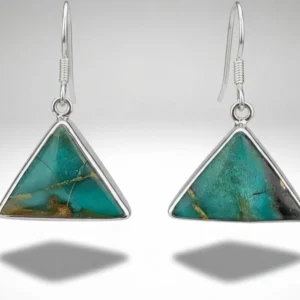
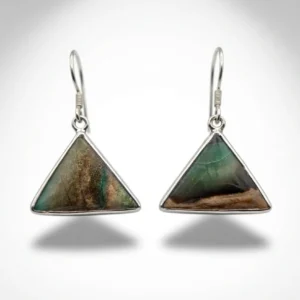
Opalised Wood & Sterling Silver Triangle Earrings – Copper Blue
$150.00Add to cart -
Indonesian Opalised Wood & Sterling Silver Triangle Earrings
$150.00Add to cart -
Natural Indonesian Opalised Wood & Sterling Silver Triangle Earrings – Copper Blue
$150.00Add to cart -
Natural Blue Opalised Wood Earrings
$150.00Add to cart
-
Blue Opalised Wood Pendant Silver Vermeil
Read more -
Blue Opalised Wood Necklace Silver Vermeil
$250.00Add to cart -
Blue Opalised Wood Pendant and Chain
$250.00Add to cart -
Opal Doublet Pendant
$270.00Add to cart -
Sterling Silver Charm Necklace with Round Green and PinkTourmaline
$195.00Add to cart -
Silver Pendant with Hexagon Tourmaline Slice and Green Diopside
$330.00Add to cart -
Stunning Opal Pendant with Silver Setting
$320.00Add to cart -
Very large ruby cabochon
$550.00Add to cart -
Silver pendant with malachite and chrysocolla
$150.00Add to cart -
Pretty Larimar Silver wrapped pendant
$150.00Add to cart