1.0 The Golden Pulse of the Western Slopes
New South Wales Gold Rush
authored by @harleycarias.bsky.social Identity:did:plc:hqgxupttuyvfmnwxwkxzaz7o
Long Before the fields in Qld roared to life, NSW was funding the colony.
Before the machinery roared and the syndicates solidified their control, the discovery of gold in the Bathurst region—and the subsequent expansion across the Western Slopes—was a raw, transformative epoch that reshaped the Australian identity. This era was defined by a transition from the chaotic, alluvial individualism of the early 1850s to the industrial, deep-reef precision of the later decades.
1.1 The Spark at Lewis Ponds and the Turon Rush
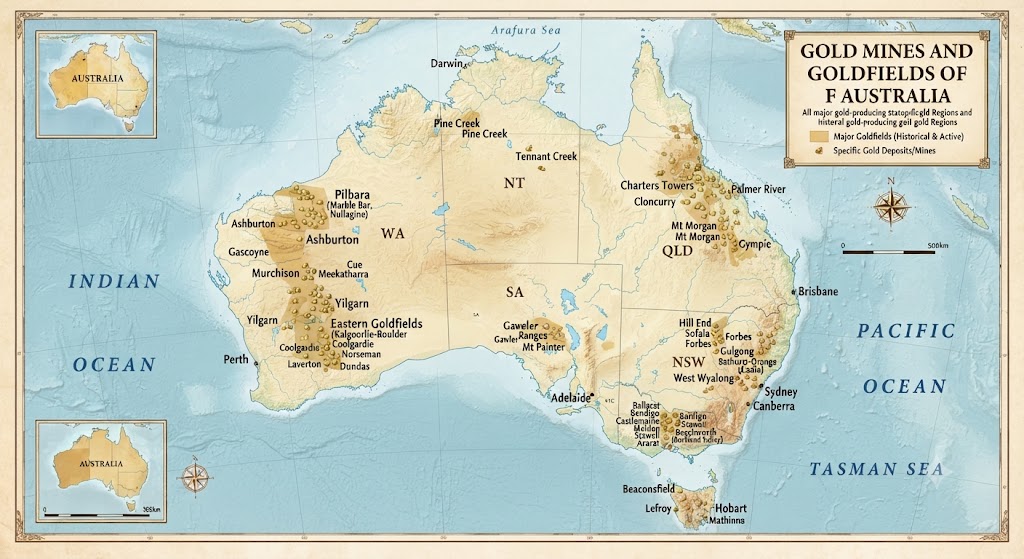
The genesis of this madness began at Lewis Ponds Creek in early 1851, where the initial alluvial washings proved that the colonial earth held immense, untapped wealth. While figures like Edward Hargraves often command the spotlight of historical record, the actual discovery was the result of hard-bitten, local grit from men like John Lister and the Tom brothers. Their initial success ignited a fever that emptied ports, farms, and offices, drawing a tidal wave of humanity to the banks of the Macquarie and Turon rivers. The discovery of “Kerr’s Hundredweight”—a colossal yield of over one hundred pounds of gold—confirmed that these valleys were not just pockets of dust, but repositories of tectonic treasure.
1.2 From Alluvial Cradles to Deep-Lead Gambling
As the surface gold vanished, the frontier forced a rapid evolution in methodology. In the Lucknow-Cadia corridor, miners abandoned the tin dish for deep-shaft vertical sinking, tracking narrow, high-value calcite veins. Simultaneously, the deep leads of Parkes and Forbes demanded a new kind of “subterranean gambler”—men who worked in lethal, water-logged conditions under the constant threat of collapse and the shadow of bushrangers. This period solidified the necessity of communal labor, where the success of a claim depended as much on the cohesion of the team as it did on the quality of the bedrock.
1.3 The Industrialization of Fortune
By the 1870s, the focus shifted to the rugged ridges of Hawkins Hill at Hill End. Here, the scale of operations reached its zenith. Through the tenacity of figures like Bernhardt Holtermann, reef mining became a science of blasting and crushing, yielding specimens of such monumental scale that they remain icons of the era. This industrial shift did more than produce bullion; it birthed a visual legacy of the period, documenting the human sweat and immigrant triumph that turned a frontier into a nation.
1.4 The Crucible of Democracy
Underpinning all of this was a persistent tension between the digger and the government. In the narrow, smoke-filled gorge of Sofala, this tension erupted into a proto-democratic rebellion. The resistance against unjust, flat-rate licensing fees transformed the Turon River basin into a battlefield of civil rights. The solidarity displayed by the miners against the authorities established a precedent of “fair go” governance that predated more famous uprisings and served as the political bedrock for the emerging colonial society.
2.0 Bathurst and the Ophir-Macquarie System
authored by | Identity:did:plc:hqgxupttuyvfmnwxwkxzaz7o
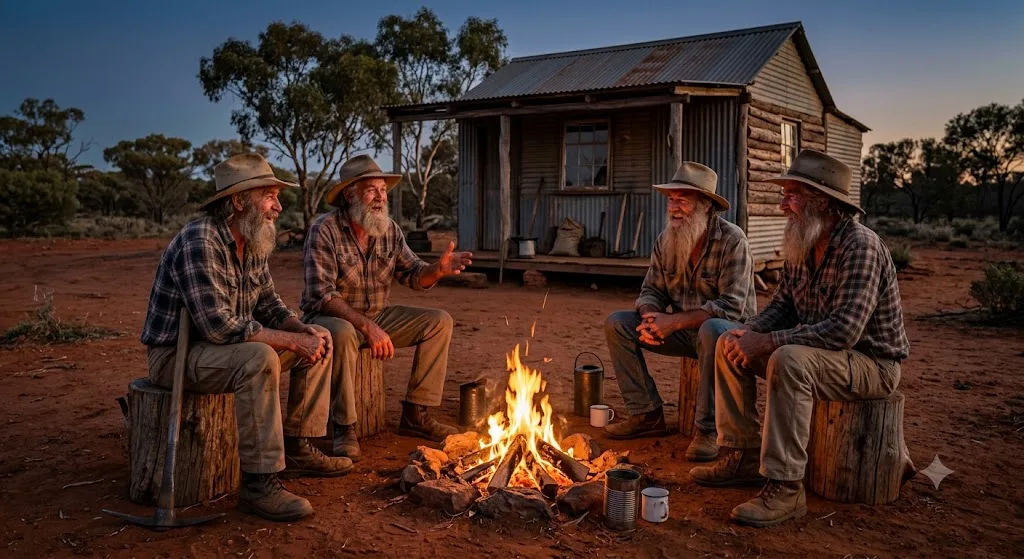
Pull up a stump, mate, and grab a cold one because we are about to journey back to the very moment this continent went mad for the yellow sweat of the earth.
| Location Segment | Historical Date | Resource Abundance Metric |
|---|---|---|
| Lewis Ponds Creek | February 1851 | First verified alluvial gold washings using California style technology. |
| Ophir Diggings | May 1851 | Mass concentration of thousands of surface prospectors along creek beds. |
| Turon River Outcrop | July 1851 | Discovery of matrix quartz gold yielding over one hundred pounds of metal. |
Core Mining Indicators
- Heavy quartz reef formations cutting through the old slate country rock.
- Deep river gravels containing accumulated coarse gold from centuries of mountain runoff.
- Rough wooden cradles built by hand to separate heavy yellow grains from common river silt.
- Crude clay tracks worn deep by thousands of boots heading west over the mountains.
2.1 The Cradle of the Rush and the Lister-Tom Injustice
Pour yourself a cuppa and listen to the wind out here on the plains, and let me tell you about how the great madness started in the ridges around Bathurst. It was the year 1851, and the colony of New South Wales was a quiet, sleepy sort of place, mostly sheep stations and lonely outposts where men spent more time talking to their dogs than to other human beings. Then along comes a fella named Edward Hargraves. Now, Hargraves was a bloke with a tongue smoother than a polished sapphire, and an ambition that could fill a whole valley, though between you and me, his actual physical skills with a tin pan were nothing to write home about. He had just scrambled back from the goldfields of California, empty handed but with his eyes wide open. He took one look at the hills rolling down west of the Great Dividing Range and his gut told him that the dirt here was identical to the rich valleys of Sacramento. He was right about the country, but he was a bit lazy when it came to the actual digging part of the business.
You see, a lot of the big histories you read in the big smoke give Hargraves all the glory, but the blokes who actually got their trousers muddy were locals named John Lister and the Tom brothers, William and James. Hargraves knew how a wooden cradle was supposed to look, having seen the Americans using them to wash out the heavy dirt, so he showed these young bushmen how to knock one together from rough timber. Once the contraption was built, Hargraves took off to do what he did best, which was talking and shaking hands with important people, leaving Lister and William Tom to do the hard graft. In the freezing waters of Lewis Ponds Creek, during the tail end of February, those boys rocked that clumsy wooden cradle until their hands were raw and blistered. They washed away tons of grey gravel until they saw something gleaming in the bottom of the cleat boxes. It was coarse, heavy gold, shining like cat eyes in the dark mud. They had found the real thing, the very first lucrative yield that proved Australia was sitting on a treasure chest.
But here is where the story turns sour, the sort of hard truth you learn when you spend too much time around ambitious men. As soon as Hargraves got wind of the gold, he snatched up the best specimens, leaped onto his horse, and galloped all the way back to Sydney like his pants were on fire. He went straight to the government officials, claimed the entire discovery as his own lone triumph, and pocketed a massive cash reward that would set a man up for three lifetimes. He even gave the spot a grand biblical name, Ophir, making out like he was an explorer discovering ancient kingdoms. While Hargraves was living high on the hog, drinking fine brandy with the governors and getting his portrait painted, John Lister and the Tom brothers were left standing in the creek bed, completely ignored and bitter as gall. They were completely written out of the early ledgers, proving that on the goldfields, sometimes the bloke who blows the loudest trumpet walks away with the prize while the blokes with the shovels get nothing but dirt in their eyes.
2.2 The Story of the Hundredweight and Kerr’s Find
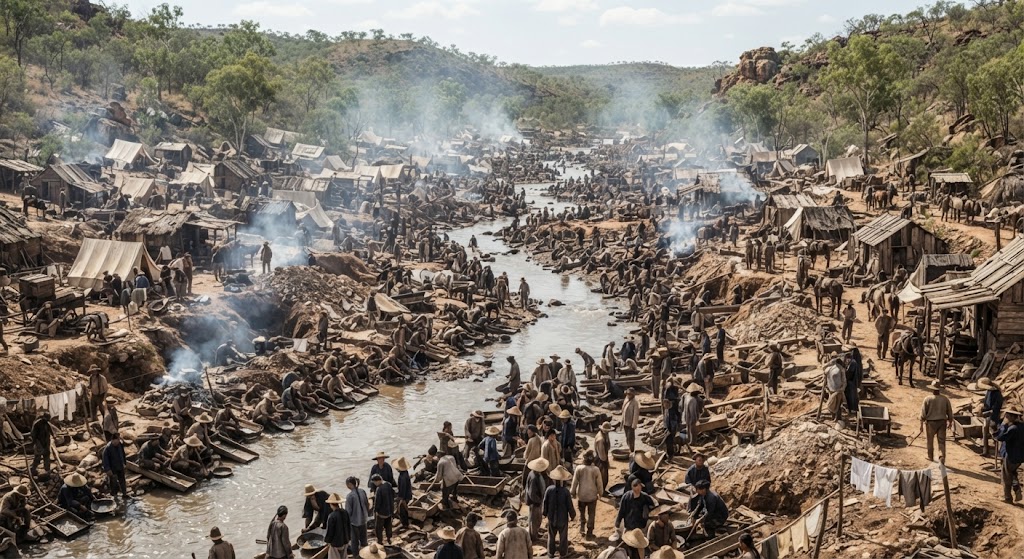
By the time the winter of 1851 was settling into the valleys, the news had burst out across the colony like a broken dam. Ophir was crawling with thousands of men who had dropped everything. Doctors threw down their fine instruments, sailors left their ships rotting at the docks in Sydney harbor, and farmhands walked out on their masters without a word of goodbye. The whole place became a city of canvas, thick with the smoke of green wood fires and the constant, rhythmic rattling of hundreds of gold cradles along the banks of the Macquarie and the Turon rivers. It was a tough, wild life, and most fellas were only finding enough fine dust to buy their daily damper and a bit of salt mutton. But then nature, that grand old unpredictable force, decided to show just how crazy she could be if you caught her in the right mood.
There was an Aboriginal stockman whose name has been lost to the official reports, a quiet chap working for a bush doctor named William John Kerr. This stockman was out tracking cattle through the rough country near the Turon River, riding through the ironbarks and keeping an eye on the ridges. He noticed a strange, bright glint coming off a big chunk of white quartz rock sitting out on the hillside. He climbed down off his horse, walked over, and hit the stone with his hand axe just to see what made it sparkle. The iron blade bit into the rock, but instead of shattering the quartz, it struck something soft and yellow that buckled under the blow. He had split open a giant tooth of solid gold hidden inside the stone matrix. He did not touch it further; he rode straight back to the station and told Dr. Kerr what he had found in the hills.
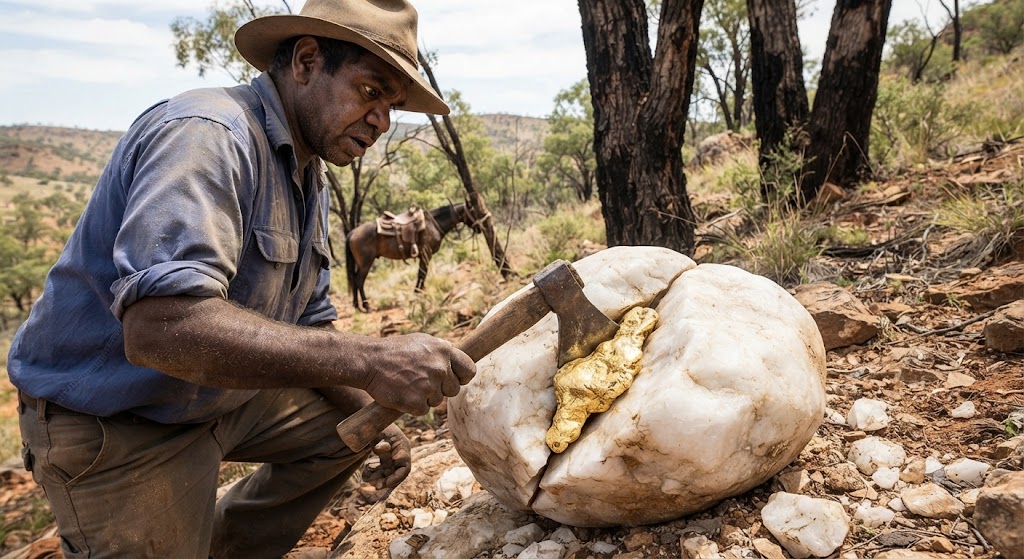
The doctor did not waste a second. He saddled his best horse and raced out to the ridge with the stockman. Together, they pried three massive chunks of quartz out of the earth, but the stones were so bound together by thick, twisting ropes of native gold that they could barely lift them onto the cart. This find became known across the civilised world as Kerr’s Hundredweight, because when they finally broke it down and melted it into clean bullion, it gave up roughly one hundred and six pounds of pure, glittering gold. That is more than forty-eight kilograms of wealth found by an ordinary bush doctor and his stockman on a lazy afternoon. The news went across the oceans like a wildfire, turning the goldfields into an international destination and ensuring that the quiet valleys around Bathurst would never be the same again. It proved to every poor soul on earth that a man could go to sleep a pauper and wake up a king before the sun came up over the Great Dividing Range.
2.3 The Evolution of the Turon River Workings
The discovery of the Hundredweight changed the whole nature of the game along the Turon River system. It was no longer just about lonely prospectors skimming the edges of the creeks with a tin dish. The scale of human effort grew massive overnight. Men started realizing that the gold they were finding in the water had a mother lode somewhere up on the steep ridges, trapped inside those thick white veins of quartz that cut through the old grey slate like bones through meat. The work became heavier, requiring crews of mates to band together to break the hard stone, using heavy hammers and black powder explosives that echoed through the valleys like constant thunder.
You had to learn how to live in a crowd of strangers, and you had to learn how to guard what you found. The tracks between Bathurst and the Turon became treacherous lanes where a lucky man had to watch his back every inch of the way. But despite the dust, the thieves, and the freezing cold mountain nights, there was an incredible spirit among the diggers. They were all gamblers in the same great lottery, and every time a cradle rattled or a blast went off in the hills, every man within earshot felt his heart beat a little faster, hoping that the next bucket of dirt would reveal the sort of heavy gold that would let him buy his own farm and never look at a master again. It was a rugged, beautiful time when the future of a whole nation was being forged by hand in the mud and the gravel of the western slopes.
3.0 Orange and the Lucknow-Cadia Tectonic Corridor
authored by | Identity:did:plc:hqgxupttuyvfmnwxwkxzaz7o
Pull up a stump, mate, and grab a cold one while we travel down into the dark, deep fractures where the richest, heaviest gold shoots lay waiting for a sharp eye.
| Geological Boundary | Mineral Characteristic | Industrial Extraction Method |
|---|---|---|
| Serpentine-Calcite Joint Line | Coarse jagged specimens and heavy mineralized native wire strings. | Deep vertical shaft sinking and timbered timber underground drives. |
| Lucknow Native Deep Veins | Narrow, erratic, but intensely concentrated structural ore bodies. | Explosive blasting, underground winzes, and corporate guard transport. |
| Cadia Ironstone Cap Horizons | Disseminated gold grains locked inside heavy copper-bearing sulfides. | Large-scale crushing battery operations and chemical roasting processing. |
Core Mining Indicators
- Distinct dark green serpentine rock meeting the hard grey diorite along a clean contact fault line.
- Presence of white calcite veins that acted as the primary plumbing line for ancient mineral deposits.
- Extreme variation in gold distribution, where a few inches of rock could mean the difference between riches and ruin.
- High security requirements around engine shafts to prevent workers from walking off with pocket-sized fortunes.
3.1 The Golden Point and the Secretive Syndicates
Pour yourself a cuppa and listen to the wind out here on the plains, and let me take you down into a part of the country where the mining stopped being a simple game for lonely blokes with tin dishes and turned into a real chess match against the earth itself. I am talking about the Lucknow field, just down the road from the township of Orange. Now, if Ophir was a wild, laughing free-for-all where any lucky cove could turn over an alluvial stone and find a quick quid, Lucknow was a completely different beast. She was a dark, brooding, and intensely secretive field that broke the hearts of thousands of independent diggers before she gave up her real secrets to the hard-nosed syndicates who had the deep pockets to chase her into the subterranean depths.
The whole human drama here revolved around a massive change in how men worked. Out in the creeks, you were your own boss, working until your trousers were soaked through and cooking your damper over an open fire. But at Lucknow, the gold did not care about the surface gravels; it ran deep, hiding in narrow, erratic, and unimaginably rich underground veins that the old-timers called shoots. You could dig down fifty feet through solid stone, tracking a line of beautiful white calcite quartz, only for the vein to pinch out into nothing but worthless country rock, leaving you flat broke and staring at a blank wall. The individual diggers soon realized they were beaten by the sheer cost of the timbering and the constant water pumping required to keep the shafts safe. That is when the small-time miners had to swallow their pride and form tight, close-mouthed syndicates, pooling every penny they had to buy heavy machinery and hire experienced mining managers who knew how to read the deep country layout.
The master of this field was a bloke named H.W. Newman. He was an enterprising mining manager with an eye as sharp as a wedge wedge-tailed eagle and a mind that worked like a bank ledger. Newman took over claims that had been abandoned by broken men, claims that the locals said were completely played out. He looked at the underlying geology and realized that the gold was not scattered random-like; it was trapped right where two completely different types of rock collided deep in the dark. It was a boundary line where a soft, slippery dark-green stone called serpentine ran smack into a hard, stubborn volcanic rock. The miners called this line the joint, and Newman knew that if you followed that joint line down with religious devotion, sooner or later you would strike the exact pockets where the ancient volcanic fires had cooked up the heavy mineral wealth. He kept his mouth shut, worked his men in absolute silence, and built an empire of deep shafts that made Lucknow one of the most productive, and most secretive, gold fields in the entire colony.
3.2 The Luck of Lucknow and the Uncle Tom Engine Shaft
Now, Lucknow was legendary across the Western Slopes for producing what we call coarse gold. This was not the fine, powdery yellow dust that you had to catch with mercury or a piece of greasy flannel cloth; this was heavy, jagged metal that came out in massive, solid lumps that would make your pockets sag. The gold here was so clean and dense that it looked like it had been melted down in a blacksmith’s forge and poured right into the cracks of the stone. Because the wealth was concentrated in these tiny, hyper-rich pockets rather than spread out evenly through the countryside, the atmosphere around the shafts was thick with tension, suspicion, and a strange kind of gold fever that could turn best mates into bitter rivals overnight.
The most famous story from those days happened down the dark hole of the Uncle Tom Engine Shaft. The miners had been blasting through the hard rock face for weeks, their candles flickering in the foul, heavy air as they dragged out heavy iron buckets filled with nothing but grey mullock. They were right on the joint line, following a thin thread of calcite no wider than a man’s thumb. Then, on a Tuesday morning, a miner swung his heavy pick into the floor of the drive and the rock simply gave way, opening up into a small, natural cavern hidden deep in the mountain. When they lowered their candles through the narrow opening, the men stopped breathing. The walls of that tiny cave were completely laced with thick, twisting ropes of native gold, running through beautiful white calcite crystals like veins through a hand. It looked for all the world like an enchanted ice cavern frozen in time, glittering under the weak yellow candle-glow.
In a matter of days, working in absolute secrecy with trusted men, the syndicate pulled out over forty thousand pounds worth of pure gold from a space no larger than a small bedroom. That was a multi-million dollar fortune in today’s money, extracted from a single pocket of stone. The wealth was so dense and easy to detach that the miners routinely tried to hide choice specimens in their heavy leather boots, under their shirts, or even inside their clay pipes. The syndicate owners had to introduce strict security measures, setting up search rooms at the top of the shafts and employing some of the very first organized corporate gold guards in the colony to watch the men as they changed out of their digging gear. It changed the goldfields forever, turning the wild frontier lifestyle into a disciplined, high-stakes industry where every bucket of stone was treated like a bank vault.
3.3 The Legacy of the Cadia Reef Complexes
While Lucknow was famous for its narrow pockets of pure gold, just across the valley at Cadia, the earth had cooked up a completely different sort of problem for the miners to solve. At Cadia, the gold was hidden inside massive, heavy ironstone caps that sat across the top of the ridges like huge brown scars. This was not gold you could pick out with a pocket knife; it was disseminated, meaning it was locked away in tiny, invisible grains inside heavy copper and iron minerals. To get the wealth out, you needed massive timber crushing batteries with heavy iron stampers that went night and day, making a racket that you could hear ten miles away across the ridges.
The transition to this kind of mining required an immense amount of capital and a tough breed of workers who were prepared to spend their days feeding heavy stone into the iron jaws of the stampers. It was hard, dusty, and dangerous work that lacked the sudden romance of finding a giant nugget in a creek bed, but it provided a steady, solid living that built the towns of the district. The men who worked the Cadia reefs knew that they were laying the foundations of a permanent industry, turning the old pastoral district into an industrial powerhouse. It proved that whether the gold was hidden in a glittering ice cavern deep underground at Lucknow, or locked inside the stubborn ironstone ridges of Cadia, it took the same indomitable bush spirit and a willingness to face the hard truths of the earth to bring that color out into the light of day.
4.0 Parkes and the Forbes-Lachlan Deep Leads
authored by | Identity:did:plc:hqgxupttuyvfmnwxwkxzaz7o
Pull up a stump, mate, and grab a cold one while we look down into the subterranean riverbeds where men gambled their lives against mud, water, and outback outlaws.
| Subterranean Stratum | Operational Danger Profile | Yield Distribution Matrix |
|---|---|---|
| Saturated Alluvial Gravels | Sudden drift sand collapse and rapid heavy water inundation. | Disseminated fine scale grains requiring extensive box sluicing. |
| The Lower Gutter Bedrock | Foul air pockets and structural timber failures at extreme depths. | Coarse heavy gold concentrated inside deep ancient river potholes. |
| Discarded Tailings Heaps | Dust inhalation and economic instability from low initial recovery. | Secondary fine gold reserves successfully extracted by organized syndicates. |
Core Mining Indicators
- Thick layers of sticky black clay overlaying ancient river gravels up to a hundred feet deep.
- Heavy water flows requiring continuous baling and early mechanical pumping interventions.
- Strict communal timbering structures designed to prevent the soft drift sand from crushing the drives.
- High concentrations of ironstone boulders resting directly on the bedrock where the best gold was caught.
4.1 Subterranean Gamblers and the Bushranger Menace
Pour yourself a cuppa and listen to the wind out here on the plains, because we are moving into the 1860s, a time when the easy gold on the surface of New South Wales had mostly been skimmed off like cream from a milk pail. If you wanted to make your fortune now, you had to become a subterranean gambler, digging deep into what the old-timers called deep leads. Out around Parkes and down toward Forbes on the Lachlan plains, the gold was not sitting pretty in shallow creek gravels. No, mate, it was buried dead and buried deep beneath thirty to one hundred feet of treacherous red clay, shifting gravels, and water-logged sand. These deep leads were nothing less than ancient, prehistoric riverbeds that had been choked out and covered up by millions of years of wind and dust, completely hiding the rich gold gutters from the light of day.
Mining in this part of the country was an extreme test of human endurance, a regular game of blind man’s bluff against the earth. Blokes did not work alone out here; you could not survive five minutes on your own. Teams of four to eight men would form sacred mateships, pooling their muscle and cash to sink vertical timber-lined shafts down through the shifting layers. It was pure, unadulterated gambling. A crew could spend three months hacking through suffocating heat, breathing foul air that would make a candle go out, and hoisting up thousands of heavy buckets of wet dirt, only to hit the hard bedrock and find absolutely nothing but smooth, barren stone. They called it a duffer shaft when it came up dry, and it meant you were flat broke, living on credit, and starting all over again on a new patch of ground. But if your shaft dropped straight down into the gutter—the very center of that ancient, buried riverbed where the heavy gold had settled during prehistoric floods—then you became kings of the field overnight, pulling out rich yellow wash dirt that looked like it was mixed with brown sugar.
This immense concentration of wealth deep under the flats did not just bring in honest diggers; it acted like a beacon for every rogue, scoundrel, and desperate character within a thousand miles. The towns that sprouted up around the deep leads, like the famous Welcome Lead in Forbes, were chaotic settlements of bark shanties, illegal grog shops, and gambling dens where a man could lose his whole week’s gold in an hour. It was out here on the Lachlan plains that the bushranger Ben Hall and his gang operated, hiding in the ironbark ranges and keeping a sharp eye on the dusty tracks. The wealth leaving the Forbes and Parkes deep leads was so immense that it practically funded the golden age of Australian bushranging. A lucky team of miners could get their gold up to the surface after weeks of dangerous underground labor, only to have Hall or his boys step out from behind a gum tree with a cocked revolver and take the lot in twenty seconds. It was a harsh, unpredictable world where you had to guard your gold as fiercely as you dug for it, knowing that every ounce you won was paid for with the sweat of your brow and the safety of your neck.
4.2 The Welcome Stranger of the North and the Chinese Triumphs
The rush to the Lachlan was a wild, roaring tide of humanity. When the Welcome Lead exploded with life in 1862, it was a melting pot of languages and cultures, all driven by the same burning desire for the gold. Among this great wave of people was a massive influx of Chinese miners who had made the long journey across the sea to the colonies. Now, these fellas faced a wall of severe racism and cruel prejudice from the European diggers, who did not understand their ways and envied their discipline. The white miners would often drive the Chinese off the main leads, forcing them onto the abandoned ground or the old, water-logged shafts that had been discarded as useless waste. But the European diggers made a big mistake in underestimating the sheer grit and organized work ethic of these Asian syndicates.
You see, while the European miner was often an individualist who wanted to strike it rich with one lucky blow and move on, the Chinese worked in highly organized communal teams. They operated like a finely tuned machine, sharing the labor, the risks, and the rewards equally. When they took over a section of the field that had been abandoned as a water-logged failure, they did not just start digging random holes. They built clever wooden treadmills and waterwheels to pump out the shafts systematically. They stayed down in the mud for hours, carefully cleaning out the bedrock with small brushes, finding the fine gold trapped in the tiniest cracks that the impatient white men had overlooked in their mad rush. They re-worked old tailings heaps, washing the dirt through long sluice boxes until they extracted vast fortunes from what had been thrown away as rubbish. Their success was a triumph of pure, unpretentious hard work, proving to anyone with eyes to see that patience and cooperation could win the day on even the toughest goldfield in the colony.
4.3 The Long Grind of the Lachlan Alluvial Fields
As the years rolled on, the nature of the deep leads forced the independent miners to change their ways or go under. You could not chase the gold past a certain depth without proper machinery, and steam engines soon began to replace the old hand-wound windlasses at the top of the shafts. The landscape around Parkes and Forbes became a forest of timber poppet heads and massive heaps of grey mullock stone that had been hauled up from the deep. The old wild frontier days began to fade into a structured industry, but the spirit of those early subterranean gamblers never truly left the district.
The men who stayed on the fields became master miners, blokes who could tell the depth of a lead just by looking at the color of the clay coming out of a borehole. They had learned their trade the hard way, underground where the timbers groaned under the weight of the shifting sand and the water rose around your boots like ice. It was a life that aged a man before his time, leaving him with stiff joints and a cough that never quite went away, but it also left him with a deep pride. They knew they had conquered the ancient river systems of the outback, digging out the wealth that nature had spent an eternity hiding away, and that was a feat no amount of dust or hardship could ever take away from them.
5.0 Hill End and the Hawkins Hill Orogenic Core
authored by | Identity:did:plc:hqgxupttuyvfmnwxwkxzaz7o
Pull up a stump, mate, and grab a cold one while we climb the steep, rugged ridges of Hawkins Hill where the biggest mass of gold ever found by human hands lay sleeping in the dark stone.
| Structural Feature | Mineral Composition | Historical Milestone |
|---|---|---|
| Hawkins Hill Quartz Reefs | Laminated quartz sheets bound with high purity native gold filaments. | Deep level structural blasting leading to the 1872 Star of Hope discovery. |
| The Holtermann Matrix | Colossal slab of slate rock and quartz utterly saturated with native gold. | Extraction of a single four hundred and ninety-six pound mineral specimen. |
| Hill End Crushing Sluices | Fine free gold recovered through mercury amalgamation tables. | Creation of the colony’s premier visual archive of historical operations. |
Core Mining Indicators
- Vertical veins of quartz running through thick beds of ancient, dark slate rock.
- Extreme concentrations of gold particles locked directly into the stone matrix rather than loose gravels.
- Heavy machinery requirements, including steam batteries to crush the hard rock into fine powder.
- Massive migration of European immigrants bringing new underground skills to the colony’s mineral fields.
5.1 The World’s Greatest Specimen and the Immigrant’s Triumph
Pour yourself a cuppa and listen to the wind out here on the plains, because we are moving into the early 1870s, a time when the whole game changed from washing river sand to attacking the heavy quartz reefs with black powder and iron hammers. Down at Hill End, perched high on the ridges overlooking the Turon gorge, the country rock was as hard as iron, and it did not give up its secrets to lazy men. This was reef mining, a business that required you to sink shafts directly into the solid rock, chasing thin veins of white quartz that cut through the mountain like marrow through a bone. The undisputed king of this field was a steep, jagged ridge known as Hawkins Hill. It was a place that broke the spirits of hundreds of prospectors, a mountain that swallowed up savings and left men old before their time, but it was also destined to give up the single most spectacular discovery in the entire history of global gold mining.
The human story of this mountain centers on a German immigrant named Bernhardt Holtermann. Now, Holtermann had arrived on the shores of Australia completely broke, with nothing in his pockets but a heavy accent and a willingness to work until his knuckles bled. He did not start as a wealthy mining magnate; he worked as a waiter in Sydney, groomed horses, and took any odd job he could find just to buy enough flour and tea to stay alive before he finally headed into the rugged bush toward the diggings. For years, Holtermann and his steady mining partner, Hugo Beyers, endured near-starvation on the slopes of Hill End. They poured every single penny they earned into a narrow, stubborn claim on Hawkins Hill that the local coves laughed at, calling them eccentric foreign fools who were chasing a dead reef that would never pay for its own tallow candles. But Holtermann had a stubborn streak that was thicker than the mountain itself, and he kept drilling and blasting into the dark stone long after everyone else had packed up their kits and walked away.
By October 1872, the two mates were right at the end of their tether, living on nothing but hope and credit from the local storekeeper. They had sunk their shaft deep into the Star of Hope mine, working in conditions that would make a coal miner think twice. On the night of October 19, the shift miners rammed a heavy charge of black powder deep into the rock face and lit the fuses, scrambling up the ladders to wait for the blast. When the smoke finally cleared from the drive, the men went back down into the dark, their grease lamps cutting through the dust. When the light hit the shattered rock face, they did not see the usual scattering of grey mullock and broken quartz. They stood there frozen, their mouths open, staring at a colossal, monolithic slab of slate and quartz that was standing upright like a giant tombstone. It was utterly saturated with a thick, heavy web of solid yellow gold that held the broken stone together in a glittering embrace.
5.2 The Holtermann Specimen and the Photographic Legacy
This massive chunk of wealth became known to history as the Holtermann Specimen, and to see it was to understand what the gold fever was truly about. It stood nearly five feet tall and weighed a massive four hundred and ninety-six pounds when they finally hoisted it up into the blinding outback sun using a heavy timber derrick. The old timers on the field came from miles around just to touch it, running their rough hands over the thick ropes of yellow metal that ran through the white stone like wild vines. When they finally broke it down and ran it through the heavy iron stampers of the crushing battery, it yielded approximately eighty-five kilograms of pure, clean gold. It made Bernhardt Holtermann one of the wealthiest men in the entire colony, turning the penniless immigrant into a celebrated figure across the civilised world.
But here is the finest part of the story, the bit that shows the true character of the man. Instead of squandering his immense fortune on fine racehorses or drinking himself to death in the grand hotels of London or Sydney, Holtermann decided to give something back to the country that had adopted him. He realized that the gold rushes were a fleeting, passing moment in history, a wild chapter that would eventually fade away into quiet farming life. He used his wealth to fund an extraordinary photographic project, buying the finest glass-plate cameras available and hiring master photographers to travel across the goldfields of New South Wales. They documented the ordinary people—the diggers in their mud-stained trousers, the Chinese teams working the tailings, the women standing outside their bark huts, and the rough towns that had sprung up from the dust. Because of his fortune, Australia possesses the finest visual archive of nineteenth-century goldfields history in the world, a permanent record of the human sweat and desperate hope that built the foundations of a nation.
5.3 The Sunset of the Hawkins Hill Deep Reefs
The great gold boom of Hawkins Hill eventually ran its course, as all booms do. The rich shoots of gold were followed down until the cost of pumping out the subterranean water and hoisting the heavy stone grew too expensive for the syndicates to bear. The miners drifted away to new rushes, the heavy stampers fell silent, and the bush slowly began to reclaim the deep scars on the hillside. Today, if you walk along the ridges of Hill End, you can still see the old shafts yawning open in the quiet bush, covered over with iron grids to stop the cattle from falling in.
The old timers who stayed behind would sit on their verandahs as the sun went down over the Turon valley, looking up at the ridge where Holtermann found his fortune. They knew they had lived through an era that would never happen again, a time when a man with nothing but a pick, a steady mate, and a mountain of patience could shake the world. It was a rugged, beautiful time that proved that the true wealth of the country was not just the gold hidden in the stone, but the indomitable character of the blokes who went down into the dark to dig it out, and that is a truth that will outlast any reef on the continent.
6.0 Sofala and the Upper Turon Drainage Basin
authored by | Identity:did:plc:hqgxupttuyvfmnwxwkxzaz7o
Pull up a stump, mate, and grab a cold one while we drop down into the steep, roaring river bends where ten thousand angry diggers stood shoulder to shoulder against the government men.
| Geomorphic Zone | Social Conflict Variable | Alluvial Dispersal Profile |
|---|---|---|
| Turon River Gorge Floors | Massive non-compliance with the monthly crown mining license fees. | High density fine scale flaky gold trapped inside river bar gravels. |
| Sofala Township Terraces | Civil unrest, illegal grog consumption, and political mass meetings. | Secondary ancient terrace wash deposits situated above modern high water marks. |
| Chesney Creek Tributaries | Armed police incursions and community-wide defensive warning networks. | Coarse nuggetty gold concentrated directly inside narrow granite gullies. |
Core Mining Indicators
- Narrow, claustrophobic valleys where heavy floods routinely tore away the sluices and cradles.
- High concentration of free-washing surface gold along the inner curves of the river bends.
- Aggressive government policing aimed at extracting revenue from miners regardless of their daily yields.
- Strong communication networks among diggers using tin pans and whistles to sound the alarm against authorities.
6.1 The Riotous Rebel Town of the Turon
Pour yourself a cuppa and listen to the wind out here on the plains, because we are heading down into the wild, claustrophobic depths of the Turon River gorge to a place called Sofala. Now, if Hill End was a story of corporate patience and deep reef luck, Sofala was the absolute wild-west frontier of the colony, a raw explosion of pure human muscle and rebellious spirit. Established in June 1851, right on the heels of the first whispers of gold, this town did not grow neat and tidy like a surveyor’s blueprint. It burst into existence within a matter of weeks, a chaotic, screeching sprawl of ten thousand diggers packing themselves along the narrow riverbanks like sardines in a tin. The valley was so steep and tightly packed that the smoke from thousands of campfires hung low over the river like a permanent grey blanket, and the noise of hundreds of cradles rocking at once sounded like a thousand outback cicadas on a hot summer afternoon.
The folks who rushed to Sofala were a tough, independent breed, and they had to be. You were working in freezing mountain water that came straight down from the high ranges, standing up to your thighs in mud for twelve hours a day, and living in a drafty canvas tent that offered no protection from the biting winds. But what really made the blood boil along the Turon was not the hard work or the bad tucker; it was the heavy-handed approach of the Sydney authorities. The government, seeing millions of pounds of gold slipping out of the dirt, panicked and introduced an aggressive, expensive monthly gold license fee. It did not matter to the commissioners if you were a lucky cove finding nuggets the size of walnuts, or a starving young fella who had not washed out enough fine dust to pay for his weekly bag of flour. Every single soul had to shell out thirty shillings a month just for the right to hold a shovel. It was an unjust, flat-rate tax that turned the Turon gorge into a political powder keg, waiting for the slightest spark to go up in flames.
By the end of 1851, the resentment had reached a boiling point. The diggers felt they were being hunted down like wild dogs by the armed police, who would march through the workings in tight formations, demanding every man show his paper license on the spot. If you did not have it on you, or if you had lost it in the mud, you were dragged off in chains and tied to a log until the court day. This constant harassment brought the men together in a way the government never expected. Mateships that had been forged in the mud turned into an organized front, and the bush telegraph went to work, carrying whispered plans from claim to claim along the river. The diggers decided they had suffered enough under the heels of the commissioners, and standard mining work along the Turon came to a grinding halt as thousands of men prepared to draw a line in the sand.
6.2 The Diggers’ Rebellion of Sofala and Captain Machattie
The true climax of the Sofala unrest came during the dry months when the river was low and the tempers were short. Angry miners began holding mass meetings under the stars, gathering in their thousands on the flat river terraces where the shadows hid their faces. They waved homemade flags, banged their tin pannikins together, and swore sacred oaths to refuse payment of the unfair fee. The leader who stepped forward out of the crowd was a colorful, larger-than-life character named Doctor Captain Machattie. Now, Machattie was a bush doctor who had more fire in his belly than a steam battery, and he possessed the sort of thunderous voice that could carry right across the river gorge without an ear trumpet. He rode through the camps on a big grey horse, inciting the diggers to stand firm and resist the armed police with sheer numbers.
When the fateful morning arrived for the license collection, a heavily armed detachment of foot police and mounted troopers marched down into the Sofala gorge, their boots clicking on the stones and their bayonets gleaming in the sun. They expected the usual scattered crowd of individual diggers running for the scrub. Instead, they marched straight into a solid, living wall of thousands of defiant men who had laid down their tools and stood shoulder to shoulder across the valley floor. As the commissioners stepped forward to demand the papers, the crowd did not scatter; they surged forward, surrounding the police completely, hooting, groaning, and clashing their tin pans in a deafening rhythm that echoed off the high rock walls of the gorge. The sheer human mass of determined bushmen was terrifying. The police realized that if they fired a single shot, they would be utterly overwhelmed by an army of men wielding picks and heavy timber bars. The commissioners had to read the writing on the wall, pocket their receipt books, and back down, retreating up the mountain track under a barrage of jeers.
6.3 The Forging of a Democratic Spirit
This great stand at Sofala was a crucial, unheralded chapter in the history of the colonies. It happened long before the more famous Eureka Stockade rebellion took place down south in Victoria, and it proved that the ordinary Australian bush worker would not sit quietly under the boot of unfair authority. The victory of the Turon diggers forced the government to rethink its entire approach to the goldfields, eventually leading to cheaper licenses and better representation for the working men who were actually building the wealth of the nation.
Today, Sofala is a quiet, sleepy little place where the old timber buildings lean over the narrow streets and the river flows gently past the old stone bars. But if you sit down by the water as the light is fading, you can almost hear the phantom rattle of the old cradles and the distant roar of thousands of voices shouting for their rights in the dark. It was a cradle of more than just gold; it was the birthplace of a rough-and-ready democratic spirit that insisted every man should get a fair go, regardless of his station in life or the size of his bank balance, and that is a legacy that remains carved deep into the stone of the Turon country to this very day.
See our blog
Buy Gems and Jewellery
See our blog
Buy Gems and Jewellery
Gems and Jewellery Sourced with Care
See our blog
Buy Gems and Jewellery
Gems and Jewellery Sourced with Care
See our blog
Buy Gems and Jewellery
Gems and Jewellery Sourced with Care