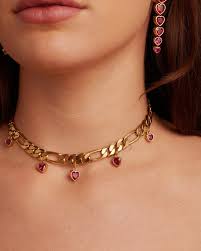
1.0 Fashion Jewelry Trends for 2027 The New Pricing Regime and Price Collapse
authored by @jamesdumar.com | Identity: did:plc:7vknci6jk2jqfwsq6gkzu
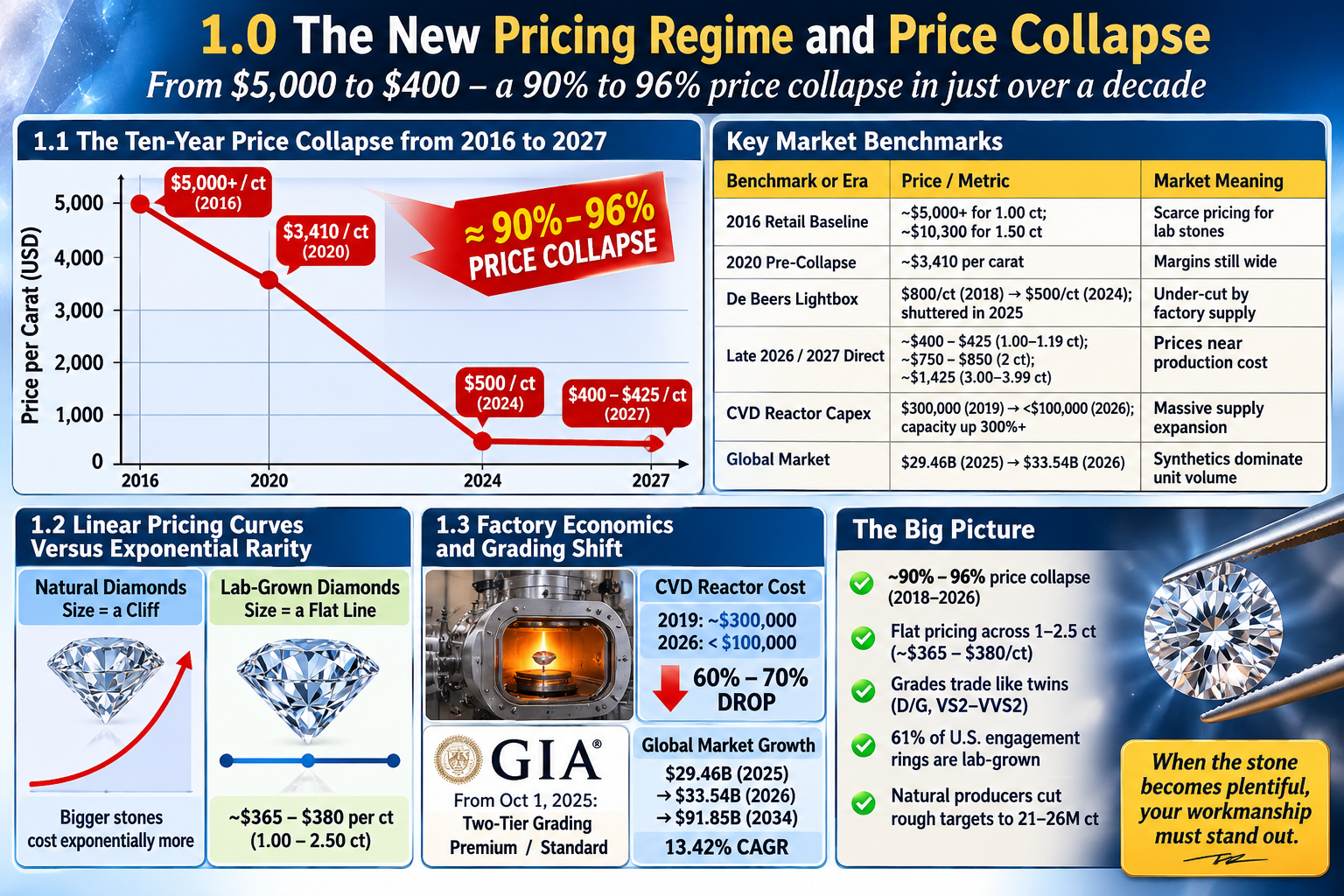
Here are the actual facts from fifty years on the bench in Sydney: lab-grown diamond wholesale prices collapsed roughly 90% to 96% between 2018 and late 2026, rewriting how we price, cut, and set stones.
| Benchmark or Era | Recorded Price or Metric | Market & Bench Meaning |
|---|---|---|
| 2016 Retail Baseline | ~$5,000+ for 1.00 ct; ~$10,300 for 1.50 ct (G, VS1, Ex) | Early lab stones were priced like scarce treasures rather than factory goods |
| 2020 Pre-Collapse Retail | ~$3,410 per carat retail | Margins were still wide before mass reactors flooded the market |
| De Beers Lightbox Arc | $800/ct (2018) to $500/ct (2024); shuttered in 2025 | Open-market factory prices undercut even a giant’s commoditized tier |
| Late 2026 / 2027 Direct Loose | ~$400 to $425 median (1.00 to 1.19 ct, D to F, VS+); ~$750 to $850 for 2 ct; ~$1,425 avg for 3.00 to 3.99 ct | Carat price curves flattened near a factory production floor |
| CVD Reactor Capex & Supply | Reactor cost fell from ~$300,000 (2019) to under $100,000 (2026); capacity up 300%+ (2020 to 2023) | Cheaper machines and massive output in Surat and China locked in abundance |
| Global Market & Grading Shift | $29.46B (2025) to $33.54B (2026); 61% U.S. engagement volume; GIA 2-tier system from Oct 1, 2025 | Synthetics dominate unit volume while grading treats them as standard or premium goods |
- Wholesale Compression Trajectory: Edahn Golan’s industry index and De Beers disclosures show wholesale lab-grown prices dropping roughly 90% to 96% from 2018 to late 2026, including another 14% year-on-year slide in Q1 2026 and 13% in Q2 2026 as the market neared production cost.
- Loose Stone Price Tiers: Direct-online 1.00 to 1.19 carat stones in D to F color and VS or better clarity sit around a $400 to $425 median, with lower-demand grades dipping near $233 and broader live indices averaging about $525.
- Multi-Carat Pricing Reality: Two-carat rounds trade around $750 to $850 (roughly $365 to $380 per carat), while 3.00 to 3.99 carat stones average around $1,425 (about $430 per carat).
- Flattened Carat & Grade Spreads: Unlike mined stones where bigger weights jump exponentially, synthetic per-carat rates stay fairly flat from 1.00 to 2.50 carats (~$365 to $380/ct), and D and G colors or VS2 through VVS2 grades sit tightly clustered.
- Industrial Scale & Market Split: Global lab-grown value reached $29.46 billion in 2025 and $33.54 billion in 2026 on its way toward a projected $91.85 billion by 2034 (13.42% CAGR), while mined producers like De Beers and Alrosa trimmed 2026 rough targets to 21 to 26 million carats.
1.1 The Ten-Year Price Collapse from 2016 to 2027
Despite the nonsense you may hear on social media, I want to give you the factual story of how a one-carat lab-grown diamond went from the price of a second-hand ute to the cost of a decent weekend away with the missus. Back in 2016, when folks in Sydney and across the globe first started eyeing synthetic stones seriously, a clean one-carat round in G color, VS1 clarity, and an excellent cut still fetched north of $5,000 at retail. Step up to one-and-a-half carats and you were looking at roughly $10,300. In those days, a bench jeweller treated a lab stone with the same guarded reverence as a freshly turned parcel of mined crystal because the suppliers charged like it was scarce.
By 2020, just before the whole world got turned upside down, the pre-collapse retail baseline had already slipped to roughly $3,410 per carat. Even then, plenty of jewellers were still figuring out how to talk to punters about origin without sounding defensive. Then came the floodgates. Between 2020 and 2023, factory expansion in Surat in India and across China pushed global production capacity up by more than 300%. Imagine building ten new bakeries in a town that used to have two: once the ovens are hot and the flour is cheap, nobody charges five dollars for a plain bread roll.
The Lightbox Signal and Shuttered Plans
No story tells that shift plainer than what happened to De Beers’ Lightbox venture. Launched in 2018 at a flat $800 per carat, it was meant to draw a clear line in the dirt between natural rarity and lab-made abundance. By 2024 that price tag was cut to $500 per carat, and in 2025 the operation was shuttered altogether because open-market factory prices had already blown right past it. When a major mining house walks away from its own synthetic showcase because the street price has dropped below the sign on the door, you know the ground has moved permanently.
What Late 2026 and 2027 Look Like on the Bench
Entering 2027, a direct-online loose 1.00 to 1.19 carat stone in D to F color with VS or better clarity sits around a $400 to $425 median, with softer grades dipping toward $233 and broader live indices averaging about $525. A two-carat round runs roughly $750 to $850, or about $365 to $380 per carat, while 3.00 to 3.99 carat stones average around $1,425, or roughly $430 per carat. Add in Q1 2026’s 14% year-on-year wholesale drop and Q2 2026’s 13% drop, and you can feel the market pressing right up against what it actually costs to run the gear and pay the hands.
1.2 Linear Pricing Curves Versus Exponential Rarity
Anyone who has spent forty or fifty years looking through a ten-power loupe knows the old rule of natural diamonds: size is a cliff, not a ramp. Pull a decent two- or three-carat crystal out of hard rock or river gravel, and the jump in scarcity makes the price climb steeply with every extra point of weight. The earth only made so many big, clean pieces under crushing heat and pressure, and nature never kept a spare warehouse out back.
Lab-grown stones do not play by that bush telegraph. Because they are grown under controlled conditions in reactors rather than dug out of ancient pipes after billions of years of shifting crust, the per-carat price stays remarkably flat between 1.00 and 2.50 carats, hovering around $365 to $380 per carat. Above three carats, prices rise only modestly—averaging roughly $430 to $520 per carat—because a longer run in the chamber brings extra time, gas, power, and the risk of inclusions spoiling the run.
Grades That Trade Like Twins
Even more startling to an old-school grader is how tightly the color and clarity brackets have bunched together. In the 1.5 to 2.5 carat window, D color and G color trade at virtually identical per-carat prices, sitting right around $371 to $378 per carat. Clarity from VS2 all the way to VVS2 sits within roughly ten dollars per carat of one another. For a bench craftsman, that means I no longer spend half the afternoon arguing over whether a stone is an F or a G or a VS1 or a VVS2 just to quote a fair retail figure; the spread is small enough that the design and the setting do the heavy lifting.
1.3 Factory Economics and Institutional Grading Shifts
Behind those numbers lies hard industrial math. Capital expenditure for Chemical Vapor Deposition—or CVD—reactors in India fell from about $300,000 in 2019 to under $100,000 by 2026, a 60% to 70% drop in upfront machinery cost. When the machine that grows the crystal costs a third of what it used to, more workshops buy in, competition sharpens, and efficiency improves across every shift.
That reality also forced the grading houses to change how they speak. Effective October 1, 2025, the Gemological Institute of America retired traditional 4Cs grading for lab-grown diamonds and moved to a two-tier Premium or Standard classification. It was a plain admission that lab stones belong in the world of standardized industrial and fashion goods rather than one-of-a-kind natural collectibles, even as the overall lab-grown market grew from $29.46 billion in 2025 to $33.54 billion in 2026 and fashion jewelry climbed at a 14.35% compound annual growth rate.
Hard Truths About Supply and Scarcity
Here is the hard truth I have learned over half a century in this trade: no business stays easy forever, and cheap raw sparkle does not automatically make good jewellery. While synthetics took 61% of U.S. engagement ring unit volume by 2026 and up to 87% at major UK retailers, natural producers like De Beers and Alrosa cut 2026 rough targets to 21 to 26 million carats to protect scarcity in three-carat-plus mined goods. For those of us working with fire, metal, and files every day, the lesson is simple: when the stone becomes plentiful, you had better make sure your workmanship can stand up in the daylight.
\
2.0 Consequences of the New Pricing Regime on Jewelry Design
authored by @jamesdumar.com | Identity: did:plc:7vknci6jk2jqfwsq6gkzu
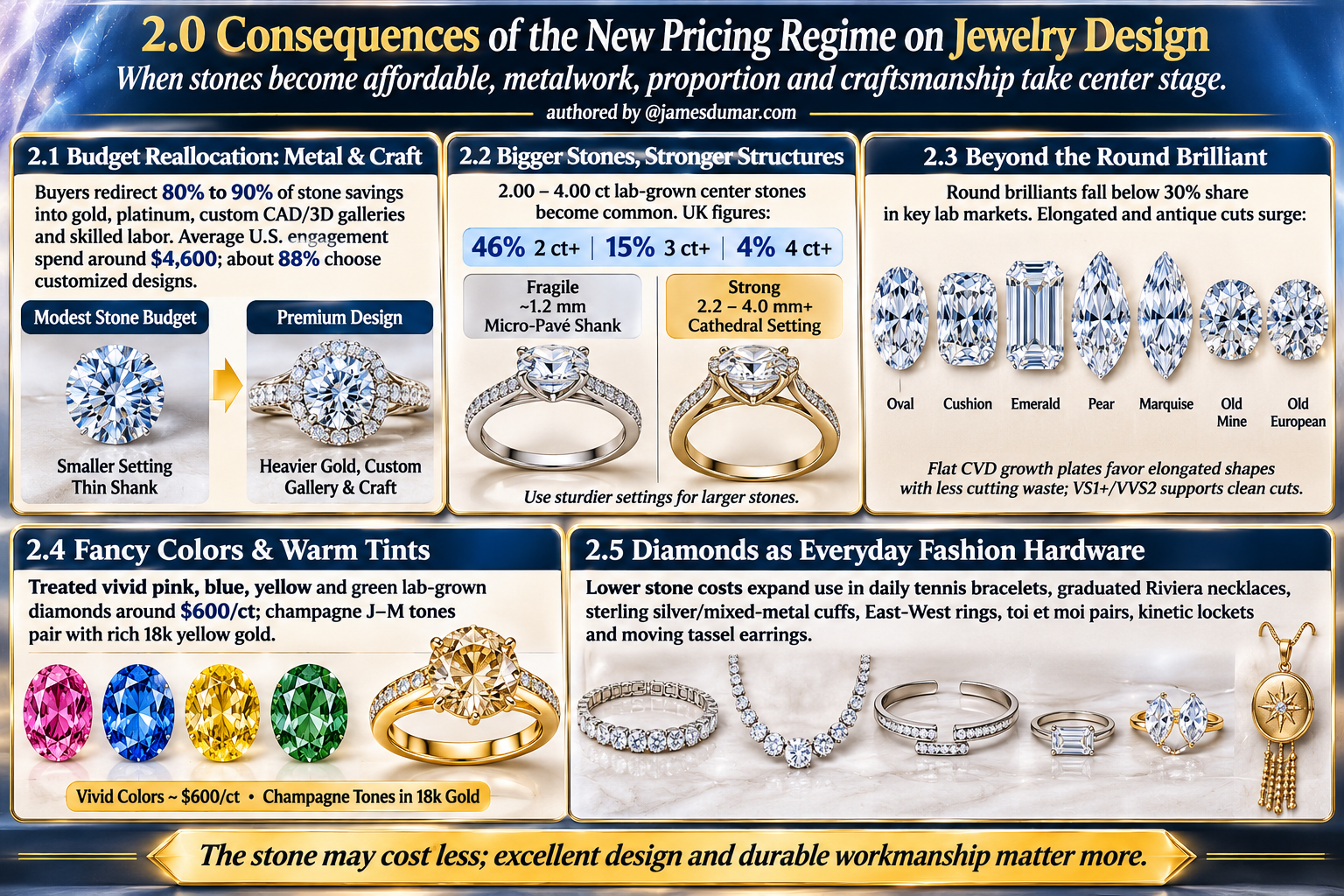
Here are the actual facts from the bench as we head into 2027: when loose synthetic diamonds drop to a fraction of old prices, folks put their cash into heavy metal, bold cuts, and real bench craft.
| Design Pillar | 2027 Bench & Market Shift | Why It Happens in Practice |
|---|---|---|
| Budget Allocation | 80% to 90% of stone savings move into gold, CAD/3D galleries, and labor; ~88% custom choice | Total spend stays around ~$4,600 in the U.S., so buyers buy better metalwork and custom design |
| Carat Size & Shanks | 2.00 to 4.00 ct stones common; shanks move from ~1.2mm up to 2.2mm to 4.0mm+ with heavy bezels | Skinny bands bend or snap under bigger stones; thick gold or platinum frames hold them safe |
| Cuts & Shapes | Rounds under 30% in key lab markets; ovals, emeralds, pears, marquises, and old mine cuts surge | Flat CVD plates suit elongated shapes with less waste, while clean VS1+ stones open up step and antique cuts |
| Fancy & Warm Colors | Treated vivid pinks, blues, yellows, and greens near ~$600/ct; warm champagne tones in yellow gold | Lab color treatments cut old luxury premiums, while warm tints pair naturally with rich yellow gold |
| Everyday Fashion Hardware | Daily tennis bracelets, silver and mixed-metal cuffs, kinetic lockets, and East-West or toi et moi rings | Low stone costs let diamonds act as everyday texture and moving parts rather than rare vault trophies |
- Metal Over Cheapskate Savings: Rather than slashing ring budgets to bare bone, many buyers hold spending around ~$4,600 in the U.S. and pour 80% to 90% of what they save on the stone into heavier 14k or 18k gold, platinum, and custom 3D-printed or hand-built galleries, with around 88% of U.S. couples choosing customized designs.
- Structural Strength for Larger Stones: With 2.00 to 4.00 carat stones routine—including 46% of UK lab-grown engagement rings at 2.00 ct or up, 15% at 3.00 ct or up, and 4% at 4.00 ct or up—fragile 1.2mm micro-pave shanks give way to 2.2mm to 4.0mm+ shanks, rubover bezels, and cathedral shoulders.
- Elongated, Step, and Antique Shapes: Round brilliants slip below 30% share in key synthetic markets as flat CVD plates favor ovals, elongated cushions, emerald cuts, pears, marquises, and old mine or old European cuts that spread wide or show chunkier old-world facets.
- Vivid Colors and Warm Tints: Irradiation and annealing bring vivid pink, blue, yellow, and green synthetics down toward roughly $600 per carat, while designers also embrace J to M champagne warmth set in 18k yellow gold instead of icy white-metal sterility.
- Diamonds as Everyday Hardware: When melee and 0.50 to 2.00 carat stones cost less than skilled bench labor, they go into daily tennis bracelets, Riviera necklaces, sterling silver and mixed-metal cuffs, East-West and toi et moi rings, and moving lockets or tassels.
2.1 Budget Reallocation: Putting Savings Into Metal and Craft
Despite the nonsense you may hear on social media, I want to give you the factual story of what happens when a two-carat center stone drops from roughly $18,000 down to around $800. Folks did not suddenly turn into tightwads who stopped caring about their rings. Across the U.S. market in 2026, average engagement spending held right around $4,600. Instead of pocketing all the difference, buyers shifted 80% to 90% of that saved stone money straight into the metalwork, custom 3D-printed and hand-finished galleries, and the hours a setter spends getting every claw or bezel dead true.
Think of it like building a house out in the country. If the roof tiles suddenly cost pennies instead of clearing out half your timber money, you do not put up a tin shed with crooked posts—you put in stronger rafters, thicker weatherboards, and a verandah you can actually sit on after a long day. Around 88% of U.S. couples heading into 2026 and 2027 went for customized designs rather than pulling a plain stock mounting off a rack, because when the center stone is affordable, your personal mark on the piece becomes the real prize.
How Galleries and Bench Time Earn Their Keep
On my own bench, when a client brings in a generous lab-grown stone for a few hundred dollars instead of thousands, the conversation changes in five minutes flat. We talk about under-galleries that let light in without catching on knitwear, heavy gold bridges that keep a ring from spinning on the finger, and clean solder joints that will still look sharp thirty winters down the track. Cheap stone prices have not made good bench work obsolete; they have put the spotlight right back on whether the maker actually knows how to build a jewel.
2.2 Size Inflation and Proportion Shifts
Once a big stone stops looking like a small fortune, size inflation takes hold fast. In the 2.00 to 4.00 carat bracket, big stones are no longer rare showstoppers saved for movie stars—in UK retail figures, 46% of lab-grown rings sold were two carats or larger, 15% were three carats or larger, and 4% hit four carats or more. When a customer can step up from a modest rock to a proper heavy hitter without blowing the budget, plenty of them take that extra spread.
That jump in weight creates real mechanical headaches if a jeweller tries to cut corners. Those skinny little 1.2mm micro-pave shanks that looked so delicate a decade ago simply do not have the backbone to hold a three- or four-carat stone through daily knocks, bag straps, and door handles. Push on a tall crown with a thin band and you get torque, bent prongs, and lost stones that break a wearer’s heart.
Building Shanks and Bezels That Hold the Line
For 2027, proper construction calls for thicker, sculptural shanks running 2.2mm to 4.0mm or more, sturdy cathedral shoulders, and solid rubover or bezel frames in 14k or 18k yellow gold or platinum. A full or half bezel wraps that big stone like a good leather saddle wraps a stout horse—it protects the girdle, keeps the edges from chipping when you knock your hand against a table, and gives the whole ring a grounded, confident weight on the hand.
2.3 The Death of the Round Brilliant Monopoly and Rise of Elongated and Antique Cuts
For decades, the round brilliant ruled the roost because a rough natural octahedron naturally nudged cutters toward round shapes to save weight. Chemical Vapor Deposition rough grows differently—in flatter, tabular plates—so cutting elongated shapes does not carry the same painful weight penalty as slicing a round out of a flat slab. As a result, round brilliants have slipped below a 30% share in key lab-grown markets.
In their place, elongated shapes—ovals, elongated cushions, emerald cuts, pears, and marquises—lead the pack because they stretch across the finger and give more face-up look per carat. Emerald and Asscher step cuts are a classic example: because those long, flat facets act like little windows straight into the stone, inclusions show up fast. Under steep mined prices, a clean three-carat emerald cut was mostly for deep pockets, whereas ~$400/ct VS1 or VVS2 lab stones let everyday buyers wear crisp, architectural step cuts.
Bringing Back Old Mine and Old European Facets
What tickles an old-timer like me most in 2027 is the comeback of Old Mine cuts and Old European cuts. Back in the eighteenth and nineteenth centuries, cutters worked by eye and candlelight rather than computer rays, leaving chunky facets, high crowns, and small tables that throw soft, warm flashes instead of harsh laser glare. Today’s cutters deliberately give up a touch of modern brilliance to shape modern antique cushions and old mines, which we set in yellow gold bezels that echo old-world craftsmanship without pretending to be a dusty museum piece.
2.4 Mainstreaming of Fancy Colors and Warm Tints
Years ago, a vivid pink, blue, green, or canary yellow diamond was auction-room territory, priced in the tens or hundreds of thousands per carat because nature rarely lined up the right trace elements or underground radiation just so. Through post-growth irradiation and annealing, synthetic makers can now offer vivid pink, blue, yellow, and green diamonds right around $600 per carat—only about a 65% bump over colorless goods, and sometimes close to parity at retail.
At the same time, many designers are walking away from the cold, sterile look of icy D-color stones set in white metal. Warm champagne or softly tinted stones in the J to M range look right at home nestled in rich 18k yellow gold, bringing an earthy, lived-in glow that feels far more human than a clinical ice cube.
2.5 Commodity Usage in Non-Bridal Fashion Jewelry
When small melee and 0.50 to 2.00 carat stones cost less than the hours of skilled metal finishing required to set them, diamonds stop acting like untouchable crown jewels and start working like hardware. Across 2027 fashion lines, we see multi-carat tennis bracelets and graduated Riviera necklaces worn every single day with jeans and a shirt rather than saved once a year for a black-tie dinner.
We also see bold silver and mixed-metal cuffs—combining sterling silver, yellow gold, and platinum—studded with sizable lab stones, an idea that made no financial sense when stones ran $5,000 a carat. Add in East-West horizontal settings, toi et moi pairs like an emerald cut beside a pear, and kinetic lockets or moving tassel earrings built to catch the light as you walk or turn on camera, and you have a bench where design freedom runs wide open as long as the metal underneath is built honest and strong.
3.0 Ten-Year Evolution of Jewelry Style from 2017 to 2027
authored by @jamesdumar.com | Identity: did:plc:7vknci6jk2jqfwsq6gkzu
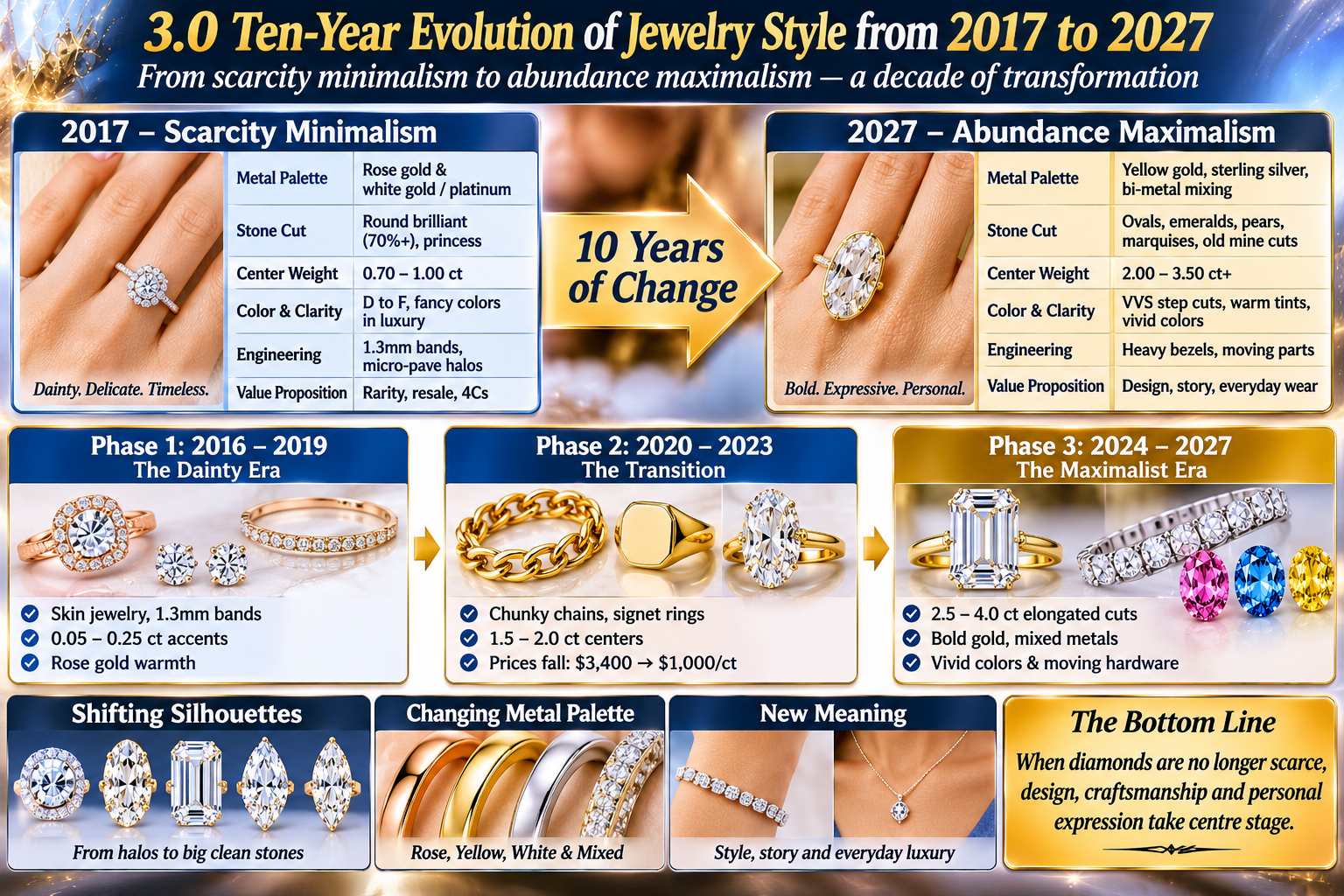
Here are the actual facts from fifty years on the bench: over ten years from 2017 to 2027, jewelry style swung from skinny scarcity minimalism to bold abundance maximalism as cheap synthetics rewrote every proportion.
| Style Attribute | 2017 Scarcity Minimalism | 2027 Abundance Maximalism |
|---|---|---|
| Dominant Metal Palette | Rose gold and cool white gold or platinum ruled the showcase | Warm 14k/18k yellow gold, sculptural sterling silver, and deliberate bi-metal mixing |
| Flagship Stone Cut | Round brilliant (70%+ share) and princess cuts led by habit | Elongated ovals, elongated cushions, emerald cuts, pears, marquises, and old mine cuts |
| Typical Center Stone Weight | 0.70 ct to 1.00 ct, often padded with micro-pave halos | 2.00 ct to 3.50 ct+ in clean solitaires, bezels, or East-West mountings |
| Color & Clarity Ethos | Chasing colorless D to F grades while fancy colors stayed in high-end auctions | Clean VVS step cuts alongside warm champagne tints and accessible vivid pink, blue, or yellow stones |
| Structural Engineering | Delicate prongs, whisper-thin ~1.3mm bands, and static pendants | Heavy bezels, substantial gold galleries, kinetic moving parts, and silver-plus-diamond pieces |
| Consumer Value Proposition | Mineral rarity, resale lore, and strict 4Cs grading labels | Design authorship, solid metalwork, personal story, and everyday expressive wear |
- Phase 1 (2016 to 2019 Dainty Era): Built on “skin jewelry,” ~1.3mm bands, tiny 0.05 to 0.25 ct bezel accents, rose gold warmth, and halos meant to stretch a modest 0.50 to 0.80 ct center when lab stones still ran $3,500 to $5,000+/ct.
- Phase 2 (2020 to 2023 Transition): Marked by chunky “Zoom-neck” chains, signet rings, early oval solitaires with hidden halos, and 1.5 to 2.0 ct lab stones as prices slid from ~$3,400/ct toward $1,000/ct amid a 300%+ factory capacity surge.
- Phase 3 (2024 to 2027 Maximalist Era): Driven by wholesale prices falling 90%+ toward a ~$350 to $500/ct floor, bringing bold yellow gold, heavy bezels, 2.5 to 4.0 ct elongated or antique cuts, vivid fancy colors, mixed metals, and moving hardware.
- Shifting Silhouettes: Micro-pave halos that faked size give way to big clean stones, East-West rings, toi et moi pairings, and daily tennis bracelets or convertible lockets.
- Shifting Meaning: Buyers care less about old resale myths and more about how a piece sits on the hand, moves in daily life, and carries their own story.
3.1 From 2017 Scarcity Minimalism to 2027 Abundance Maximalism
Despite the nonsense you may hear on social media, I want to give you the factual story of how ten years changed the look of a jeweller’s tray more completely than any decade I have seen since I first tied on a leather apron in Sydney. In 2017, scarcity was not just a price tag—it was the whole grammar of design. Mined stones carried steep weight jumps, and early lab-grown diamonds still cost $3,500 to $5,000 or more per carat, so everyone dressed scarcity up in dainty clothes.
That gave us the minimalist era of 2016 through 2019. You saw “skin jewelry” that barely whispered against the collarbone, bands around 1.3 millimeters wide that looked like silver thread, tiny 0.05 to 0.25 carat bezel drops, single-ear studs, and rose gold everywhere you turned. When a center stone sat around 0.50 to 0.80 carats, jewellers ringed it with a micro-pave halo of tiny one-point melee to make the whole head read bigger without paying for a larger center rock. It was clever work, like stretching a small roast with plenty of gravy and spuds so everyone at the table gets a full plate.
The 2020 to 2023 Pivot on the Bench
Then came 2020 to 2023, and the whole rhythm shifted under our feet. Folks stayed home, stared at their own faces on screens, and put money they might have spent on flights or big halls into heavy paperclip chains for the neck and bold signet rings on the hand. At the same time, factories in Surat and China expanded capacity by over 300%, dragging lab-grown prices down from around $3,400 a carat toward $1,000 a carat. Suddenly a 1.5 or 2.0 carat lab center stone on a hidden-halo band stopped feeling like a stretch and started looking like the new normal.
Reaching 2027 Abundance Maximalism
By the time wholesale lab prices fell 90% or more and settled near a $350 to $500 per carat floor heading into 2024 through 2027, the old halo trick lost much of its point. Why build a ring of tiny crumbs around a small stone to fake big size when a two-and-a-half to four-carat elongated or antique-cut stone is right there in the parcel? Today’s maximalism is not messy or loud for the sake of noise—it is broad, confident, and grounded, pairing big stones and substantial gold with clean lines that let the metal and the cut breathe.
3.2 Side-by-Side Shifts in Metal, Cut, Weight, and Meaning
Look across the bench from 2017 to 2027 and you see every single habit of the trade turning a corner. In 2017, rose gold rode high alongside cool white gold and platinum, round brilliants took roughly 70% or more of the action along with princess cuts, and buyers hunted colorless D to F grades as if a hint of warmth were a sin. Today, warm 14k and 18k yellow gold is back at the front of the tray, joined by sculptural sterling silver and intentional mixing of metals so a piece works with whatever else you wear.
The cuts and weights tell the same story. Instead of 0.70 to 1.00 carat centers padded with halos, 2027 leans into 2.00 to 3.50 carat-plus stones in ovals, elongated cushions, emerald cuts, pears, marquises, and old mine cuts—often turned sideways in East-West settings or paired as toi et moi designs. Alongside crisp VVS step cuts, we are seeing warm champagne tints and vivid pink, blue, or yellow stones used freely in everyday tennis bracelets, cuffs, and moving lockets.
What Changes When Sparkle Is No Longer Scarce
Here is the honest truth after fifty years of filing, soldering, and listening to customers across the counter: when a stone is cheap and plentiful, you cannot hide behind a big price tag or a paper certificate anymore. The value shifts onto whether the shank feels solid when you grip a steering wheel, whether a bezel or hinge moves smoothly without binding, and whether the maker put real care into every edge. Good jewelry was always meant to outlast passing fads, and in 2027 the pieces that hold their ground are the ones built with real weight, honest proportion, and human craft.
4.0 Technicolor Pop and Warmth: The Fancy Color and Champagne Revolution
authored by @jamesdumar.com | Identity: did:plc:7vknci6jk2jqfwsq6gkzu
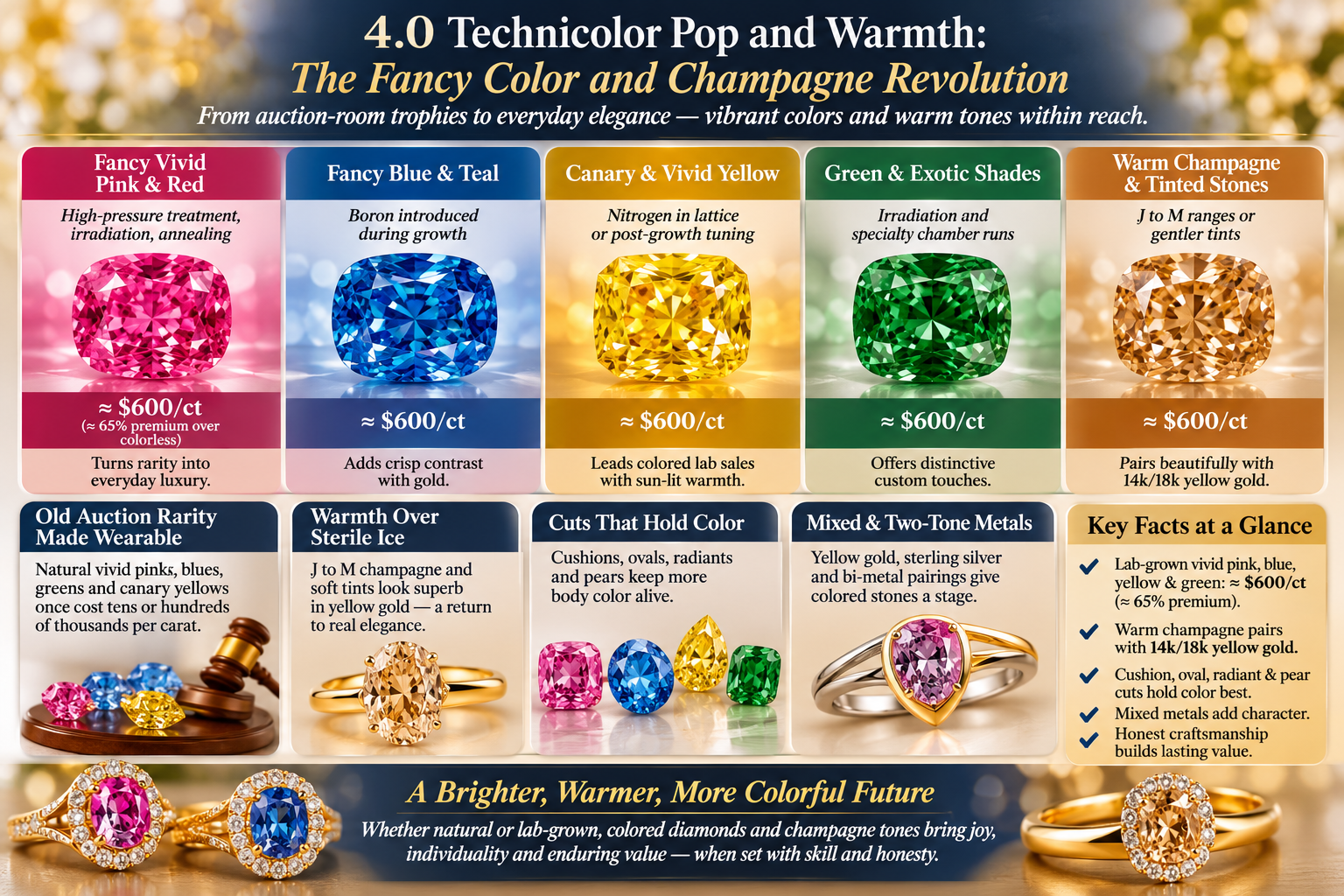
Here are the actual facts from fifty years on the bench in Sydney: lab-grown vivid pinks, blues, yellows, and greens now sit within reach alongside warm champagne stones and rich yellow gold.
| Color Family | How It Happens or Is Made | 2027 Design & Bench Role |
|---|---|---|
| Fancy Vivid Pink & Red | High-pressure treatment, irradiation, and low-temperature annealing tuned after growth | Turns once-rare auction colors into everyday rings and pendants near ~$600/ct |
| Fancy Blue & Teal | Boron introduced during growth or post-growth treatment | Adds crisp ocean or sky contrast against warm yellow gold or mixed metals |
| Canary & Vivid Yellow | Nitrogen in the crystal lattice or post-growth tuning | Leads colored lab sales with bright sun-lit warmth in cushions, ovals, and radiants |
| Green & Exotic Shades | Irradiation and tailored chamber runs creating green or specialty hues | Offers distinctive custom touches for bold fashion and one-off pieces |
| Warm Champagne & Tinted Stones | Soft warm body color in J to M ranges or gentler tints | Pairs naturally with 14k/18k yellow gold and antique cuts over icy white sterility |
- Accessible Fancy Colors: Post-growth irradiation and annealing allow lab-grown vivid pink, blue, yellow, and green diamonds to sell near ~$600 per carat—roughly a 65% premium over colorless goods or close to parity at retail.
- Old Auction Rarity Made Wearable: Natural vivid pinks, blues, greens, and canary yellows once cost tens or hundreds of thousands per carat due to rare trace elements, radiation, or lattice shifts.
- Warmth Over Sterile Ice: Designers increasingly pair J to M champagne or softly tinted stones with 18k yellow gold instead of chasing icy D-color sterility in white metal.
- Cuts That Hold Color: Cushions, ovals, radiants, and pears keep more body color alive than shallow or wide-open cuts, especially when paired with vintage or bezel mounts.
- Mixed & Two-Tone Metals: Yellow gold, sterling silver, and bi-metal pairings give warm and colored stones an expressive stage without hiding their character.
4.1 From Auction-Room Trophies to Everyday Fancy Colors
Despite the nonsense you may hear on social media, I want to give you the factual story of how colored diamonds went from untouchable vault legends to something I can fit into a regular client’s ring budget without blinking. Anyone who has spent half a century around the gem trade knows what a real, deep natural pink, blue, green, or canary yellow diamond used to cost. Out in the earth, getting the right trace element or shifting the crystal lattice just so was like winning the Melbourne Cup twice in one afternoon—tens or hundreds of thousands of dollars per carat, locked away in safes and auction rooms.
Now, through post-growth irradiation and annealing, synthetic makers can bring vivid pink, blue, yellow, and green stones out at roughly $600 per carat. That is only about a 65% bump over colorless goods, and at retail the gap can look smaller still. A young couple or a woman buying a right-hand ring for herself does not have to take out a second mortgage just to wear a bright pink or rich blue stone that catches everyone’s eye across the table.
How Heat, Light, and Carbon Tell a New Story
Think of a crystal lattice like a timber frame in an old house. When carbon atoms settle in an even grid, light passes clean through like clear glass; when trace elements get mixed in or careful heating and irradiation shift how light is absorbed, you get rich yellow, warm rose, deep blue, or green. On my bench, the trick is never to treat a colored stone like a cheap novelty. You treat it with respect, check how the light rolls across the crown, and set it cleanly so the color speaks without shouting.
4.2 Leaving Cold White-Metal Sterility Behind for Champagne and Yellow Gold
For years—especially through the 2010s—folks got sold on the idea that a diamond had to be as white and icy as winter frost, pinned into white gold or platinum like a specimen on a card. Nothing wrong with white metal when it suits the piece, mind you, but chasing lifeless perfection drained a lot of soul out of everyday jewellery. By 2027, plenty of designers and wearers are saying enough is enough and turning back toward warmth.
Warm J to M champagne diamonds and soft honey or golden tints belong right alongside rich 14k and 18k yellow gold. Instead of fighting a hint of warm color, a thoughtful jeweller leans into it. Slip a warm champagne pear, cushion, or oval into a solid yellow gold bezel or a sturdy four-claw basket, and the metal and the stone talk to each other like old mates sharing a pot of tea after a long shift.
Why Shape and Setting Matter With Warm and Colored Stones
When a stone carries color or warm tint, cut and setting do half the work. Cushions, ovals, pears, and radiants tend to hold deeper color saturation than stones with wide-open windows, while antique-style facets give a softer, candlelit glow. Pair that with a solid yellow gold shank or a deliberate mix of yellow gold and sterling silver, and the piece feels warm, lived-in, and unmistakably yours—not like something stamped out to match a cold checklist.
Hard Truths About Honesty and Longevity on the Bench
Here is the plain truth after fifty years of working with fire, files, and stones: cheap color does not excuse sloppy work or quiet shortcuts. Whether a stone is natural or lab-grown, treated or as-grown, warm champagne or bright pink, a good jeweller tells the truth straight up and builds the mount strong enough to survive real life. When the stone costs less than a week’s wages, the craft you put into the gold is what makes the piece worth keeping.
5.0 Ten Years on the Bench: From 2017 Scarcity Minimalism to 2027 Maximalism
authored by @jamesdumar.com | Identity: did:plc:7vknci6jk2jqfwsq6gkzu
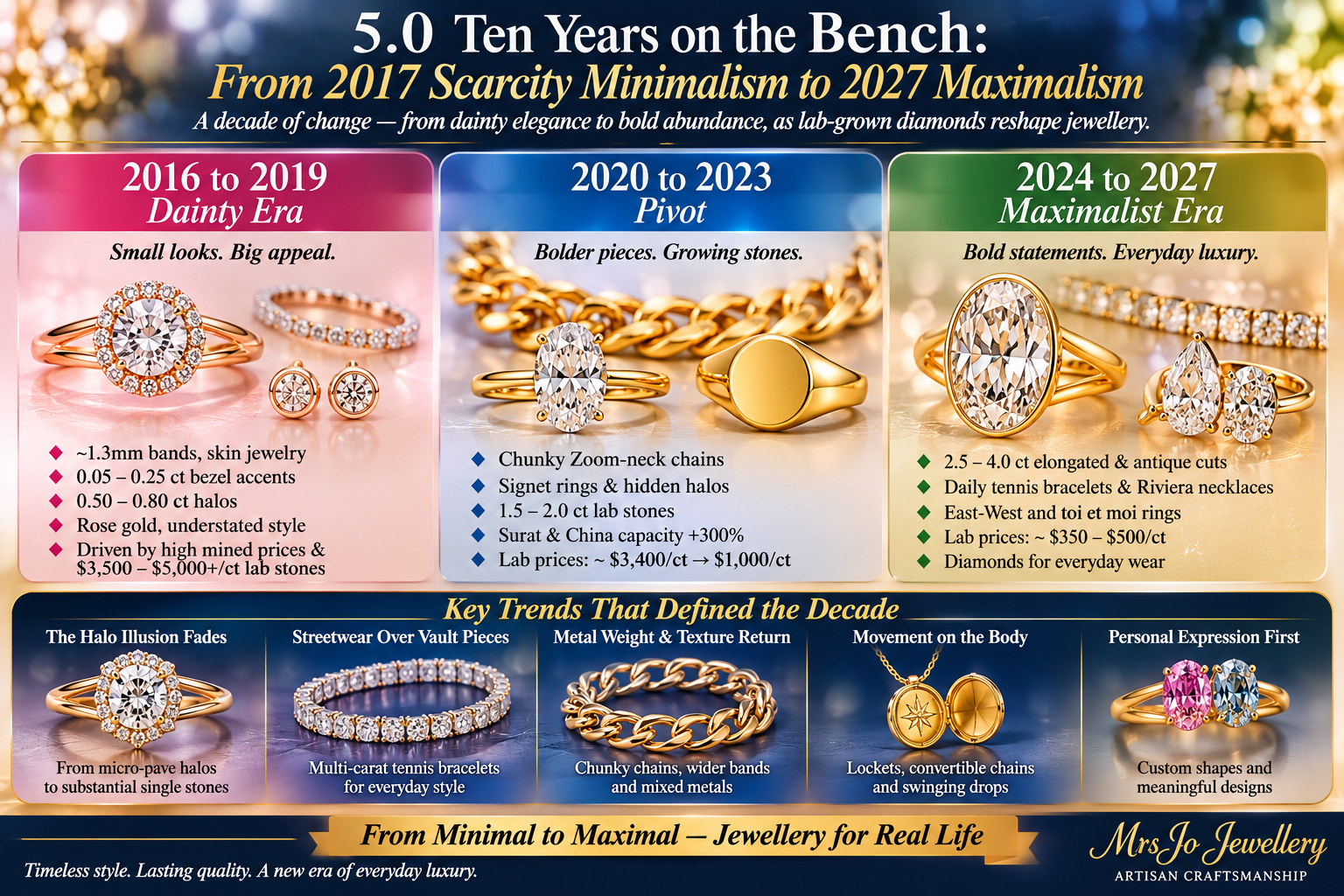
Here are the actual facts from fifty years on the bench: between 2017 and 2027, jewelry swung from dainty scarcity minimalism to bold abundance maximalism as cheap synthetics and daily wear rewrote every silhouette.
| Decade Chapter | Signature Look & Stones | What Drove the Shift |
|---|---|---|
| 2016 to 2019 Dainty Era | ~1.3mm bands, skin jewelry, 0.05 to 0.25 ct bezel accents, rose gold, and 0.50 to 0.80 ct centers in halos | High mined prices and $3,500 to $5,000+/ct early lab stones made small stones and halo illusions the norm |
| 2020 to 2023 Pivot | Chunky Zoom-neck chains, signet rings, early oval solitaires with hidden halos, and 1.5 to 2.0 ct lab stones | Surat and China capacity rose 300%+, pushing lab prices from ~$3,400/ct toward $1,000/ct while home life shifted focus |
| 2024 to 2027 Maximalist Era | Bold yellow gold, heavy bezels, 2.5 to 4.0 ct elongated or antique cuts, daily tennis bracelets, East-West and toi et moi rings | Wholesale lab prices dropped 90%+ toward a ~$350 to $500/ct floor, turning diamonds into everyday fashion hardware |
| Kinetic & Convertible Pieces | Moving lockets, multi-wear necklaces, articulated tassels, and layered everyday pieces | Wearers want versatile pieces that move with daily life and catch light in motion rather than sitting static |
- The Halo Illusion Fades: Where 2017 used tiny micro-pave halos around 0.50 to 0.80 ct stones to stretch budget and look bigger, 2027 favors substantial 2.5 to 4.0 ct single stones, East-West orientations, or two-stone toi et moi pairings.
- Streetwear Over Vault Pieces: Multi-carat tennis bracelets, Riviera necklaces, and solitaire studs or pendants increasingly pair with everyday clothes rather than waiting for formal nights out.
- Metal Weight & Texture Return: Chunky chains, wider bands, and deliberate metal mixing give pieces physical presence that matches larger stones.
- Movement on the Body: Hinged lockets, convertible chains, and swinging drops bring real motion to a piece when you walk, turn, or gesture.
- Personal Expression First: Buyers lean into personal symbols, custom shapes, and everyday wearability over old resale checklists.
5.1 The 2016 to 2019 Dainty Era: Making Small Stones Look Big
Despite the nonsense you may hear on social media, I want to give you the factual story of how we got from there to here over ten years at the bench. Between 2016 and 2019, the watchword across shops and magazines was dainty. People talked about “skin jewelry” so light you could forget it was on until you caught a glint in the mirror, paired with bands around 1.3 millimeters wide that looked like a fine wire pulled straight off a spool.
Back then, mined diamonds still carried steep weight jumps, and early lab-grown diamonds sold for $3,500 to $5,000 or more per carat. So if a customer had their heart set on a bigger look without paying a small fortune for a large center stone, we reached for the micro-pave halo. Set a modest 0.50 to 0.80 carat stone in the middle, surround it with a ring of tiny one-point melee, and suddenly the whole top of the ring read wider on the finger. Add rose gold, single-ear studs, and tiny 0.05 to 0.25 carat bezel drops, and you had the whole look of the late 2010s.
Why Scarcity Shaped Every Tiny Claw
Working on those tiny settings took steady eyes and a light hand, because a one-point stone leaves no room for sloppy graver work. Still, the whole design language was built around scarcity—stretching every fraction of a carat and keeping the metal fine and understated so the piece felt effortless and modest.
5.2 The 2020 to 2023 Transition: Chunky Chains and Growing Stones
Then came 2020 to 2023, and the ground shifted right under our boots. When lockdowns and travel pauses changed how people spent their time and money, the top half of the body got plenty of attention. We turned out chunky paperclip and heavy link chains—the sort of “Zoom-neck” pieces that showed up clear on a video call—alongside solid signet rings with enamel or clean engraved faces.
At the exact same time, factory expansion across Surat and China pushed global capacity up by more than 300%, pulling lab-grown prices down from around $3,400 per carat toward $1,000 per carat. Suddenly, clients who might have settled for a one-carat stone or a classic halo started asking for 1.5 to 2.0 carat lab centers, often tucked into clean solitaires or hidden-halo mounts that kept the profile tidy from the side while letting the main stone carry the day.
A Bench Turning Corner by Corner
For a bloke who has spent decades cutting and soldering, that middle stretch felt like watching a river change its channel after heavy rain. You could still see traces of the old minimalist habit, yet every month more buyers were asking for bolder links, heavier gold weight, and bigger stones that did not need a ring of tiny crumbs around them to stand out.
5.3 The 2024 to 2027 Maximalist Shift and Everyday Hardware
Once wholesale lab-grown prices fell 90% or more and settled near a $350 to $500 per carat floor heading into 2024 through 2027, the old rules flipped completely. Today’s abundance maximalism is not about clutter for clutter’s sake; it is about big, clear statements—2.5 to 4.0 carat elongated ovals, cushions, emerald cuts, pears, marquises, and old mine cuts set in sturdy bezels, East-West horizontal mounts, or two-stone toi et moi rings where two shapes or colors sit side by side like old partners.
Just as big is how diamonds show up in ordinary daily life. When stones no longer cost the earth, a multi-carat tennis bracelet or Riviera necklace does not have to sit in a velvet box waiting for a wedding or gala. You can wear it with a crisp shirt, a knit jumper, or rolled-up sleeves on a sunny afternoon, alongside mixed metals like yellow gold and sterling silver that give the piece real grit and character.
Kinetic Pieces Built to Move
Another real mark of 2027 is movement—kinetic lockets that open or pivot, convertible necklaces that adjust in length or wearability, and articulated drops or tassels that catch the light every time you turn your head or move your hands. A static lump of metal can look fine in a still photo, but a well-hinged piece that moves cleanly with your body feels alive.
Hard Truths From Half a Century of Making
Here is the plain truth after fifty years in this trade: trends swing like a pendulum, from thin to thick, from shy to bold, from white metal to warm gold. What never goes out of style is a joint soldered flush, a bezel burnished smooth with no sharp edges to snag your clothes, and a stone set tight enough that you never have to worry when you reach into your pocket. Make the structure honest, and whatever style is in fashion this year will wear like a good old friend.
Check out our blog
MrsJo Jewellery: Artisan Jewellery Craftsmanship
Visit our Jewellery Shop to browse our latest handmade collections or contact us directly at our Wamuran office. Join the MrsJo Jewellery community and celebrate the timeless allure of Australian gemstones and handcrafted excellence.
-

Mexican Cantera Fire Opal Ring in Gold Vermeil
$385.00Add to cart -
Mexican Cantera Opal Large Men’s Signet Ring in Gold Vermeil – Size 19.5
$410.00Add to cart -
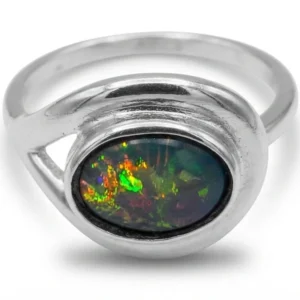
Ethiopian Opal solid stone. 925/rhodium.size 9
$235.00Add to cart -
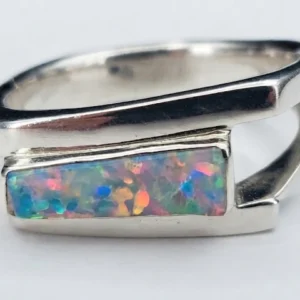
Lightning Ridge Opal Inlay Ring in Rhodium-Plated 925 Sterling Silver – Size 9
$410.00Add to cart -
Peridot Ring Silver Size 10.5
$210.00Add to cart -
Blue Sapphire Silver Vermeil Ring size 10.5
$210.00Add to cart -
Blue Sapphire Silver Vermeil Ring size 10
$200.00Add to cart -
Blue Sapphire Silver Vermeil Ring size 9. 5
$190.00Add to cart -
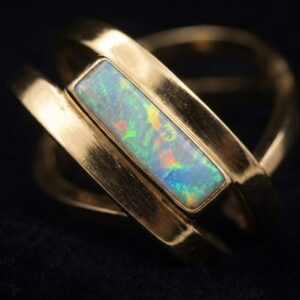
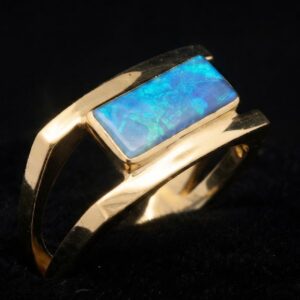
Opal Ring
Read more -
Opal Inlay Ring
Read more
-
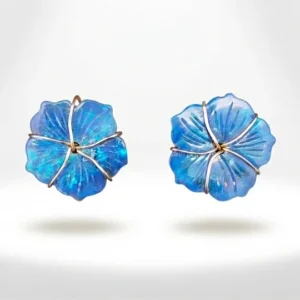
Carved Opal Flower Earrings
$270.00Add to cart -
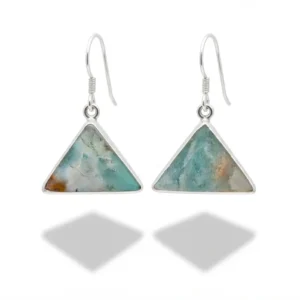
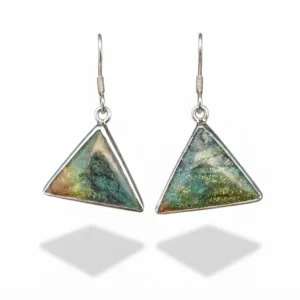
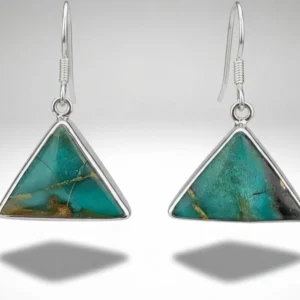
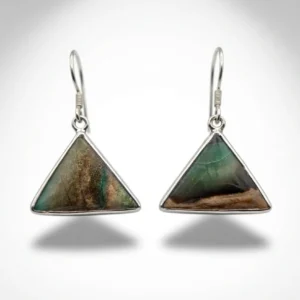
Opalised Wood & Sterling Silver Triangle Earrings – Copper Blue
$150.00Add to cart -
Indonesian Opalised Wood & Sterling Silver Triangle Earrings
$150.00Add to cart -
Natural Indonesian Opalised Wood & Sterling Silver Triangle Earrings – Copper Blue
$150.00Add to cart -
Natural Blue Opalised Wood Earrings
$150.00Add to cart
-
American Variscite & Blue Topaz Statement Pendant with Chain
$510.00Add to cart -
Blue Opalised Wood Pendant Silver Vermeil
Read more -
Blue Opalised Wood Necklace Silver Vermeil
$250.00Add to cart -
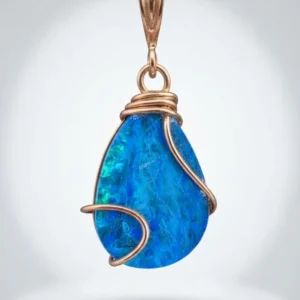
Blue Opalised Wood Pendant and Chain
$250.00Add to cart -
Opal Doublet Pendant
$270.00Add to cart -
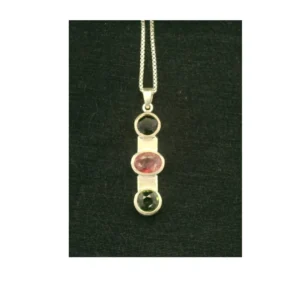
Sterling Silver Charm Necklace with Round Green and PinkTourmaline
$195.00Add to cart -
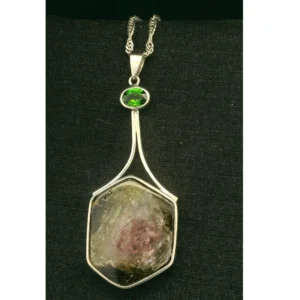
Silver Pendant with Hexagon Tourmaline Slice and Green Diopside
$330.00Add to cart -
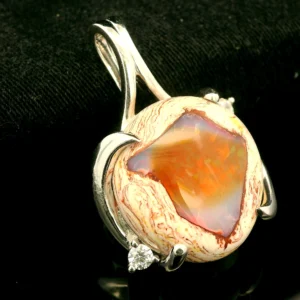
Stunning Opal Pendant with Silver Setting
$320.00Add to cart -
Very large ruby cabochon
$550.00Add to cart -
Silver pendant with malachite and chrysocolla
$150.00Add to cart -
Pretty Larimar Silver wrapped pendant
$150.00Add to cart