1.0 Heliodor Golden Beryl History, Geology, and Market Realities
authored by @jamesdumar.com | Identity: did:plc:7vknci6jk2jqfwsq6gkzu
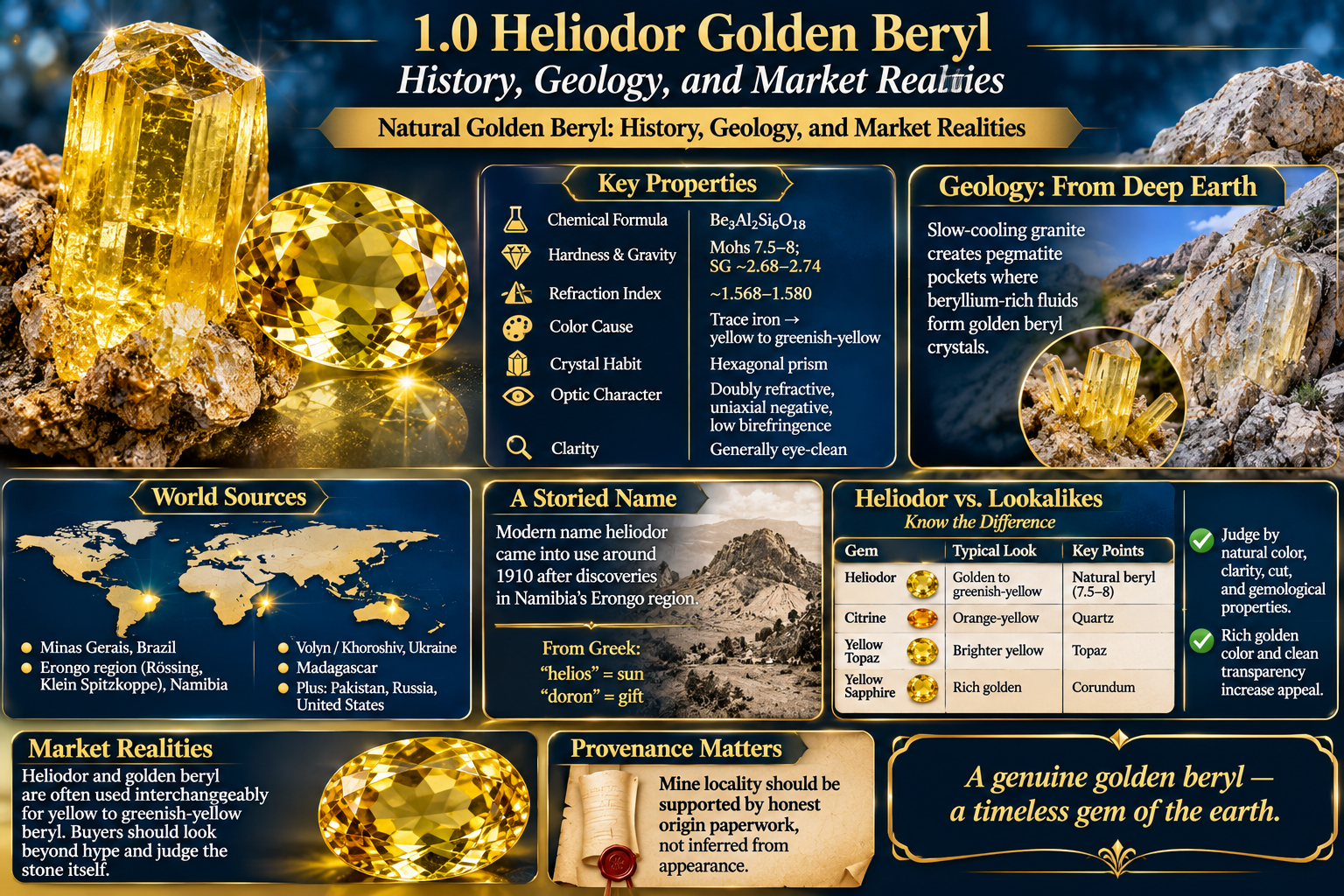
Here are the actual facts about heliodor and golden beryl, stripped of fancy words so any working buyer or collector can size up the stone with plain common sense.
| Property | Physical & Optical Fact | Bench & Market Meaning |
|---|---|---|
| Chemical Formula | Beryllium aluminum silicate written as Be3Al2Si6O18 | Shares the same core beryl family backbone as emerald and aquamarine. |
| Hardness & Gravity | Mohs hardness 7.5 to 8 with specific gravity roughly 2.68 to 2.74 | Tough enough for everyday rings and pendants, while weight separates it from quartz and heavy simulants. |
| Refraction & Color Cause | Refractive index near 1.568 to 1.580 from trace iron coloring the crystal | Gives clean golden-yellow to greenish-yellow brilliance that stands up well on the trading tray. |
Core Attributes of Heliodor and Golden Beryl:
- Crystal Shape: Grows in six-sided hexagonal prisms, often with vertical lines along the sides that give cutters clear clues about crystal growth.
- Optic Character: Doubly refractive and uniaxial negative with a low birefringence gap, keeping light return crisp when cut with care.
- Clarity Profile: Generally clean to the unaided eye compared with heavily included emeralds, letting clean golden color shine right through.
- Name Usage: The name comes from Greek words for sun and gift, and folks on the bench often use heliodor and golden beryl interchangeably for yellow to greenish-yellow stones.
- Market Role: Offers honest natural beryl pedigree and warm color without the price tag of top yellow sapphire or the mass-market sameness of heat-treated quartz.
1.1 From Ancient Sun Names to Modern Showcases
Despite the nonsense you may hear on social media about overnight fortunes or miracle cures, I want to give you the factual story of how this sunny beryl earned its place in the trade. Folks have loved warm, golden stones for thousands of years because sunlight trapped in a crystal feels good in the hand and catches the eye across a dimly lit room. After five decades of trading stones out of Sydney and walking dusty diggings around the world, I can tell you that buyers still chase that same bright, steady warmth. The modern name heliodor came into play around 1910 after discoveries in Namibia around Rössing and the Erongo area put bright yellow-green beryl in front of European buyers.
1.1.1 Why Aquamarine Stole the Spotlight
For years, cool blue-green aquamarine hogged almost all the oxygen in the beryl display case. Shoppers flocked to pale and rich blue stones for rings and pendants, leaving golden and greenish-yellow beryl sitting quietly in the back tray. That neglect was a mistake from a practical standpoint, because a clean golden beryl has a cheerful, fiery presence that holds its own when cut well. Over time, independent cutters and discerning buyers started noticing that a well-colored golden beryl gives you genuine beryl standing at a much friendlier price than top-grade blue or green relatives.
1.1.2 Where the Name Heliodor Fits Today
In old books and mineral notes, people sometimes drew a fine line between heliodor for greenish-yellow beryl and golden beryl for pure yellow stones. Out on the working bench today, most dealers and collectors treat the two names as two handles on the same bucket. What matters when you lay cash on the felt pad is not arguing over dictionary labels—it is judging the exact shade of yellow or greenish-yellow, checking how clean the crystal looks, and seeing how well the cutter brought out the light.
1.1.3 Provenance Discipline on Modern Trading Trays
Over the years, I have learned never to buy a story without checking the stone first. Knowing a mine name like Erongo, Volyn, or Minas Gerais helps explain where classic material came from, yet a pretty yellow stone by itself does not stamp a mine name onto its back. Good traders keep the gem’s physical tests and honest origin paperwork straight so nobody gets burned paying a fancy locality markup on an unverified rock.
1.2 Slow-Cooked Pockets: Geology and Magmatic Chemistry
If you want to understand how a clean golden beryl gets built, picture baking a giant cake in a slow oven deep beneath the ground over millions of years. Down where hot granite magma cools off slowly, ordinary rock minerals like feldspar and quartz lock into place early, leaving behind hot, watery fluids packed with scarcer ingredients. Beryllium is one of those stubborn elements that hangs back until late in the cooling process, riding along in fluid-rich veins and open pockets called pegmatites where crystals have room to stretch out and form six-sided prisms.
1.2.1 How Trace Iron Turns Clear Beryl Golden
Pure beryl without color-causing impurities is clear as clean glass, a variety known as goshenite. When tiny amounts of iron step into aluminum spots inside the crystal framework during growth, the stone begins to absorb certain light wavelengths and send back warm yellow to greenish-yellow tones. Think of it like adding a pinch of spice to a plain pot of stew—you do not need a mountain of it to change the whole character of what comes out of the pot.
1.2.2 Stability in the Ground and Under Normal Wear
Growing a clean, large beryl crystal takes patience from the Earth itself. If the ground shifts too violently while crystals are forming, fractures crack up the rough and turn prize material into scrap. Once formed, natural heliodor generally holds its yellow to greenish-yellow color well in normal daylight and everyday wear, though any fine gem deserves sensible care away from hard knocks or sudden heat shocks.
1.2.3 Why Rough Size Varies So Widely
Pegmatite pockets are irregular by nature, just like roots twisting through hard soil. One pocket might yield small, clean pieces suited to neat calibrated stones, while another produces large crystals with natural surface pits or internal fluid trails. Reading that rough before the saw ever touches it separates seasoned cutters from folks who waste good weight in the shop.
1.3 Boots in the Dirt: Major Mining Regions
You cannot learn this trade sitting behind a polished desk; you have to get out to the digging ground, talk to miners, and see how real rock comes out of the earth. Heliodor shows up in pegmatite districts across several continents, and each region brings its own rhythm and character. Brazil’s Minas Gerais pegmatite belt has long been a major source of yellow and golden beryl, while Namibia’s Erongo region—including areas around Rössing and Klein Spitzkoppe—holds a special spot in history as the place that gave the stone its name.
1.3.1 Brazil and Namibia in the Trade
In Brazil, pegmatite workings across Minas Gerais have supplied plenty of attractive golden beryl over the years, ranging from bright yellows to warmer tones depending on the pocket. Namibia’s Erongo rocks have produced crisp, attractive yellow to greenish-yellow crystals that collectors prize for both mineral specimens and cut stones. Both places remind any seasoned trader that natural pockets come and go, so you buy strong stones when you find them rather than assuming an old vein will pump endlessly.
1.3.2 Ukraine, Madagascar, and Other Pegmatite Ground
Up in northwestern Ukraine, the Volyn pegmatite field around Khoroshiv and Volodarsk-Volynskii has long been famous among mineral and gem folks for large beryl crystals, including heliodor marked by distinct natural surface etchings. Madagascar also hosts pegmatite districts that yield golden beryl alongside other classic pocket gems, and additional occurrences appear in places like Pakistan, Russia, and parts of the United States. Taken together, these scattered deposits show how spread out this stone is across rugged terrain.
1.3.3 Small-Scale Digging and Mixed Mineral Pockets
Most colored beryl comes out of smaller-scale workings rather than giant industrial open pits. Diggers working a pegmatite pocket often pull out more than one gem variety—such as aquamarine, tourmaline, quartz, or topaz—from the same mineral system. Having multiple minerals in the ground gives small-scale miners a practical cushion when demand for one stone runs hot or cold.
1.4 Market Realities: Value, Competition, and Smart Buying
When you turn from geology to hard cash, heliodor lives in a competitive neighborhood alongside citrine, yellow topaz, and yellow sapphire. Plenty of bright yellow gems on the market are heat-treated quartz or treated stones made to look flashy for a low price. A smart buyer compares real properties—hardness around 7.5 to 8, refractive index near 1.57, and natural color—rather than getting swept up by slick sales talk.
1.4.1 Judging Color and Cut Without Getting Fooled
On the bench, color intensity and clarity drive real value far more than hype. A rich, lively yellow or golden-yellow stone with clean transparency and a well-proportioned cut looks far richer than a pale, washed-out stone that leaks light through the bottom. If a stone looks too cheap for its size and brightness, check closely—it may be quartz, glass, or a treated simulant rather than honest beryl.
1.4.2 Long-Term Place for Collectors and Jewelers
For designers and collectors who care about genuine natural minerals, heliodor offers an appealing mix of durability, warm color, and historical roots. It may never grab the loud headlines of emerald or the steep price tags of fine yellow sapphire, yet clean, well-cut pieces with rich color stay steady favorites among people who know their stones. Buy clean color, check your bench facts, and let the stone speak for itself when the light hits it.
2.0 Heliodor Golden Beryl Mineralogical Physics, Optical Dynamics, and Faceting Architecture
authored by @jamesdumar.com | Identity: did:plc:7vknci6jk2jqfwsq6gkzu
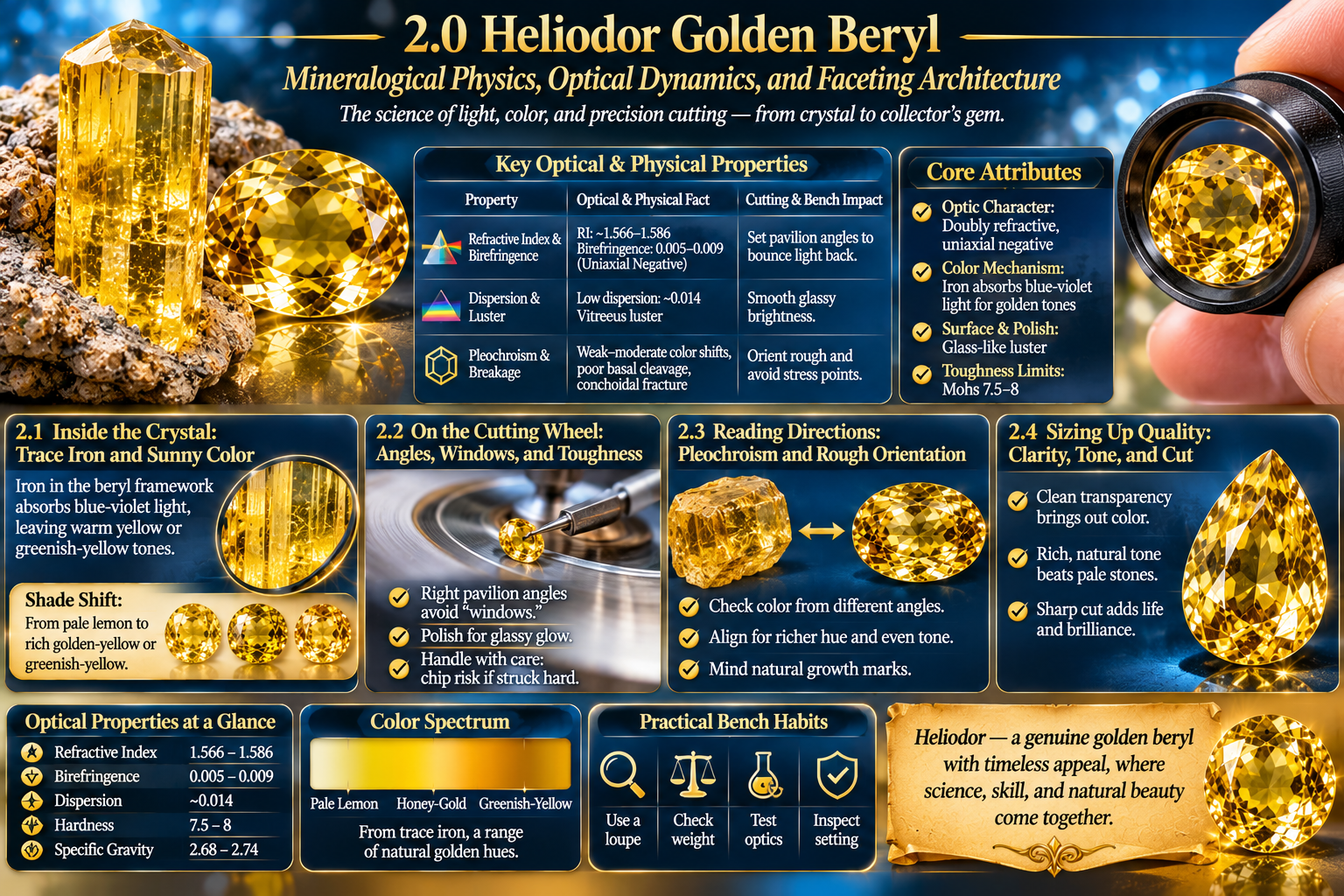
Here are the actual facts about how light behaves inside heliodor and golden beryl, stripped of fancy words so any cutter or buyer can see what makes a stone glow on the bench.
| Property | Optical & Physical Fact | Cutting & Bench Impact |
|---|---|---|
| Refractive Index & Birefringence | Refractive index roughly 1.566 to 1.586 with low birefringence around 0.005 to 0.009 and uniaxial negative character | Sets the pavilion angle needed to bounce light back instead of letting it leak out the bottom. |
| Dispersion & Luster | Low dispersion around 0.014 with a clean vitreous luster | Wins on smooth glassy brightness and rich color rather than rainbow flashes like diamond. |
| Pleochroism & Breakage | Weak to moderate color shifts across directions, poor basal cleavage, and uneven to conchoidal fracture | Guides crystal orientation before cutting and rewards steady hands during rough work. |
Core Optical and Cutting Attributes:
- Optic Character: Doubly refractive and uniaxial negative with a narrow birefringence spread, keeping back-facet reflections tidy when angles are right.
- Color Mechanism: Iron sitting inside the beryl framework absorbs blue-violet light and leaves warm yellow to greenish-yellow tones for the eye.
- Surface & Polish: Takes a crisp, glass-like luster when polished with fine laps, making clean facet junctions stand out clearly.
- Toughness Limits: Hardness around 7.5 to 8 handles daily wear well, yet a sharp whack on a hard corner or sudden heat shock can chip or crack a stone.
2.1 Inside the Crystal: Trace Iron and Sunny Color
Despite the nonsense you may hear on social media about magic crystal vibes or secret lab tricks, I want to give you the factual story of why heliodor looks yellow or greenish-yellow. After five decades of trading stones out of Sydney and looking through loupes in rough sheds from Brazil to Africa, I can tell you that real color comes from what is locked inside the crystal itself. Plain beryl without coloring impurities is clear as window glass, yet when tiny amounts of iron step into place inside the mineral framework as the crystal grows, the stone begins to soak up shorter blue-violet light waves and throw back warm golden and yellow-green tones.
2.1.1 Why Shade Shifts Between Gold and Yellow-Green
Think of color in heliodor like adjusting the mix in a pot of paint rather than slapping a coat over the top. Small differences in how iron sits inside the crystal framework and how much iron is present shift the look from pale lemon or straw to warm honey-gold or a hint of greenish-yellow. On the bench, that shade shift matters plenty—a rich, warm golden-yellow with lively brightness usually turns heads faster than a pale or dull yellowish-green stone, though some collectors love a crisp, unusual yellow-green tone when the clarity is clean.
2.1.2 Color Hold in Everyday Light
Folks often ask me if yellow beryl fades out in the sun like some colored quartz or treated stones. Natural heliodor holds its color steadily through ordinary daylight and normal wear, provided you treat it like a real natural mineral and keep it away from rough knocks or sudden temperature swings. Good stones do not need loud claims when their color is clean, honest, and natural to the crystal.
2.2 On the Cutting Wheel: Angles, Windows, and Toughness
Pull up a stool beside the lapidary wheel, because turning a rough six-sided beryl crystal into a bright finished gem takes real judgment rather than guesswork. If a cutter rushes the job just to save extra carats, light can slip straight out the back of the stone and leave the middle looking pale or washed out—what cutters call a window. Getting the pavilion angles right and polishing every facet flat turns that same piece of rough into a stone that gathers light smoothly and looks alive from edge to edge.
2.2.1 Taming Windows and Getting Clean Brilliance
Because beryl has a moderate refractive index around 1.57, a shallow cut lets light escape out the bottom like water leaking from a cracked bucket. A careful cutter tunes the pavilion and crown angles to the stone’s outline and color depth so light bounces back toward the viewer’s eye. Even though heliodor has low dispersion around 0.014 and does not throw heavy rainbow fire like diamond or zircon, a crisp polish and balanced proportions give it a clean, glassy glow that feels refined and honest.
2.2.2 Handling Brittle Edges and Heat Care
Beryl is tough enough for everyday rings and pendants on the Mohs scale at 7.5 to 8, yet it is still a mineral crystal that can chip if slammed hard against stone or concrete. Its cleavage is poor rather than slick like topaz, and its fracture runs uneven to conchoidal, so steady hands on the saw and dop stick keep clean rough from splitting along hidden stress lines. Bench jewelers also keep a careful eye on heat—gentle warmth is one thing, while sudden torch heat or sharp thermal shock can crack a stone or open tiny internal inclusions.
2.3 Reading Directions: Pleochroism and Rough Orientation
Before a cutter ever locks a piece of rough onto a dop stick, they study how the crystal looks from different angles. Heliodor shows weak to moderate pleochroism, meaning the shade or depth of yellow to greenish-yellow can shift slightly depending on which direction light travels through the crystal. Picture looking down a long six-sided tube versus looking sideways across its width—checking both directions first helps the cutter decide which way gives the richest, most even color in the finished stone.
2.3.1 Lining Up the Table for Richer Color
Every seasoned rough sorter knows that orientation is half the battle before the grinding wheel even spins. If a stone looks pale in one direction and warmer or deeper in another, lining up the crown and pavilion properly can turn an average-looking piece of rough into a lively, well-colored gem. Good cutters do not just chase weight on the scales; they chase color balance so the finished stone looks good face-up in real lighting.
2.3.2 Working With Natural Crystal Growth
Hexagonal beryl crystals often carry natural growth marks, striations along the prism sides, and internal fluid or crystal inclusions that tell a story about how the pocket formed. Some inclusions show up as tiny liquid-and-gas pockets, slender tubes, or delicate healing planes under magnification. A sharp cutter spots those features early, decides whether a slight inclusion sits harmlessly out of sight or needs to be worked around, and aims for clean transparency where it counts most.
2.4 Sizing Up Quality: Clarity, Tone, and Cut Together
When you lay a parcel of heliodor on the tray to price it, no single number tells the whole story by itself. A stone can be clean as spring water yet look dull if the cut is shallow or the color is pale and watery, while a deeply colored stone can lose charm if milky cloudiness or heavy cracks choke out the light. Real bench judgment weighs color tone and saturation, eye-clean clarity, and clean cutting together so you pay for genuine quality rather than empty carats.
2.4.1 Why Clean Transparency Matters Most
In heliodor, clean transparency and clear color sit right at the front of the line. When a stone is free of distracting clouds, heavy fractures, or murky inclusions, light passes cleanly through the crystal and brings out its warm yellow or greenish-yellow character. Buyers who check stones under good light with a loupe quickly spot the difference between a lively, clean gem and one that looks cloudy or dead in the center.
2.4.2 Practical Bench Habits for Traders and Buyers
Over fifty years in this trade, I have seen plenty of folks get tripped up by skipping basic checks. Measure, weigh, check how light moves through the stone, and keep your eyes open for simulants like citrine, glass, yellow topaz, or yellow sapphire so every price tag matches what is actually sitting in front of you. When the color is honest, the cut is crisp, and the crystal is clean, heliodor earns its keep on any bench or collector tray.
3.0 Heliodor Golden Beryl Worldwide Mining Economics, Artisanal Supply Chains, and Ethical Sourcing Frameworks
authored by @jamesdumar.com | Identity: did:plc:7vknci6jk2jqfwsq6gkzu
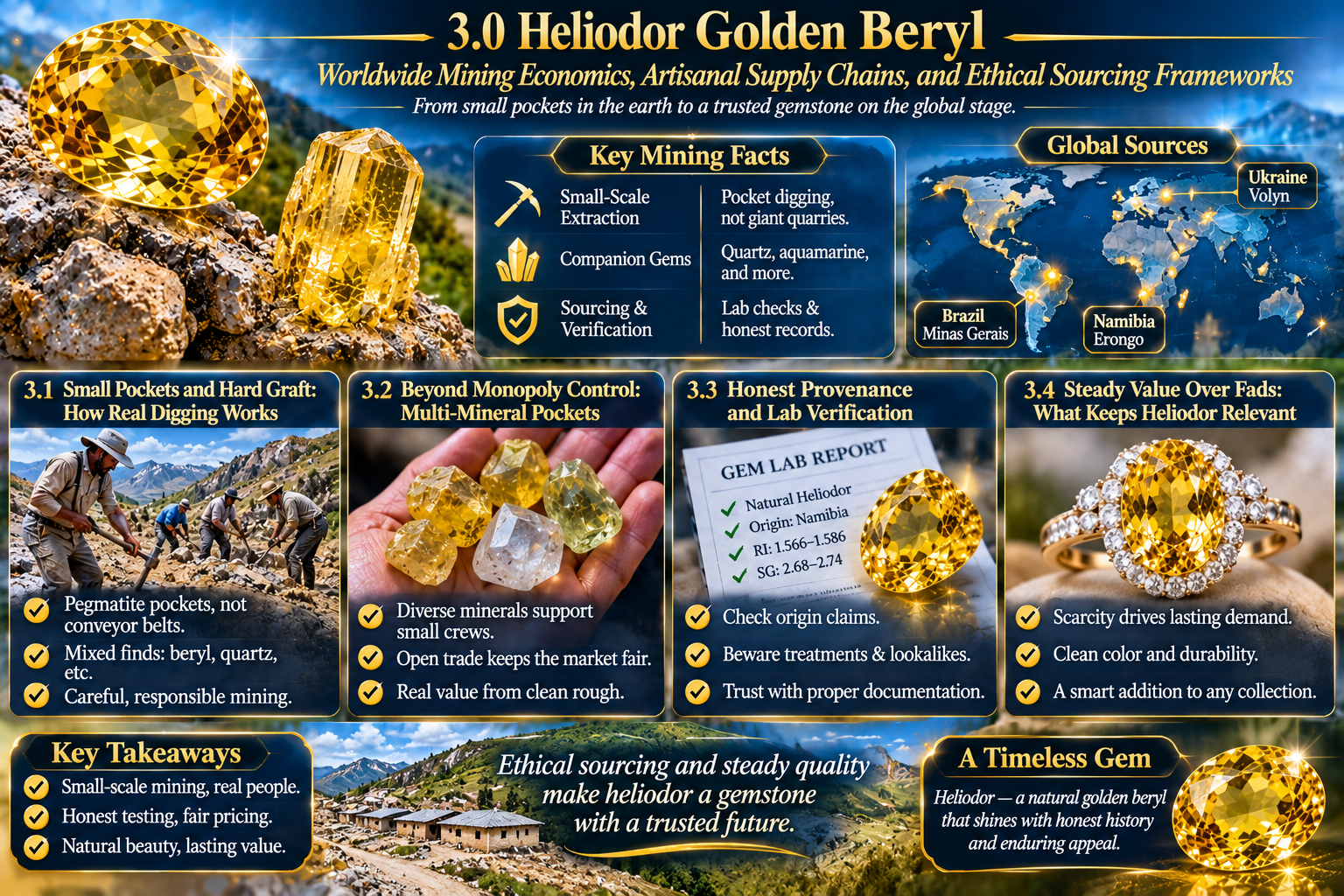
Here are the actual facts about how heliodor rough moves from small pockets in the earth to the bench without corporate cartels running the show.
| Supply Chain Pillar | How It Works on the Ground | Practical Impact on Trade & Buyers |
|---|---|---|
| Extraction Scale | Mostly small-scale and pocket digging rather than giant industrial quarries | Keeps output patchy and tied to real ground work instead of factory assembly lines. |
| Pocket Companion Gems | Pegmatite pockets often yield beryl varieties, quartz, or other pocket minerals together | Gives small-scale diggers more than one way to earn when a single stone slows down. |
| Sourcing & Verification | Direct buying channels paired with lab checks and honest origin records | Helps jewelers and buyers avoid guesswork, mislabeling, and overinflated stories. |
Core Mining and Sourcing Attributes:
- Pocket Rarity: Clean, well-colored heliodor takes plenty of rock work to uncover, since gem-grade material is only a small fraction of what comes out of pegmatite ground.
- Decentralized Trade: Smaller workings and independent cutters keep the market open to hands-on traders rather than one single monopoly controlling the tap.
- Environmental & Ground Care: Cleaner digging habits, water care, and honest land work matter more as buyers ask harder questions about where stones come from.
- Honest Pricing: Real value tracks natural color, clarity, weight, and verified lab facts rather than noisy slogans or unbacked origin claims.
3.1 Small Pockets and Hard Graft: How Real Digging Works
Despite the nonsense you may hear on social media about hidden treasure caves or effortless windfalls, I want to give you the factual story of how heliodor comes out of the ground. After five decades of trading stones out of Sydney and walking dusty diggings across the world, I can tell you there is no magic shortcut past hard rock and slow work. Pegmatite pockets hold gems in scattered pockets rather than neat conveyor belts, and diggers may move plenty of ordinary rock before hitting a clean crystal worth bringing to the light.
3.1.1 Why Giant Machines Rarely Chase Golden Beryl
Big industrial mines are built for tons of uniform ore every single day, not scattered pockets of yellow or greenish-yellow beryl tucked inside coarse granite veins. Because gem pockets sit unevenly and break easily if blasted carelessly, smaller crews and family-scale diggers usually work the ground with careful hand tools and steady patience. That small-scale rhythm is a big part of why clean, well-colored stones stay scarce in the trade.
3.1.2 Respecting the Ground and the Work
Over the years I have watched digging areas change as rules tighten, water gets scarcer, and neighbors pay closer attention to how land is worked. Good operators watch their waste, manage water carefully, and keep their workings tidy so they do not ruin the land or make enemies down the valley. Smart buyers notice that too—clean, responsible work keeps good ground open over the long haul.
3.1.3 What Diggers Actually Bring Out of a Pocket
Open a single pegmatite pocket and you rarely see just one neat label sitting on a shelf. A digger might pull out clear or smoky quartz, a bit of aquamarine or tourmaline, and maybe a handful of yellow to greenish-yellow beryl in mixed sizes. Sorting that mix fairly on the spot takes a trained eye and straight dealing between digger, buyer, and cutter.
3.2 Beyond Monopoly Control: Multi-Mineral Pockets and Open Trading
One thing I have always appreciated about colored stones like heliodor is how they keep the trade honest compared with tightly locked commodities. When a pocket produces more than one kind of mineral, a miner or small crew is not completely sunk if buyers slow down on one color for a few months. Having other minerals in the same working helps keep daily bread on the table while waiting for the next clean pocket to open.
3.2.1 Why Diversified Pockets Cushion Small Crews
Think of a pegmatite working like a mixed orchard rather than a single-crop field. If frost or low prices hit one tree hard, another row still bears fruit that keeps the farm running. In the gem fields, pulling mixed pocket material helps small operators weather slow spells without giving up their claims or cutting corners on safety.
3.2.2 Straight Talk Between Cutter, Trader, and Jeweler
Because colored stone trade runs through many independent hands—miners, rough sorters, cutters, dealers, and bench jewelers—trust matters more than fancy suits. When a rough dealer tells a cutter the truth about tension cracks or color zoning, and a trader tells a jeweler the truth about clarity and treatments, everyone saves time and money. Bad habits get found out fast when stones hit the cutting wheel or the loupe.
3.2.3 Keeping Costs Real From Rough to Bench
Every step from a remote digging site to a finished stone in a jeweler’s tray adds real work, travel, cutting time, and risk. Good traders keep an eye on how much rough is actually usable after trimming out flaws and dark or pale zones. Paying smartly for good rough and cutting it cleanly beats chasing cheap scraps that waste hours on the wheel.
3.3 Honest Provenance and Lab Verification in Today’s Market
Folks today ask more questions about where their gems come from and whether a stone is natural, treated, or lab-grown—and frankly, that is good for honest business. Still, a pretty story on a tag is no substitute for real gemological checks and straight records. Over fifty years on the bench, I have seen plenty of buyers get burned by trusting a smooth talker instead of checking the stone’s physical traits and getting a proper lab report when serious money is on the line.
3.3.1 Origin Claims vs. Physical Facts
A locality name like Namibia’s Erongo area, Brazil’s Minas Gerais, or Ukraine’s Volyn district carries real history, yet a loose yellow beryl does not wear a birth certificate stamped into its facets. Unless a stone has credible documentation tied directly to it from a trustworthy source, treat origin claims with plain common sense. Judge the stone you hold first, and let solid records back up what can actually be proven.
3.3.2 Spotlighting Treatments and Lab-Grown Lookalikes
As buyers look closer at natural value, clear disclosure around treatments and synthetics is non-negotiable. Some beryl and other yellow stones on the market may be heated or irradiated, and lab-grown beryl or simulants like glass and citrine can fool the unwary at a glance. When a stone carries a clear, reputable gem lab report matching its weight, measurements, and traits, a buyer can bid or buy with real confidence.
3.3.3 Building Trust That Lasts Past One Sale
A quick profit on a misleading stone ruins a reputation fast in a tight-knit trade. When a jeweler or collector comes back year after year because every stone matched what was promised, that steady repeat business is worth far more than a one-off score. Straight dealing keeps your name clean from Sydney to every buying room you walk into.
3.4 Steady Value Over Fads: What Keeps Heliodor Relevant
Markets bounce around with headlines and fashion cycles, yet good natural materials with real limits tend to hold their ground over time. Heliodor is not a loud, flashy fad stone—it is a honest, sun-warmed beryl with solid hardness around 7.5 to 8 and a clean, bright look when well cut. Buyers who look past hype and focus on real beauty and solid quality rarely regret picking up a good one.
3.4.1 Why Scarcity and Taste Shape Demand
Gem-grade heliodor is not pouring out of giant factories every week; good sizes with clean clarity and lively golden or yellow-green color take real patience to find and cut. When independent designers and collectors look for something natural, durable, and a bit different from standard blue or green stones, a strong heliodor stands right out. Taste shifts a little every season, yet clean color and crisp light return never go out of style.
3.4.2 Practical Rules for Building a Lasting Stock
If you want to build a dependable collection or a trusted tray of colored stones, keep your rules simple and strict. Favor clean transparency and lively color over pale or cloudy weight, check every stone carefully under good light and magnification, and keep your paperwork straight. Do that year after year, and you will run a trade built on rock-solid ground rather than guesswork.
4.0 Heliodor Golden Beryl Comparative Market Valuations, Collector Grading Standards, and Future Projections
authored by @jamesdumar.com | Identity: did:plc:7vknci6jk2jqfwsq6gkzu

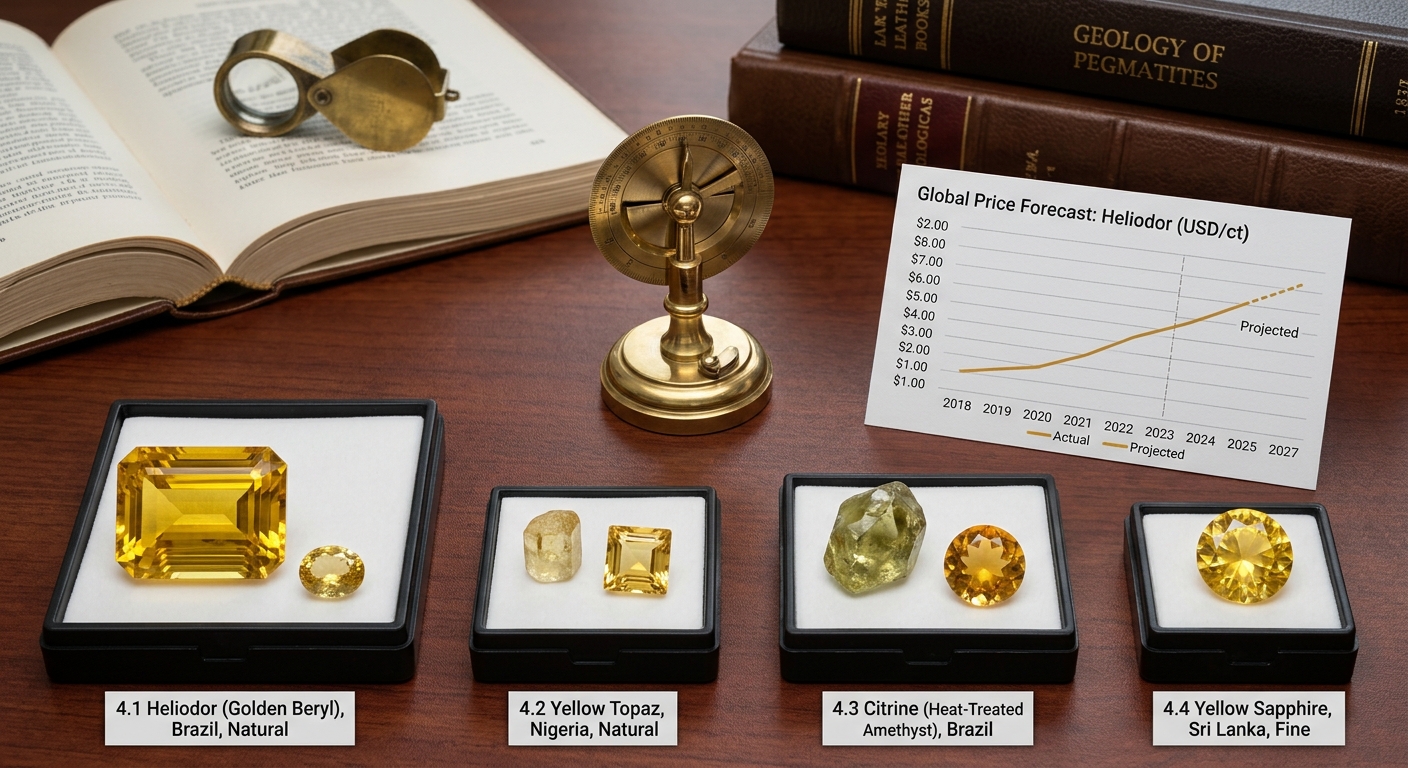
Let us break down how heliodor stacks up against other yellow stones on the trading floor, what serious collectors look for under the loupe, and where prices are heading as we navigate forward.
| Gemstone Variety | Origin & Enhancement Profile | Market Valuation & Collector Standing |
|---|---|---|
| Heliodor (Golden Beryl) | Natural geological beryl, completely unheated and untreated. | Strong organic appreciation, commanding premium for natural origin and durability. |
| Commercial Citrine | Heat-treated amethyst or low-cost quartz mass-produced. | Abundant, low-cost baseline with minimal long-term investment value. |
| Yellow Topaz / Sapphire | Frequently irradiated or diffusion-treated to boost color saturation. | High price point for sapphire and moderate tags for topaz, often tempered by treatment disclosures. |
Core Valuation and Collector Benchmarks:
- Price Trajectory: Moving from around forty-five dollars per carat in 2018 to over seventy dollars in 2022 and projected toward one hundred fifty-five dollars per carat in 2027 for fine five-carat unheated stones.
- Color Saturation Threshold: Rich butter-gold and deep canary tones command steep premiums over washed-out straw or pale lemon shades.
- Clarity Discipline: Eye-clean Type I standards prevail, punishing visible feathers, veils, or heavy inclusions that cloud brilliance.
- Treatment Integrity: Natural, unheated stones outpace oven-baked quartz and irradiated topaz among purists and independent jewelers.
4.1 Head-to-Head on the Trading Bench: Heliodor vs. Quartz, Topaz, and Sapphire
Here are the actual facts from fifty years of sitting across felt pads and viewing trays in Sydney, Denver, and every dusty rough market in between: when a customer asks for a yellow stone, half the time they have been sold a bill of goods disguised as rarity. Think of the gem market like a crowded country auction where every stall claims to hold prize-winning stock, yet only a handful of pens hold true breeding animals. Commercial citrine is the workhorse mule of that yard—most of what sits in chain-store windows started out as purple amethyst or plain quartz tossed into a kiln until heat turned it warm orange-yellow. There is plenty of it in the ground and plenty more cooked up in ovens, so while a bright citrine looks cheerful in a sunny window, it rarely builds real long-term value on a collector’s ledger.
4.1.1 Quartz Family Realities and Kiln-Baked Shortcuts
When you line a genuine heliodor beside a kiln-baked citrine or irradiated yellow quartz, the difference in light return jumps right out once you know what to look for. Quartz has a lower refractive index around 1.544 to 1.553 and lacks the crisp crystalline authority of beryl, often feeling a bit sleepy or glassy under bright shop lights. Worse yet, plenty of yellow quartz on the market owes its color to radiation or heat treatment that can fade or look flat compared to natural golden beryl. I have watched buyers pay good money for flashy yellow quartz only to find out years later that the stone carries no real scarcity behind it. Golden beryl, sitting higher on the hardness scale and carrying genuine beryl pedigree alongside emerald and aquamarine, belongs in a tougher, more enduring class of stone.
4.1.2 Yellow Topaz, Yellow Sapphire, and the Treatment Divide
Now compare heliodor against yellow topaz and yellow sapphire, and you see two very different benchmarks on the trading floor. Irradiated yellow topaz can throw bright color on the cheap, yet topaz has that razor-sharp cleavage plane that makes careless setting a gamble, and radiation treatments leave purists cold. Yellow sapphire, by contrast, is the heavyweight champion of hardness and prestige—corundum brings serious durability and steep prices, especially for unheated stones with clean saturation. Heliodor sits right in that sweet spot where smart buyers get real gemological pedigree, strong wearability, and honest natural color without paying yellow-sapphire money or settling for treated quartz.
4.2 Collector Grading Standards: Reading Saturation, Tone, and Cut Under the Loupe
Despite the nonsense you may hear on social media about magic crystal vibes or instant fortune formulas, buying a top-shelf heliodor comes down to hard-earned eye training and strict grading discipline. When I pull a parcel of golden beryl out of the safe, I look at color first, because color is what makes a buyer’s pulse jump across the table. You want rich, saturated golden-yellow or warm honey-amber without a muddy brown cast or a watery straw look that drains life out of the gem. A stone can be clean as spring water, yet if the color is pale and washed out, it trades at a fraction of a vibrant, deeply saturated gem.
4.2.1 Clarity Standards and Type I Expectations
Because heliodor belongs to the Type I clarity group in standard gem trade practice, buyers expect clean vision through the crown and pavilion. Think of it like looking through a clear pond toward smooth river stones on the bottom—when the water is clear, every pebble stands out sharp and bright, whereas silt and weeds turn the whole view murky. In golden beryl, visible liquid feathers, stress cracks, or heavy growth tubes break up light return and knock down value fast. A stone that passes a clean inspection under a ten-power loupe earns top respect on the bench, especially in larger sizes where flaws have nowhere left to hide.
4.2.2 Proportions, Polish, and Light Return in Larger Carat Weights
Size brings its own test on the cutting wheel, particularly when you move up into three-, five-, and ten-carat stones. If a cutter rushes the pavilion angles to save rough weight, the middle of the gem turns into a clear window that lets light leak straight out the back instead of bouncing golden fire back to your eye. True lapidary craft balances depth, crisp facet junctions, and a glass-smooth polish so the stone glows evenly from edge to edge. When clean clarity, strong golden saturation, and disciplined proportions come together in a larger stone, you are holding something that stands tall in any custom setting.
4.3 Market Trajectory from 2018 to 2027: Scarcity, Costs, and Buyer Shifts
Let us trace the money trail honestly, because a wise trader watches ground conditions just as closely as price sheets. Back in 2018, a fine, untreated five-carat heliodor could be picked up around forty-five dollars per carat if you knew the right cutting rooms and had cash ready on the spot. By 2022, growing demand from independent jewelers and buyers looking past mass-market stones pushed fine five-carat prices past seventy dollars per carat. Heading toward 2027 projections around one hundred fifty-five dollars per carat for top-quality stones of that caliber, the climb has not come from hype—it has come from tighter rough supply, deeper diggings, stricter environmental oversight, and rising fuel, labor, and compliance costs across mining districts.
4.3.1 Supply Bottlenecks in Brazil, Ukraine, and Secondary Districts
When a mining pit goes deeper or local rules tighten around artisanal workings, every gram of clean rough costs more sweat and coin to bring to daylight. Brazil remains the main engine of commercial heliodor out of Minas Gerais and neighboring districts, while historic pockets in Ukraine’s Volyn region and smaller workings across Africa and other pegmatite belts face real extraction, export, and logistics hurdles. You cannot whip up more natural unheated beryl out of thin air when a pocket pinches out or a region faces disruption. That physical ceiling on supply is why scarcity keeps putting firm upward pressure on clean, well-colored stones.
4.3.2 How Independent Designers and Modern Buyers Reshape Demand
Over the past decade, I have watched a real shift in who buys colored stones and why they buy them. More independent goldsmiths, custom designers, and discerning buyers want natural, unheated gems with honest origin stories rather than cookie-cutter mall pieces or heavily treated stand-ins. Heliodor fits that shift like a glove—it offers warm, sunny color, dependable everyday wearability, and real geological character at a price point that still rewards early-mover collectors. Patient buyers who focus on unheated quality, clean cut, and verified natural color rather than chasing flash-in-the-pan fads position themselves well for the years ahead.
5.0 Heliodor Golden Beryl Comparative Market Valuations, Collector Grading Standards, and Future Outlook
authored by @jamesdumar.com | Identity: did:plc:7vknci6jk2jqfwsq6gkzu
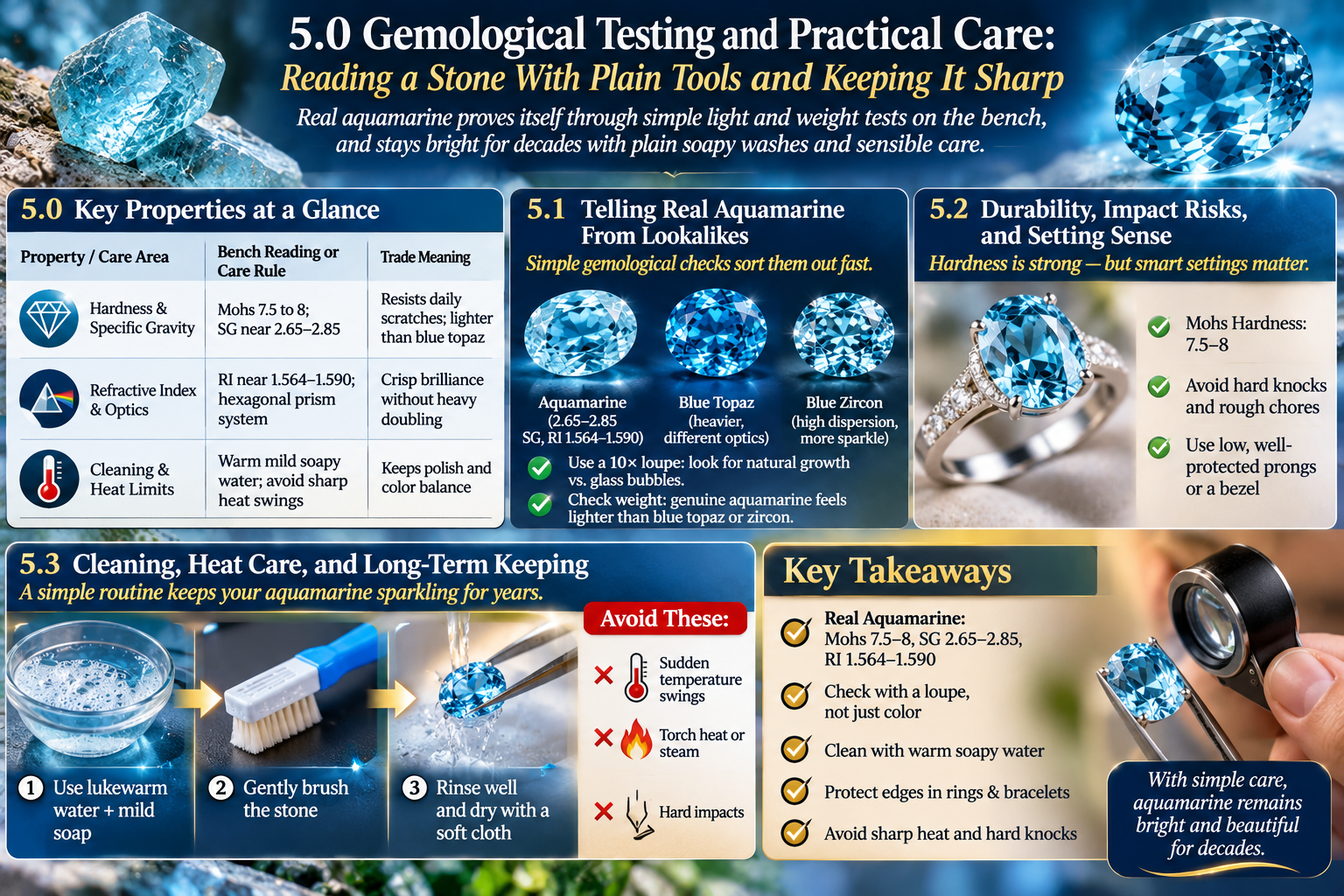
Here are the actual facts on how heliodor stacks up against other yellow stones, what buyers check first, and where trade demand is heading.
| Stone Type | Typical Material & Treatment Fact | Market & Bench Standing |
|---|---|---|
| Heliodor / Golden Beryl | Natural beryl from pegmatites, often valued when natural and clean rather than treated | Solid durability around Mohs 7.5 to 8 with steady collector interest for clean, lively color. |
| Citrine / Yellow Quartz | Commonly quartz or heat-treated amethyst with lower refractive index near 1.544 to 1.553 | Budget-friendly and widely available, making it easy to find without strong scarcity backing. |
| Yellow Topaz & Sapphire | Topaz brings cleavage care and frequent treatment; corundum brings Mohs 9 toughness and higher prices | Sapphire commands steeper prices for clean yellow hues, while heliodor offers strong value in between. |
Core Valuation and Collector Benchmarks:
- Color Over Labels: A lively, clean golden-yellow or warm greenish-yellow stone beats a dull or pale stone regardless of what fancy trade name sits on the tag.
- Clarity & Cut Together: Clean transparency and well-judged pavilion angles keep light bouncing back instead of leaving a dead, glassy window in the middle.
- Size & Scarcity: Clean crystals with rich color get harder to find as sizes climb, so well-cut larger pieces draw serious eyes on the tray.
- Plain Common Sense: Comparing hardness, weight, refractive index, and honest treatment disclosure keeps buyers from overpaying for lookalikes.
5.1 Yellow Stone Showdown: Heliodor Against Quartz, Topaz, and Sapphire
Despite the nonsense you may hear on social media about instant riches or secret shortcuts, I want to give you the factual story of how yellow stones compete across the counter. After five decades of trading stones out of Sydney and sorting parcels in busy buying rooms, I have seen plenty of buyers confuse a cheerful yellow color with equal value. Think of it like comparing a sturdy farm ute to a town sedan and a heavy haul truck—each one has its place on the road, yet none of them is built the same way underneath.
5.1.1 Quartz Family Realities and Kiln-Baked Shortcuts
When you set a clean heliodor beside ordinary citrine or heat-treated yellow quartz, you are looking at two different minerals with different habits. Quartz sits lower on the Mohs scale around 7 with a refractive index roughly 1.544 to 1.553, and plenty of commercial yellow quartz gets its warm tone in an oven from amethyst or smoky quartz. That does not make citrine useless—it makes a bright, affordable stone for cheerful everyday pieces—yet it does not carry beryl family pedigree or the same pocket scarcity.
5.1.2 Yellow Topaz, Yellow Sapphire, and the Middle Ground
Step over to yellow topaz and yellow sapphire and the trade-offs show up right away on the bench. Topaz has strong hardness around 8 yet carries a clean cleavage plane that rewards careful setting, and yellow topaz often sees treatment on the market. Yellow sapphire brings corundum toughness at Mohs 9 and steep prices when clean and unheated, leaving heliodor in a practical middle lane where buyers get genuine beryl character and solid durability without sapphire-level tags.
5.2 Grading Standards for Collectors: Color, Clarity, Cut, and Size
When a seasoned buyer or collector picks up a heliodor with a loupe in hand, they do not guess from a distance—they check four basics together. First comes color: how rich, warm, and even the yellow or greenish-yellow looks in real light without turning muddy or washed-out. Second comes clarity: how clean the crystal looks inside so light travels straight through without heavy cracks or murky clouds getting in the way.
5.2.1 Judging Color Tone and Evenness
A stone’s color is like the broth in a good soup—too thin and it tastes like warm water, too heavy and it turns murky. In heliodor, clean yellow to golden-yellow or crisp greenish-yellow tones look best when they stay bright rather than pale straw or heavy brown. Always check the stone in natural daylight as well as shop lighting so you know how it really behaves on the hand.
5.2.2 Cut Proportions, Polish, and Larger Carat Weights
Even great rough can look flat if a cutter rushes the job and leaves a pale window right across the middle. Good cutting balances pavilion depth, crisp facet edges, and a clean polish so the stone gathers light smoothly across its face. As carat weight climbs, clean clarity and balanced cutting matter even more because flaws and weak spots stand out faster in bigger stones.
5.3 Looking Ahead: Scarcity, Direct Sourcing, and Buyer Habits
Nobody has a crystal ball that can promise exact price numbers years down the track, yet fifty years of watching rough markets teaches you what lasts. Natural gem-grade beryl comes out of finite pockets in the ground, not out of a limitless factory line. When digging gets harder, pockets run lean, and buyers care more about honest natural quality, clean stones with real character hold their footing.
5.3.1 Why Natural Quality and Straight Records Matter More
More buyers today—from independent jewelers to careful private collectors—want stones that are natural, clearly described, and backed by straight bench facts. A shiny stone with a murky story or hidden treatment loses luster fast once a buyer knows what to ask. Keeping clear notes on treatments, simulants, and lab checks protects both the seller’s name and the buyer’s purse.
5.3.2 Practical Takeaways for the Years Ahead
If you want to buy or stock heliodor with plain common sense, keep your standards steady and your eyes sharp. Look for clean transparency, lively color, honest cutting, and fair pricing rather than chasing loud claims or rushed deals. Do the simple checks every time on the bench, and you will build a collection or inventory that stands up to real scrutiny.